Showing posts with label Anne Frank. Show all posts

Thursday, January 26, 2017

NETHERLANDS: ART AND LITERATURE


When it comes to Dutch art, one form dominates them all: painting. A few Dutch painters have become such familiar names that some of their art is now worth millions. 

Vermeer, "The Milkmaid"
Dutch art pretty much started with the Dutch Golden Age. In the 1620s, the Dutch painters grew out of the Baroque period. The Flemish/Dutch painter Rubens brought forth the realistic style of the Baroque. 

Frans Hals, "Willem Heythuijsen"
One of the key characteristics of paintings from the Dutch Golden Age is that artists tended to evoke intimacy and emotion from the viewer. If you were going to make it as a painter during this time and you had a good amount of talent, it was behooving to hook up with wealthy families who commissioned portraits. Portrait painting was the thing and many of them paid well.
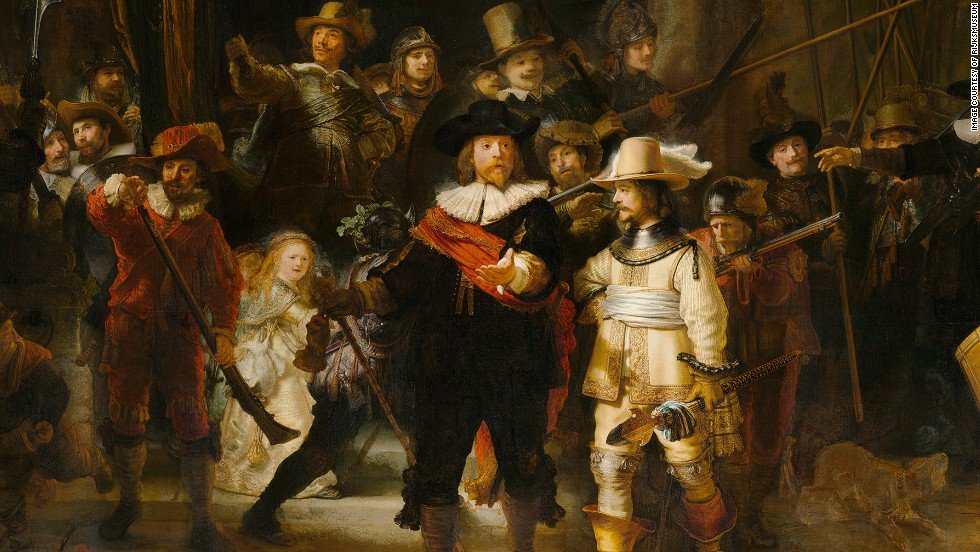
Rembrandt, "The Night Watch"
Starting out as a portrait painter, Rembrandt was one of the more famous painters to work during this period. His realistic-style paintings often depicted the suffering in his own life. His most famous painting is probably “The Night Watch.”
 
Vermeer, "The Girl with the Pearl Earring"
Johannes Vermeer is well known for his work with light and shadows. (Perhaps lessons inspired by the chiaroscuro styles of Italy?) He is most famous for his painting “Girl with the Pearl Window.” 
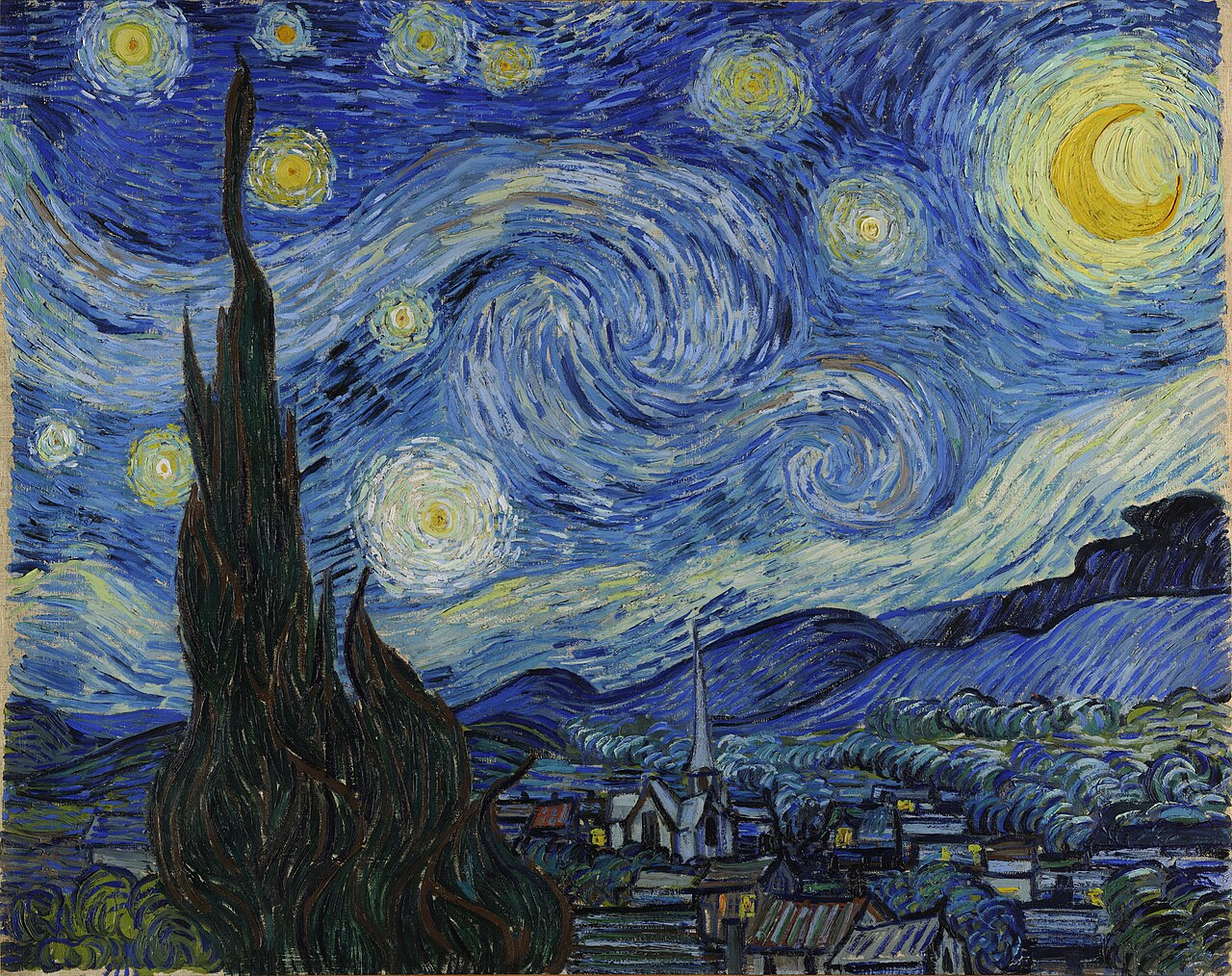
Van Gogh, "Starry Night"
During the 19th century, the Hague School brought Dutch painting to the forefront of the art world at that time. Impressionism also made its way into Amsterdam art studios. Vincent van Gogh, one of the world’s most well-known artists, represented the post-Impressionist period. His unique use of impressionist brush strokes with bright colors and defined edges creates a very eye-catching scene. Today, many of the paintings of Vincent van Gogh have sold between $50-100 million.
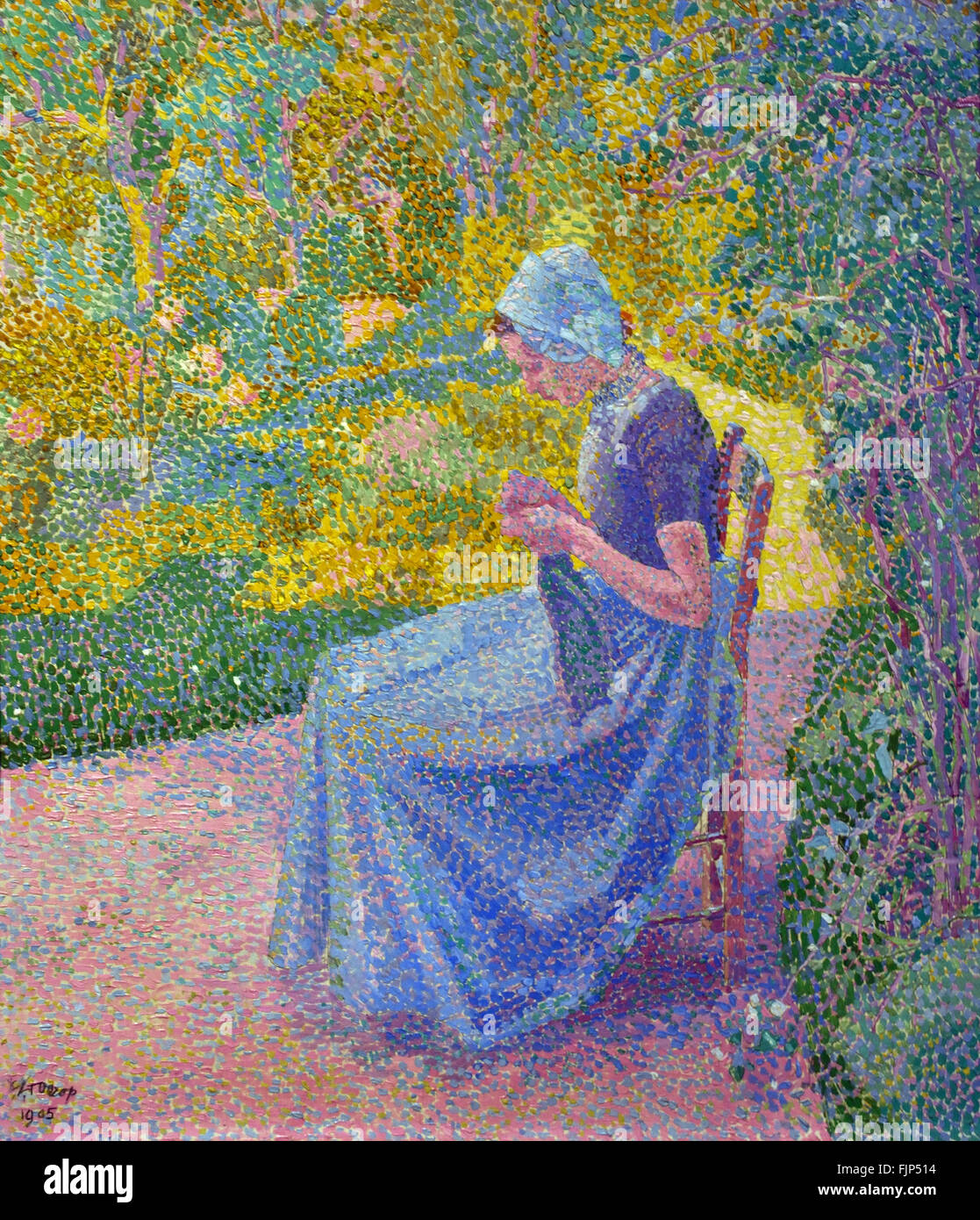
example of pointillism by painter Jan Toorop
In the first decade of the 20th century, Dutch painters saw a rise of pointillism style of painting, and not long after, other art movements like cubism and expressionism that were on the rise other places in Europe became popular among Dutch artists as well. As the 20th century rolled on, artists excelled at other mediums: sculpture, design, and public art. 


Dutch-language literature actually encompasses the literature from a number of countries, namely Netherlands, Belgium, Netherlands Antilles (Caribbean Netherlands), and Suriname as well as countries where the Dutch have spent a considerable time, such as Indonesia (or Dutch East Indies as it was called then), South Africa, and French Flanders. The Dutch spoken in South Africa and Namibia actually developed into its own language called Afrikaans, which is a mix of 17th century Dutch with local African languages.


Early on, about the 1113th centuries, the earliest form of literature was poetry. Most of this was about heroic stories of noblemen. Anna Bijns was an important Belgian poet who carried an important message in Dutch-speaking countries: she was quite the 15th century feminist. Translations of the Bible into Dutch were among first books to be printed. After the Netherlands gained its independence, literary topics started to expand. Suddenly, works on government, history, philosophy, religion, culture, and humanities began to emerge. Drama written in Dutch became a thing during the 18thcentury.


As the Netherlands saw a period of political changes and social upheaval, poetry once again rose to the forefront of literature. Probably the most famous writer during this time was Willem Bilderdijk, an intellectual poet. Later on, many poets writing in the style of romantic nationalism introduced works that touched on Dutch culture as well as give a push to Flemish literature. By the late 1800s, a movement by a few Dutch authors called Tachtigers started to show some homage to foreign authors, like Percy Bysshe Shelley as well as influence others like Oscar Wilde.  Poetry and drama were still going strong. WWI and WWII would change things. During WWII, many writers either moved (if they were fortunate) or went underground. One of the most popular required reading selections in schools around the world is the Diary of Anne Frank, a young girl living in Amsterdam who wrote about her life hiding during the war. She later died in a concentration camp in 1943. Today, there are many authors who write in every genre.

Up next: music and dance

Monday, January 23, 2017

NETHERLANDS: THE LAND AND THE PEOPLE


I’ve had a thing for the Netherlands for a while now. I know two people who have spent time there, one for several years. From listening to them talk about the Netherlands, I grew an interest in the country. And thanks to Duolingo, I began studying a little bit of Dutch. However, I was also doing the German track at the same time, and I don’t recommend doing that because they’re too similar. (It’s the same reason why I had to stop doing Portuguese and Spanish at the same time.)
 
The Dutch name for the Netherlands is Nederlands, literally meaning “the lower country.” (Nederlands is also the name for their language, Dutch.) It’s called this because about half the country is less than 1m above sea level. The country is also widely known as Holland, which is sort of a misnomer since Holland only refers to two states (North Holland and South Holland). However, there are a number of people who refer to the entire country as Holland. (For example, the Japanese word for the country, Oranda, is based on the word for Holland.)


The Netherlands is located in the northwest corner of mainland Europe. It’s surrounded by Belgium to its south and Germany to its east, and the western coast borders the northern end of the English Channel. The country experiences warm summers and cool winters (I'm already sold). 


Evidence shows that the Neanderthals were most likely the first people in this area. Other groups have migrated through this area over time, and archeologists have uncovered many of their items, including the world’s oldest boat (a canoe dubbed the Pesse Canoe). Smiths began smelting the iron ore from the bogs and started creating swords, knives, and other tools and weapons. The Romans took over the lands for the first couple of centuries AD, and the Franks took control when the Romans were defeated. The Franks also had to share this area with the Frisian Kingdom. The 10th and 11th centuries were dominated by the Holy Roman Empire. At this time, the Netherlands was nothing more than a collection of small city-state kingdoms, and advancements in agriculture helped develop communities and society at a quicker pace than in the past. They couldn’t get too comfortable, though: things changed as they fell under Habsburg rule during the Middle Ages. Holland began having trouble growing grain and startd figuring out how to effectively drain the wetlands. Finally, they gained their independence and many of the states formed a united confederation. During the 17th century, the Dutch Empire began expanding to the US, the Caribbean and South America, Africa, and Southeast Asia. Between the Dutch East India Company and Dutch West India Company, they set up trading posts all over the world. Under the Batavian Republic, they fought as an extension of the French army under Napoleon Bonaparte until he was defeated. Although the Netherlands managed to remain neutral during WWI, they were invaded by Nazi Germany in WWII. In 1954, the Kingdom of the Netherlands reorganized itself, releasing several of its colonies and reclassified others. They were one of the founding members of NATO, Benelux, the EU, and a number of other organizations. The 1960s and 1970s were a time of quite a few social and cultural changes in the Netherlands. That momentum led to Netherlands being the first country to legalize same-sex marriage in 2001. (The US wouldn’t achieve this for another 14 years.) 


Although Amsterdam is the largest city in the Kingdom of the Netherlands and is considered the capital, unlike most capitals, it’s not where the center of government is located. For the Netherlands, that would be in The Hague. Amsterdam was named after the dam on the Amstel River (yes, the same river Amstel beer is named after). The city is widely known for its red-light district and weed cafés as well as its picturesque bridges over the canals and waterways. Anyone who’s ever read The Diary of Anne Frank knows Amsterdam, and anyone who’s ever taken an art class in school should know who its two famous resident painters are: Rembrandt van Rijn and Vincent van Gogh. Today, the city is a global alpha city, often topping the Best Cities lists in a number of categories. 


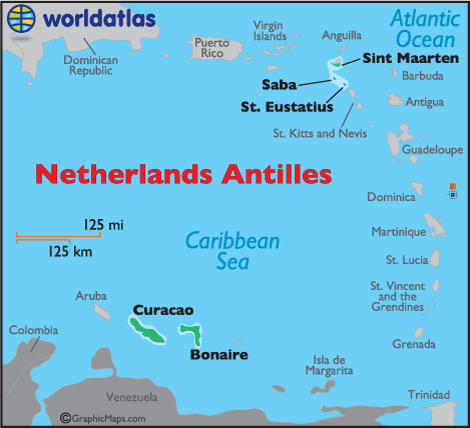
The Netherlands has a developed economy, and many of the top global companies are headquartered here; they’re all names most of us are familiar with: Philips, KLM, ING, TomTom, Unilever, Randstad, Heineken, and Royal Dutch Shell (known as Shell Oil Company in the US). The Amsterdam Stock Exchange is the oldest one in the world. In the 1950s, huge reserves of natural gas were discovered, which really helped the Dutch economy. They’re so big that they equal about a quarter of all the reserves in the EU. While the Netherlands in Europe uses the euro as its currency, the islands of the Caribbean Netherlands use the US Dollar instead.


Since about the time of the Reformation, the Netherlands has traditionally been a Protestant country: about two-thirds Protestant and one-third Roman Catholic. But by the time the 20th century rolled around, things started to change. Today, roughly about two-thirds of the people claim no affiliation with any particular organized religion. It’s one of the world’s most secular countries (sounds like my kind of place). There are certainly smaller numbers of Catholic, Protestant, and other Christian denominations still present, and there are also sizable Muslim, Hindu, and Buddhist populations as well.

The official and most widely spoken language is Dutch. To me, Dutch is like a cross between English and German. West Frisian holds an official status in the province of Friesland. The European Netherlands also declared two regional languages: Low Saxon and Limburgish. When it comes to the Caribbean Netherlands, English has an official status on Saba and Sint Eustatius, and Papiamento has an official status on Bonaire. About 90% of Dutch can carry on a conversation in English since it’s required in secondary schools. German and French are the second and third most popular foreign languages studied. 

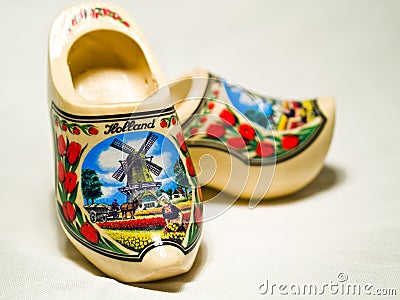
Oh my gosh, these are so kitchy.
When I was a kid, the stereotypical images of the Netherlands used to fill my head: wooden shoes, windmills, tulip fields, and what I read in Hans Brinker, or The Silver Skates by Mary Mapes Dodge, including the story of the boy who plugged the dam with his finger. As I entered college, the famous cafés of Amsterdam piqued my interest in the country more. And as an adult, the fact that the Netherlands has a more efficient healthcare system than the US, more affordable college, and a secular view draw me in more. I’ve already learned so much about this small country that does big things. But I think there’s more to learn out there.

Up next: art and literature