Of course, there are always the more popular images of Sweden that come up for most people: Swedish meatballs, Vikings, Swedish fish, IKEA-broken marriages, buxom blonde bombshells, and the Swedish chef. But there’s one thing that comes to my mind when I think of Sweden: Anthony Bourdain’s absolute loathing hatred for the band ABBA. Every single time he’s went to Sweden, he mentions this to the shocked chagrin of his Swedish hosts. Oh, and snow and cold.

Sweden is another country that was named by someone else: the Dutch in this case. However, the Old English and ultimately Latin, Old Norse and other similar languages referred to this area as being the land of the Swedes. The word Swede itself may have stemmed from a Proto-Germanic word meaning “one’s own,” referring to the Germanic tribe itself.

Sweden is located in northern Europe, part of the Scandinavian countries. Surrounded by Norway to the west, Finland to the east, and Denmark to the southwest, it also has a coastline along the Baltic Sea and Gulf of Bothnia. It’s across the water from Germany and Poland on the southern end and Russia, Lithuania, Latvia, and Estonia to the east. The border between Sweden and Norway is quite mountainous and the longest uninterrupted European border. Because Sweden is so long, its climate and landscape varies quite a bit from agricultural in the south and gets more forested the farther north you go. Despite its being such a northern country, southern winters are nothing like the far north; its proximity to the water keeps it fairly mild (similar to how Long Island, NY doesn’t get quite the cold temps as other areas of the state do). The northern 15% of the country is in the Arctic Circle, where there are days when the sun never sets in the summer and never rises in the winter.

The earliest people were hunter-gatherers, probably chasing some reindeer, probably doing a little fishing. The Swedes entered their Viking era from about the 8th century to the 11th century. Their accomplishments and tragedies are carved in runestones around Scandinavia. The epic poem Beowulf even chronicled the wars between Svealand (Sweden) and Göteland (Gothia). As Sweden moved into the Middle Ages, it somehow avoided the feudalism and slavery that embraced much of the rest of Europe. People here were more or less a group of free farmers with a handful of larger cities here and there. However, it was still poor and bartering seemed to be how things were dealt. During the 1300s, the country couldn’t escape the devastating effects of the Black Death. It would take nearly 500 years for the population numbers to recover from these losses that only took two years to unfold. The Hanseatic League formed after this, an agreement among many of the countries that touched the Baltic Sea that essentially swept the seas of piracy and encouraged trade among themselves, and Stockholm became a very popular place to be because of this. However, Sweden broke apart when things started to change and went out on their own, entering into their own golden era. Sweden grew during the 1600s and gained land and influence, including the introduction of Protestantism. They entered several wars, including Polish-Lithuanian Commonwealth and with Russia. The last war Sweden took part in was in 1814 with the Battle of Leipzig, which was in relation to the Napoleonic Wars. The mid-1800s saw the beginning of modernization and industrialization, and many Swedes were also looking at areas abroad. Many came to the US during this time, and many of those ended up in areas in the Midwest, especially Minnesota (the city of Lindström, MN is known as America’s Little Sweden). Officially, Sweden was neutral during WWI and WWII, but was often thought to have been under Germany’s influence. After the wars, Sweden tried to strengthen its diplomatic and economic ties with other countries in Europe. There have been some periods of economic instability, and in recent years, there has also been some real challenges on the socio-political front regarding immigration in recent years.
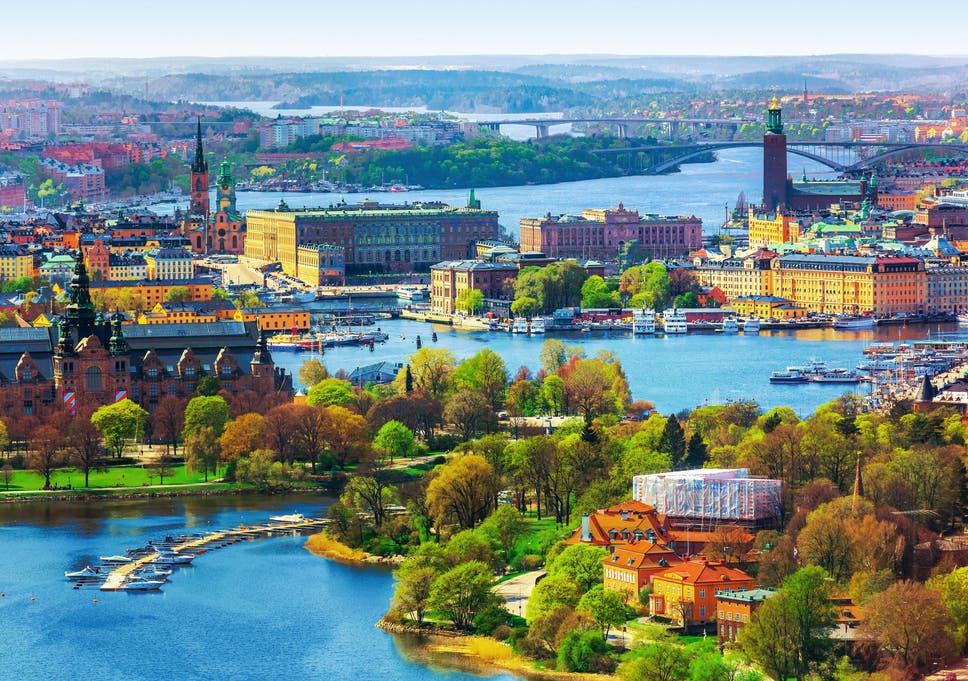
Stockholm is capital and largest city in not only Sweden, but in all of the Nordic countries. It’s located on the eastern side of the country where Lake Mälaren flows into the Baltic Sea. The central part of the city is stretched across 14 different islands that make up the Stockholm archipelago. There are actually tons of smaller islands that dot the waterways all over this region. It’s not only the center of government, but also of media, culture, education along with being the corporate headquarters for many multinational companies.
 |
| A Volvo at an IKEA in Sweden... thanks, Reddit! |
Sweden has a high GDP and high standard of living. Its exports include hydropower, timber, arms (weaponry, not body parts -- don’t be creepy), iron ore, and they depend on foreign trade. They have strong industries in technology (especially mobile phone technology) and the automotive industry. Several Swedish companies are internationally known: IKEA, Volvo, Ericsson, Sony Ericsson Mobile (my Japanese host father worked for them for many years), Electrolux, and Securitas. Sweden also has a low income inequality and is one of the few members of the EU that does not use the euro, opting for their own krona currency instead.

Lutheranism was introduced at the end of the 1500s to replace the Norse paganism that most of the people followed. Other religions, like Roman Catholicism and Judaism, expanded into Sweden during the 1700s. However, the country loosened its religious constraints during the 1800s and allowed for other denominations and secularism. Because of immigration, there is a sizable Muslim population in Sweden. And according to a study in 2015, only 21% believe in a god (which is down 14% from seven years earlier).

Sweden’s official language is Swedish, but it was only given its official status in 2009. The language is closely related to Norwegian and Danish. Because of the large number of Finns in Sweden, the Finnish language has been recognized as a minority language along with Sami, Yiddish, Romani, and Meänkieli (a group of Finnish dialects spoken in northern Sweden). Arabic is also spoken by many people in minority communities. After WWII, English gained its standing as a global language and especially one to learn for the sciences and technology.
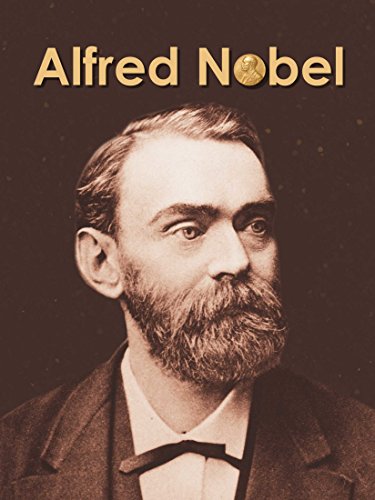
Swedish scientists have invented and developed quite a few scientific discoveries. Some of their works have completely changed the way we work in the world, and some are names we all recognize (at least if you haven’t been living under a rock). Some of the names and inventions that might sound familiar include Anders Celsius (created the 100-point temperature scale), Gustaf Erik Pasch (invented the safety match), Martin Wiberg (invented a bunch of things but is known for his work with computers in 1875), Alfred Nobel (invented dynamite and namesake of the Nobel Prizes), Jonas Offrell (invented the revolver around the same time Samuel Colt was doing the same thing), Helge Palmcrantz (invented a type of machine gun), Lars Magnus Ericsson (inventor and owner of telecom tech company), Carl Rickard Nyberg (invented the blowtorch), Inge Edler (helped develop ECG technology for the heart), Nils Bohlin (developed 3-point seat belt system), and a ton of other things used in the medical field and technology.
Up next: art and literature