Showing posts with label Gulf of Guinea. Show all posts

Sunday, May 13, 2018

SÃO TOMÉ & PRÍNCIPE: THE LAND AND THE PEOPLE


As a long-time off-and-on-again student of Portuguese, I’m quite familiar with the Lusosphere (countries that speak Portuguese). And one small island nation in the Atlantic off the coast of Africa is included in that. It’s not a country many people (i.e. Americans) are aware even exists, but I’ve taken it upon myself to tell everyone about all of these really cool countries “no one’s ever heard of.” Besides what’s not to love about a country where practically every word has an accent mark in it? 
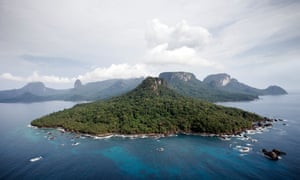

Although the dates of discovery by Portuguese sailors are somewhat disputed, the names of these two islands were roughly named for the dates they arrived. São Tomé was discovered on or around December 21 (1471), which is St Thomas’ Day. The island of Príncipe was originally named Santo Antão after they landed there on January 17 (1472), which is St Anthony’s Day. A few decades later, its name was changed to Ilha do Príncipe after the Prince of Portugal – gotta keep the boss man happy.


São Tomé and Príncipe are located on the Atlantic side of Africa (actually in the Gulf of Guinea). The island of São Tomé is just off the coast of Gabon, while Príncipe, a much smaller island, is located off of the coast of mainland Equatorial Guinea. One of the smaller islands that belong to Equatorial Guinea, Annobón, is located to the southwest of São Tomé, while Bioko (also belonging to Equatorial Guinea) is northeast of Príncipe. The islands have a tropical climate with a rainy season (October to May) and a dry season (June to September).
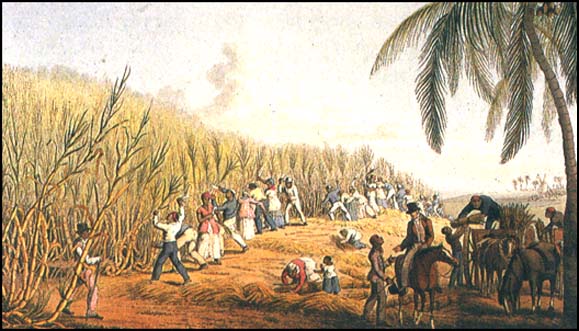


Unlike most other countries, this was one country that was not inhabited at the time Europeans arrived. The Portuguese were the ones who arrived first and took this for themselves. They quickly established these two islands as a place for sugarcane plantations, and sent the people they really didn’t like (mostly Jews) to man the farms. (Great work, guys. Way to handle your discrimination.) However, by the early 1500s, the Portuguese started using these islands as a staging center for the trans-Atlantic slave trade. They started pulling Africans from all over the mainland, and consequently, they also became a huge producer of sugar. By the early 1800s, coffee and cocoa were added to the mix of exports. Because the soil here is rich from volcanic ash, it makes for prime agriculture, and mega plantations were created to handle the demand. These mega plantations (called roças) run by the Portuguese led to absolute power and the abuse of that power. Although slavery was officially abolished in 1876, there were documented cases that it was still in effect some 30 years later. As many African countries were demanding their independence during the 1960s, São Tomé and Príncipe was no exception. Their independence was finally granted in 1975. During the 1990s, they had several reforms and peaceful elections, although they had some difficulties during the early 2000s dealing with corruption building up to an attempted coup in 2009.  


The capital and largest city is the City of São Tomé, which is located on the island of… São Tomé. (Were you expecting something else?) It’s the center of government, education, commerce, transportation, and media. The city was founded in 1485 and has served as an important port for centuries. There’s actually a weekly ferry that goes to Cape Verde (oh, I’m sorry, it’s Cabo Verde now), but that seems to me like it would be a very long trip.
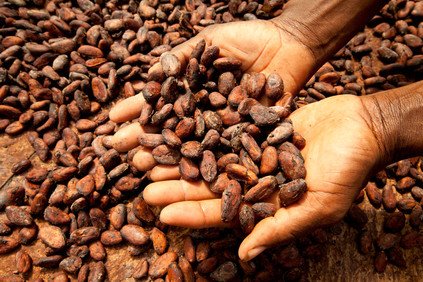

It should come to no surprise, knowing the islands’ history, that their largest economic driver is agriculture. Cocoa is now their largest crop, representing roughly 95% of their crop exports. They also depend on copra, coffee, fishing, and palm kernels. They are also making plans to try to development more tourism in the country. São Tomé and Príncipe often struggles financially, but they have an agreement with Nigeria to jointly explore the Niger Delta Basin as part of a petroleum exploration. So, hopefully that’s working out for them.


Because of their ties to Portugal, the majority religion is Roman Catholicism. However, there are a few other denominations and religions represented here as well. A number of smaller followings of Protestant denominations such as Seventh-Day Adventists and other evangelical sects are spread throughout the islands. There is also a small number of Muslims.

I picked this because in 2003, I went to Porto Alegre, Brazil. I think they should be sister cities.
As I mentioned in the introduction, Portuguese is the official language of São Tomé and Príncipe. The vast majority of the people know it as their first language since it’s been around these parts since the 1400s. However, there are also a number of Portuguese-based creoles spoken here: Forro, Cape Verdan Creole, Angolar, and Principense. As far as foreign languages that are taught in school, the most popular ones are French and English (for obvious reasons—these are used most often as a lingua franca in many areas of Africa).


Probably one of the oddest things I’ve seen is on the island of São Tomé: the Pico Cão Grande (or Great Dog Peak). It’s a volcanic plug located on the southern end of the island. Volcanic plugs are formed when magma solidifies in a vent on a volcano, and it just builds up in a tower. To me, it looks like a giant finger sticking out of the ground. (Maybe it belongs to the Easter Island heads?) Although it’s very difficult to climb, two teams of climber have managed to do this impossible feat. There are apparently a crap ton of snakes up there, so that’s a huge no thanks from me.

Up next: art and literature

Monday, October 20, 2014

GHANA: THE LAND AND THE PEOPLE


It took me a lot of time to figure out how to start this post on Ghana. I had only a vague knowledge on the country – somewhere in Western Africa… remnants of stories about someone knowing someone who visited or lived there… Why is this so vague in my mind? Why don’t I know more about this country than I should? Why am I drawing such a blank? And when I read up on the country, it was like I never knew the country before. It was an epiphany, you might say.

The word Ghana is derived from a title that was given to kings of the Ghana Empire, meaning  “Warrior King.” (Even though this empire was actually located north of what is now Ghana.) The country of Guinea also derived its name from the same source. (I’ll get to Guinea in a couple of months.)


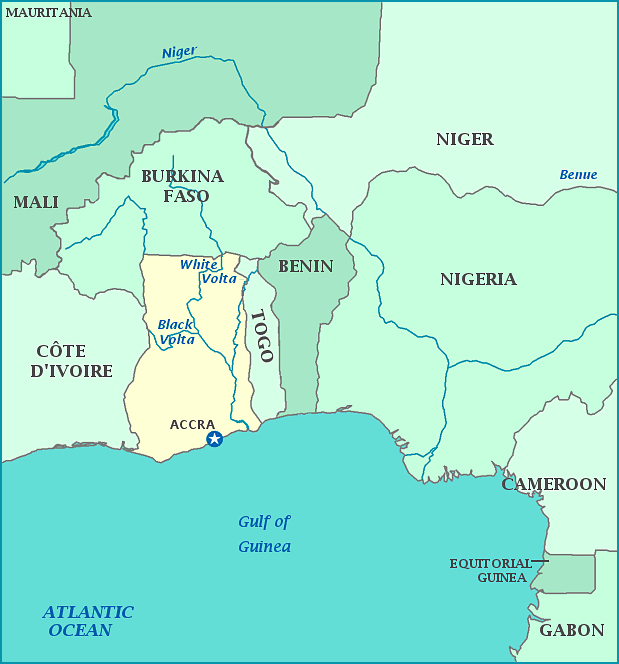
Ghana is located in West Africa, surrounded by Côte d’Ivoire to the west, Burkina Faso to the north, Togo to the east, and the Gulf of Guinea to the south.  Ghana lies only a few degrees north of the equator, and the Prime Meridian runs through the city of Tema, an important port city.  In fact, the country is only about 382 miles from the 0º, 0º center coordinates, which is actually out in the Gulf. Ghana’s landscape varies between grasslands, low hills, waterfalls, rivers, and islands. Their tropical climate is generally divided into two seasons: dry and rainy.

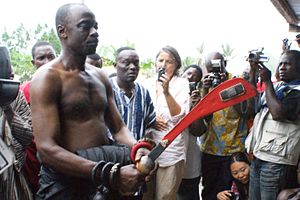
Denkyira sword demonstration
Five kingdoms (Ashanti, Akwamu, Bonoman, Denkyira, and Mankessim) were collectively known as the Akan Kingdom, and they were among the original peoples to inhabit what is now known as Ghana. In the 15th century, the Portuguese were the first Europeans to arrive and renamed the area Portuguese Gold Coast because of the amount of gold that was there. By the end of the 1500s, the Dutch arrived and settled their own aptly-named Dutch Gold Coast. The Swedish and Danish followed and guess what they called their fortresses? Go on, guess. Yep, Swedish Gold Coast and Danish Gold Coast. (See a pattern? Not very original here.) In the 1600s, the Germans, not wanting to be left out, set up the –you guessed it– German Gold Coast (sometimes referred to as the Brandenburger Gold Coast). The British arrived, because why not at this point? They established control over parts of these areas during the late 1800s and named it something completely different. Just kidding: they called it British Gold Coast. The Akan peoples fought against the British for many years, and the British people finally granted the Ghanaians their independence in 1957. Their first president, Kwame Nkrumah, expanded pan-Africanism and incorporated the teachings and lessons of Dr. Martin Luther King, Jr., Marcus Garvey, and W.E.B. du Bois into their policies. There have been some shaky times in Ghana’s political history, but it’s been fairly stable in recent years.


Accra, whose name is derived from the word for “ants,” is Ghana’s largest city and center of government. Located on the Gulf of Guinea, Accra is the 13th largest metropolitan area in Africa.  Accra was once the capital of the British Gold Coast, and after they gained independence, the capital remained where it was. Modern skyscrapers intermingle with classical European architecture; the city enjoys many modern amenities, such as shopping malls, universities, theatres, sports arenas, museums, libraries and is a center of many local and federal government offices, international businesses, and the Ghana Stock Exchange.

Pure gold. I'll take that, please.
Ghana has one of the quickest up-and-coming economies in Africa, especially in sub-Saharan Africa.  They are using their gold reserves along with partnering itself to the Chinese Yuan Renminbi to strengthen their economy.  Since the 1960s Ghana has invested money in hydroelectric power by the use of dams in the Lake Volta region, and they’re also looking into building Africa’s second nuclear power plant. Although not necessarily the largest producer of cocoa, Ghana has made a name for itself as a producer of some of the finest grades of cocoa in the world. They also have a significant economic impact from manufacturing (especially in information and computer technology), mining (Ghana has the 9th largest diamond reserves and the 10th largest gold reserves), real estate, trade, and science and technology. Ghana has contributed a considerable amount of money towards space exploration and research to partner with South Africa’s National Space Agency. (Someone needs to since the US Congress sadly decided NASA isn’t important enough to fund anymore.)

Cocoa beans
The vast majority of Ghanaians are Christian, and of those, the majority is Pentecostal. A smaller, yet significant portion of the population, practice Islam (of those, Sunni is the largest denomination).

Ashanti Twi: top one means "welcome," bottom one means "how are you?"
Because the British controlled the area for so long, English has become the official language of the government, business, and everyday life. However, there are several indigenous languages that are still spoken in the home. Akan languages include Twi (also recognized for literacy), Mfantse, and Nzema; Mole-Dagbani languages that are often used are Dagaare and Dagbanli. Other languages that are commonly spoken in Ghana include Ewe, Dangme, Ga, Gonja, and Kasem (not to be confused with Casey Kasem). 

Frema Agyeman as Martha Jones in Dr. Who -- I LOVE her jacket! 
One of the most famous Ghanaians is Kofi Annan, former Secretary-General of the United Nations (1997-2006). Frema Agyeman, who plays Martha Jones in the new Dr. Who episodes (I LOVE Dr. Who!), is half Ghanaian on her father’s side. Idris Elba, an actor in several big-name movies (American Gangster, Prometheus, Pacific Rim, Thor: The Dark World) is half-Ghanaian on his mother’s side. Peter Mensah is another actor people will recognize from Hidalgo, 300, the Spartacus series, and True Blood. Author W.E.B. du Bois, famous for his pan-Africanism and African-American rights issues in the US, became a Ghanaian citizen after the US refused to renew his passport. 


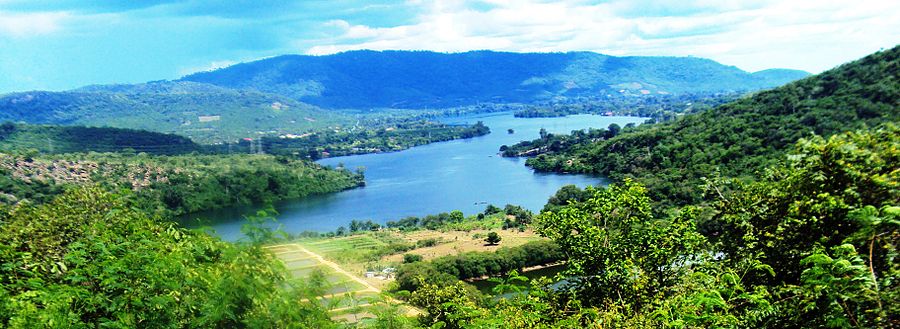
Ghana is home to the largest man-made lake in the world, Lake Volta.  (However, it is only the largest man-made lake by surface area.  The largest by volume is Lake Kariba, on the border of Zimbabwe and Zambia.)  The lake provides a thriving fishing industry as well as a logging industry in submerged forests and other tropical woods. But this tropical location also yields amazing tropical food.  I’ve got my recipes picked out, and I’m looking forward to eating. 

Up next: art and literature