Art in Cambodia goes back centuries to the Angkor days.
Several styles of traditional art were once the very heart of day-to-day living
and functionality, whether you made it, used it, wore it, or merely admired it.
The Khmer Rouge took away all of the arts practices – artists, musicians, and
writers were killed for their craft.
However, after they left power, the arts slowly started to make a
comeback. Different schools for learning the traditional arts were established,
as well as learning contemporary art.
Textiles are an important part of Cambodian life. Silk
weaving has been practiced for centuries, given Cambodia’s proximity to the
famous Silk Road. When it comes to weaving, there are two main techniques. The
first is called ikat (no, not another Apple product), which is basically dying
the weft yarn (the horizontal strands in fabric) in order to make designs. The
designs vary from region to region. It’s somewhat of a long, complex
process. The other is called
uneven twill, a process of taking two or three colors of yarn and weaving them
in such a way that one color will be dominant on one side of the fabric and the
other one (or two) will show on the other side. The dye they used came from natural elements.
_from_Cambodia,_Khmer,_1880-1910.jpg)
Besides silk, cotton is also highly popular. Some of the
more popular woven items are a sampot (wrap skirts, similar to a sarong), pidan
(tapestries with pictures woven into them), and krama (traditional headscarves
worn by both men and women). Basket weaving, wicker and rattan arts are also prevalent.

Stone carving goes back to the Angkor days and was used to
decorate the temple walls and surrounding areas. Some can be quite elaborate
and intricate in design. It’s become somewhat of a lost art, but efforts are
being made to try to bring it back. Likewise, lacquerware and silversmith work
are two other arts that are starting to make a comeback into the arts world as
well.

Kite-making and the kite-flying tradition is one that spans
across Asia on a whole. In Cambodia, they sometimes attach small pipes onto the
kite so that when the wind blows, it makes a whistling sound. They call these
singing kites. The tradition goes back centuries, but in the past 20 years or
so, kite-flying competitions take place with several competitors and many
spectators alike, ranging from the young to the young-at-heart.

Of course, drawing, painting, and sculpting of a more
modern, European style are also highly regarded as well. Especially in the
years after the Khmer Rouge, art production and art education took off, and
several art museums were rebuilt in Phnom Penh and other major cities. Some of
the artists that have made a name for themselves are Chhim Sothy, Chath
Piersath, Chhan Dina.
The first texts in Khmer were mainly religious texts (such
as translations/ transliterations of the Tripitaka), written by Buddhist monks
as well as court documents and stone-carved scripts at temples. There was also
a strong tradition of folklore and storytelling in Cambodia. Most of these stories were passed down
verbally from generation to generation.
Many of the topics were deeply laden in Buddhist themes and
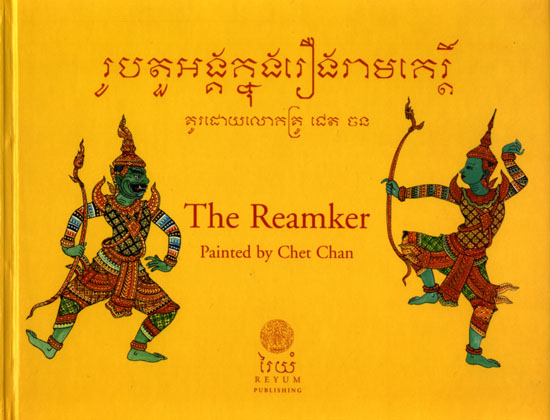
proverbs. The ancient Hindu epic
poems were also a source for inspiration as well. “Reamker” is a Cambodian version of one of these poems that
has been adapted to both theatre and dance.
One of the first famous writers – perhaps because he was the
king as well – was King Ang Duong.
Two of his well-renowned works, both inspired from the Jataka tales
(stories told about the previous births of the Buddha), are “Kakey” and
“Puthisen Neang Kong Rei.”
After the French took over Cambodia, written language took
on another level. The French were
controlling, but they did help establish and produce printed Khmer literature
by creating the movable blocks for the Khmer script to be used on a printing press,
the first Khmer language book being published in 1908. They also transformed
their educational system as well, giving more students a chance to learn to
read and write.
Writers and Cambodian literature on a whole also suffered
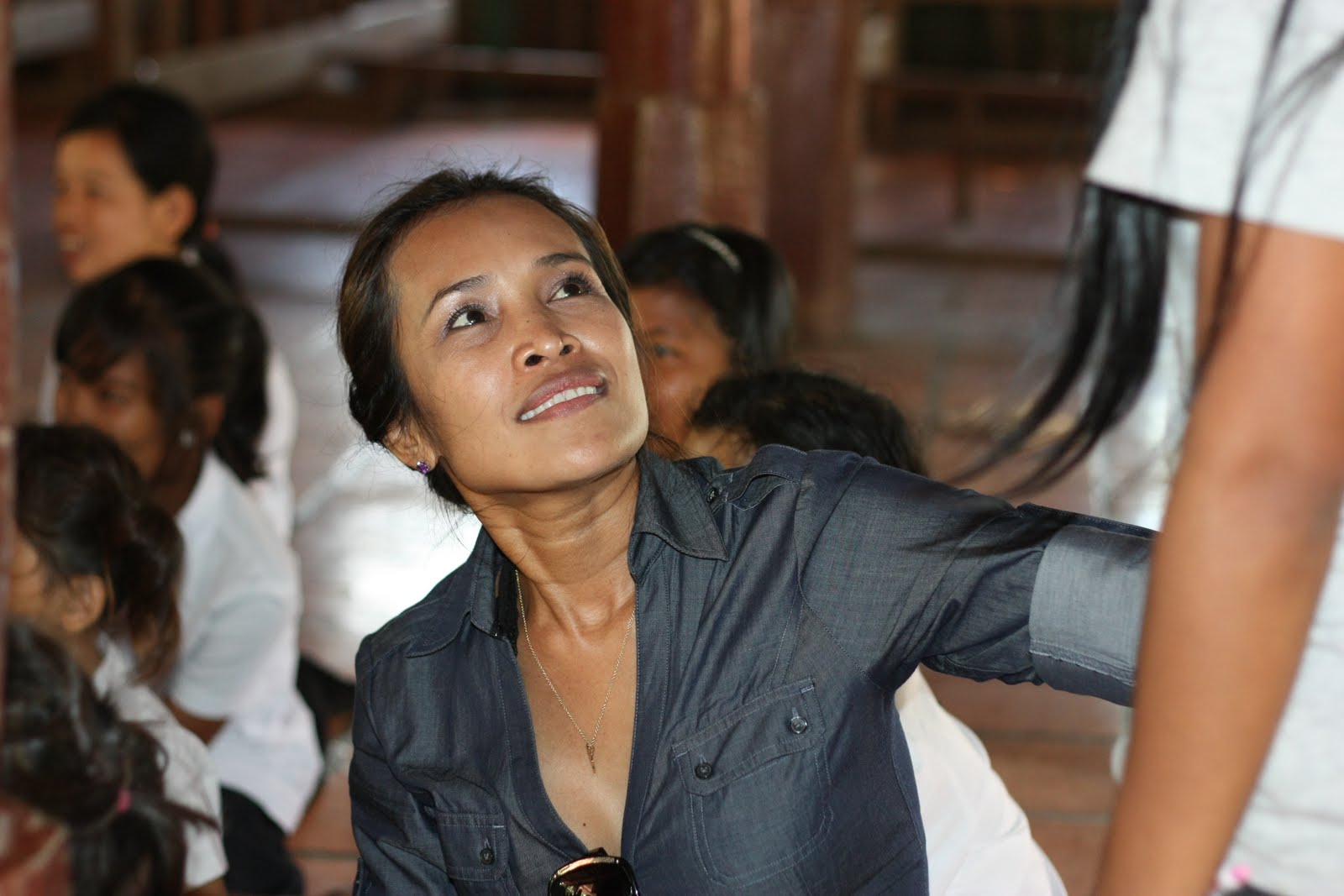
the same fate from the Khmer Rouge days. One of the more well-known Cambodian
authors today is Somaly Mam. Her beginnings were bleak, being essentially
orphaned, not even sure which year she was born. She was taken in by a man she
had to call “grandfather” (a sign of respect) who abused her and enslaved her
before selling her to a brothel at the age of 14. She was then forced to marry
a soldier in the Khmer Rouge, a man she had never met, who beat her and raped
her repeatedly. She had to prostitute herself, sometimes five or six times a
day just to make ends meet, and if she refused, she faced a barrage of
torturous beatings. In fact, her best friend at that time was brutally murdered
in front of her. She managed to escape, and a French aid worker helped her relocate
to France where she later married a French national. Although she went through
all of this, it did not deter her from helping other women caught in the sex
trafficking trade throughout Cambodia and Southeast Asia. Her memoirs are
written in The Road of Lost Innocence.
She also founded The Somaly Mam Foundation in 2007 as a non-profit based in the
US who helps organize anti-trafficking groups and assists in helping women and
girls escape from sexual slavery. Please visit their website; there is a lot of
information on the sex slave trade, what the foundation is doing, and how you
can help: www.somaly.org.
Up next: music and dance
