Showing posts with label Rastafarian. Show all posts

Sunday, July 5, 2015

JAMAICA: THE LAND AND THE PEOPLE


When I was first dating my native-Chicagoan husband, he couldn’t believe I had never had jerk chicken before. It quickly became one of my favorite foods. And the south side of Chicago has some of the best places to get jerk chicken. They also served with it this dense white bread that my husband loves so much (the jerk chicken places here in Indy that we’ve tried use a cheaper wheat or white bread, and it’s just not the same—the crumb is too loose). When I told him we were on Jamaica now, he begged me to find that recipe, and after some research, I found the recipe for hard dough bread (also spelled with a variety of spellings). When we got married almost 11 years ago, we wanted to take our honeymoon to Jamaica, but life got in the way, and we were never able to take a honeymoon anywhere. And now we have two kids. Maybe one of these days, we’ll all go.

 
The word Jamaica comes from its indigenous people, the Taíno people, meaning “Land of Wood and Water” or “Land of Springs.” Jamaicans themselves often refer to their island as the “Rock,” and there are many derivatives from this. [Note: this made me think of the popular drink throughout Latin America called jamaica (or flor de jamaica), pronounced ha-MY-kah, made from hibiscus flowers. But as far as I can tell, the name comes the flower being imported into Jamaica first and then Mexico. However, in the country of Jamaica, it’s called sorrel; it’s also called bissap among other names in West Africa.]
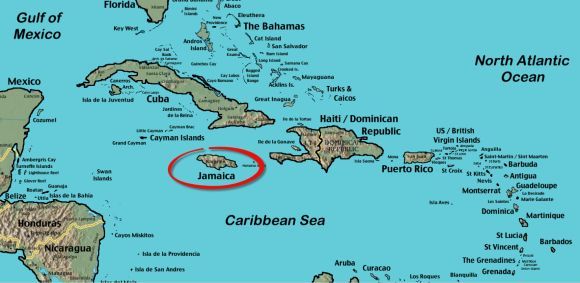

Jamaica is an island nation in the Caribbean. Cuba is to the north, Haiti to the east, the Cayman Islands to the west, and Panama and Colombia is directly south if you travel a ways across the Caribbean.


Jamaica has a tropical climate and is subject to Atlantic hurricanes; it’s been devastated many times during its history. The island’s tropical climate allows for a variety of plants and animals that thrive in this climate to make Jamaica their home. Many kinds of fish, birds, insects, lizards, and other animals are found here. The good thing is that of the eight types of snakes that are found on the island, none are poisonous (I personally would treat all snakes as poisonous and ready to eat me whole, despite its size. But that’s just me.). On the other hand, Jamaica is home to the Giant Swallowtail, the world’s second-largest butterfly. 

Like other islands in this area, the Arawak and Taíno peoples were the first inhabitants of Jamaica. Christopher Columbus landed on the island of Jamaica in 1494 and claimed it in the name of Spain. The Spanish introduced many crops to the area, such as sugarcane, a variety of citrus trees, bananas, and others. By the mid-1600s, the British had taken control and quickly brought in slaves from Africa to work these fields and within 20 years time, blacks had outnumbered the white population. During this time, Jews who were banished from their home areas in Europe saw Jamaica as a refuge and a new start and began pouring into the country. There were also a number of free blacks on the island as well, many escaping the US (like they did with the Bahamas). After the British finally abolished slavery during the early 1800s, they began shipping in Indian and Chinese workers as indentured servants to work the fields. Although the British did manage to make some changes in their labor laws (i.e. making it illegal to beat the workers, etc.), this system of labor more or less lasted until the middle of the 20th century. There were still several revolts throughout the 19th and 20th centuries, and the island remained under British control. By 1962, their efforts paid off, and Jamaica became its own country. However, it still pays homage to the queen (like Canada). With their manufacturing industry, their bauxite and aluminum industries along with tourism, Jamaica began their independence with a strong economy. However, economic changes for the worse throughout the 1970s and 1980s caused a tension that forced the country to rely on more foreign investment and support.


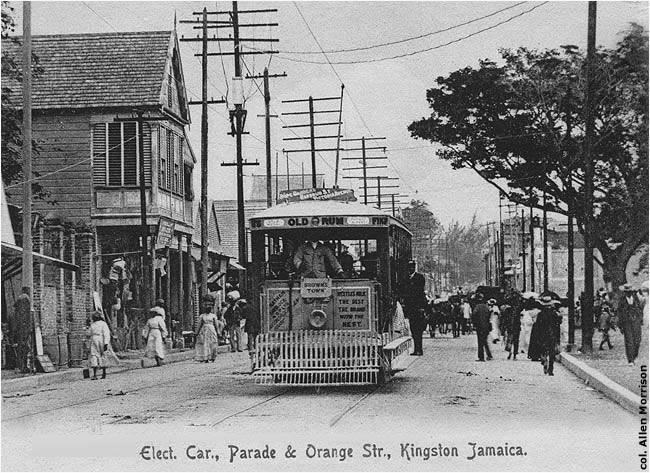
The capital city, Kingston, is the island’s largest city and located on the southeastern shores of the island. This city is the largest city south of the United State where the majority of its people speak English. The harbor this city is situated on, Kingston Harbour, is the seventh-largest harbor in the world. This large harbor is probably why it was chosen as the perfect location for a capital city. The city is home to about 940,000 people and is the center of government, business, education, sports and has a strong arts and culinary side to their culture. The British set up many botanical gardens across the island, and this city hosts several that are still standing.


One of the largest economic drivers in Jamaica is none other than tourism. Mining is also important with bauxite and alumina mining forming a significant portion of this industry. Along with mining, various kinds of manufacturing also employ many people in businesses such as glass production, construction, beverage processing, printing, publishing, and software and data (and other technical) processing. However, Jamaica is also a haven for music production, insurance underwriting and financial services, and educational services in the Caribbean. The island is also widely known for its agricultural products such as sugar, coffee, rum, yams, and bananas.


Because of the longstanding presence of the British on this island, Christianity remains a majority religion on this island, and this includes many different denominations, mostly Protestant. And the interesting thing is that Jamaica has more “churches” per square mile than any other country in the world. (Chicago’s south side is probably number two—if it were its own country, that is.) Jamaica is also mostly identified with the Rastafari movement, which got its start in Ethiopia and is known for its practices of dredlocks and smoking marajuana. But because there were many Indian and Chinese workers brought here in the past, there are also many followers of Hinduism, Buddhism, and Bahá’í as well as other local indigenous belief systems. 


English is the official language of Jamaica. However, most locals speak a type of Creole called Jamaican Patois. This patois uses many words from English but has also incorporated many words from African languages and Taíno (and other indigenous) languages. Many Jamaican Patois words have spread across the word with the global popularity of reggae music. 


But for this small-ish island in the Caribbean, Jamaica has a lot to brag about. Jamaica was the first country to build a railroad in the Western Hemisphere. Not only did they build it, they built it 18 years before the US did. And this country first established a postal code in 1688! Jamaica was also the first country to commercially produce rum. (And I sincerely thank you for it.) Jamaica is known for its sports stars and has won numerous medals in world competitions. Among its top performs include Sherone Simpson, Asafa Powell, and Usain Bolt. The Jamaican bobsleigh team made history and was commemorated in the 1993 movie Cool Runnings. Of all the national flags in the world, Jamaica’s flag is the only one that doesn’t share any colors with the US flag. (Yes, I had to look at some flags just to make sure.) But one thing that remains true is this: this country has a lot to offer, like good food and good music for starters.

Up next: art and literature

Sunday, June 22, 2014

ETHIOPIA: THE LAND AND THE PEOPLE


Growing up in the 1980s, Ethiopia was synonymous to extreme drought, famine, and poverty.  I can remember seeing this on the news as an elementary student and was really stunned by it. Nearly eight million people were affected by this, and some estimates say around one million people didn’t survive. 


The ancient Greek name for the area, Aithiops, appeared several times in Iliad and Odyssey, as well as the Bible and the Koran (but also mentioned by its other names).  It’s thought that the word is derived from the words for “I burn” and “face.” This place is also known by many of its ancient names: Kush, Nubia, Aksum (also spelled as Axom), Habesha, and Abyssinia.  (There’s an Ethiopian restaurant in Indianapolis called Abyssinia. I haven’t been there yet, but I definitely want to go after I’m done to see how close to –or how far from– authentic that I got.)


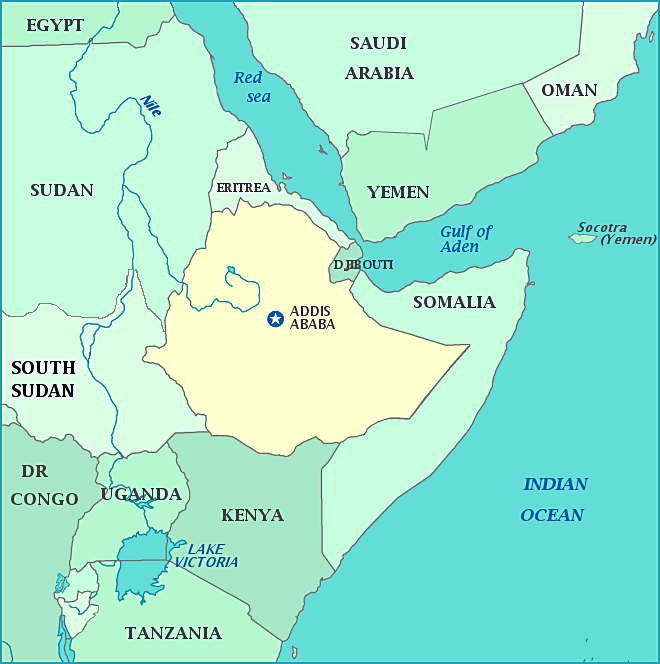
Ethiopia lies in the Horn of Africa, surrounded by Sudan, South Sudan, Kenya, Somalia, Djibouti, and Eritrea.  The land is highly diverse.  The Great Rift Valley runs through Ethiopia (and is visible from space), surrounded by lowlands, steppes, semi-desert areas, the highlands and mountains, as well as tropical forests.  Lake Tana is the source for the Blue Nile, which runs north and empties into the Mediterranean Sea.  Several species of animals are listed on the endangered and vulnerable animals list, such as the Ethiopian wolf, the African wild dog, African elephant, cheetah, and the spotted hyena.

Ethiopian wolf
Ethiopia is the cradle of human civilization.  The earliest known modern human remains have been found in the southwestern part of the country, now called the Omo remains (most famously, the remains named Lucy). Originally it was part of the D’mt lands mentioned in Ancient Egyptian times.  Sometime during the first century AD, the Aksumite Empire emerged in Ethiopia and Eritrea; some historians consider this one of the greatest empires of the world. Ethiopia was second only to Armenia in adapting Christianity as its official religion. 


Ethiopia went through a period between 1755-1855 called the “Age of Princes,” which isolated them from other countries. The emperors were merely puppets for the war lords. They later overtook the ruling party and changed the established language of Amharic to Afaan Oromo. It didn’t end until the British got involved and established Emperor Tewodros II in power; Ethiopia began to sit at the world table once again. Under the reign of Menelik II, Ethiopia made great strides to modernize the country. In fact, he was the first African to drive a car. He entered an agreement with Italy to recognize them as a sovereignty if they would be able to control an area in the north (now Eritrea). However, Italy expanded its border areas just prior to signing the papers, which led to fighting where the Ethiopians defeated the Italians. Haile Selassie I became emperor in 1930. They quickly entered the Italo-Abyssinian War, and although they defeated them again, they were still placed under Italian occupation. Although the Italians briefly occupied the country, Ethiopia remains one of two countries in the world who were never invaded and conquered (the other is Russia). The British stepped in again and recognized their full sovereignty.  Slavery was abolished in 1942, and they annexed Eritrea twenty years later.  From 1974-1991, Ethiopia quickly joined the Communist bloc of countries.  In May 1998 (the month and year I graduated from high school), they entered into a two-year-long war with Eritrea, severely crippling their economy.  And just in the past couple of years, Ethiopia has once again been hit with another extremely detrimental drought.

Haile Selassie I -- recipient of TIME magazine's "Person of the Year" 1935. 
The capital city of Addis Ababa (meaning “new flower” in Amharic) is the largest city in Ethiopia and is actually a chartered city (a city and a state).  The African Union is also based here.  Because of the city’s proximity to the equator, the temperatures remain fairly consistent. However, the strange thing is that the highest recorded temperature was 90ºF in 1996. (I think we hit that mark a couple days last week.) It’s also Africa’s highest city; most people are surprises at how cool and cold Addis Ababa can be.  The diverse, multilingual city has roughly 2.7 million people. Home to several universities and private colleges, it is also the site for the main government offices, several museums, a large public market, sports stadiums and racetracks.  Addis Ababa has the honor of housing the world’s largest pre-fab building, Shengo Hall (used for conventions and large meetings). There are several options for public transportation: taxis, buses, air, and train for getting to and around the city.


Even though years of drought has negatively impacted Ethiopia’s agricultural industry, their economy is still listed as one of the fastest-growing economies in the world. Ethiopia produces more coffee than any other country in Africa.  It’s believed that the coffee plant also originated in Ethiopia (the story goes that a shepherd watched his goats eat a coffee plant and became increasingly restless).  Starbucks is a huge partner with Ethiopian coffee producers. They’re also one of the largest producers of livestock, also exporting khat (a plant legal in the Horn of Africa, but considered a controlled substance in the US, Canada, and other countries), gold, leather, sesame seeds and is gearing up be a leading exporter of flowers and plants.


There may be nearly ninety languages spoken in Ethiopia.  The mostly widely spoken one is Oromo, followed by Amharic.  Because there are so many ethnic languages spoken across the country, the 1995 Constitution of Ethiopia established Amharic as the official working language of federal government and was the language of primary school education.  Many of the out-lying areas utilize other regional languages in their schools and businesses.  The Ge’ez script (sometimes called Ethiopic) is used in writing, the only country to have its own unique script (besides Eritrea who also uses it as well, but their cultures have similar ties). English is the most common foreign language taught in schools.


Ethiopia still has many Christian followers to this day, and it also has the oldest Muslim community in Africa as well.  And actually, there was a sizable Jewish population in Ethiopia as well up until the 1980s when most moved to Israel.  (It’s thought by some that these might be part of the Lost Tribes of Israel.)  The Ethiopian Orthodox Tewahedo Church is by far the largest Christian denomination.   While Rastafarianism got its start in Jamaica during the 1930s, Ethiopia remains its spiritual homeland. They basically worship Haile Selassie I as Jah (short for Jahweh). 


Ethiopia is famous for producing some of the world’s greatest marathon runners. It might have something to do with the fact that 70% of Africa’s mountains touch the lands here. Because of their proximity to the equator, there is very little change in when the sun rises and sets throughout the year.  In Ethiopia, they traditionally measure time by when the sun rises. So, instead of it being 7:00, they’ll call it 1:00.  I think that’s more confusing than when I had to convert military time into normal people’s time at Japanese train stations.  Both of those fall into the category of “Please Don’t Make Me Do Math.”  And because of their calendar differences, they are the only country on a 13-month calendar. (Again, with the math.) But luckily, what’s not super complicated are the recipes I found for next week that have me so hungry already – with the notable exception of trying to find teff flour.  It’ll be an adventure for sure. 

Up next: holidays and celebrations