Showing posts with label Theravada Buddhism. Show all posts

Sunday, November 27, 2016

MYANMAR: THE LAND AND THE PEOPLE


After we moved to the neighborhood we live in now, I noticed the population here is fairly divided between working class whites, blacks, and Hispanics. However, there is one group I’ve noticed growing over the past 5-6 years: Burmese. My kids’ doctor’s office has signs in English, Spanish, and Burmese. There are car dealerships whose signs are written in Burmese. There is at least one restaurant I’ve come across serving Burmese food – where I first tasted Burmese tea! According to the refugee report by the Indiana State Department of Health, Burmese refugees have made up nearly 80% of the refugees coming into Indiana since 2007 with the majority settling in Indianapolis and Fort Wayne.


Ok, so let’s talk about the name. Because what’s in a name anyway? I grew up calling this country Burma. It was pretty easy to pronounce. The name Burma was derived from the term “Bamar,” which was the term for the casual form of their country name, named after one of the larger ethnic groups. Officially, they called their country Myanmar, which was the formal form. There are several ways I’ve seen it pronounced, but I think it’s pronounced “MEE-an-mar” by the BBC and “MYAN-mah” by the locals (both of which are different than how I’ve always pronounced it as “MY-an-mar”). On the surface, it doesn’t seem that big of a deal to change their name, but because it was forced by a military government at the time, there are some ill feelings by some, and there are some who still refuse to recognize it.


Myanmar is located in Southeast Asia. It shares a small border with Bangladesh to the west, a larger one with India to the west, China to the northeast, Laos to the east, and Thailand to the southeast. It also has a significant shoreline along the Andaman Sea and the Bay of Bengal. Myanmar is subject to annual monsoons and experiences rainy and dry seasons. Plus, there are regions of the country that receive more rain than others. 
Burmese Independence
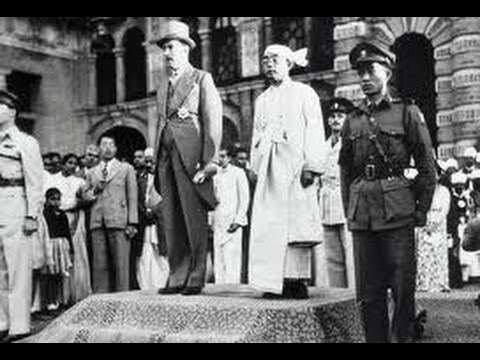
There is evidence showing that people moved into this area roughly 750,000 years ago. There were also many developments in their communities throughout the Bronze and Iron Ages, adapting technologies and cultural habits from nearby India and Thailand along the way. City-states began popping up, and quite a few changes took place between 1000-1500. Certain city-states grew, like Pagan (yes, it’s actually the name of the city), and eventually grew into the Pagan Kingdom (which sounds like an evangelical’s worst nightmare). As the Khmer Empire grew, these two would be the major empires in this area of the world until the Pagans fell to the Mongols. Buddhism was introduced and spread across the area. There were some efforts aimed at unification during the 1600s, mainly orchestrated by the Taungoo Empire. However, the 1700s and 1800s brought a series of wars between Myanmar and its neighbors (along with fighting the British and French to add variety). Concerned about the formation of French Indochina, the British took control of Myanmar. As the British East India Company spread its holdings across Myanmar, Indians began pouring into the country as well. There was a general disrespect for Burmese culture, which led to resentment and conflicts. Buddhist monks became the face of the resistance movement. Just before WWII, they began looking at independence, but then Japan occupied the country during the war. They did gain their independence in 1948 and renamed themselves the Union of Burma. Statesman U Thant served as the third Secretary General to the UN for ten years. However, in 1962, Myanmar was taken over by a military coup d’état, turning it into a Soviet-influenced form of socialism. For almost the next 30 years, there would be numerous demonstrations and protests throughout the country, some ending in violence. In 1990, Aung San Suu Kyi won 80% of the seats, but the military refused to budge like a toddler who doesn’t want to go to bed. She was placed under house arrest for 15 of the last 21 years (she was released in 2010), gaining notoriety as a political prisoner. Her party won the 2015 elections, and she’s won numerous peace and freedom awards.
 
Uppatasanti Pagoda, Naypyidaw
The capital city is Naypyidaw, sometimes spelled Naypyitaw. Officially, it’s written as Nay Pyi Taw. It literally means “seat of the king” or more broadly, “royal capital.” As a capital city, it’s fairly young; the capital was moved to Naypyidaw in 2005 perhaps because it’s more centrally located (even though it may be just a guess). Previously, the capital was in Yangon, formerly known as Rangoon (this name change happened when the country name changed). Today, the city has a number of shopping centers, museums, entertainment options, parks and gardens as well as schools and universities, and public transportation. 

Jade from Myanmar
Myanmar’s lack of up-to-date infrastructure, lack of educated workers, and inflation contribute to it being one of the poorest countries in Southeast Asia. Energy shortages are common, and the country relies on help from its neighbors and foreign investment. Rice cultivation is their top agricultural product, but they’re also among the largest producers of opium. Many gems and precious stones, like jade, rubies, pearls, and sapphires, come from Myanmar. However, the working conditions are so appalling that some companies won’t accept gems from Myanmar (it’s nice to see they might have an inkling of human feelings, but not quite enough to hold them accountable or help in other ways). Tourism has grown some in recent years, but it’s pretty limited to just the big cities. Good luck getting around the country with sub-par infrastructure and police/military check point inspections. 


Although there are several religions present in Myanmar, Buddhism is by far the largest, with nearly 88% of the population. And within Buddhism, Theravada Buddhism is the most common. A smaller following of Christians and Muslims are also found in Myanmar. Other religions, like Hinduism and Judaism and others, are represented in the larger cities. 
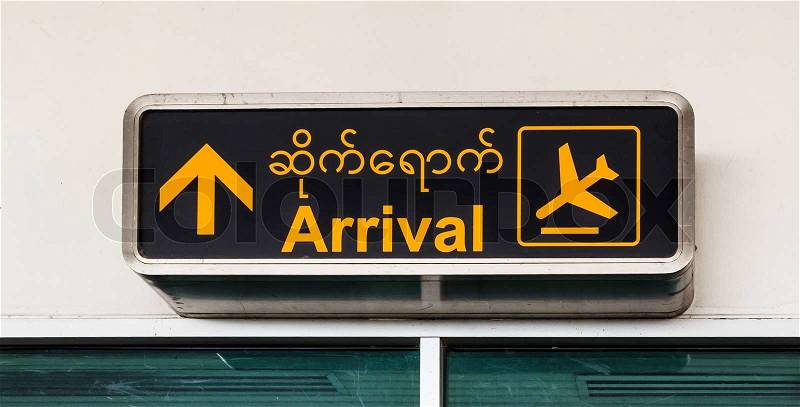

Myanmar is a multi-ethnic country, and because of that, there are multiple languages spoken here. It’s estimated that nearly a hundred languages are spoken here, although there may be many that are only spoken by a dwindling number of people, if not bordering on extinction. The official language is Burmese, a language that is related to Chinese and Tibetan. Other minority languages include Shan, Karen, Kachin, Chin, and Mon-Khmer. English is the most common second language. 
World's Largest Book
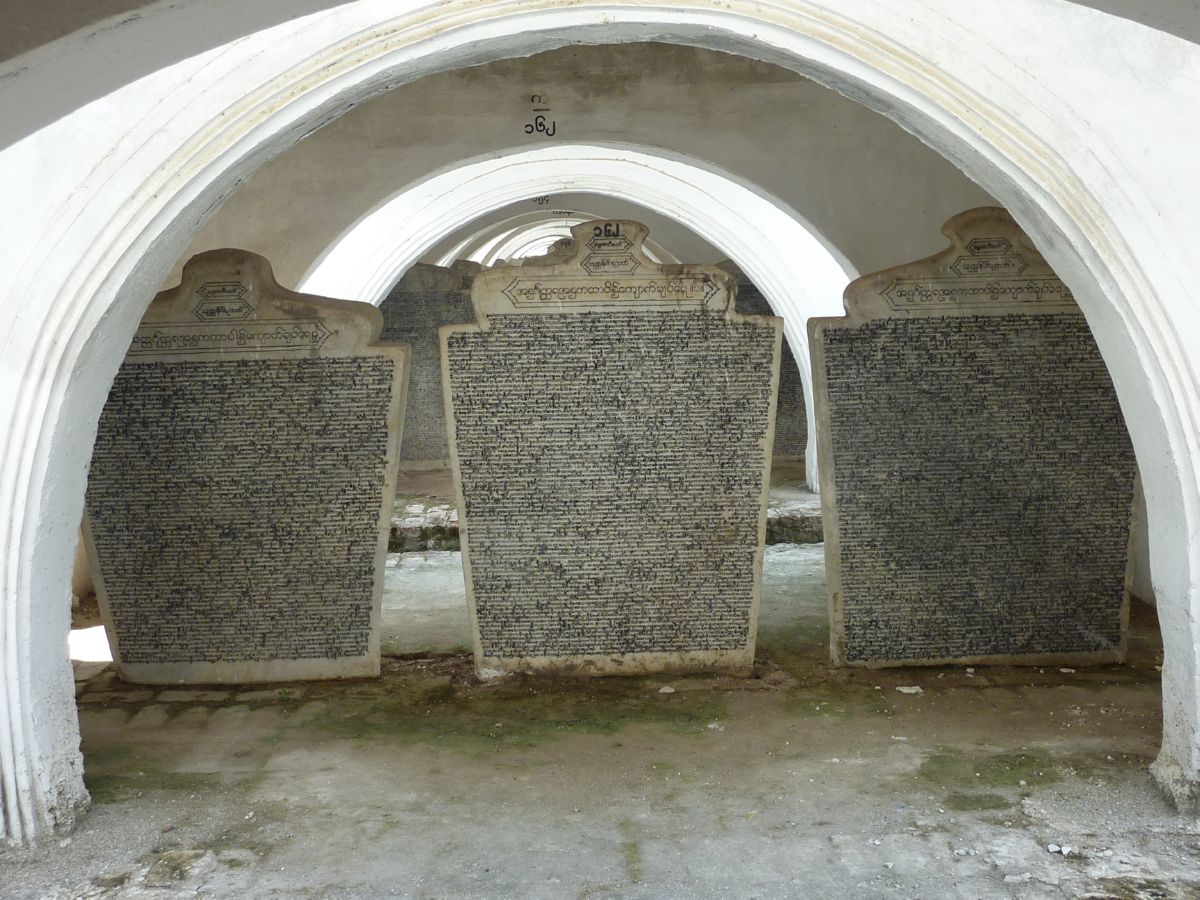
If you’ve ever traveled outside of the United States, one thing you’ll notice is that everything is measured in the metric system. Most of the world uses this system except for three countries: the US, Liberia, and Myanmar. So, you know, we’re not the only ones holding out on metrics (but, why???). And no matter which system you measure it, Myanmar is home to the world’s largest book: Located in Kuthodaw Pagoda in Mandalay, it has 1460 pages and 730 leaves where each page is about 3 ½ ft wide by 5 ft tall by 5 inches thick! You know, just some light reading.

Up next: art and literature

Sunday, October 25, 2015

LAOS: THE LAND AND THE PEOPLE


Years ago, I worked at a Japanese camp in northern Minnesota (part of the Concordia Language Villages). One summer, there was a girl who worked with me—I forget her name—who told me that she was Hmong. I had no idea what that meant. She explained that her family originally came from Laos and came to Minnesota to live. While attending high school there, she took Japanese classes. (Because of refugee movements during the middle of the 20th century, Minnesota and Wisconsin have the largest concentration of Hmong communities in the US, outside of California.) And of course, she taught me all the bad words in Hmong that I’ve completely forgotten by now. 


The country’s name refers to the Lao kingdoms. There were three kingdoms that were unified by the French. The French added the final “s” to the name based on French spelling rules. Many English speakers pronounce the “s” which is not pronounced in French. So, technically the country is pronounced as “Lao.” 


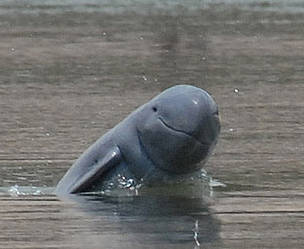
Laos is a landlocked country in Southeast Asia. It’s surrounded by China and Myanmar to the north; Vietnam to the east; Cambodia to the south; and Thailand to the west. The Mekong River, an important river system in this region, makes up much of the border between Laos and Thailand. Much of the land is forested and mountainous with some plains here and there. The weather is tropical throughout the year and experiences a definite monsoon season. Laos is home to hundreds of species of tropical plants, birds, animals, insects, and marine life—including the rare Irrawaddy river dolphin. They’re known for their characteristic small heads that look like they’re smiling. 

French Indochina
Humans have lived in this area for tens of thousands of years: a human skull was found in northern Laos that dated back 46,000 years. Archaeologists have found iron tools and other objects indicating there was a complex society. There were actually many kingdoms established in this area. The early prince Fa Ngum established Theravada Buddhism as the official religion. He was also the founder of the Lan Xang kingdom. Laos suffered many conflicts with Thailand, Cambodia, and Vietnam up until the 1800s. During the late 1800s, the French took control of this area and made it a French Protectorate. During WWII several groups occupied Laos (known as French Indochina at that time). After the war, the country briefly enjoyed a period of independence. Briefly. Like for about a month. Then Japanese forces moved in and occupied it. But by the next year, the French took back Laos as a Protectorate. The Laos rebelled several times during the French occupancy. During the Vietnam War, Laos was the recipient of many bomb attacks by US forces. In fact, it is often considered “the most heavily bombed country on earth.” I saw a news program several years ago where journalists were walking through Laos and could still find unexploded ordinances lying around in fields. The highest point in the country, called Phou Bia (looks like the word “phobia,” which may be pretty telling of the area), can’t even be visited by tourists because of the vast number of unexploded bombs there. The Pathet Lao was a communist group that is the Lao version of the Khmer Rouge or the Viet Cong. In 1975, they took over the government and turned the country into one of the few remaining communist countries in the world. Numerous genocide and human rights violations, especially to the Hmong, have been documented after the take-over. And because of this, hundreds of thousands of Hmong refugees have fled the country to the China, Vietnam, US, Thailand, France, and a number of other countries. 


The capital city of Vientiane is located in the northern part of Laos along the Thai border. The name comes from the Pali language, and if you’ve studied any Buddhism like I have, you’ll know that Pali is a very important in ancient Buddhist texts. The name Vientiane literally means “city of sandalwood.” I happen to really like the smell of sandalwood (I have a vanilla-sandalwood candle in my living room). However, others argue it means “city of the moon.” (I’m sure the moon doesn’t smell as great.) Regardless, this is the largest city in the country and is the center for government, finance, and commerce. Even though the city has about 783,000 people (a little smaller than the size of Indianapolis, IN). The spelling of the city is also based off of the French spelling: it was originally called Viangchan. 


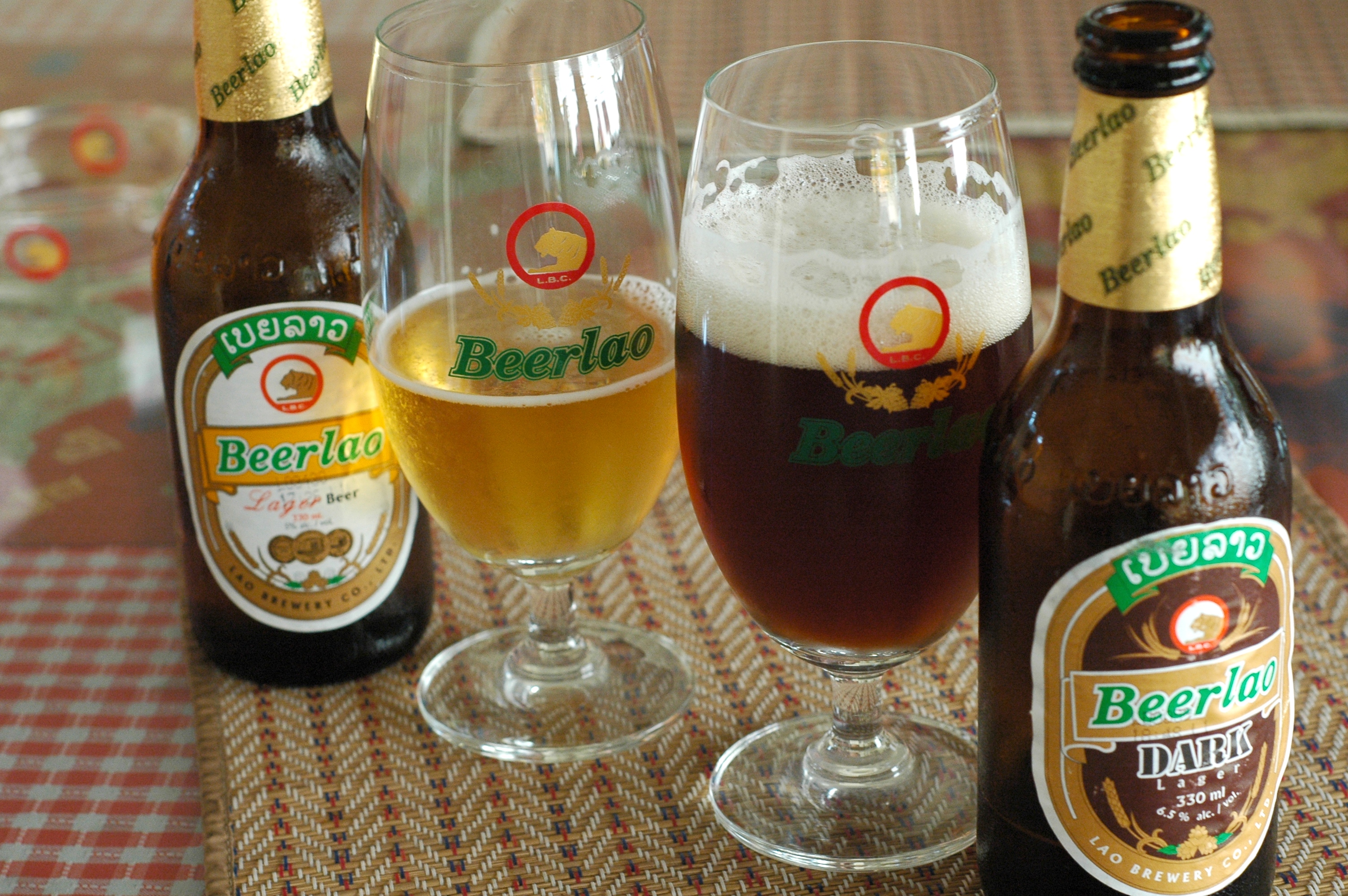
The Laotian economy heavily depends on trade with its neighbors, and although the country is still a communist country, the US has lifted some of its trade embargoes against it. About half of their economy is based on subsistence farming. Roughly 80% of the people work in this field with the majority of the crops being rice. Investment is also an important part of their economy as well. Luckily, this country is also rich in mineral resources, and mining has become an industry that many foreign countries invest in. Laos has two main exports: hydroelectric energy and their own beer brand called Beerlao (which is supposed to be pretty tasty). They also have a large number of exports in coffee as well. Tourism continues to grow in the country, especially from France, even though much of the country is lacking in basic infrastructure. The interesting thing about Laos is that many businesses not only accept their own currency, but many also accept payment in Thai bahts and US dollars as well. 


About 2/3 of Laotians are Buddhist, and more specifically Theravada Buddhist. Although Buddhism has been established here for many centuries, there are also many Laotians who practice pantheism/polytheism or animism. However, there are a small number of Christians, Muslims, Hindus, and other religions found here and there. 


The official language of the country is Lao and is closely related to Thai. Because of their history, French is still used for certain government and business functions. In fact, French is still taught in schools in Laos. Many students also go on to study English because of its status as an international language. 


Laos has a sense of mystery about it, and there are many things about this country that seems extraordinary. England has Stonehenge, but Laos has the Plain of Jars. For an unknown reason and created by unknown peoples, hundreds of stone urns—some large enough to hold a person—are spread in groups of five across a region of northern Laos. And here’s a travel tip: apparently fees are only collected at attractions if you enter through the main entrance. If you enter through side entrances, it’s free. (Well, uh, some people kind of know that’s true for just about any place, if you have access to the building codes, which are considered public records…). And unlike the US and most other countries, the highest officials in Laos only get paid $10/month. Even my Netflix bill is higher than that. But I have a feeling that the food is going to be extraordinary and have me smiling like an Irrawaddy dolphin. 


Up next: art and literature