When I was in 8th
grade and going through high school orientation, we were told to start thinking
about what foreign language we wanted to study. Our options were Spanish,
Latin, and Japanese. I knew I didn’t want to study Latin because I wanted to
study a language I could use while traveling someday, and let’s face it: while
studying a dead may be beneficial to the sciences, you can’t travel anywhere
with it. Except maybe science conventions. But I think scientists speak another
language altogether. And I knew that Spanish was super popular, and the classes
would be full. (I did go back and learn some Spanish on my own.) So, that left
me with Japanese. Plus, all of my friends were taking Japanese, and that was
probably the biggest reason I took the class. But to be honest, I already had
an interest in Asia and their writing systems and culture, so this also seemed
to be a logical choice for me. I took four years of Japanese in high school,
then won a scholarship to study abroad in Japan during the summer of 1998 where
I was placed directly in Tokyo. I continued to study throughout college and
joined the Japanese Student Association and other Japan-America organizations.
I even worked for three summers at Concordia Language Villages at the Japanese
camp, Mori no Ike. I have to admit, I haven’t studied quite as much during the
last five or ten years or so, giving way to studying Spanish and Portuguese.
But Japan has always had a special place in my heart, and I’m very happy to finally
land on Japan for my blog.

The Japanese word
for Japan is Nihon or Nippon, often translated as “the origin
of the sun.” The etymology of the
term Japan comes from a
mispronunciation or other foreign term for the islands of Japan. However, which
language it’s stemmed from seems to be somewhat disputed. It mostly likely was
introduced into English from the Portuguese traders who picked up the
Malay-origin Chinese word for the island nation.

Japan is an archipelago
of over 6800 islands in East Asia. On the eastern side is the Pacific Ocean and
to the western side is the Sea of Japan, which separates Japan from North Korea
and South Korea as well as Russia.
It’s also separated from mainland China by the East China Sea. The
Ryukyu Islands are also part of Japan, which includes the island of Okinawa
(housing one of the US Air Force Bases that are still in Japan left over from
WWII) and extends all the way to Taiwan. The four main islands from north to
south are Hokkaido, Honshu, Shikoku, and Fukuoka. Because Japan is spread out quite
a ways from north to south, it has a very drastic change in climate across the
country. The northernmost island of Hokkaido is very cold in the winter and has
a famous snow sculpting celebration each February. The southernmost islands of the
Okinawa prefecture enjoy a warm tropical climate. Its location along the
Pacific Ring of Fire makes it prone to earthquakes (as many as 1500 per year—to
be fair, I was in six earthquakes while I was there for six weeks, and only one
or two were barely felt) and tsunamis, a Japanese word itself. It’s one of the
most densely populated countries in the world: it’s like taking half of the
people in the US and forcing them to all live in California.

The original people
in Japan were the Ainu who mostly lived on the northernmost island of Hokkaido
as well as some of the Russian islands north of Hokkaido. (I did a research paper on the Ainu
when I was taking Japanese in college. They were treated much like the American
Indians were by the Europeans who arrived later.) The early people in Japan
were mainly hunter-gatherers, and they were highly influenced by the Chinese
language, literature, and culture. Likewise, Buddhism began to spread and
became widely popular during the 11th century. Starting in the
1200s, Japanese society entered into a feudal era. This is this time period
that inspired many of our samurai films and stories. The country was pretty
much shut off to the rest of the world. However, Portuguese Jesuit priests were
allowed to enter during the 1600s (if you’ve ever read James Clavell’s Shogun, you’ll be familiar with this
period). This was a crucial visit, which allowed Japan to obtain many items
(including weapons) and cultural information from the West. This period of
closure to the outside lasted until US Navy Commodore Matthew Perry landed in
Japan in 1854, and Japan subsequently opened itself up to the world again.
Japan entered what’s known as the Meiji Restoration where they sent out their
best and finest students to learn everything they could from the rest of the
world to bring back to Japan in order to help modernize the country. Around the
turn of the century, Japan entered wars with China and Russia to gain land. It
then entered China again in 1937 and also invaded French Indochina and Pearl
Harbor. The US responded to the attack at Pearl Harbor by dropping the
controversial atom bombs on Hiroshima and Nagasaki (making it the only country
in the world to be attacked this way). Since WWII, Japan has increased its
economy to have one of the largest economies in the world and subsequently, a
high quality life.

Not only is Tokyo
the capital, it’s the largest city in the country, coming in with over 13.1
million people in the metropolitan area. I have a certain affinity for this
city because this is where I did my homestay (in Ikegami, Ota-ku). Its former
name is Edo, which is often mentioned in literature and in some place names,
but was renamed Tokyo during the Meiji Restoration. Tokyo took much damage from
bombings during WWII and much of the city was rebuilt after the war. Today, it
is a major city for government, education, finance, culture, sports, and the
arts not only in Japan but throughout Asia. The city is divided into 23 wards,
each one with its own special bragging points. The major shopping and tourist
areas are in Shinjuku and Shibuya as well as the Ginza and Harajuku
neighborhoods. Temples and shrines dot the cityscape along with museums,
libraries, restaurants, Tokyo Dome baseball stadium, Tokyo Tower, Tokyo
Imperial Palace, Tokyo Metropolitan Government Building, the Rainbow Bridge and
many other places to see.

Since the Meiji
period started in 1868, Japan started expanding its economy and joining the
world market. There were many industries getting their start, and there are many
top companies in Japan today that were started during this period. The period
after WWII saw much growth up until the 1990s when the bubble finally popped,
and the slowdown generally lasted until the 2000s. Japan is a leading producer
of cars—names like Daihatsu, Honda, Isuzu, Mazda, Mitsubishi (what I drive),
Nissan, Subaru, Suzuki, Toyota, and Yamaha are common names around the world.
They’re also known for their electronics companies such as Sony, Panasonic,
Nintendo, Casio, Hitachi, Seiko, Sharp, Toshiba, Minolta, Fuji, Fujitsu, JVC,
Kenwood, Konica, Kyocera, Uniden, TDK, Sanyo, Pioneer, and Nikon. They also
have substantial robotics, energy, biomedical technologies, chemical, and space
programs in Japan. The oldest company in the world is a construction company
that was founded in 578 and was continuously in business until it was absorbed
by another company in 2006.

Religious freedom
is granted throughout the country. Although most Japanese people do not
actually consider themselves belonging to any religion, most people visit a
Buddhist or Shinto shrines during major festivals and holidays and will lay
claim to one of these religions when asked. Other Asian religions are also
found in Japan like Hinduism, Sikhism, Islam as well as Judaism and to a much
lesser degree, Christianity.

By far the most
widely spoken language in Japan is Japanese. It’s the language of government
and education and general communication. Japanese uses four writing systems:
hiragana (for purely Japanese words), katakana (for foreign or borrowed words),
kanji (the more complicated symbols borrowed from Chinese), and romaji (Roman
letters as well as Roman Arabic numerals). It also utilizes a set of
honorifics, meaning they have different ways of speaking to those higher than
you in society and those lower than you. The Ainu language in northern Japan is
on the verge of becoming extinct. However, awareness of the Ryukyuan languages
(those of the Ryukyu Islands and Okinawan dialects) are also increasing.
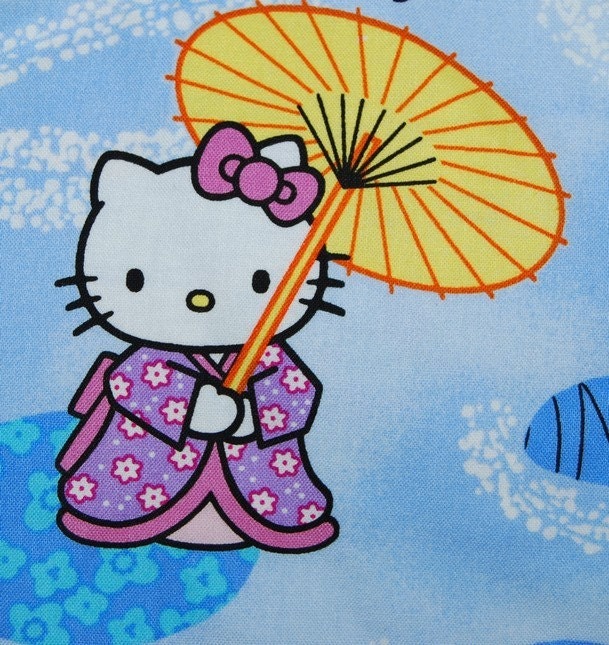
Japan’s popularity
and cultural products have reached all corners of the earth from Hello Kitty to
Pocky to anime to video games to sumo wrestling and martial arts to cat cafes
to karaoke to beer vending machines to bonsai trees to sushi, green tea, fugu,
and Kobe beef. I’m so excited to write about a country I love and would love to
take my children to. My kids are already telling me to find a job there (I just
don’t think any company offering an editing job would pay to move my whole
family across the world, or to any country for that matter).
Up next: art and
literature


