Showing posts with label hagiography. Show all posts

Thursday, September 25, 2014

GEORGIA: ART AND LITERATURE


Since the earliest civilizations, Georgians have been honing their artistic talents. Every group who came in and controlled this area left a piece of their own culture when they were here which stayed when they left. Because of its location, early influences on Georgian art include that of the Mesopotamians (now Iraq, Kuwait, and parts of Syria, Turkey, and Iran), Anatolians (now mostly Turkey, but parts of Georgia, Azerbaijan, Armenia, and Mesopotamian lands), Greeks, Persians (now mostly in Iran), Romans, and Byzantines (Bulgaria, Greece, Russia, Macedonia, Montenegro, Serbia, Romania, Ukraine, Moldova, and Belarus).


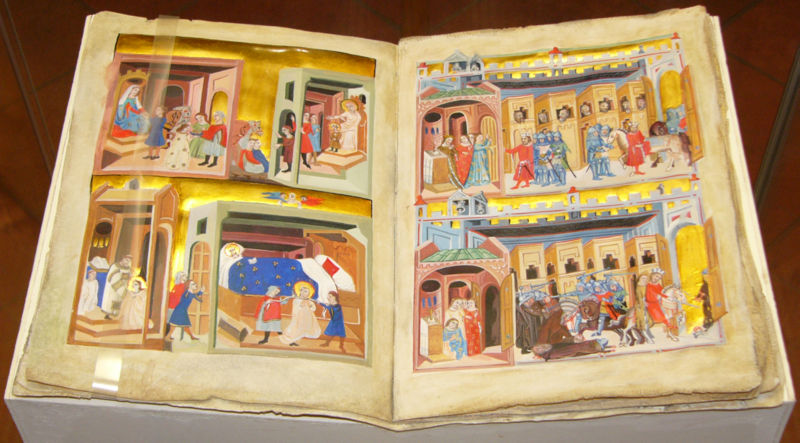
Early art included paintings and mosaic arts of religious figures and scenes. Calligraphy and religious iconography were especially coveted skills in the church. Religious-based sculptures of prominent saints and Biblical characters fill not only churches but some more well-off people’s homes as well.  Goldsmith work was also very popular, especially in both jewelry and in small sculptures and reliquaries.


Towards the late 19th century and into the 20th century, Georgian art began to be influenced from other areas of Europe, namely the traditions coming out of the art capitals of Europe: France, Italy, Spain, and elsewhere. Russian art also had a huge impact on Georgian art, especially while under Russian rule. 

Some of the major Georgian artists include Gia Bugadze (muralist, painter, Rector of the Tbilisi State Academy of Arts from 2003-2012), Gigo Gabashvili (painter, first major painter to paint all different kinds of subjects in both oils and watercolor), Lado Gudiashvili (painter, used a lot of mythological influences), David Kakabadze (avant-garde painter, graphic artist, scenic designer), Shalva Kikodze (expressionist painter, graphic artist, theatre set designer), Niko Pirosmani (known simply as Nikala, primitivist painter, portrait is on the 1-gel banknote), and Sergo Tbileli (painter, sculpter, and designer).

by Niko Pirosmani
The earliest literature from the pre-Christian days was in the form of epic poems. Historical accounts, hymns, and stories about the royalty were also commonly written during the early periods of Georgian literature. After Christianity was introduced to the Georgian people, hagiographic and other religious writing dominated the canon of literature in the early centuries of this era.

from a Georgian-Italian dictionary
Secular epic poetry and odes were still probably the most commonly written works during the Middle Ages. Contributing to the world of prose with Book of Wisdom and Lies, Prince Sulkhan-Saba Orbeiani also created the first Georgian language dictionary during the 17th century. The Georgian language borrows words from many other languages, but its grammar is unique in and of its own. (I wish someone would explain Georgian names to me, though. It seems that many last names either end in “–dze” or “–vili.” Does this have a particular meaning?)  Soon after dictionaries of Georgian to other languages began to be produced as well. 

Nineteenth- and twentieth-century writing shows many influential characteristics from styles that are commonly used in Russian literature.  During the Soviet period, Georgian writers and other intellectuals suffered greatly in Joseph Stalin’s “Great Purge.” Eclectic poetry and prose seemed to dominate Georgian literature during the post-Soviet years.  Donald Rayfield, a London professor of Georgian and Russian, wrote a book called The Literature of Georgia: A History, chronicling the influences of Georgian literature throughout the centuries. It’s the first of its kind written in the English language and a great reference in Georgian literature.

K Gamsakhurdia -- not a happy guy.
Konstantine Gamsakhurdia is considered one of the most influential Georgian writers of the 20th century. Although he was highly opposed to the Russian politics of the day, he somehow managed to escape the fate of most other writers and intellectuals. He is most famous for his novel The Right Hand of the Grand Master and his post-WWII works The Flowering of the Vine and David the Builder.
M Javakhishvili
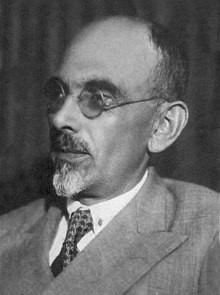
Mikheil Javakhishvili often shares the podium next to Gamsakhurdia as the other most influential writer from Georgia. Javakhishvili tended to incorporate folk language into his writing and his topics ranged from the differences between country and city life, rebellion, violence, sexual passions, and other taboo subject matter. This didn’t put him in the Russian’s good graces. He’s best known for his novels Jaqo’s Dispossessed and Arsena Marabdeli. Unlike Gamsakhurdia, Javakhishvili was not able to escape the grip of Stalin’s Great Purge; he was executed in 1937.

Up next: music and dance

Thursday, October 24, 2013

CZECH REPUBLIC: ART AND LITERATURE


Czechs are renowned for their glass-making art and their crystal.  I’ve been a huge fan of art glass ever since I saw a Dale Chihuly exhibit when I was in college (although he studied more of an Italian and French style art glass, I think.).  Art glass, made in the original way, is heated and then mouth-blown using a special tool and then decorated by hand. While the earliest glass-blowing techniques were developed in Egypt and spread throughout the Mediterranean, the Syrians invented the glass-blowing tube that helped to revolutionize this art.  Part of the reason why art glass is so popular in central Europe is because of the natural raw materials, especially in the form of quartz veins along the Lusatian Mountains. Small pieces of this type of glass have been found in ruins dating back to medieval days. During the 17th century, glass artists began developing a type of extremely clear, high-quality glass called crystal, which is shaped and cut by using special rotating copper wheels. With the creation and production of crystal chandeliers during the 18th century, business boomed, but then lagged behind when glassmakers didn’t quite adhere to growing trends elsewhere. Through different trends and styles of engraving, inlays, and painting, Czech art glass is still loved and a popular exhibit in art museums all over the worlds.


One of the most well-known painters is Alphonse Mucha. His artistic styles gained international notability at the 1900 Exposition Universelle, and his style soon became known as Art Nouveau. A lot of his art can be seen in postage stamps, banknotes, and ad posters for various shops and theatres and such.  One of his legacies is a set of large paintings that depict Czech and Slavic history known as The Slav Epic. It was a series of 20 paintings that he bestowed upon the city of Prague as a gift to the city he loved.  When the Germans entered into Czechoslovakia, he was among the first to be rounded up and interrogated. During this long interrogation, he contracted pneumonia, and although he was released, it took a toll on his lungs.  He eventually died of an infection in his lung during the summer of 1939.    


For the most part, Czech literature is written in Czech. For this reason, Prague native Franz Kafka (who is fluent in Czech) is not included in the Czech canon of literature since he wrote in the German language.  The earliest pieces of Czech literature were mostly liturgical in nature, and mostly written in Old Church Slavonic using the Glagolitic alphabet (that Saints Cyril and Methodius developed).  Of course Latin was also widely used in religious matters as well, later changing over to Czech or German after the Middle Ages. During the Baroque period, Catholic poetry and prose were pretty much the best-sellers out there. Hagiographies were very popular during these times as well. (I had to look up hagiography: it’s a biography written about a saint and the miracles they did.)


The 18th and 19th centuries were changing times in Czech literature. Classicism became the most noted genre, especially in the German and Austrian style, and the sciences also began to be explored. Historical accounts were being documented, and grammars were being nailed down and standardized. Several writers were also making efforts in another field: drama (which generally mimicked what the Germans were already doing).  While they were part of the Austro-Hungarian Empire, emerging authors were exploring new paths, incorporating philosophical themes and the current hot genres for that time. Among these authors were Božena Němcová, Karel Mácha, and Jan Neruda (the namesake of where Chilean poet Pablo Neruda chose his pen name). 

Jan Neruda
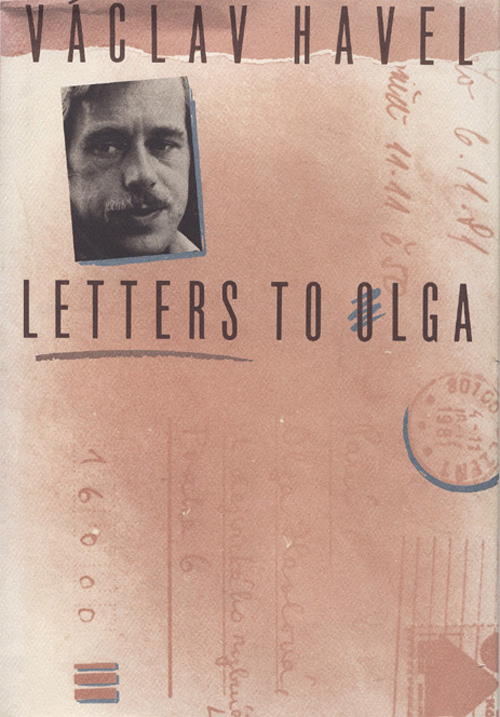
The 20th century brought about an array of avant-garde writing with topics delving into women’s rights, anarchy, expressionism, social commentary, and other literary movements and liberal topics.  Drama, poetry, and prose all fell into these various movements.  During the Communist years, much of this literature turned to ideals such as freedom and democracy and actually still circulated somewhat freely.  However, as censorship began to take its ugly hold, most of these authors fled abroad. Their works began to be read less and less in Czechoslovakia, but gained a different readership as it was translated into other languages. One of these poets and playwrights is none other than Václav Havel. I first heard of him on The Last Word with Lawrence O’Donnell a few years ago when Havel had passed away. He was the last president of Czechoslovakia and the first president of the Czech Republic. The author of over 20 plays and numerous non-fiction works, he was ranked fourth in a 2005 poll by Prospect magazine of the world’s top 100 intellectuals.  Because he was a dissident during the Communist years, he was imprisoned, and during those years, he wrote many letters to his wife Olga. Years later, these letters were compiled in a book called Letters to Olga,” which I’ve requested from the library. It’s said that this book is one that author Salmon Rushdie always carries with him, so I can’t wait until my book comes in. 


Up next: music and dance