Showing posts with label stilt dancing. Show all posts

Saturday, May 9, 2020

TOGO: MUSIC AND DANCE

Most of the people who live in Togo live near the coastal southern regions. In these regions, the folk songs sung by fishermen are particularly popular. These are often accompanied by a type of bell called the gankogui, also known as the agogô (it can be a single or double bell). And because Togo is such a diverse place, these folksongs can be sung in several different languages: mainly Ewé or Kabiyé but also Fon and Yoruba.


When it comes to instruments, percussion is king. Drums are essentially the core of folk music, and there are many different types of drums used in their music, varying in their construction, materials used (for both the body and head of the drum), and size. Many times drums and percussion instruments are used in festivals and celebrations for certain life events. Not only are different types of drums used in different regions, but they also have different rhythms in their music. Outside of percussion, you’ll also find stringed instruments such as the kologo (or xalam, and it may be an ancestor to the banjo) and gonjey (a type of one- or two-stringed fiddle). Various sizes and styles of flutes, a type of xylophone called a balafon, and singing are also commonly heard in Togolese folk music.
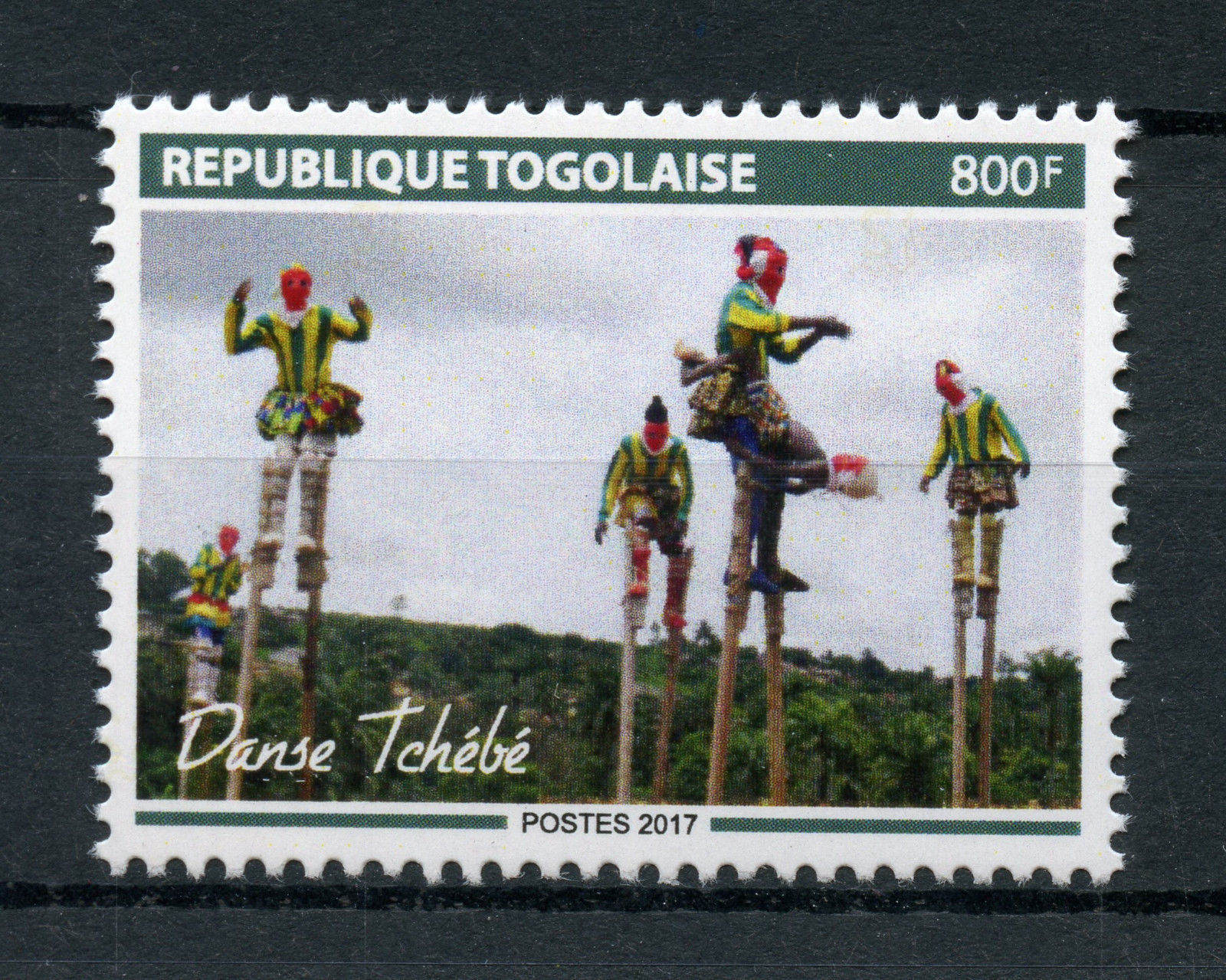

There are quite a few traditional dances performed in Togo. Many of these dances are tied to different aspects of life and rituals like war dances (like the kpehouhuon and atsina) and hunter dances (like the adewu). Another dance includes a stilt dance called the tchebe. And each region has their own varieties, of course.

Bella Bellow
I did find several musicians on Spotify that I listened to. The first was Bella Bellow. She was famous during the 1960s and early 1970s, tragically dying in a car accident in 1973 at the age of 28. As young as she was, her voice sounded much older. And they had quite a bit of an American/European rock sound with her melodic vocals behind it. And interwoven within this rock sound, there are subtle African motifs in there. I really enjoyed this a lot.


Another singer that I think falls in the same category as above is Akofa Akoussah. She has a little more funk in her music. I can’t tell exactly which language she’s singing in, but I do know it’s not French. I liked what I heard from her music.


I also listened to Afia Mala. I found an album where she has a strong Cuban influence on her music. I’m a big fan of Cuban music, so I really enjoyed this album. From what I could tell, the songs were sung in Spanish, French, and maybe whatever her native language is.

King Mensah
One of the more well-known musicians from Togo is King Mensah. He uses elements from Afropop, funk, reggae, and other local styles. He sings in multiple languages and has won numerous awards in his long music career.

Jimi Hope
Jimi Hope is a guitarist as well as a painter and sculptor. He actually just passed away in 2019. I think he has more of a blues and funk style and sings mostly in English (at least on the album I was listening to) and in his native language. I liked his style on most of his songs, especially the ones that were more blues.

Toofan
Finally I came across a couple of hip-hop artists. The first one I listened to was Small Poppy. They tended to use a lot of sound effects and mixing in their music. I thought some of the songs were pretty catchy. I also listened to Toofan. Their music was a little more melodic, the style being kind of similar to that of the French-Congolese rapper Youssoupha (who I love). I really enjoyed their music.

Up next: the food

Sunday, August 4, 2013

REPUBLIC OF THE CONGO: MUSIC AND DANCE


Rooted in the musical styles of central and western Africa, Congo is no stranger to a strong music and rhythmic background.  Some of the more common instruments are xylophones and marimbas, as well as the mvet, which is somewhat of a cross between a zither and a harp, except that it has one or two gourds that act as resonators. Of course, they also use a variety of drums and percussion instruments as well. 


Much of the music that is played and listened to in the Republic of the Congo is highly influenced by its neighbor with a similar name, the Democratic Republic of the Congo (or DRC). One style called soukous is a major influence on the music scenes of most major cities in central and western Africa. Soukous is a sort of cross between Cuban rumba, American jazz, and traditional Congolese music.  It rose to popularity in the 1950s and 1960s as it entertained the dance halls across this area and still remains as one of the favorite styles of African music in general. 


American- and French-influenced hip-hop is also highly popular with artists such as Bisso na Bisso and Passi. I really like the group Bisso na Bisso; I found the album Le 15 Mai 99 on Spotify and have listened to it a dozen times. I also found it on iTunes for $8.99. I like their style: you can tell it’s been influenced by soul, by jazz, by blues, by Latin music – but that may be the soukous speaking. It’s catchy, and I like it. I might buy the album one day (even though I’m not a huge fan of live albums and generally avoid them, but this one might be an exemption.) The video above is the song "Tata N'Zambe," and every time I hear it, I think they're saying "zombie." Two other groups that bear mentioning are Extra Musica and Les Bantous de la Capitale.


The Congolese has used dance as a means of expression since the earliest of days. The Kyébé-Kyébé dance of the Mbochis tribe is one of the more famous dances. Another famous dance is the traditional stilt dance used with brightly-colored puppets.  During the 1920s and 1930s, people would come out on Sunday afternoons to the different cultural centers of Brazzaville – the largest being the Grande Place in Poto-Poto – and hold these large dance competitions. Drummers would line up and perform different rhythms that were indicative of their particular section of the city or tribal background (like the walla rhythm that is commonly used by the Kongo people), and while just about anyone could join in the dances, many of the serious dancers dressed in full traditional costumes. They’d go on all afternoon and at the end, there would be a prize for the best dancers. I found this video (above) and would LOVE to find something like this to show my kids. The costumes are amazing, and it makes me think that this is where the choreographers who did The Lion King live-stage version of the musical got their inspiration. 

Up next: the food