Showing posts with label Eastern Orthodoxy. Show all posts

Sunday, March 6, 2016

MACEDONIA: THE LAND AND THE PEOPLE

When I first started doing this blog, I was really interested in my statistics. I decided to keep a list of the countries that viewed my blog. I’m kind of a nerd like that. I have a note in my iPhone where I keep an updated number of pageviews and a list of countries where at least one person has read my blog (ok, at least landed on the page. I don’t know if they actually read it or not.). I did get a hit from Macedonia, but I could never figure out why it had [FYROM] in brackets behind it. (Is it like CD-ROM?) But then I looked it up (thanks, Wikipedia) and found out it stood for Former Yugoslav Republic Of Macedonia. But, why? (Hint: keep reading.) 


The name of Macedonia is kind of confusing. The neighboring country of Greece to the south has a region called Macedonia that once included the country of Macedonia. The word in and of itself is of Greek origin, meaning “tall” or “taper,” possibly in reference to the height of the people. 


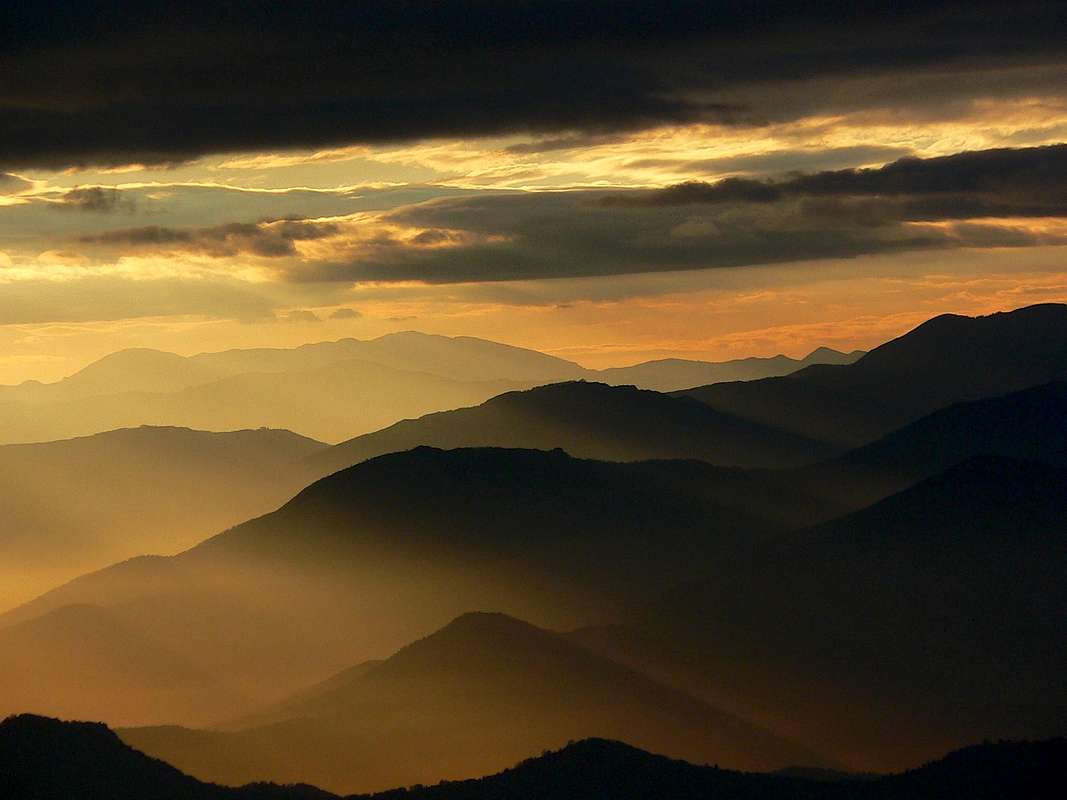
Macedonia is a landlocked country located in southern Europe. It borders Greece to the south, Albania to the west, Kosovo to the northwest, Serbia to the northeast, and Bulgaria to the east. The country is mountainous, and there are several rivers and lakes that dot this area. The summers are hot and dry, but the winters are fairly cold. It’s certainly colder the higher in the mountains you go. 

In ancient times, this area was originally the kingdom Paeonia. The Persians moved in during the 6th century. Later, Philip II of Macedon —Alexander the Great’s father—took over the southern part of the region and Alexander the Great took over the rest of it. Then the Romans moved in and established the Province of Macedonia. The Slavs later began to settle into this area along with the Bulgars. The Byzantines invaded Bulgaria and proceeded to take over most of the Balkans, Macedonia included. The Bulgarian Empire rose to power during the 13th century and took back the region. But a century later, it was passed back to the Byzantines and then it got handed off to the Serbian Empire. Eventually, it all fell under the reign of the Ottoman Empire. There were several movements during the 19th century calling for more autonomy for Macedonia. After the Ottoman Empire broke up, the area was essentially divided between Greece, Serbia, and Bulgaria; Macedonia was annexed to Serbia. However, this area was renamed as the Kingdom of Serbs, Croats, and Slovenes (specific, but man, what a mouthful). It was later changed to Yugoslavia in 1929 (which is what I knew growing up). Greek and Bulgarian communists denied a free Macedonia; however, Macedonia was known as Vardar Macedonia back then and a special resolution acknowledged this separate nation and its own Macedonian language. There were a lot of struggles between different powers and parties, and it remained part of Socialist Yugoslavia until 1991 when Yugoslavia broke up. There have been some conflicts with ethnic Albanians living in Macedonia. Today, Macedonia is working toward gaining entry into the EU. 


Originally called Scupi when it was under Roman rule, the capital of Skopje is also Macedonia’s largest city. Located along the Vardar River in the northern part of the country, the city has roughly a half million residents. It’s located in the middle of several mountain ranges and surrounded by several lakes, rivers, and cave systems. Skopje serves as the nation’s capital for finance, government, media, and commerce. With several hospitals, universities, sports venues, theatres, museums, a nightlife scene, and several festivals held throughout the year, Skopje is every bit of a modern city. Mother Teresa was probably the city’s most famous resident. 


Since the mid-1990s, Macedonia has seen gradual, steady growth economically. The government has worked to fight against inflation and has experimented with a flat tax system in order to attract more foreign companies and investment. They have brought in some multinational companies such as Johnson & Johnson, Lear Corp, and Visteon Corp. However, even though these measures have proven moderately successful, Macedonia still has a really high unemployment rate at nearly 27%. Their main export is chemicals and other related products as well as machinery. Of the former Yugoslav countries, Macedonia has a much smaller economy in comparison to the others. Although they are less developed than other Balkan countries, Macedonia’s IT market has made significant increases, making it one of the fastest growing markets in this region.
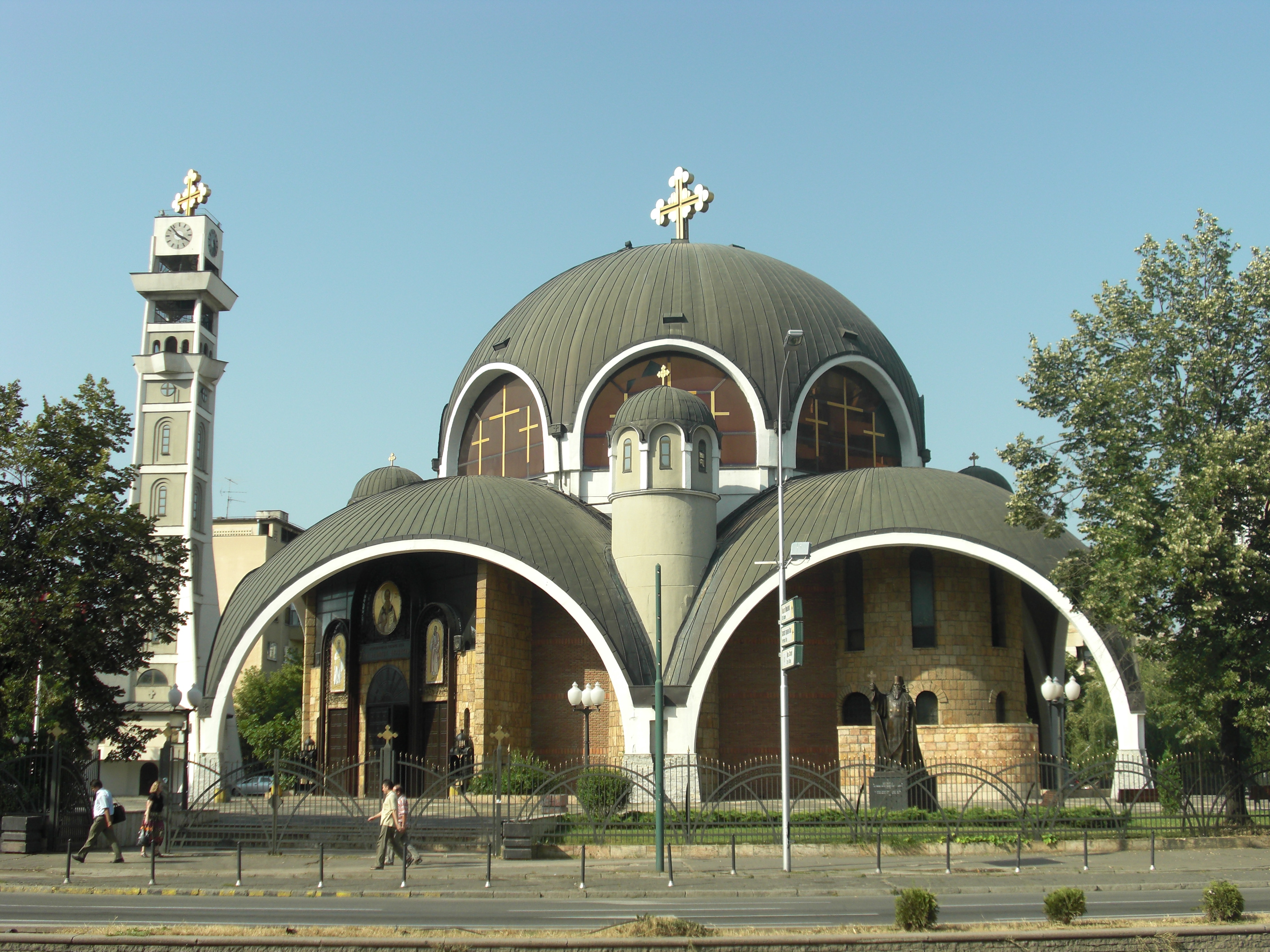
Church of St. Clement of Ohrid, Skopje
About two-thirds of Macedonians follow Eastern Orthodoxy religion. Other Christian denominations and Jewish populations are also found here but make up a scant number of people. The remaining third of Macedonians are Muslim and are mostly of Albanian, Turk, or Romani ethnic origins. 
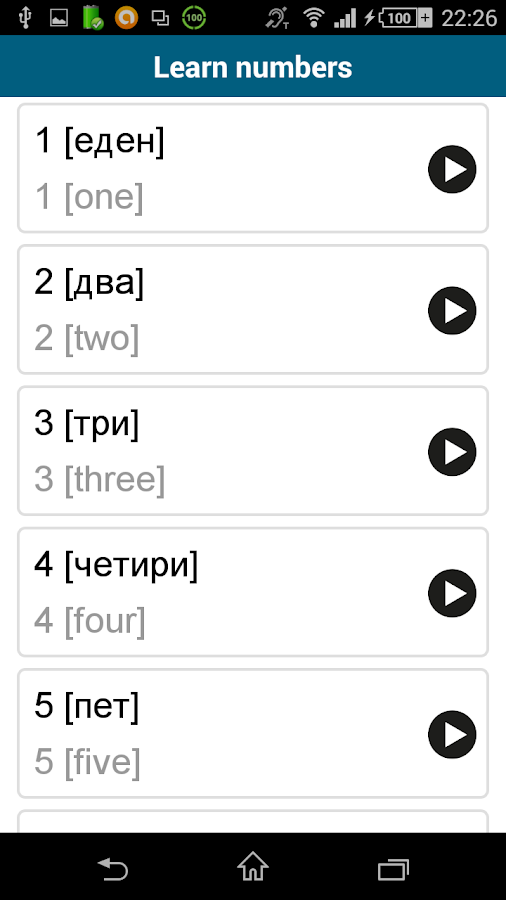

The official language is Macedonian, part of the South Slavic language family. Macedonian is actually closely related to Bulgarian and uses the Cyrillic script. However, because of Macedonia’s diverse ethnicity, there are several other languages spoken in areas where there are a large number of speakers (and in some cases, carry a co-official status in certain communities): Albanian, Turkish, Romani, Serbian, Bosnian, and Vlach.  


And finally what you’ve been waiting for: the TV Guide version of its naming dispute. When Yugoslavia broke up in 1991, officials wanted to call itself Macedonia. However, Greece held their hand up, saying it would be confusing because of the region in Greece of the same name. There are millions of people in Greece who identify themselves as Macedonians but are ethnically unrelated to the Slavic people living in Macedonia who also call themselves Macedonians. And they’ve gone round and round about the name. However, the UN had to call them something when they declared their independence. So, for right now, the compromise is Former Yugoslav Republic of Macedonia, often shortened to Republic of Macedonia. Even their flags have been disputed. (Man, they can’t catch a break.) To make matters even stranger, Greece and Macedonia have even brought in Alexander the Great and Phillip of Macedon to argue who’s more ethnically tied to the name of Macedonia. The problem is that these arguments are stalling Macedonia’s application to the EU and NATO. So, regardless of who’s called what and who came from where back in antiquity, one thing for sure is that they all have great food. Perhaps they should just have dinner together and talk it out over a bottle of wine: in vino veritas.

Up next: art and literature

Sunday, November 9, 2014

GREECE: THE LAND AND THE PEOPLE


It’s the birthplace of Western Civilization, where democracy and political science, mathematics, Western thought, modern literature, language, drama, and the Olympic games were created and developed. And from there, they spread all across Europe and eventually the world. The Ancient Greeks have contributed so much to the development of the world as we know it. But what about the Greece of today? That’s what I want to know.

The Greeks themselves call their country Hellas or Ellada.  However, the term “Greece” came from the Roman term for the country, Graecia. The term Hellas is also used in English, as in the Hellenic Republic.


Greece lies between the Ionian Sea (which separates Greece from Italy) and the Aegean Sea (which separates Greece from Turkey). It also borders the countries of Albania, Macedonia, Bulgaria, and Turkey. The country lies on a peninsula known as the Peloponnese Peninsula and also includes 1200-6000 islands (depending on how you define an island apparently) at the end of this peninsula, of which 227 are inhabited, the largest being Crete. About 80% of Greece is either covered in mountains or hills, which means there are no navigable rivers here. Mt. Olympus is the highest peak in the country, the same peak the Ancient Greeks thought was where the gods lived. The Vikos Gorge is noted as the deepest gorge in the world and many endangered species use its natural protection as a refuge.


Some of the oldest artifacts of human existence in the Balkans are Greek, which isn’t surprising seeing how the Ancient Greek Civilization was one of the most advanced civilizations at that time. Greece went through its own Dark Ages, which traditionally ends with the first Olympic games in 776 BC.  Homer’s Iliad and Odyssey also were written right around this time as well. During this time, Greece was more or less made of a collection of city-states spreading across much of the Balkans and the Peloponnesian Peninsula. It was a thriving cultural center in all of Europe and much of the world as well — a central hub for literature, language, architecture, drama, philosophy, science, and mathematics. And in 508 BC, it became the world’s first democracy, the model that much of Europe, the Americas, and many other areas of the world base their government on. Greece entered a series of wars, battles, and oppositions with the Persians, then with the Peloponnesian War between the Spartans and the Athenians, the Goths, the Huns, the Slavics, the Franks, the Venetians, the Serbs, and the Ottomans (Turks). They eventually were granted their independence from the Ottoman Empire in 1829.  They continued to have several wars with Turkey on into the 20th century.  During WWII, the Italians demanded Greece to surrender to them, but they fought heroically and stood their ground against the Fascist Regime. Today, Greece is a highly industrial country and one of the biggest tourist spots in Europe.  Greece joined the European Union in 1981 and adopted the euro in 2001. Although Athens hosted the 2004 Summer Olympics, Greece was hit hard after the global economic crisis in 2008-2010.


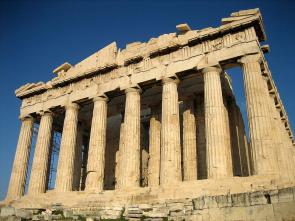
Athens, the capital city, is one of the oldest cities in the world; they’ve been continually inhabited for the past 7000 years! Athens itself has been the center for education and government. It’s particularly famous for the Acropolis, the Parthenon, the Theatre of Dionysus, Plato’s Academy, Aristotle’s Lyceum, and the Acropolis Museum.  And actually you can go to the Acropolis Museum for free. And by free, I mean, go to Google Maps, type in “Acropolis Museum” and put it into streetview on top of the museum. You can walk through the museum, and it gives you a great view of the Parthenon. I’ve been to this museum several times this way. (I wonder what other museums Google mapped?)  With about 3.7 million people in its metro area (slightly smaller than Los Angeles, California), it is a crossroads between old and new, ancient Greek architecture standing next to modern, energy-efficient buildings. Dotted with parks, gardens, museums, shopping, sports arenas, theatres, and universities, Athens is every bit of a modern city.  Major highway systems, rail and subway systems, and ferry systems make it easy to get to and get around the city.


Greece’s economy is a high-income economy and considered advanced. They generally rank high in terms of GDP (gross domestic product) and PPP (purchasing power parity), an indication of their high standard of living and ranking high on the Human Development Index. Roughly 85% of their economy is service-based with tourism as one of their biggest economic drivers. Greece was ranked as the 7th most-visited country in the European Union and 16th in the world. Greece is ranked number one in Europe’s production of pistachios and cotton; number two in rice production and olives; number three in almonds, tomatoes, watermelons, and figs; and they’re ranked fourth in tobacco production. And because of its coastal location, they have a highly-developed shipping and fishing industry.  Science and technology is a huge industry in Greece. In fact, millions of women all over the world have a Greek scientist to thank (or resent, rather). His name is Georgios Papanikolaou, and he came up with the Pap smear. There have also been many Greek scientists who have made contributions to the confusing world of physics and even more confusing world of computer science. However, Greece fell into trouble after the 2008 global economic crisis, and although they are slowly climbing out of it, they still have one of the lowest credit ratings among EU countries.


By far, the most-adhered-to religion in Greece is Eastern Orthodoxy, which is a part of the Greek Orthodox Church. Some 97-98% of Greeks identify themselves as Eastern Orthodox. In comparison with other countries in Europe, most Greeks take religion seriously.  There are a small number of Turkish Muslims (with Muslims from elsewhere included as well) who live in Greece. The Greek city of Thessaloniki used to have a large Sephardic Jewish population at the beginning of the 20th century, but after WWII, those numbers dropped drastically. A small number of Roman Catholics and even Jehovah’s Witnesses among others have followers in Greece.


The Greek language is the official language of Greece; however, the question of whose dialect and which form (more classical, scholarly Greek vs. what was spoken by the people) has been a constant source of debate and dispute for centuries. In fact, this wasn’t resolved until the mid-1970s when the government finally decided that the official language form should be the language of the people. The literacy rate in Greece has more than tripled since the 1950s. There are several other minority languages spoken in Greece, which includes Albanian, Turkish, Bulgarian, Romani, Macedonian Slavic, Aromanian, and Meglenitic.  If you look at a list of English-language prefixes and suffixes, many of these come from Greek and Latin.


Greece has a ton of cool things about it: in light of our recent (deplorable) election turnout, no one in Greece has the option to stay home; it’s mandatory to vote. There’s a small chance that the next marble statue you see is of Greek marble since 7% of the world’s marble comes from here. There are actually some olive trees planted in the 13th century that are still producing olives today! It’s no doubt that Greece is a beautiful place to visit: they enjoy over 250 days of sunshine a year; it’s lucky for them that they get to enjoy the sunshine longer than most people since they rank 26th in the world for life expectancy.  Greeks feel that waving with an open palm is taboo, so they prefer to wave with a raised fist instead. Apparently, the British poet Lord Byron was so head-over-heels about the Greeks, he went to Greece to help them fight in their war for independence against the Turks, where he later caught fever and died (they still consider him a national hero). The word “barbarian” is a Greek word meaning anyone who didn’t speak Greek. To counter that, I suppose this is where the phrase “It’s all Greek to me” came from (Perhaps? Maybe?). Greeks generally have the lowest divorce rates yet the highest abortion rates (makes you wonder if the two are related somehow). Greece’s original currency, the drachma, was the oldest in Europe, reaching the fine old age of 2650 years (it was replaced by the euro). So, I think I’ll get some feta cheese, some kalamata olives, watch My Big Fat Greek Wedding again, and look forward to some real Greek food in about a week.

Up next: art and literature