Showing posts with label Louvre. Show all posts

Thursday, August 7, 2014

FRANCE: ART AND LITERATURE


France is renowned for its contributions to the world of art. The earliest art is in the form of cave drawings. Some of the oldest and most famous of these are found in Pech Merle, Lascaux, Cosquer Cave, Chauvet Cave, and Trois-Frères Cave. Gold work and manuscript illumination were influenced by Celtic traditions of the fifth to eighth centuries. Romanesque art and Gothic styles were popular in French architecture from about 1000AD and 1200AD. Gothic painting didn’t appear until about 1200.

During the 1500s, Italian Renaissance influences on art began to seep across the border. Artists like Rosso Fiorentino, Nicolo dell’Abbate, Michelangelo da Caravaggio, Leonardo da Vinci, and others introduced adding mythological ideas into their art. As French artists moved through Classicism, Baroque, Rococo, and Neoclassicism movements, France and Paris especially was becoming a haven for artists all over Europe.
Renoir

After the French Revolution and the Napoleonic Wars, the face of French art changed drastically. Instead of being mostly influenced by Greek and Roman mythology and art, artists started looking beyond Europe to Asia and Africa. Probably the most prolific artistic style coming out of France is the Impressionistic movement.  Artists such as Claude Monet, Pierre-Auguste Renoir, and Edgar Degas paved the way for other artists to this day. The late 19th century brought another wave of art movements, such as expressionism and others, introducing artists such as Georges Seurat, Paul Cézanne, Paul Gaughin to the world and marking their place in art history and art museums. There were many artists who were born in other countries but moved to France to study art and ended up staying, such as Vincent van Gogh and Pablo Picasso.
Seurat was known for his pointillism. 
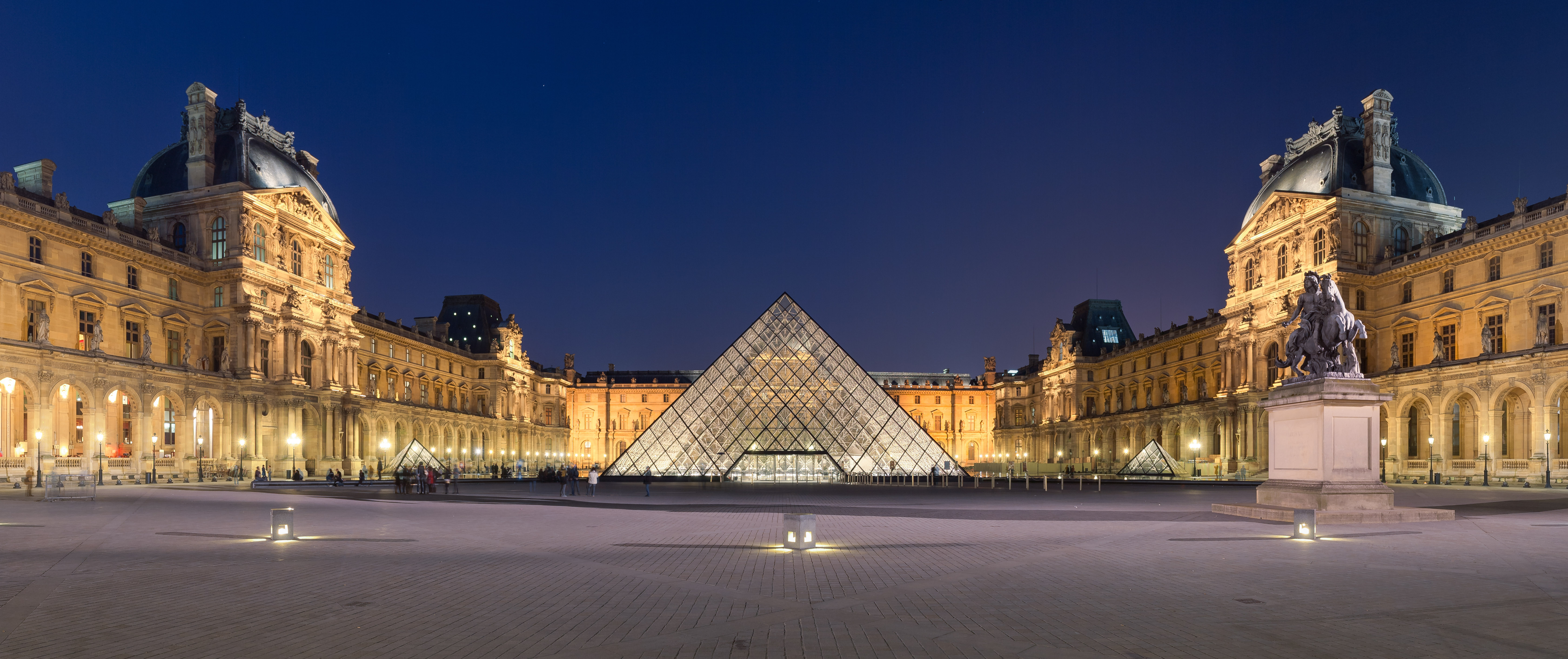
The 20th century brought forward the French counterparts of many of the modern movements: cubism, surrealism, avant-garde Dadaism (or perhaps, anti-art is the term), abstract art, expressionism, pop art, and everything in between and outside of it. Today, France has a plethora of art museums and art schools.  The Louvre in Paris is the most visited art museum in the world. The Musée d’Orsay also in Paris is another museum that ranks high on tourist must-sees. There are also many smaller museums showing works for a specific artist or a particular art period. In fact, there are even several textile and tapestry museums.
French literature is written in French, and mostly by people who are from France; however, writers from other French-speaking countries are considered Francophone literature. French literature dates back to the Medieval period; the most famous surviving pieces are epic poems and stories.
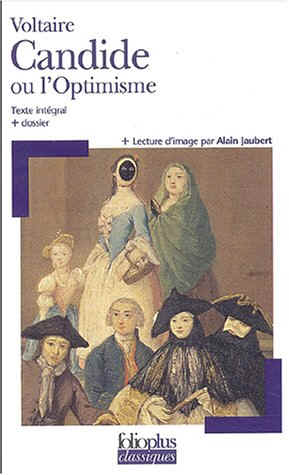
The 18th century brought along one of my favorite authors: Voltaire. He is most famous for writing Candide, and Zadig, or the Book of Fate, both of which I’ve read. I actually bought a copy of Candide when I was in Brazil so that I could have a copy in Portuguese. And of course, don't forget Leonard Bernstein's operetta of the same name (I have the soundtrack, too). Another famous name from this period of the Marquis de Sade, better known for lending his namesake to the word “sadism” or “sadist.” His most well-known work is Justine.
The 19th century would introduce many works that are now considered classics, many of which I read in college and afterwards. Some of my favorites include Honoré de Balzac (La Comédie humaine), Alexandre Dumas (The Count of Monte Cristo, The Three Musketeers [I’m reading this now]), Victor Hugo (The Hunchback of Notre-Dame [read it], Les Misérables [read it]), Gustave Flaubert (Madame Bovary [read it]), and Jules Verne (Twenty-thousand Leagues Under the Sea [read it], Around the World in Eighty Days [read it], Journey to the Center of the Earth).  Albert Camus is a 20th century writer that I enjoyed reading: I’ve read both The Stranger and The Plague. Gaston Leroux may not be a household name, but his work may be: The Phantom of the Opera. Collette’s novel Gigi was also made into a musical by the same name. One of my favorite 20th century French books is The Little Prince (or Le Petit Prince) by Antoine de Saint-Exupéry. I love this book and want to get a tattoo from this book. I also have this book in French, Japanese, and English.

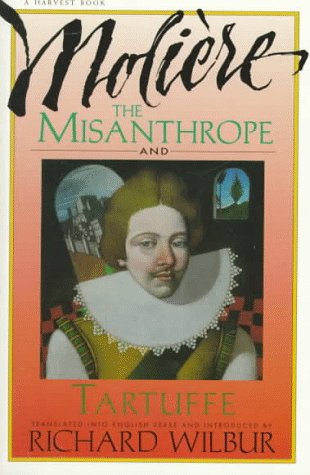
Molière is often considered one of the masters of comedy theatre, most famous for The Misanthrope (first performed in 1666). Pierre Beaumarchais is best known for his plays The Marriage of Figaro and The Barber of Seville. Mozart’s opera based on The Marriage of Figaro and Rossini’s opera The Barber of Seville remain to be the best-known versions of his plays. Edmond Rostand is probably best known for his play Cyrano de Bergerac, although his play Les Romanesques is best known by its musical version, The Fantasticks.
Of course, French writers also led their works toward the development of modern politics, philosophy, and science. Writers such as Blaise Pascal, René Descartes, Alexis de Tocqueville, and Jean-Paul Sartre were great influences on the current thinking of the time.
Up next: music and dance

Sunday, August 3, 2014

FRANCE: THE LAND AND THE PEOPLE


Ah, France. It’s the land of wine and lovers, the land for culinary experiences and artistic expressions. France has been in the forefront of art, politics, music, literature, military, and the sciences since the days of antiquity.  And now, I have finally arrived at France in my blog, something I’ve been waiting for for a long time. Several years ago, I had this fascination with France. I was trying to learn French (which would come in handy if I actually studied more) and planning vacations I would never take. (My bank account barely allows me to go to the international aisle at the grocery store these days.)

The name “France” is attributed to the Latin word francia, which means “land of the Franks.” Where the name Frank came from is somewhat more up for debate. Some historians believe it’s derived from a Proto-Germanic word for javelin or lance (their throwing axe was called a francisca). Others believe it possibly came from an ancient Germanic language word for free (meaning not a slave).
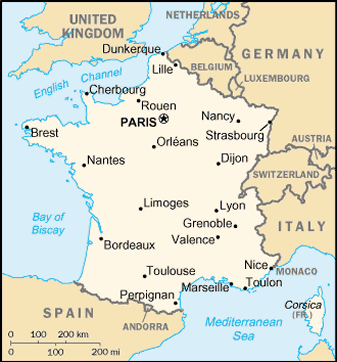
The country of France lies in Western Europe, surrounded by the countries of Belgium, Luxembourg, Germany, Switzerland, Italy, Monaco, Spain, and Andorra. It also includes the island of Corsica, which is just north of the Italian island of Sardinia in the Mediterranean Sea. There are also several overseas regions that are also counted as part of France: French Guiana in South America, the islands of Guadeloupe and Martinique in the Caribbean, Réunion (east of the African island country of Madagascar), and Mayotte (part of the Comoros Islands chain, northwest of Madagascar). The French mainland runs the gamut on climate and land changes: from warm Mediterranean beaches to the snowy mountainous peaks of the French Alps.
Mont Blanc, the highest mountain in France.
The earliest peoples in France were hunter-gatherer types. Cave drawings, such as the ones in Lascaux, clearly depict this nomadic life and are famous for being one of the best preserved cave drawings. Later, Ionian Greeks founded a colony near present-day Marseilles around 660 BC making this is the oldest city in France. At this same time, Gallic Celts were landing on the opposite side of the country.  This area eventually became to be known as Gaul. Gaul became a prosperous country but fought many times with the Romans, eventually defeating them and remaining a threat for several centuries. By the third century, Gaul had divided into several smaller kingdoms: Germanic territories, Celtic territories, Roman territories. They renamed themselves Francia, and it would take a while for them to fully unite as a country with a unifying language. Charlemagne took much of the responsibility for uniting many of these kingdoms together and building a vast empire that spanned across much of Western and Central Europe. France became a Catholic country, and feudalism took hold around this time as well. From the 9th Century through the end of the 18th Century, France went through a period of many wars and many kings (I won’t bother you with this long laborious history of all the kings of France – the world would end before I was finished. In short, there were no less than 36,000 guys named King Louis, and they all had issues). And of course, there was the famous Napoleon Bonaparte – everyone’s favorite short guy, who apparently was actually 5’6”, which is still taller than me by six inches – one of France’s most notorious Emperors. France was invaded by Nazi Germany at the beginning of WWII, and the Allies landed in 1944. The latter part of the 20th century brought on more conflict in French Indochina and in Algeria, as well as revolts in mainland France.
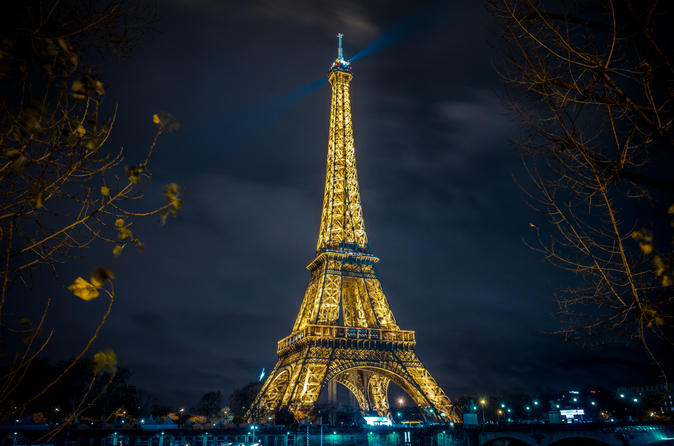
Eiffel tower at night.
Paris is one of Europe’s largest metropolitan areas with over 12 million people, and the capital of France. Paris is the center for art, music, literature, politics, aspiring chefs, and fashionistas alike. Dotted with some of the world’s most iconic buildings such as the Eiffel Tower, the Louvre, Notre-Dame de Paris, and the Arc de Triomphe, its cityscape makes for many great photo ops. Paris is known as the City of Lights: a moniker perhaps from the Age of Enlightenment, but perhaps more likely stemming from the early 1800s when Paris was one of the first European cities to install gas street lights.
The Louvre Museum, the world's most visited museum.
France is one of the leading economies in Europe, relying heavily upon insurance, banking, and investing as well as nuclear technologies. France also has large areas of highly fertile lands, allowing for their illusive wine industry.  They are quite famous for their champagne, Bordeaux wines, rosé wines, Burgundy wines, and cognac. France is home to several successful auto manufacturers: Renault, Peugeot, and Citroën.  Tourism is also important to the French economy. France is the number one tourist destination in the world. It has 37 World Heritage sites and 200 Remarkable Gardens, as well as other popular destinations such as the French Riviera, Disneyland Paris, and the Cannes Film Festival.
French Riviera
The official language is French, which has a status as being a global language.  Besides French, there are eight regional minority languages spoken in the French mainland, including Alsatian, Breton, and Occitan. If you count the overseas regions, there are 69 minority languages.

While originally a strong Catholic country, today France is far more secular, highly embracing the separation of church and state. Catholicism is still considered a majority religion, although statistics show only 5% attend Mass once a week or more (2006). A large number (between 27-31%) of Frenchmen and -women identify themselves as agnostic or atheist as well as a sizable number of Muslims.

France is a quirky country. And because it’s such a popular country, there is a plethora of information and facts about France. Here are some of my favorites I haven’t already mentioned: Paris has only one stop sign (it says “Arrêt”). You can receive a medal for raising good kids, and you can also marry a dead person. Twenty percent of French people have experienced depression, which is probably why there is a lot of wine. French toast is not French (named after a guy named French who forgot the apostrophe – this is the exact same reason why German chocolate isn’t German), and neither are French fries (French refers to the cut of the potato. By the way, the term Freedom Fries really gets my goat. I hate that term because it’s out of ignorance.) It’s home to the Tour de France, the French Open, and the 24 Hours of Le Mans sports car race. There’s a Victor Hugo Street in every town and city of France (Come on, who doesn’t love Les Misérables and Hunchback of Notre Dame?) A “French kiss” in France is called a tongue kiss or a soul kiss. There are over 400 different kinds of cheese produced in France. And that brings me to French cooking – I have had such a difficult time narrowing down what I’m going to make, but I think I may have it now, thanks to Julia Child. I just need to go on a wild goose chase for some French cheese.  So, here we go.
Up next: holidays and celebrations