Sunday, December 16, 2012

BOTSWANA: THE LAND AND THE PEOPLE

Botswana is far more than the nature parks and game reserves that spread across most of the northern part of the country, although that is a large part of it. The flat landscape of the Kalahari Desert takes up around 70% of the land in Botswana. In fact, the nickname and symbol for Botswana is the zebra. Because of this, Botswana is one of the most sparsely populated countries in the world: it’s almost like taking all of the people out of the state of Texas, except for the residents of the city of Houston.  The country borders South Africa (using the Limpopo River as a border for some of the way), Namibia, and Zimbabwe (sharing a border with the Zambezi River part of the way), and a really tiny technical border with Zambia (from what I can tell on Google Maps). It's the only place in the world where four countries come together.


The area was originally inhabited by the Tswana peoples, and tensions arose when other tribes started making their ways in the northern sections of the country. On top of all that, Dutch Boers also started making their way inland from the Transvaal into Botswana as well. Finally after a number of appeals, the British put the area under their protection in 1885 and called it the Bechuanaland Protectorate (which is why English is one of the official languages, along with Setswana). The northern part eventually became what we know as Botswana today, and the southern area where many of the Setswana speakers lived became part of South Africa. Botswana later gained independence from Britain in 1966, and started out as one of the poorest countries, but quickly changed that for the better.

The origin of the word Botswana is interesting to me. The name of the main ethnic group, Tswana, is the base word. The prefix bo- is added to it to indicate the “land of.” Following in that fashion, the prefix ba- means “the people (plural)” as in Batswana; mo- means “a person (singular)” as in Motswana; and se- means “the language or culture of” as in Setswana.  Even though in English language print, “Botswanan” is usually used to describe its people and things from the country. I found it interesting that their currency is called pula, which is also the Setswana word for "rain." It's also their motto.


Botswana makes a lot of their revenue in uncut diamonds. (Debswana is the largest diamond mining industry in Botswana, yet it’s half-owned by the government. That would never fly in the US.) They have also found large deposits of uranium as well as gold, copper, and oil.


Botswana and southern Africa is thought to be the origin of watermelons. It traveled north through trade, and 
Africans brought watermelons and watermelon seeds along with them to North and South America and the Caribbean via the slave trade. While it’s a terrible reason how it got here, I’m really glad they brought this with them.


One of the biggest problems facing Botswana today is the high prevalence of AIDS, which affects life expectancy and other economic factors. The estimated rate from 2006 was that nearly 24% of adults suffered from either AIDS or HIV.  However, Botswana also has a comprehensive plan to combat it by giving its citizens access to free or cheap generic anti-retroviral drugs that they need. Part of this program is to pass on information that is critical to stopping the spread of the disease, thanks in part to the Bill and Melinda Gates Foundation, the Merck Foundation and several other organizations for helping to fund this program to make this happen. I’m sure they will see increases in life expectancy and other economic improvements in the years to come.


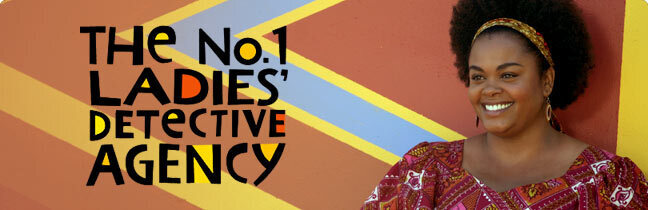
It’s also the setting for the famous books by Scottish writer Alexander McCall Smith, The No. 1 Ladies’ Detective Agency. In the US, it was broadcast as a mini-series on HBO a couple of years ago starring Jill Scott (love her music!) and Anika Noni Rose (who did the voice of Tiara in The Princess and The Frog).  I just got disk 1 off of Netflix and watched the pilot episode last night. Since it was filmed entirely in Botswana and in its capital Gaborone, the opening shots showed wonderful views of the beauty of the land. I highly recommend it, even only after one episode.


My initial research on Botswana has intrigued me on many levels. I had some small pre-knowledge about this area, only in general, but I’m hoping that I can draw connections and fill in gaps on the culture of this country.

Up next: Holidays and Celebrations

Friday, December 14, 2012

THE LIEBSTER AWARD


Back when I was doing the posts for Armenia, I had contacted Robyn Kalajian, the main writer for a husband-and-wife blog called The Armenian Kitchen (www.thearmeniankitchen.com) and told her how much I enjoyed the blog. I had used the recipes they had listed as a basis for my Armenian menu – which was wonderful! Last week, she sent me an e-mail saying that she nominated Worldly Rise for the Leibster Award. (In her acceptance post, she had mentioned that the word “leibster” is the German word for “beloved.”) In essence, I’m gathering that it’s more of an award of recognition for the blogs that you find meaningful and/or interesting and/or simply enjoy reading. I’ll take that. That means that there are people out there who are reading what I do, and I suppose that’s the whole point of it all. Essentially, all writers want to be read.

In order to accept the award, I had to in turn nominate five other blogs that had less than 300 followers. It almost posed a problem, and I struggled, but I came up with four. I’m sure that’s enough. I don’t have much time to read too many since I’m writing and researching all the time. Oh yeah, and my family and full-time job seem to vie for my attention as well.

My college friend, Tony Bird, has a blog called “Your Friend Tony” (www.yourfriendtony.wordpress.com) that I enjoy reading. He went to high school in the next school district over, yet we have many mutual friends weirdly enough. However, I met Tony through a friend of mine while at college – we were all English majors of varying sorts.  I like his perspective on things, and I like his nerdy-dry humor (maybe because it’s similar to mine).

I went to college with Heather Pechin, where we were both music majors. (Don’t be confused: I majored in both English and music, but only graduated with a degree in music.)  I’ve enjoyed reading her blog “Pechin’s Pizza of the Week” (www.pechinspizzaoftheweek.blogspot.com). While it’s not strictly about pizza, she does cover an array of food and local eating establishments. The best thing I learned from her was making brownies and putting Andes mints on top of the batter before baking. It was the best idea ever.

While I was researching food from Bangladesh, I came across the blog “Rownak’s Bangla Recipes” (www.banglarecipes.com.au). I used several of the recipes listed on her blog. My favorite by far was the sweet buns, a braided roll with sweet butter on the inside.  It was definitely a favorite in my family. It’s a great collection of recipes and some stories about them along with some tips in preparing and cooking the meals. I really enjoy it!

I’ve been told my blog is the sister-blog of “Travel by Stove (www.travelbystove.blogspot.com). I actually come across it whenever I start a new country, and I always try to read it to see what she’s already done (she’s a little ahead of me). I tried to make mine a little different from hers so that readers can get the whole sense of each country through both of our blogs. I like her writing style (probably because it’s not that much different from my own: witty, intelligent people spot our types of humor from miles away), and I don’t feel so bad that I came to the table (no pun intended; well, ok, maybe just a little) not knowing much about all the dirty details of cooking and am accident-prone with my fair share of mistakes. I’m glad there are two of us in the world who aren’t afraid to admit it in a humorously, well-written way.

And as promised, without further ado, I have to state eleven facts about me:
      1.    I met my husband on an Amtrak train. I took a day trip to Chicago from Indianapolis, and on the way back, we sat next to each other, and started talking. And less than a year later, we were married and have been for the past eight years. And now we have two kids, that I’m pretty sure are only here as a study to see how quickly we lose our sanity. (Just kidding, I love my kids.)
      2.       I really don’t like prime numbers. You know, those numbers that are only divisible between one and itself. I don’t know why; they’re the “odd” one out (yes, the pun was intended). If I’m changing the volume or something, I try not to stop on a prime number. I read somewhere once that Christina Applegate hates odd numbers. I don’t know if that’s exactly true or not, but I’d like to think that there might be two of us weirdos out there.
      3.       I played the French horn for 10 years and have played the piano for the past 20 years. I have sang and did percussion for many years along the way. I also own an mbira from Zimbabwe that I bought earlier this year, and I play it as a means of stress relief.
      4.       I have studied Japanese for almost 20 years and can read a substantial amount of Portuguese and Spanish. I had taught at Mori no Ike (Japanese language camp of Concordia Language Villages in Dent, Minnesota) for three summers.  I spend a summer in Tokyo, Japan in 1998, and I spent a month in southern Brazil (Curitiba and Porto Alegre) during September 2003.
      5.       We’re car show people: we have a 2000 Chevy S-10 lowrider truck that has won various awards for my husband’s custom paint jobs, and we’re currently restoring/customizing a 1964 Chevy Bel Air.
      6.       The farthest north I’ve traveled was Winnipeg, Manitoba, Canada; the farthest east I’ve traveled was Montauk Point, Long Island, New York; the farthest south I’ve traveled was Porto Alegre, Rio Grande do Sul, Brazil; the farthest west I’ve traveled was Maebashi, Gunma, Japan.
      7.       Capers really are the best thing in the world. And so is black olive tapenade and avocados. My idea of great breakfast items include: a) cold pizza, b) cold jerk chicken, c) pumpkin pie (or any pie for that matter), and/or d) biscuits and sausage gravy.
      8.       My husband and I are huge fans of house music and techno music. But not so much into that dubstep mess.  I’m also a fan of reggae, reggaeton, hipster rock, indie rock, punk rock (gypsy punk, Irish punk, skateboard punk), hard rock, classic rock, rockabilly, 80s hair bands, psychedelic rock, Japanese rock, MPB (musica popular do Brasil), Arabic groove, Cuban groove, gypsy groove, jazz, big band, blues, classical, R&B, hip-hop and any kind of fusion between them all.
      9.       When I was in college, I was able to have lunch with the great Peter Schickele. I was also able to shake the hand of and receive a kiss from the late great Les Paul.
      10.    I love office supply stores or educational supply stores. And even though I passed the seventh grade, I’m still fascinated by the pens that contain four different inks. Really one of the best inventions ever, just behind the microchip and the transistor.
      11.   I have an interest in the meaning of place names and names in general. My first name Beth means “house of God” in Hebrew, but my real name Harriet means “home ruler” in Old German. My last name Adams means “son of Adam” in English (but may also come from the Hebrew word for “earth”), but my maiden name Campbell means “crooked mouth” in Scottish. My husband’s name translates to “Crown Nobleman Son-of-Adam” (from Greek, Old English, and English). My daughter’s name translates to “Variation-of-Mary Ruddy-complected Son-of-Adam” (from Latin, Gaelic, English). My son’s name translates to “Fearless King Son-of-Adam” (from Swahili, Arabic, English). 

Sunday, December 9, 2012

BOSNIA AND HERZEGOVINA: THE FOOD

Thanks to the Ottoman Empire, the food in Bosnia and Herzegovina share a lot of similarities to Turkish cuisine, but also that of Greece as well.

The first dish I made today is called japrak. I changed up the dish a bit, so it’s probably not authentic by any means. It’s basically meat and rice stuffed in grape leaves. Right off the bat, I substituted ground lamb, only because I was looking for an excuse to cook with lamb again, and I actually found ground lamb at Meijer. Second of all, I couldn’t find any grape leaves. I don’t know if it’s something that’s out of season or that I was never looking in the right places. Both may be valid. So, I used cabbage leaves instead. But then again, I must’ve picked the worst cabbage out there. I could hardly tear any leaves off of it without ripping it to shreds. And to top it off, my folding skills are at a minimum. (But if you’ve met me, I can’t fold anything. Whether it be towels, clothes, origami, cabbage leaves, it’s just not happening. If only there were a Wadding Something into a Ball Award, I would totally rock that.) But somehow, by the grace of all that’s sacred, I managed to finagle it all together into something that slightly resembled what I was making. So, while it technically may not be japrak as the Bosnians know it, it was still tasty nonetheless.

When it's filled with my favorite meat, lamb, it doesn't matter what it's wrapped in. 
The second dish on the menu is the burek: the most iconic Bosnian food item. In fact, the musician Dino Merlin has an entire album entitled “Burek” (I put it in my Spotify playlist just because of this).  I used this as my bread recipe. I had to guess at making the dough somewhat since my recipe had sort of forgotten to list some measurements. After I made the dough and divided it into four pieces, I rolled each piece out into a circle. I placed a mix of minced beef and onions in the middle and rolled the dough around it, making a tube of sorts. Then I spiraled the tube around, but the pieces weren’t that large, so it was hard to make a tight spiral. And of course, I got confused on my recipes, so I needlessly gave each burek a sour cream and milk bath.  No harm, no foul though. It was much better tasting than I imagined.

How do you get better than meat-filled dough?  Why were they keeping this a secret? 
And finally, I made something I’ve always enjoyed but never had to guts to make myself: spinach and cheese pie. The recipe reminded me of one of my favorite Greek dishes, spanokotirapita. Mine, as you might have guessed, didn’t quite turn out the same.  I mixed the spinach with the sour cream and ricotta cheese and laid it between layers of fillo dough. The problem was that the fillo dough I had had been in my freezer since when I made empanadas from Argentina. So, needless to say, it was pretty crumbly, but that wasn’t stopping me. It definitely wasn’t as many layers as the recipe suggested, but it was still really good. 

Prior to the last layer of fillo dough and sour cream on top. 
The kids had a different opinion, but that was to be expected. Not even YouTube videos of classic Popeye cartoons were changing their minds. But I did get my son to help tear up the spinach with me, even though I was saving him from being in trouble at this moment. 

What he doesn't know is that he's helping make a dish he won't touch. 
I really liked this meal, and my husband told me to definitely put this in the “do again” pile (especially the burek). If this meal had a theme, it would be “it may not look pretty, but it tastes good, so who cares?” There is something in food presentation; if it doesn’t look appealing, you’re far less inclined to eat it. But then on the other hand (where I mostly reside), I really try not to stress out about formalities. If it’s mostly there, then it’s good enough for me. There’s a zen proverb I try to adhere to that says “80% is perfect.” So even though it didn’t turn out how it was supposed to if I was strictly trying to go for authenticity, who’s to say it wasn’t perfect as a meal that my family enjoyed?

The final product! Perfect for a moderately cool, rainy December evening. 

Up next: Botswana 

Saturday, December 8, 2012

BOSNIA AND HERZEGOVINA: MUSIC AND DANCE

One of the most traditional forms of music from Bosnia and Herzegovina is ganga music. It originated in the rural areas, especially in Herzegovina and the Croatian region of Dalmatia (the namesake of the famous black and white spotted dog breed). It mostly consists of a lead singer singing one line and then the other singers coming in, some describing it as a “wail.” It also utilizes dissonant harmonies, often having different singers singing half-steps from each other. In most Western and European classical music traditions, especially  before WWI, it’s often recommended to not to have half-steps against each other because these are tendency tones and need to be resolved. But here, it’s desired to have that dissonance, probably something that takes a while for Western ears to listen past. However, this dissonance was used for a purpose: ganga was performed in the fields, and used as a means of communicating with people in distant fields.


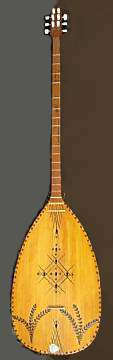
Common instruments found in ganga and other related forms are the droneless bagpipe, wooden flutes and the šargija (a long-necked, fretted string instrument that is plucked). The gusle is a single-stringed instrument with a long neck which is bowed that is really similar to the Albanian lahuta (mentioned earlier when we did Albania).


Another style of folk music in Bosnia Herzegovina is called sevdalinka, some thought of as the most traditional (or most “Bosnian”) of musical forms. It has more emotion and melancholy in the melody line, the subjects being mostly about lost loves and death, especially of a loved one. Originally, it was performed with a saz (a type of stringed instrument originating from Turkey), but now accordions are used far more, along with the help of clarinets, violins, upright bass, and snare drums. Not only are the sevdalinkas a merge of Bosnian and Turkish music, but it also incorporates certain musical styles of Muslim music as well.


As far as modern music goes, I found a ton of music available on Spotify for free and iTunes if you want to buy it (most priced around $10). Rock music is really popular, even though many groups sound like the rock from the late 1980s/early 1990s US rock groups a la Journey or Rush, or some of the hair band anthem rock sounds of Def Leppard or Poison. (Don’t get me wrong, I like that style.) And then there are several groups I found who have more of an indie rock feel by bringing in folk music into the music. Some of the groups that I found that I liked are Dino Merlin, Laka, Igor Zerajic, Letu Stuke, Zoster, Monolit, Zabranjeno Pusenje, Indexi, Bijelo Dugme, Divlje Jagode.


Hip-hop music is starting to make its way into Bosnia Herzegovina as well. It’s not quite as popular, but there are a few artists making a name for themselves, and it’s growing in popularity. Two that I like are Edo Maajka and Frenkie.


The kolo is a dance that is danced in many of the Balkan countries, including Bosnia and Herzegovina. The dancers will gather in a circle (sometimes as a single or double line) and hold hands or put their hands around each other’s backs, and practically all of the dance steps are complicated steps with just the legs and feet. Each region and even each city has its own kolo. Both men and women dance the kolo, and typically wear traditional dress while doing so.


Up next: the food!

Thursday, December 6, 2012

BOSNIA AND HERZEGOVINA: ART AND LITERATURE

The art in Bosnia and Herzegovina is as diverse as its people. But more so, it changed and morphed every time it someone else took control of the area.

There have been many cave drawings and engravings that have been preserved from the primitive times. Archaeologists and local peoples have also found decorated plates and bronze necklaces that date back to the Bronze Age. Roman art and architecture made its way across the Adriatic, as well as influences from nearby Greece as well.

When the Ottomans entered the area, they not only introduced their religion, their cuisine, and their language, they also had a major influence on its art and architecture. Mosques, bath houses, and public fountains started popping up across the country and Islamic art filled these areas and people’s homes. Bridges are really important to the Ottoman and to Islamic architecture. Arabic and Persian calligraphy was also really popular in Bosnia and Herzegovina. (I discovered some pretty cool pictures of Arabic calligraphy when we did Bahrain.)


After Bosnia-Herzegovina became part of the Austro-Hungarian occupation, the art and architecture scene thrived. New buildings quickly were erected, in the classical, renaissance, baroque, and gothic styles. Artists themselves were sent abroad to the main art capitals of Europe: Prague, Paris, Vienna, Krakow.

By the time that Bosnia-Herzegovina became part of Yugoslavia, it had already been exposed to the changing art scene and modern art movements in Europe. Art nouveau, impressionism, expressionism, and functionalism were utilized by Bosnian artists around this time. During these communist times, the art scene practically disintegrated, but there were a few artists who remained popular. Roman Petrović and Jovan Bijelić are two that leaned toward abstract art, while Karlo Mijić and Vojo Dimitrijević were known for their paintings. 


However, after WWII art started moving towards abstract art sculptures and later in architecture. 
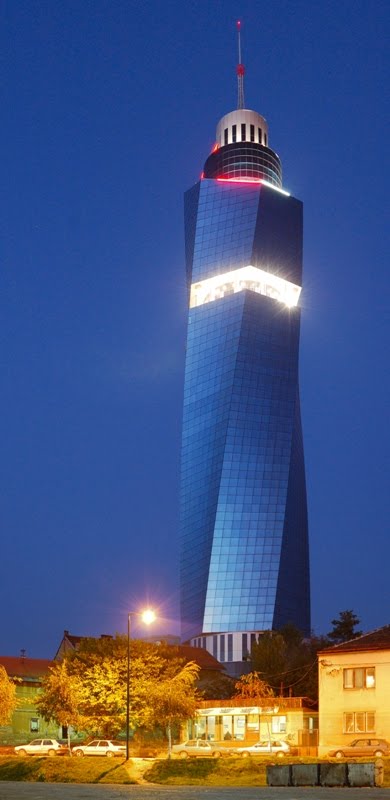
Two of the most iconic buildings in Bosnia Herzegovina are in Sarajevo: the Holiday Inn, and the Avaz Twist Tower (one of my favorite buildings – really cool design! – the headquarters of a large newspaper company). 
 

Bosnia and Herzegovina has a long literary history, starting with the founder of modern literature, Matija Divković. He was a Franciscan and wrote a couple of books on religious topics. He later traveled to Venice and had Bosnian Cyrillic letters cut and molded so that he could print his works.


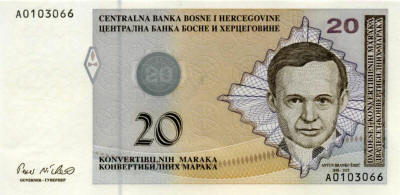
Antun Branko Šimić is a poet who grew up in Herzegovina. He tore himself away from traditionalists and developed a name for himself as an expressionist poet, never really having a large canon of personal works. He did, however, write a great deal of literary criticism and translations. Many times, he would use the decasyllabic foot (meaning to have ten syllables per line) and folk lament style, writing about pain and poverty, life and death, and Herzegovina. His image is on the 20 KM bank note.


Aleksa Šantić is another poet from the city of Mostar in Bosnia Herzegovina who wrote over 800 poems during his lifetime. Šantić lived during the times during the Austro-Hungarian occupation. Many of these poems were critical of the government and the “Establishment,” hoping for diversity in social and cultural aspects.  He was highly influenced by Heinrich Heine (who I mentioned when we did Austria) and translated many of his works.


I actually share a very general and distant tie with the symbolist poet Jovan Dučić. As a writer, he was more privy to the dodecasyllable (having 12 syllables per line) and hendecasyllable (having 11 syllables per line) styles that he picked up from the French. Now here’s where we get to the ties: when Germany invaded Yugoslavia during World War II, Dučić left the country to escape the war, he came to stay with a relative of his who was living in Gary, Indiana. (See, he came to the same state that I live in. I said it was kind of distant.) He later crossed the border and organized an Illinois-based group for Serbian ex-pats who also escaped the war, only to pass away in Libertyville, Illinois two years after coming here. (Ironic name for the place where he finally rested.)

Ok, I really have to say that THAT is some mustache. 
Ivo Andrić is a short story writer and novelist who received the Nobel Prize in Literature in 1961. He mainly wrote of Bosnian life during the Ottoman Empire. The novel that put him on the map, The Bridge on the Drina, was based on a real life bridge near the town of Višegrad on the River Drina where he grew up. After he was awarded the prize money from winning the Nobel Prize, he donated all of his winnings to developing and improving the library system in Bosnia Herzegovina.


Up next: Music and Dance

Tuesday, December 4, 2012

BOSNIA AND HERZEGOVINA: HOLIDAYS AND CELEBRATIONS

It seems like there are a million holidays in Bosnia and Herzegovina, but there are several holidays which are celebrated on slightly different days, depending on whether you are Catholic or Orthodox. There are also some public holidays that may be only celebrated in one region or another (like in Australia). Because of the many religions celebrated here, there are more than the usual number of holidays.

New Year’s Day.  January 1-2. This is a time to bid the old year goodbye by gathering at friend’s or family’s homes and sharing traditional foods together. Bars and restaurants are often filled with partiers, and at the stroke of midnight, people will spill into the streets, often with drinks in hand, to shout and yell, bringing in the new year. Fireworks light up the sky in its own reverie. Children look forward with anticipation to receiving gifts from the adults at this time as well.

Christmas [Orthodox]. January 7. In Orthodox tradition, they celebrate Christmas on this day, based on an older calendar. Many will also take part of a 40-day fast prior to the day and start their celebrations with an elaborate feast after attending a special church service in honor of the day. An old tradition is the cutting of oak branches used to start large bonfires in front of churches and homes, thought to bring warmth, love, and harmony to the community. Some carry on the tradition of baking a gold coin into a loaf of bread, and whoever receives the gold coin gets special well-wishes for the coming year.


Republic Day [Republika Srpska]. January 9.  Bosnia-Herzegovina is divided into two main “states” if you will: Republika Srpska and the Federation of Bosnia and Herzegovina. The Repubilka Srpska more or less follows the border across the northern and eastern sections and is divided in two by the small District Brčko.  The main city in the region is Banja Luka. Basically this region (comprised mostly of the Serbian population of Bosnia-Herzegovina) decided to celebrate Independence Day on this day.

Old New Year.  January 14. Many of the former Soviet countries, as well as Bosnia-Herzegovina celebrate what’s known as the Old New Year or Orthodox New Year. (Another source called it Serbian New Year.) It’s based on the Julian calendar, the calendar used before agreeing to switch over to the currently-used Gregorian calendar in 1918. On this day, many local rock bands perform concerts prior to a firework display at midnight.

Mevlud (Prophet’s Birthday) [Muslim]. Varies. This holiday celebrates the Prophet Muhammad’s birthday. Bosnian Muslims will go to their mosques for special prayers, and some may also sprinkle the people with rosewater while incense fills the atmosphere. Originally, Bosnians sung in Turkish, but since then the lyrics have been translated into Bosnian.

Independence Day [Federation of Bosnia and Herzegovina].  March 1. This day marks the independence of Bosnia and Herzegovina from the Socialist Federal Republic of Yugoslavia. This is only celebrated in the Federation of Bosnia and Herzegovina (as mentioned earlier, the Republika Srpska celebrates it January 9).  Many of the larger cities will have special street parades and state-sponsored cultural shows. Since most people that this day off, they are able to spend it with friends and family.  


Easter [Catholic and Orthodox].  Varies. While Catholics and Orthodox Christians celebrate Easter on different days, they celebrate it in very similar ways.  Traditionally, people would fast for the 40 days prior to Easter, but in recent years most people just fast starting on Good Friday.  Traditional Easter foods include a variety of cold meats and cheese, breads, and of course colored eggs. A lot of the time, eggs are colored red, although you’ll certainly find other colors.  Egg hunts are something of a new thing only in the past 2-3 decades.

May Day.  May 1-2. Most people have the day off of work and school, and commonly spend the day with friends and family.  It’s a popular day for recreation and games, and traditionally roast lamb at picnics.

St. George’s Day [Orthodox]. May 6. Celebrates the Feast of St. George, one of the most important figures in Orthodox Christian religion. St. George is a martyr and is usually depicted as a horse-back riding cavalier valiantly slaying a dragon.


Victory Day [Republika Srpska].  May 9. Also known as Victory Day over Fascism, and most businesses and schools are closed for the day.

St. Vitus’ Day [Orthodox]. June 28. Also called Vidovdan, it’s a holiday that encompasses a lot of sentiments. It’s more of a holiday for the Serbs of this region, and in remembrance of times in history when the Serb-majority areas were overtaken by others that happened to correspond to being on this day. St. Vitus is an important saint to Serbian culture, who was also a martyr and was the one who exorcised the evil out of Diocletian’s son around the same time Christianity was being brought to the Serbs.

St. Peter's Day [Orthodox]. July 12. This day, named after St. Peter, is a pyromaniac's holiday. I say that in jest of course, but one of the traditions is burning things. Many use wood and burn torches now, but in the past, people have burned tires to create an acrid black smoke, signifying the past when people have been burned at the stake.


St. Elijah's Day [Orthodox]. August 2. Also called Ilindan or St. Elias' Day, in honor of an Arab educated in Egypt. Celebrations can be raucous, since it's believed he ascended to the heavens in a fiery chariot. Traditionally, there are a lot of fireworks displays around the area on this day.

Eid al-Fitr [Muslim]. Varies. This day includes special prayers at the mosque and is spent with friends and families with elaborate meals. Eid al-Fitr is the holiday feast that celebrates the end of Ramadan, the month of fasting and reflection.

Assumption of Mary [Catholic – August 15. Orthodox – August 28]. This holiday is centered around the idea that Mary the mother of Jesus ascended into heaven after her death. It is generally celebrated with a great feast and other festivities.

Nativity of the Virgin Mary [Catholic – September 8. Orthodox – September 21]. This is a day in honor of the Virgin Mary, a figure considered highly important in the Christian religion. It’s been written in the Book of James (that was left out of the Bible that we know today) that Mary’s birth was too miraculous since her parents were past age to bear children. There are many symbols used around this time, namely the fleur de lis, pierced heart, crescent moon, among others.

Eid al-Adha [Muslim]. Varies. Also called “Feast of the Sacrifice,” this holiday commemorates Abraham’s willingness to sacrifice his only son. Traditionally, people would sacrifice an animal and give part of the meat to the poor, as well as other charitable acts.  People do dress in their best clothes for special prayer services at their mosque and come home to wonderful feasts with family and friends.


All Saints Day [Catholic].  November 1. This is a Catholic holiday that celebrates all the saints, especially as a catch-all to those saints that do not already have days for them.

All Souls Day [Catholic].  November 2. This day is in remembrance of those who have passed on already. People will take time to care for and maintain upkeep on loved ones’ gravesites.

St. Demetrius’ Day [Orthodox].  November 8. Also called Mitrovdan. St. Demetrius, a martyr from Thessalonica, was baptized in secret since his parents had to keep their Christianity a secret. He’s often thought of as the protector of the young and those who are struggling with extremely alluring temptations.

Dayton Agreement Day [Republika Srpska].  November 21. The Dayton Peace Agreement was held at the Wright-Patterson Air Force Base in Dayton, Ohio in 1995, and set the steps in motion for the end of the Bosnian War for Independence from Yugoslavia that lasted for four years. It’s only celebrated in the Republika Srpska, where businesses and schools are closed for the day. 


Statehood Day [Federation of Bosnia and Herzegovina].  November 25. This day emphasizes Bosnia and Herzegovina’s diversity in race and religion and their vow to work together and bring equal rights to all of its citizens.

Christmas [Catholic].  December 25.  Many family decorate Christmas trees with a variety of toys, lights, ornaments (including chocolate – hopefully it’s not too close to the lights), and topped with a star. The three Sundays prior to Christmas day is designated as special days for children, mothers, and fathers. Christmas Eve is a time for elaborate meals with family that include turkey, stuffed cabbage, spinach pies (which I’ll be making!) and different kinds of desserts. Instead of Santa Claus, they celebrate by having Grandfather Frost bring the children their toys and treats.


Up next: Art and Literature

Sunday, December 2, 2012

BOSNIA AND HERZEGOVINA: THE LAND AND THE PEOPLE

It’s a name I first heard in the early-to-mid-1990s. Not quite sure where it was at the time – generally somewhere in Europe – images of war-torn buildings on fire, people running for their lives in the streets, and two peoples – Serbs and Croats – were my own knowledge of this country with the really long name.  Unfortunately these views stayed with me since I was 14, but now I feel like I’m exploring an entirely different country. Those images that I knew of are only a snapshot of what Bosnia and Herzegovina is all about.


Just east of Italy, Bosnia and Herzegovina is bordered by Croatia, Montenegro, Serbia, and a very small (around 12 miles) stretch of land along the Adriatic Sea. Situated in the Dinaric Alps (also called the Dinarides) on the Balkan Peninsula, it has many areas of limestone and salt deposits. The area has a long history of being ruled by someone else, starting with various Slavic peoples until the Ottoman Empire moved in and claimed the lands, ruling there from the mid-15th century to the late 19th century. They were among the first to influence the culture in this region, chiefly regarding the introduction of Islam and cuisine which changed their previous way of life. Later, the area had been included as part of the Austro-Hungarian Monarchy up until WWI. After that, it was part of the Socialist Federal Republic of Yugoslavia until Bosnia and Herzegovina declared independence in 1992.


The first mention of the word Bosnia was discovered in the mid-10th century, but there are several theories as to its exact etymology. Many historians and linguistics think it may have derived from the Bosna River, one of the major rivers that flow through Bosnia and Herzegovina. In classical Latin, the river’s name was Bossina, or Bosona in Illyrian, both of which mean “running water.” The name Herzegovina came from the German word for “duke” (Herzog) combined with the ending –ovina, meaning “land,” roughly meaning the same as the word “dukedom.” It was in reference to the lands that were owned by a dignitary and nobleman of the 1440s. And apparently, it’s also equally acceptable to refer to the country as “Bosnia and Herzegovina” or “Bosnia-Herzegovina.”

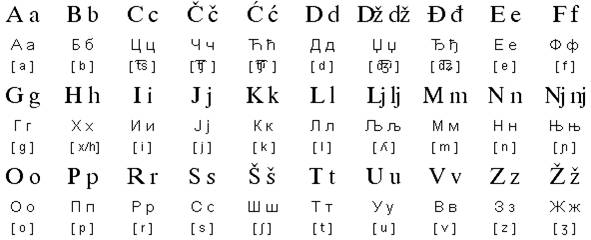
The largest ethnic group is the Bosniaks, followed by another large proportion of Serbs. Croats and others also live throughout the area as well. Because of the divided ethic groups living there, Bosnia and Herzegovina has two official languages: Bosnian and Croatian, although Serbian is also spoken in areas were Serbs tend to dominate and several sources also include it was an official language. All three of these languages belong to the Serbo-Croatian language group, part of the larger Slavic language family. Because of its history, Bosnian is written in both Cyrillic and Latin letters.


The capital is Sarajevo, often nicknamed "The Jerusalem of Europe" or "The Jerusalem of the Balkans" due to its sizable numbers of followers of Islam, Orthodoxy, Catholicism, and Judaism. Sarajevo has had its moments in the international spotlight: the first being that it was the second city in the world (just after San Francisco, California) to have a full-time electric tram running throughout the city.  Sarajevo is also the site where the Austrian archduke Franz Ferdinand (no, not the singer) was assassinated and in essence started WWI. In 1984, Sarajevo hosted the Olympics, only to suffer from destruction due to the Bosnian war for independence nearly ten years later. Even in the midst of reconstruction, Sarajevo has been listed as 43rd best city in the world by Lonely Planet and has made others’ “Top Cities” lists as a cultural capital, hosting renowned film festivals and jazz festivals.


Despite the fact that the country had went through a war (for which the peace treaty was signed about a two-hour drive from me in Dayton, Ohio – how did I not know that?), it certainly has fathomed better than other countries have in comparison in the 20 years after a reconstruction began. They maintain a high literacy rate, overall health and life expectancy, access to clean water and sanitation, as well as education. These things in combination make Bosnia Herzegovina and Sarajevo in particular one of the fastest growing regions in Europe. I think it’ll be interesting to see Bosnia and Herzegovina’s history told through its cultural arts and its cuisine. I already have my menu set and my Spotify playlists made, and I can assure you that this is a country of surprises. I could quite possibly add Sarajevo to my list of places I want to see before I die.


Up next: Holidays and Celebrations