Sunday, October 28, 2012

BENIN: THE FOOD

Today is a special day. Today is my 33rd birthday, and I’m lucky enough to have an awesome meal for the occasion. Most people I’ve talked to sounded confused when I said that I’m making my own birthday meal. But that’s ok; I get that a lot on a normal basis.

Now this time, I couldn’t narrow it down to just one bread – I had to do two. The first bread that I made was a mango bread. It called for fresh chopped mangoes; however, mine weren’t ripe at all. It felt like I was biting into an apple slice, and the flavor was subdued. I chopped it finely in hopes that it’ll soften during baking. It also called to be baked in a Dutch oven. I had to do a little research and came up with this plan: I took a casserole dish and heated it in the oven at 500 degrees for about 15 minutes. Then I put my dough mixture into my silicone loaf pan and placed that in the casserole dish with the lid on for 20 minutes at 450 degrees. That’s enough time to build up natural steam (in lieu of using a steam-injected oven); then you can take the lid off and continue baking for about another 40 minutes. Unfortunately, either 40 minutes was too long or 450 degrees was too high of a temperature (I’m more inclined to think the latter – that part of the directions were somewhat vague), because I took it out and the outsides and bottom were a little more on the burnt side. However, the inside was nice and moist.  So, I tried to salvage as much as possible.

Thanks to Instagram, it lightened the parts that looked burnt. 
I also did a peanut butter bread. This one turned out better than the first one. However, it was just a little less sweet than I thought it was going to be, but nonetheless very good. I’m planning on putting some jelly on it later and seeing how that works out. However, my baking powder may be getting old because I had to take a knife to it and stab it to death in order to break it up. And there were still these minute rocks of baking powder that didn’t get mixed thoroughly, so while it tastes ok, there are these white balls of powder stuck in the middle of the bread.  

Peanut butter bread. It's just calling to add jelly to it. 
My main meal today was called crabe béninoise. A mix of crab meat (I cheated and used fully-cooked imitation crab. Sue me.), chopped onions and tomatoes, a little garlic and chopped pimentos as well as bread crumbs. I went ahead and added some capers too. After that, you place the mixture into ramekins (I found a set of 5 at Goodwill for 99 cents a piece!) and top it off with more bread crumbs.  After baking for a half-hour in the oven, it comes out, and voilà. The recipe I was looking at recommending serving it with rice, but I used couscous instead. I used couscous when I cooked for Algeria.

Originally, I had intended to make some fried pumpkin since I found a recipe for it. Because it’s really close to Halloween, there are pumpkins galore. But I got tired, and I got lazy. More or less.

The final meal. Yes, I know there are no vegetable included in this meal. Next time, I'll make sure of it. 
But no birthday is complete without a cake. Or something sweet at least (with the notable exception that one year, my mom forgot to make me a cake, so we put my candles in some cornbread. But that’s ok, because I happen to like my mom’s cornbread.).  I decided to go with flan au citron, though it’s not my first birthday flan interestingly enough.  But it is my first flan I’ve ever made myself. And I’m also adding an orange sauce (that I pulled from a “Baby Bananas in Orange Sauce” recipe).  It calls to make it in a bain-marie, which is a French term for what is basically a water bath. It sounds really complicated, and I have to admit was a little intimidated by the whole thing. I finally put all the ingredients together in my make-shift bain-marie and everything seems to go ok.  It’s thickening, but even after the recommended 45 minutes, it still wasn’t as thick as I thought it should be. I had to add almost 30 more minutes for it to thicken, which it never did fully. As I shoved it in the freezer to speed up the process of “cooling thoroughly,” I tried to do the orange sauce. It actually turned out – once poured onto the cooled flan – that it turned out to quickly change to rock consistency. Not sure what happened, but I seriously need to read up on making sauces and such. I would definitely fail at being a saucier.

Quasi-flan with orange sauce-flavored  rock sauce. 
Overall, I couldn’t think of any other way I would want to spend my birthday. I spent it at home, with my husband (who got me a new outer tie-rod for my vehicle, because after all, safety is the best gift ever. He also followed up with flowers.) and my kids. And I spent my day doing exactly what I like to do: watched a movie (I watched “Blood Diamond” starring Beninese-American actor Djimon Hounsou), cooking, baking, and writing. I’m hoping this coming year brings more of the same.

Up next: Bhutan

Saturday, October 27, 2012

BENIN: MUSIC AND DANCE

The music in Benin is a montage of music from Africa, from Europe, from the Caribbean and other areas of the Americas. One of the most famous musicians to come out of Benin is Angélique Kidjo. (According to Wikipedia, her real name is Angélique Kpasseloko Hinto Hounsinou Kandjo Manta Zogbin Kidjo.) Listed as one of the 50 Most Iconic Figures from Africa by BBC, Kidjo has performed with numerous musicians the world over. She is fluent in all of the languages spoken in Benin (Fon, Yoruba, and French) as well as English and will sing in all of them. There are even a few songs where she even sings in her own personal language. Since 2002, she has been a UNICEF Goodwill Ambassador and has traveled around the world doing benefit concerts for not only UNICEF but for a number of other charitable organizations throughout the world. Not to mention The Batonga Foundation that she herself founded in order to help girls have the opportunity for secondary and higher education. She really is a great humanitarian and peace ambassador, and she currently lives in New York, NY.  I listened to the album Spirit Rising, which is a live album produced earlier this year of songs she’s performed throughout her career. I really liked the album. And I’m really happy that my library has it. One of the best songs on the album – in my opinion – is the song “Malaika” (which is sung in Swahili).


Another musician I came across is the jazz guitarist Lionel Loueke. Although he was born in Benin, he studied music and jazz in Côte d’Ivoire, France, and the United States. He got the opportunity to perform and tour with the famous Herbie Hancock. He also has performed with a number of musicians all over the world. I listened to the album Heritage and The Virgin Forest: The Complete Sessions, both of which are very good. However, I was more drawn to The Virgin Forest (for which I’m glad that my library also carries this album). There are several tracks that remind me of the bossanova sounds of Brazil. It’s definitely a fusion of jazz and African rhythms and harmony. Herbie Hancock himself recorded and improvised with Loueke on this album which also includes several other guest performers as well. I'm so impressed with this song and the fact that he's not only playing and singing but also clicking with his tongue for a percussive effect. 


Other musical styles have made their way through Benin and have influenced its popular music as well. Hip-hop from the United States through Europe and other areas of Africa led to a rise in popularity as well as reggae from the Caribbean. Like most typical music from Africa, percussion is at the heart and core of it.


When it comes to dance, Ghana, Togo, and Benin share many similarities in the cultural arts. The Adzogbo dance originated in Benin. During the dance, the men would display their charms, especially their love-charms to entice the women. Even though the video above lists that the Adzogbo dance is a war dance, so perhaps the reasons behind it has changed over the centuries, or it may be different in different areas. The Kabre tribe of Benin gave us the Gota dance which was originally a dance designated towards the war god. While these two dances originated from Benin, other dances from these nearby countries are also performed in Benin as well.

Up next: the food!

Thursday, October 25, 2012

BENIN: ART AND LITERATURE

Early art in Benin was not merely art for art’s sake, but it served a purpose: depicting religious, social, cultural, and historical purposes. Much of Benin’s art spans a variety of styles and a variety of mediums. There are masks and figurines that are very typical of central Africa. They use the materials that are around them, so you’ll find much of their art using wood, ivory, clay, terracotta as well as metals such as bronze and brass.


One thing that is particular to Benin itself is called the Ikegobo. And Ikegobo is a cylindrical votive object used to mark someone’s accomplishments. It’s dedicated to the hand, seeing that the hands are the source of wealth and success.  Based on a person’s hierarchal ranking in their society, it can be made of a variety of materials: brass, wood, terracotta, or clay.


Art was always important to Beninese life. They were really famous for their bronze sculptures. These pieces were traded to Muslim traders who helped introduced Beninese art to the world.


Benin, like much of Africa, has a long history of storytelling. And like much of Africa, this was an oral tradition, that is, passing the stories verbally from one generation to another.

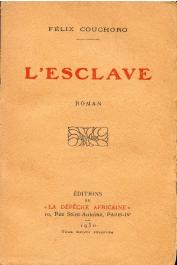
The arrival of the French changed things drastically. First of all, there was the obvious influence from the addition of the French language. The first novel written from a Beninese author, called L'Esclave, was written in 1929 by Felix Couchoro. Since then many authors have carved their niche in Beninese literature.


Most writers are employed in either the education field, in some aspect of government, or in journalism. One name that came up is feminist poet Colette Sénami Agossou Houeto. Not only has she been an educator, but she has written scores of poems. Another female writer is Adelaide Fassinou. She is Benin's Secretary General for UNESCO, yet has still managed to churn out four French-language novels. Paulin Joachim is a journalist and editor who has also published two sets of poetry. He was also the recipient of the W.E.B. Du Bois medal in 2006.

Up next: music and dance

Tuesday, October 23, 2012

BENIN: HOLIDAYS AND CELEBRATIONS

Because Benin has large followers of both Christianity and Islam, both holidays are celebrated in this country. There isn’t a lot of information in Christian holiday traditions in Benin.

New Year’s Day.  January 1. New Year’s tends to be a bigger affair than Christmas in Benin. People will generally gather together with family and friends to cook a big meal, eat and drink and tell stories for hours on end.

Traditional Day.  January 10. Also called Fête du Vodoun. It’s an important celebration in the Vodun religion. While it’s celebrated throughout the country, the largest festivities are held in the city of Ouidah. It starts out with the slaughter of a goat for the spirits and ends as a day of singing, dancing, eating, and drinking (a lot of gin) until you can’t do it anymore.


Prophet’s birthday (Mawlid). Varies. It’s a celebration surrounding the birth of the Prophet Muhammad. Mawlid is celebrated in most Muslim countries as well as countries where there is a large Muslim following. The date varies slightly and is based on the Islamic calendar. Traditions that are generally followed in most countries would be special prayer services throughout the day.

Easter. Varies. For Beninese Christians, the day starts with a church service and then spent with family. Beninese people love to celebrate holidays with food, so many dishes will be prepared and shared with loved ones.


Easter Monday. Varies. Benin is one of the few countries that have Easter Monday off. It is spent relaxing from the previous day’s festivities.

Labor Day.  May 1. It’s a day that celebrates the worker and labor movements. There will usually be a speech from the leaders in the community. Many businesses, government offices, and schools have the day off to spend with family and friends.

Ascension.  Varies. The holiday falls 40 days after Easter, Christians celebrate the ascension of Jesus into heaven after the resurrection.

Whit Monday.  Varies. Also called Pentecost Monday and is celebrated 50 days after Easter. Whit Monday is the day traditionally thought to have been the day which Jesus was visited by the Holy Spirit who descended upon the disciples to give them the “gift of tongues.”

Independence Day. August 1. This day commemorates Benin’s independence from France in 1960.  The entire country erupts in celebrations, with decorations and music everywhere. The flag is hung from businesses and homes, the national anthem is sung, and community leaders will give speeches.


Assumption.  August 15. Assumption is the day that Catholics believe that Mary the mother of Jesus had ascended into heaven. Traditions vary from country to country, but in most Christian countries, especially those of a strong Catholic following celebrate it quite grandly.

Eid al-Fitr. Varies. This is the day of the marks the end of the month-long fast called Ramadan. It’s basically a feast day, with many special foods that are made for this special occasion. People generally spend the day with friends and family and attend special prayer services for this day.


Eid al-Adha. Varies. Also called Tabaski in Benin and many other Western African countries. It’s the day commemorating Abraham’s willingness to sacrifice his only son. Many traditions include the slaughter on an animal and giving 1/3 to family or friends, keeping 1/3 for your own family, and giving 1/3 to the poor or other charitable organizations.

Armed Forces Day.  October 26. It’s a day that celebrates all branches of the military. It happens to be the same date that Lt. Col. Mathieu Kérékou overthrew the previous administration.


All Saints’ Day.  November 1. This Catholic holiday is basically a catch-all celebration in honor of all the saints, especially those who don’t have their own celebration day.

National Day. November 30. This happens to correspond to the day that Lt. Col. Mathieu Kérékou announced that the country would be Marxist and then changed the name of the country to the People’s Republic of Benin.


Christmas Day. December 25. Most people don’t have the money for elaborate gifts in Benin. But one thing they do is that they share elaborate meals with family and friends, telling stories and playing music. Many will try to buy certain kinds of meats and special treats for this day that they normally don’t have the money to buy throughout other times of the year. Much of the commercialization of the holiday is lost, and one blog I read said that many Beninese even go so far as to say that Santa Claus died a long time ago, so how could he drop off toys?

Up next: art and literature

Sunday, October 21, 2012

BENIN: THE LAND AND THE PEOPLE

Tucked away in Western Africa, Benin [pronounced beh-NEEN] is a small country that touches the Atlantic Ocean. Originally called the Kingdom of Dahomey and later called the Republic of Dahomey after their independence (*adding to my list of favorite names), it was later changed to Benin, named after the body of water that lies near it: the Bight of Benin. [A bight – a new term for me – is a geographic term in this sense meaning a large, slightly receding bay.]


Benin is a narrow strip of land that touches the Bight of Benin (Atlantic Ocean) and is bordered by Nigeria, Niger, Burkina Faso, and Togo. The country is hot and dry, with definite rainy seasons and dry seasons. The land is actually somewhat diverse: the coastal areas have many low-lying, sandy plains, forest-covered plateaus to rocky hills and mountains. There are a couple of nature reserves in the northern part of the country, providing great places to be able to see the flora and fauna in the natural habitats.


The Kingdom of Dahomey was known for its military and soldiers – both men’s and women’s corps. For about 300 years, the kingdom was right in the middle of what was known as the “Slave Coast.” And for a while, the Dahomey warriors avoided being part of it, but it did eventually catch up to them as well until it was banned in 1885. By the end of the 1800s, the kingdom had declined, and the French took over the area and controlled it for nearly 60 years until Benin’s independence from France. There was a period in its history where there were several changes in its name as well as its political stance.  In October 1972, Lt. Col. Mathieu Kérékou took over and officially declared Benin as a Marxist country. Scores of teachers and other professionals eventually left the country to escape the regime’s overextended power. In 1989, Kérékou conceded to allow the elections that eventually voted him out, and the name was changed to the Republic of Benin the following year.


Much of Benin’s economy is based on subsistence farming, cotton production and trade. However, there are problems with lower wages for women, child labor, and forced labor. Health care is at a dangerous low. The vast majority of people don’t have access to health care, and there aren’t enough doctors and/or hospitals. Basic sanitation and access to clean drinking water aren’t available in many places, especially true in the rural areas. Risk to infectious diseases are very high: diseases such as hepatitis A, typhoid fever, malaria, yellow fever, meningococcal meningitis, and rabies. Benin is also plagued by high infant and maternal mortality rates with an overall life expectancy of around 60 years old. Benin also has one of the lowest literacy rates in the world, and it’s lower if you’re a female.


Many people in Benin utilize Akan naming traditions, that is, naming children based on the day of the week they were born, birth order, or any special circumstances to which the child was born. One famous example of this would be former Secretary-General of the UN Kofi Annan. (He’s actually from nearby Ghana.) His first name corresponds to Friday, and his middle name of Atta corresponds to him being a twin.

Benin is one of those few countries that has two capitals. The official one is Porto-Novo, but the seat of government is in nearby Cotonou. Because of the French occupation, the French language is the official language, however most people also speak Fon or Yoruba as well as other local and regional African languages. The Fon do make up the majority of ethnic groups in Benin. There are slightly more Christians of various denominations in Benin, followed by those who practice Islam and Vodun (spelled a variety of ways, an animalistic religion that is related to Voodoo in Louisiana and Santería in Cuba).


Benin’s roots as a strong people, the cultural melding of its history, and its geography excites me to delve into its cultural arts, especially its music and cuisine. A country I had only a little pre-knowledge about, my preliminary research has piqued my interest in a country most Americans don’t know where it is, if they’ve even heard of it.  It happens to be a treat for me, since I am cooking and baking on my birthday.

Up next: Holidays and Celebrations

Sunday, October 14, 2012

BELIZE: THE FOOD

This week’s bread is a Belizean banana bread, something I absolutely love but have never made. I bought my bananas a few days ago in hopes that it would be ripe enough for today. I started out by creaming butter and sugar, then adding the other ingredients and flour mixture. After baking it for an hour, it smelled incredible. The recipe said it was going to be a very moist bread, and it definitely was (most likely from the evaporated milk and four bananas that went into it). Actually the person who had wrote the blog I got this recipe from had mentioned that she had put cinnamon chips into it, but I couldn’t find any. However, I might try some macadamia nuts next time.

Mouth-watering. Resistance is futile. 
I also tried a recipe for sweet potato pone (or pudding). It started out with grating sweet potatoes (which gave me flashbacks of that dish I made from Antigua and Barbuda), adding some sugar, coconut milk, evaporated milk, and vanilla extract. It’s all mixed together then baked for almost an hour. My husband remembers his grandmother from the Deep South [of the US] making sweet potato pie in a similar fashion. One problem that I had was that the recipe called for a 9x11 metal baking pan, and I don’t have one, so I used a silicone round pan. It really tasted like it needed a crust or something. Good, but I think it would’ve set up better if I used the right materials.

Ok, so it does taste like it needs to be baked in a crust.
Next came the heart of palm burritos. I love heart of palm; I had used it in a Brazilian dish I had made several years ago. To me, it’s similar in texture to artichokes (which was suggested as a substitute) but smoother on the outsides. It’s sautéed with onions, garlic, tomatoes, and green peppers. It called for achiote seasoning (also called for annatto). I couldn’t find either one, so I had to resort to substitutions (I used a combination of turmeric and Spanish smoked paprika). It turned out really well; I had been looking forward to this dish all week. And it delivered. My daughter ate hers up, my son picked at his (of course), and even my finicky husband tried a spoonful (“Hey, it’s not slimy.”).

Hearts of palm burritos, minus the burrito part yet. 
I went with a soup this time for the main dish: escabeche hot and sour chicken soup. I made several amendments with the recipe.  I went less on the hot by leaving out a lot of the hot peppers. I used green chiles instead, but added a little Caribbean Jerk seasoning. I also used half chicken broth and half water. And I also used celery instead of green peppers (because I forgot I only bought one green pepper and let the kids snack on half of it). I also didn’t use a whole chicken; I used boneless skinless chicken breasts. And the recipe didn’t say when exactly to put in the vinegar or which kind to use, so I used white wine vinegar and added it in after I put the chicken in the boiling stock water. But regardless, it made a tasty soup.

If this is Belize, count me in. Best enjoyed with the music of Andy Palacio. 
I enjoyed this meal. A lot. It was simple in its ingredients and simple in the way it’s made. It seems like it’s the type of meal that is best enjoyed with friends and family, telling stories and enjoying good times. We spent our meal listening to the kids talking about the space jump today, asking for more food, then trying to convince me they were full, all with the sounds of the MotoGP race going on in the background. This is the soundtrack of my life.

Up next: Benin

Saturday, October 13, 2012

BELIZE: MUSIC AND DANCE

Although the British had its presence in Belize for centuries, the largest influences on their music come from the Africans who were brought there and the indigenous peoples who were there, and the intermixing of all cultures that came from it.

One of the genres most identified with Belizean music is brukdown. The term is most likely taken from the phrase “broken-down calypso” and is related to Trinidadian calypso music. Brukdown is a combination of Creole harmonies based on European styles, African rhythms as well as the call-and-response format. It’s really more of a rural music form. Some of the instruments that you’ll find in brukdown music are banjos, guitars, drums, bells, accordion, and a donkey’s jawbone and/or grater. In recent times, these bands have also been called “boom and chime groups.” One of the most famous brukdown musicians is Wilfred Peters, long considered one of Belize’s national icons.


Mestizo music is characterized mainly by marimba music. (I am a huge fan of the marimba, even though I mostly used to play the xylophone in college and part of high school. Once I went to the Woodwind and Brasswind store in South Bend, IN, and they had a 5 ½ octave marimba. It was so beautiful. I may or may not have drooled on it.) A marimba is in the keyboard percussion family and usually made of wood (mostly rosewood, but sometimes mahogany). It’s played with mallets, and the heads are made of yarn wrapped around rubber. There are several marimba bands that gather and perform, but probably the most famous bands are the Los Angeles Marimba Band and the Alma Belicena.


The Garifuna also have many of their own styles of music, the most popular being punta or punta rock. Punta is mostly performed at holidays, parties, and other social events. Punta is also a dance that accompanies the music, where one couple dances in the center of a circle, and the people surrounding them clap in rhythm. Lyrics are not just limited to Garifuna, but also may be sung in Kriol, English, or Spanish. However, punta rock is almost always sung in Garifuna or Kriol.  Some of the most famous punta rock musicians you’ll run across is Andy Palacio, Mohobub Flores, Pen Cayetano (yeah, the same as the artist), and Paul Nabor. I found Andy Palacio’s album Wátina at the library and listened to it all day in the car on my day off today. I absolutely love it, and my daughter told me that “everyone in the world needs to have a copy of it.” In some songs, it reminds me of the rhythms and harmonies in some of the music from the Cape Verdean musician Cesaria Évora.


Because of its ties and proximity to Jamaica, the influence of reggae and dancehall is also really popular. Some of the more popular dancehall musicians that are listened to in Belize are Vybz Kartel and Mavado (both from Jamaica). I have both in my Spotify playlist for Belize, and I like both. But I’ve been a fan of reggae and dancehall for many years, although these two artists were new names to me. Even though they aren’t exactly from Belize, I included them anyway.


Up next: the food!