Thursday, June 12, 2014

ESTONIA: ART AND LITERATURE


It can be assumed that Estonian art goes back to antiquity when the early settlers to this area created carvings from bone and stone.  Folk art and handicrafts were the most common art forms and influences from the various occupations are evident in their art. Ethnographic materials (usually as geometric designs) are found on mittens, belts, other textiles, and art work.  Art historians have researched these for years to try to find a meaning behind these, but it’s not clear if there is a meaning. Any key for deciphering these symbols has been lost throughout history. Many of these symbols are incorporated into textiles and jewelry nowadays, and may have similar meanings to other Baltic ethnographic art. 


Many of the attractions on tourist’s lists fall in Estonia’s architecture. There are many  Medieval castles, forts, and churches still stand to this day.  Old town Tallinn, placed as a UNESCO World Heritage Site, is a great example of Gothic architecture, influenced by Germans who moved into this area. Later Baroque and Rococo architecture dominated the Russian regional government buildings. During the 19th century, Neo-Gothic and Art Nouveau can be seen throughout the cities and countryside, especially in many of the manors.


The first person attributed as being the first professional artist is Johann Köler (1826-1899).  He is most widely known for pulling himself out of poverty to attend the Art Academy in St. Petersburg, Russia and making a name for himself as a portrait artist. He was lucky enough and talented enough to attract the attention of many of the who’s who in St. Petersburg.  Köler was also instrumental in promoting the art scene and local artists as well as art education.

Johann Köler's mother

Artist Ants Laikmaa, the 13th child of his family, studied art and gave exhibitions in several countries across Europe.  He was most known for his watercolor paintings, mostly landscapes and portraits. Although he never married, he did have one daughter. Laikmaa bought a farm where he worked until he died; after he died, it was turned into a museum in 1960. 

by Ants Laikmaa

I found I’m quite attracted to the landscape painting of Konrad Mägi.  His bright colors are a contrast to that of Laikmaa who tended to use more subdued color contrast.  While studying in Paris, he became influenced by the Impressionistic style of painting, one that I’m a fan of. After WWI, he began to delve into the Expressionist movement, and it could also be seen in his work at that time.  Several years later, he traveled to study in Italy and was influenced by the emerging Art Nouveau styles.

by Konrad Mägi

Founded in 1914 in Tallinn, the Estonian Academy of Arts is the only art school in Estonia. It provides studies in art, design, media, art history, conservation-restoration, and art education. During WWII and during the Russian occupation, classes and programs were modified and some were completely removed or untaught. However, after they regained independence, the school built itself back up as the premier school to study art in Estonia.


The earliest piece of literature written in the Estonian language was The Chronicles of Henry of Livonia. The earliest printed material is a translation of Martin Luther’s Catechism.  While the earliest form of Estonian poetry was produced in 1637, it wasn’t until almost two centuries later when Kristjan Jaak Peterson would be considered the founder of modern Estonian poetry.  Unfortunately, he died at the young age of 21; to accomplish such a title at such a young age is certainly a splendid feat (although much of his poetry was published posthumously). Many of Estonian writers were still writing poetry in both Estonian and German.

By the time the late 19th century rolled around, poetry was still the most popular writing style, but prose was making its entry as well. Different groups of writers were starting to emerge as well: one was the Noor-Eesti (Young Estonia), and another was made of writers of the Siuru movement. Literature magazines were also beginning to be established during the first decade of the 20th century. During the wars, prose took at turn towards realism, as a way of coping with the changes that war brings. Once Estonia became an entity of Russia again, many of the prominent writers went into exile in neighboring countries and some even further away.  Those who stayed were forced into a strict censorship.

Jaan Kross
Today, Jaan Kross and Jaan Kaplinski are among the most famous Estonian writers and have had their works translated the most.  Kross grew up in Tallinn and later studied at the University of Tartu.  After the Nazis invaded Estonia, he was locked up on charges of promoting Estonian nationalism.  When the Russians took over, he was arrested again; this time, eventually sending him to a forced labor camp in Russia for a total of eight years. Once he was finally free to return to Estonia, it was 1954, and he started writing. The Czar’s Madmen and Professor Martens’ Departure are two of his most well-known novels and most translated.  One novel, Excavations, is thought by some literary critics to be one of his best works; however, it has only been translated into German.

Jaan Kaplinski
Jaan Kaplinski is a writer, poet, philosopher, and translator. Influenced by Eastern thought (mainly Taoism and Buddhism), he’s translated a number of Chinese classical poems. During the Soviet occupation, Kaplinski was one of the authors of the “Letters from 40 Intellectuals,” an unpublished letter written regarding the behavior of authorities during that time. He has also been a member of the Estonian parliament since the mid-1990s. While he has switched parties a few times, he’s currently a member of the Estonial Social Democratic Party. And interestingly enough, he also has a main-belt asteroid named after him: 29528 Kaplinski was discovered in January 1998.

Up next: music and dance

Tuesday, June 10, 2014

ESTONIA: HOLIDAYS AND CELEBRATIONS


New Year’s Day.  January 1. For Estonians, New Year’s Eve is a night for parties as they anticipate midnight.  Some parties can be large and are held in hotels and clubs, or they can be smaller affairs held in someone’s home. Good food and plenty of drinks are the unifying theme here as they await the ringing in of the new year.


Independence Day.  February 24. This holiday celebrates Estonia’s independence from Russia in 1918.  In April of the previous year, Estonian officials together with military personnel gathered in St. Petersburg for a demonstration towards the self-governing of Estonia. Finally with a two-thirds vote in February 1918, Estonia gained its independence. Each year, government officials will place wreathes on the base of the Estonian War for Independence Monument in Tallinn and observe a flag raising ceremony.  Despite the cold, people will often head to museums (those that are still open on this holiday), attend concerts, and sporting events.

Good Friday/Easter.  Varies.  Because of the nature of the holiday, Good Friday is a day for contemplation and mourning for Estonian Christians.  Many of those people will attend special Good Friday services at their church.  A couple days later, the mood changes drastically.  Easter not only celebrates the Christian belief that this is the day Jesus Christ rose from the dead, but it’s also celebrated as a spring holiday.  You’ll find your fair share of chocolate eggs and brightly colored feathers, and some older traditions, such as the egg-knocking competitions (basically, knocking eggs together, trying to break your opponent’s egg without breaking your own in the process).  And it wouldn’t be Easter without pasha: a dessert of drained cottage cheese, raisings, nuts, and candied peel or compote berries (stewed fruit with syrup).


Spring Day (May Day).  May 1. This holiday primarily celebrates the beginning of the spring season.  With ties to Walpurgis Night, many people (and especially college fraternities) celebrate by dressing as witches the night before and having huge bonfires. And the thing I kept seeing over and over again is that it’s basically become a night of partying and drinking. So, it’s probably a good idea that May 1 is a day off. Perhaps it should also be called Day of the Hangover. May Day is also celebrated as the International Day of the Worker in many countries as well.


Whitsunday (Pentecost).  Varies. Whitsunday is the Christian feast day in accordance to the belief that this was the day in which the Holy Ghost descended upon the disciples of Jesus Christ.  This day is sometimes called Pentecost because it falls on the 50th day after Easter.  Doves are a common symbol for the Holy Ghost, so it’s common to see this portrayed on this day. 

Victory Day.  June 23. This day commemorates the battle in which Estonian forces and allies defeated German troops in the Estonian War for Independence, which happened just after the end of WWI.  Festivals are held in different cities and towns including holding bonfires at night.  A Victory Flame is lit in honor of those who have passed away in the battles fighting for their country. This holiday is also the first day of the two-day celebrations that spill over into St. John’s Day/Midsummer Day.


St. John’s Day/Midsummer Day.  June 24. In conjunction with Victory Day, these two days constitute the main summer holiday.  Also known as Jaanipäev, it was originally a pagan holiday associated with the summer solstice, involving drinking, dancing, singing, and bonfires (they really like their bonfires, don’t they?); it was later given the association with St. John when Christianity made its way into Estonian lands.  One midsummer tradition is to light a bonfire and then to jump over it (I hope it’s small, because I can foresee a lot of problems here if it were me because I’m kind of short). It’s seen as a way to gain prosperity and get rid of bad luck.  It also is a night for lovers. In folklore, the lovers Koit (dawn) and Hämarik (dusk) meet together for a brief kiss on the shortest night of the year.  However, earth-bound lovers head into the forests looking for the flower of the fern, which is said to only bloom on this night.  I read that Estonia’s forests cover roughly 50% of the land. So… good luck with that.

Day of Restoration of Independence.  August 20.  This holiday celebrates the restoration of independence after the break-up of Russia in 1991.  Parades and concerts are held in various cities across the nation as people celebrate the day off. 


Christmas Eve/Christmas Day.  December 24-25. In Estonia, Christmas is a mix of ancient pagan practices (tied to winter solstice) and traditional Christmas events.  This pagan-Christian combination was also seen during the summer and spring holidays.  The season starts at the beginning of Advent.  Christmas Eve tends to be the busier of the two days.  For the past 350 years, the President of Estonia has delivered the Christmas Peace on Christmas Eve.  (That’s a long time! In comparison, that’s been happening 112 years longer than the US has even been a country!) Pigs are slaughtered and ale is commonly brewed in association with St. Thomas’ Day (taking place on December 21), and some places have even banned loud work, such as grinding and horse-driving because it was thought that the noise would disturb the good spirits.  On Christmas Eve, taking a steam bath is customary, and people would often wear new clothes to the evening church services.  One tradition is to bring in the Christmas straw (as in hay, not like a drinking straw. That would be weird. I’m sure it probably has something to do with the manger story.) Good luck picking all that up. Because they obviously haven’t encountered Christmas tree icicles (almost as laborious as Easter grass).  They also borrowed the tradition of the Christmas tree from the Germans.  Presents are opened on Christmas Eve, but the Santa Claus story is a fairly recent adaptation.  Visiting the Christmas village in Tallinn is a yearly tradition for many people. Traditional meals such as pork and sauerkraut (is there any better thing?) and blood sausage are common as well as serving a Christmas bread called barrow and various sweets. 

Boxing Day.  December 26.  There are a few theories about the origins of Boxing Day, but the oldest traditions tend to tie it to England. Some say it goes back to the day you get rid of boxes after Christmas, but others say it has to do with alms that were given to the church in special boxes. In modern times, many countries who celebrate Boxing Day also refer to it as the Second (or Third) Day of Christmas. Stores that are open will often have really great sales.

The following are a list of holidays that are also celebrated in Estonia, but workers generally do not get a day off for these:  Epiphany (January 6), Anniversary of the Tartu Peace Treaty (February 2), Native Language Day (March 14), Mother’s Day (second Sunday in May), National Flag Day (June 4), Day of Mourning and Commemoration (June 14), European Day of Remembrance for Victims of Stalinism and Nazism (August 23), Grandparent’s Day (second Sunday in September), Resistance Fighting Day (September 22), All Souls’ Day (November 2), Father’s Day (second Sunday in November), Day of Declaration of Sovereignty (November 16).

Up next: art and literature  

Saturday, June 7, 2014

ESTONIA: THE LAND AND THE PEOPLE


There are a few countries that are tucked away in the mysterious corners of Europe, popping up after the massive creation of independent countries during the late 1980s and early 1990s.  Estonia is one of those countries that I only recognized as breaking away from Russia and that its capital Tallinn was mentioned in The Girl With the Dragon Tattoo series as a trafficking destination.  Despite those dismal attributes, I’m finding there are other far cooler things worth mentioning about this fascinating country. 


The name for the country in the Estonian language is Eesti, which is derived from the Ancient Roman word for the area Aesti.  Although other Scandinavian and Germanic names refer to the area as Eistland and Estland, later Latin versions of Estia and Hestia more likely lent its name to Estonia, as it’s called in English. Estonia lies in the northeastern corner of Europe, with Russia to the east, Latvia to the south, Finland directly to the north across the Gulf of Finland, and Sweden to the west farther across the Baltic Sea.  In fact, the distance between the capital Tallinn and the Finnish capital of Helsinki is merely a 51-mile ferry ride.  There is actually a proposal to build a tunnel for freight-only between the two cities (the shortest distance would be about 50 km/31.1 mi), which would make it the longest tunnel in the world (far longer than the Chesapeake Bay Bridge-Tunnel in Virginia that I traveled as a kid, which is 37 km/23 mi). 


The earliest peoples moved into the area after the last glacier melted, about 11,000 years ago.  The oldest settlement dated, the Pulli Settlement, is on the river Pärnu. Historians and anthropologists have noted the changes as the Aestii people moved through the Bronze and Iron Ages, utilizing tools and moving into a more agrarian society, often considering them the ancestors of Baltic peoples. Estonia also had its own Vikings, called the Oeselians, who mostly lived on the island of Saaremaa in the Baltic Sea.  This island is also known for being the site of a major meteor crash that formed the Kaali Crater. 

During the 12th century, Denmark set its sights on Estonian lands and took it as its own.  They set up their capital in Reval (later known as Tallinn). Estonia, and more specifically the Livonian Confederation, was quite receptive to Martin Luther’s Reformation. The Livonian War of the mid-1500s, was drawn on religious lines among other things and ended up reducing their population by almost half. After the war, control of the country was handed over to Sweden, and the population boomed once again – until the plague hit, followed by the Great Famine three decades later. Roughly 20% of the population wouldn’t make it through those.


Russia later took control of the area, and after WWI and the Estonian War for Independence, they declared independence in 1918 from Russia.  However, Russia took it back during WWII, where it remained under their control until Germany invaded Russia and eventually reached Estonia. Then, to add to the tug-of-war occupation, Russia took it back several years later toward the end of the war where it remained occupied until 1991.

The capital city of Tallinn, is an important port city on the Baltic Sea.   Not only is it the capital but also the largest city in the country.  The old town is listed as a UNESCO World Heritage Site.  It’s also listed as one of the world’s most digital cities. Estonia on a whole can enjoy bragging rights for having one of the fastest Internet speeds in the world.  Tallinn, which used to be known as Reval, has very strong ties to the information technology industry, called by some as the Silicon Valley of Estonia.  In fact, much of the development for Skype and Kazaa was done in Estonia. Tourism is also an important industry in Estonia, famous for its castles, zoos, museums, cultural and historical arts centers, shopping, and sports venues. 


Estonia is considered a high-income country. It also has a low ratio of government debt to GDP as well.  Oil shale mining supplies roughly 90% of electricity for the country.  The country used to be dependent on agriculture, but in modern times, that has given way to food, construction, and electronics-based industries. The strongest trading partners tend to be other Scandinavian countries, as well as Russia, Germany, the UK, and the US. 

Most of the people here speak Estonian, a language closely related to Finnish, although there are strong borrowings from other Germanic languages. Many of the older Estonians may still also use Russian as a secondary language, left over from the previous Russian occupation.  The most commonly studied foreign languages in schools are English, Russian, German, and Finnish. 

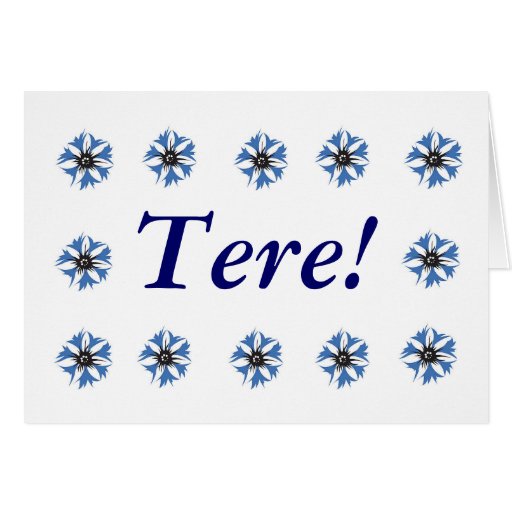
Tere means Hello in Estonian.
Clearly, Lutheranism took a strong hold in Estonia from the early days just after Martin Luther hung his famous Ninety-Five Theses.  However, since then, other Christian denominations are also found in Estonia, as well as many followers of various earth-based religions, Islam, and Buddhism. Many Estonians also consider themselves to have no religion at all, or at least some kind of open preference for no one religion in particular. According to some polls, while many Estonians do technically list a religion when asked, many of those also feel somewhat blasé about the whole religion issue, causing Estonia to be listed as one of the least religious countries in the world.

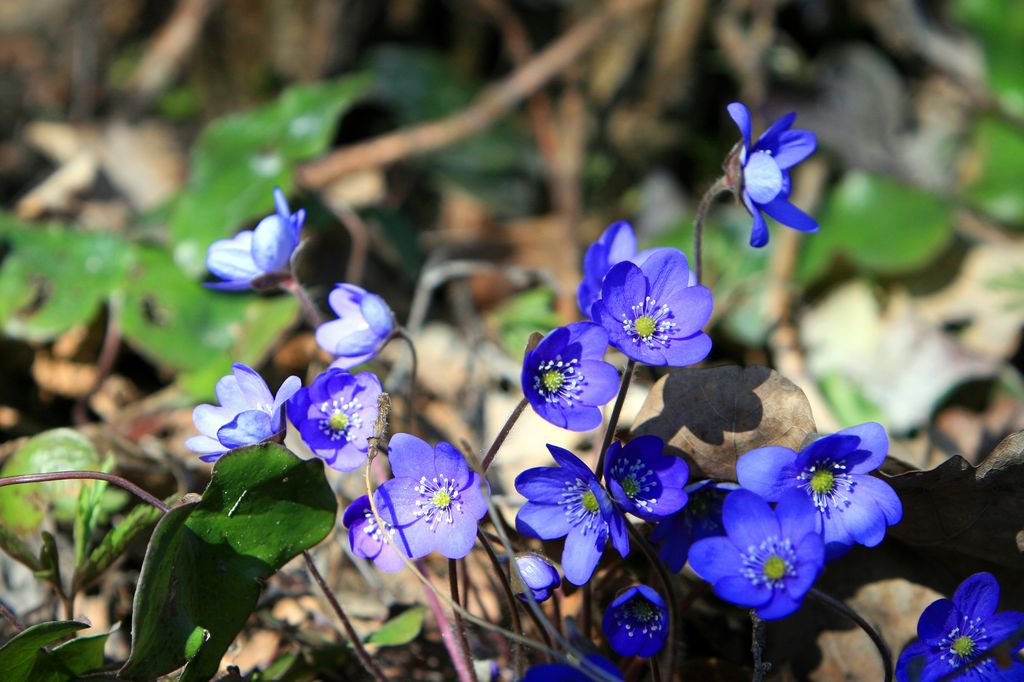
Sounds like my kind of place: saxophones, coffee cups, silverware, martinis, WiFi, and more.

While small and somewhat unassuming, Estonians are doing some fairly progressive and cool things.  They were the first country to try online voting in national elections. They also have one of the largest catalogues of their own folk songs: coming in with over 133,000 written records. Another cool thing for residents of Tallinn is that they get to enjoy free public transportation. (I’m adding this to my list of reason why I should move to Tallinn.) Another thing that I like is that Estonia puts responsibility on pedestrians and bike riders alike in the requirement that if you are walking/riding at night, you have to wear reflective gear.  Makes sense.  All Estonian schools are hooked up to the Internet, and they also have super high literacy rates as well. (Adding this to the list as well…) I have my issues with the flat tax system, but they were the first country to enact this. It hasn’t worked in other countries that tried it after the economic crisis, but it seems to work in Estonia. Another thing that works for me about Estonia is their food. I’m already craving the recipes I picked out. So, without further ado, let’s go explore Estonia.

Up next: holidays and celebrations

Sunday, May 25, 2014

ERITREA: THE FOOD


Today was the 98th running of the Indianapolis 500.  And in Indianapolis, it’s practically a holiday in and of itself.  The whole month of May is one giant festival pretty much.  We won’t be able to see it on TV until this evening, but we normally listen to it on the radio or follow the live results online, which is what I do.  (Here’s a fact to those who don’t live around here: the famous track isn’t technically in the city of Indianapolis: it’s in the city of Speedway.  Back in the 1970s, many of the smaller towns in the county became part of the city of Indianapolis, but there were four communities who opted out, and Speedway was one of them.  Now you can impress your friends.) 

Slightly blackened, yes. And yes, I used a filter to lighten the photo a bit. 
And in lieu of the typical hamburgers and hot dogs on the grill – we’ll do that tomorrow for Memorial Day – my family is having food from Eritrea for our race day fare. Today, I started with making a bread called hembesha.  First of all, I searched all over the south side of Indianapolis for fenugreek seeds.  But after four stores, I finally found it at the international grocery store.  So, this bread starts with dissolving the yeast in warm water (I suspect that my water may have been too hot), then mixing an egg, oil, and ground fenugreek, ground coriander, ground cardamom, and minced garlic into a separate bowl.  After putting half white flour and half wheat flour in a large bowl, I poured the egg/spice mix into it and the yeast/water mix in as well.  Once I got the dough so that it wasn’t sticky, I let it sit for an hour.  By then, it was time to punch it down and knead it again and form it like a flat round disk and let it sit for another 45 minutes to rise again.  I took a knife and cut some decorations into it (I modeled it after one that I saw as I scrolled through some Google images of hembesha).  For a yeast bread, this was baked a little differently: I put a small amount of oil in a skillet (although the recipe didn’t mention to do so) and placed the bread in it, covering it with a lid. I was supposed to flip it over after ten minutes and bake it for five more minutes, but it got left in a little longer giving it an unintended scorched look.  I took the bread and immediately put it on a plate to cool, but brushed a little water and melted butter on top.  It’s normally cut into wedges when served. Although it was slightly blackened and none of my designs came through, the spices made up for it. I thought it was really good.

Macedonia di frutta. Mmmmmm... Definitely needs ice cream.

While the bread was resting, I made Macedonia di frutta, a type of tropical fruit salad.  This salad called for sliced bananas, orange slices, papaya, and guava.  I looked everywhere for guava, but no one had any, so I used mango.  One of the finest things in the world is a ripe mango. Then I drizzled ½ cup of grenadine syrup over the fruit. Because I think grenadine syrup is super sweet, I added a little lemon zest on top.  Because zesting a lemon never gets old.  After it sat for a few hours, it was absolutely wonderful.  My husband and I want to put the fruit salad on top of some vanilla ice cream, one of my favorite summertime treats. 

This was soooooo good. I wish my family could handle it if I made it spicier. 

And finally, we come to the main dish: kulu’wa.  It’s like a spicy beef stew without a lot of the vegetables.  The recipe didn’t say this, but I browned the stew beef lightly first and then stored it to the side. I fried the onions in butter, adding in a can of tomatoes, garlic, and berbere spices. This is a special spice mix made of 15 different herbs and spices (piri-piri chiles, cayenne chilies, paprika, garlic powder, onion powder, sea salt, ground ginger, ground cinnamon, ground turmeric, cloves, cumin, fenugreek, cardamom, black pepper, dried thyme leaves – basically I should just empty out my spice cabinet into a container).  I didn’t exactly use all of these, but I added a dash of most of them.  Once I let the onions and tomato mix simmer for five minutes, I added the meat back in and let simmer with a lid on it for about 25 minutes.  I ladled it on some couscous, and it was really good that way.

The final product. Once again, looking forward to some awesome leftovers.  
Altogether, the meal was really good. The sweetness of the fruit salad balanced out the spiciness of the beef.  My son has decided that he doesn’t like any food that I make anymore, and especially if it’s called “dinner.”  I did get him to eat an arugula salad last week though.  So, I’m still winning. They’ve decided they’re starving – no, famished— as soon as I say, “It’s time to go to bed!” Perhaps, I should be more Brazilian: feed them more for lunch and have a lighter dinner at 9:00 at night.  It’s probably a phase they’re going through. I’ll figure it out just as soon as they change. And even though I burnt the bread, the rest of the meal made up for it. I guess you live and learn.  But now, it’s time for some ice cream. 

Up next: Estonia

Saturday, May 24, 2014

ERITREA: MUSIC AND DANCE


Eritrea has its own rhythms, but that’s fairly apparent. (Well, to be fair, it probably shares some of this with Ethiopia and neighboring countries as well. That’s just how music is. Good music is hard to keep in one place.) Dance often utilizes these rhythms, most notably seen in two of the most prominent dance styles.  One dance called the quda starts as a circle dance where the dancers shuffle their feet to the beat, moving their shoulders as well. The dancers will migrate to form groups of three and dance to each other before expanding back out to the group circle.  By the end of the song, the tempo starts to accelerate, and the dancers try to keep up with the frenetic dance moves, which require a lot of strength and agility.  Another common dance style involves two lines of dancers facing each other (usually men on one side and women on the other), and they dance towards each other. Like an Eritrean country line dance. (Or not.) Different ethnic groups have their own variations and styles of dances based on the function and purpose of these dances. 


Instruments that are used in Eritrean music commonly include the kraar (five- or six-stringed lyre, tuned to the pentatonic scale), the kebero (a double-headed hand drum, available in large and small sizes), lyres, and the wata (a rough version of an early violin).  Modern Eritrean music uses a variety of horns, woodwinds, and electronic instruments. 

Kebero

Kraar

One of the most popular musicians is Bereket Mengesteab.  His music is definitely rhythm driven, with a unique identifying rhythm that stubbornly beats its way into my head. From what I can tell, it’s like a 4/4 beat where the second and fourth beat is a triplet, which gives it a driving feel to it.  With its woodwinds as polyphonic accompaniment to the vocals, I find it somewhat complex in composition after really listening to it. 


I also listened to Yemane Barya’s album Zemen.  Slightly more ethereal sounding in instrumentation, yet the vocal style –and I noticed this with Bereket Mengesteab’s music as well— seems to make use of the scales and trills indicative of Middle Eastern and Indian music.  The rhythms seem to be typically straight 4/4; however, there are variations of the rhythms I mentioned earlier and subtle syncopations included at times in the music. 


I also came across the very beautiful Elsa Kidane, and I was happy that I was able to find some of her music on Spotify.  There weren’t too many female musicians mentioned in lists of Eritrean musicians.  I listened to the album Tezezta Fiqri.  At first listen, it seems to be in the same style and utilizes the same instrumentation as Bereket Mengesteab.  However, while listening to the title track and other tracks, she makes use of the pentatonic scale, giving it more of an “Asian” sound.  It makes me wonder if the kraar is used because of that.  I liked it though. 


Up next: the food!

Friday, May 23, 2014

ERITREA: ART AND LITERATURE


Eritrea is a multi-ethnic country, and their cultural arts reflect the nuances between these groups.  Art is not merely for art’s sake but for everyday use.  Leather goods like jackets and shoes are commonly produced, as well as gold and silver works.  Practical-use items such as ropes, clay coffeepots, and baskets are made and used by locals.


Because coffee is such an important drink to Eritrean culture, coffee pots are vital to their cuisine.  Most of the pottery made here is fired using basic kilns.  (I looked into buying a kiln once. A cheap one costs as much as a used car.)   These clay coffee pots have a large bowl at the bottom with a long slender neck and a handle on it.

Gold and silver mines are part of Eritrea’s economic growth, and this gold is not only poured into ingots and based as currency, but a portion is also made into earrings, necklaces, rings, gold crosses, and other ornamentation. 


Basketwork is slightly different than some other areas in the world, whereas baskets do not only carry food and store food, but they also have baskets that are also used in preparing and serving the food as well.  Available in all sizes, colors, and designs, these baskets are practical and beautiful. 

Eritrean literature is primarily written in the Tigrinya language.  Early literature used the Ge’ez language, but later changed over to Tigrinya. The languages are very similar; in fact, the Tigrinya language utilizes the Ge’ez alphabet and a lot of its words.  Most of the types of literature included historical accounts, stories about the royal families (even the ancient Eritreans couldn’t escape it apparently), and religious poetry. 

Example of written Tigrinya language

The first actual published work in Tigrinya was a translation of the Gospels published during the mid-19th century after the Europeans arrived. While the Europeans may or may not have been exactly welcomed with open arms, they were instrumental with establishing and promoting local written works, including the first Tigrinya-language newspaper in 1909.  During the years of being run by the Italians under fascist rule, Eritrean literature practically was non-existent.  However, when the British kicked them out and took it over for themselves, literature was published once again: mostly poetry, fables, and folktales. 

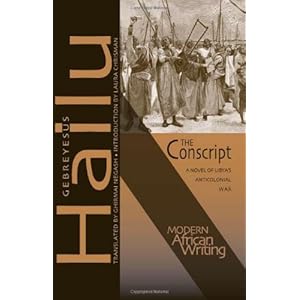
It wasn’t until almost 1950 before the first novel written in Tigrinya was published: a book called A Story of a Conscript by Ghebreyesus Hailu, about a group of Eritreans who were required to fight for the Italians in Libya.  From this point forward, literature began to be written and published en masse in Eritrea. 


The man often attributed as the “father of Tigrinya literature” is Feseha Giyorgis.  An Ethiopian, he left his home country for Italy, where he wrote a pamphlet on his journey there and continued on to teach the Tigrinya language while he was living there. 


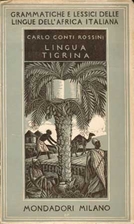
Another substantial poet worth mentioning is Carlo Conti Rossini.  His pièce de résistance is his three-part poetry called Tigrinya Popular Songs.  The first part contains 73 love songs; the second part is lover’s complaints; and the final section is a collection of long poems for special occasions, praise for tribal leaders, funeral poetry and praise for the deceased, and mourning songs.  Altogether, it was published over the course of four years and also includes notes and commentary written in Italian. 

Up next: music and dance

Tuesday, May 20, 2014

ERITREA: HOLIDAYS AND CELEBRATIONS


New Year’s Day.  January 1. Eritrea celebrates the New Year like other countries with festivities, food, and drink.  Many Eritreans also slaughter a goat or pig as part of a sacrifice to God.  People stay up late to ring in the New Year, and many people in the larger cities watch the fireworks displays that are put on for the people. 


Orthodox Christmas.  January 7.  There’s a celebratory aura in the air during the week between New Year’s and Orthodox Christmas. Restaurants will sometimes have special menus and serve their specialties during this time.  Cities decorate for the occasion, and it’s a busy time for people to buy food, sweets, new clothes, and gifts.  The day before Christmas is the traditional time to slaughter an animal for the holiday, and Christians will also celebrate the holiday by attending a special Christmas mass.     

Epiphany.  January 19.  Epiphany is celebrated for the acknowledgement of Jesus Christ as the human form of God the Son. This Timket religious holiday is celebrated with fervor across the country.  In the capital of Asmara, churches hold a nightlong prayer vigil attended by religious officials and ranking members of the government.  Water is sprinkled on the faithful who attend these special prayer services.  During these events, priests also sing hymns and holy dances are performed. 


Birth of the Prophet.  February 5.  Also known as Mawlid al-Nebiy or Mawlid al-Nabi, many schools and businesses close to allow Muslim families celebrate the birth of the Prophet Muhammad.  It’s a jovial celebration, complete with street festivals and good food and drink.  The singing of hymns is a tradition that occurs every year with Mawlid.

Fenkil Day.  February 10.  This holiday is in commemoration of Operation Fenkil (1990).  It primarily took place in the coastal city of Massawa, where the Eritreans launched a surprise attack against the Ethiopians and took over the city.  Even after the Eritreans took control of Massawa, the Ethiopians continued to aerial bomb the civilian sections of the city with napalm and cluster bombs.  The largest celebrations indubitably are celebrated in Massawa and include music, dance, street festivals, comedy skits, fashion shows, and a lot of good food and drink. 


Women’s Day.  March 8.  Also known as International Women’s Day, this holiday is celebrated all over the world on this day.  Eritrean women are forced into conscription (forced to participate in active duty military service) where they are discriminated against and often the subject of sexual abuse and harassment.  War and armed conflict have displaced families, leaving many women as the sole breadwinner and caretaker for their children and aging parents. 

Good Friday/Easter.  Varies.  Many people fast during the 56-day Lenten period (it’s a vegan fast: no animal products of any kind including meat, milk, butter, etc.) and will start their Good Friday off by going to church.  The afternoon is spent preparing for the end of their fast.  The main service starts on Saturday night with singing and some dancing. At midnight, a chicken is slaughtered for the occasion, and at 3 a.m., people will return home to eat and break their fast.  Easter, also called Fasika, is a day of celebration, filled with a lot of savory foods and often with a special brew from honey made locally. 


May Day.  May 1.  Also known as International Worker’s Day.  It’s a day to celebrate the worker and discuss labor issues.  Creating jobs and strengthening the economy is always on the forefront of Eritrean economic advisors’ and people’s agendas alike.  Work conditions, such as safety issues and workplaces discrimination, are also topics in roundtable discussions.  Activities vary across the country, but some organizations take part in reforestation events.  

Independence Day.  May 24.  One of the most important holidays of the year, this day celebrates Eritrea’s independence from Ethiopia in 1991.  A 30-year war ensued between the two countries following Eritrea’s independence.  The day is filled with celebrations in the streets as well as formal celebrations in stadiums where various performances are held.  Celebrations are held throughout the diaspora: Germany, England, Sweden, the US, and others.  (I found out there’s an Eritrean Independence Day celebration in Indianapolis the evening before, but it’s $25/adult. Probably not gonna make it since it’s looking like a no-kid event.) 


Martyr’s Day.  June 20.  This holiday was enacted to commemorate those who have died in the three decades of war defending their country.  A forest and wildlife preserve was opened outside of Asmara called the National Martyr’s Park; many visitors come to this park on this day.  It’s also a time to visit the gravesites of loved ones who have passed away during the fight for independence. 

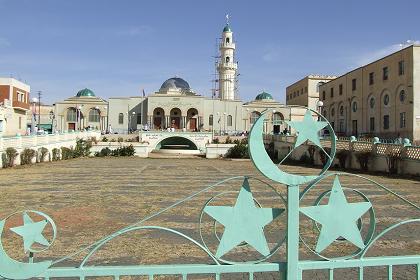
Eid al-Fitr.  Varies.  This holiday celebrated by Eritrea’s Muslims celebrates the end of Ramadan, the month-long fast.  To break the fast, families prepare a great feast to celebrate together after special prayer services are held at the local mosque. 

Start of the Armed Struggles.  September 1.  Start of the Armed Struggle goes back to the first shots fired in 1961, beginning the war to break away from Ethiopia.  Led by Idris Hamid Awate, those historical shots fired took place in the western region of the country at Mount Adal.  Government officials will often make speeches and a playing of the national anthem follows a moment of silence. 

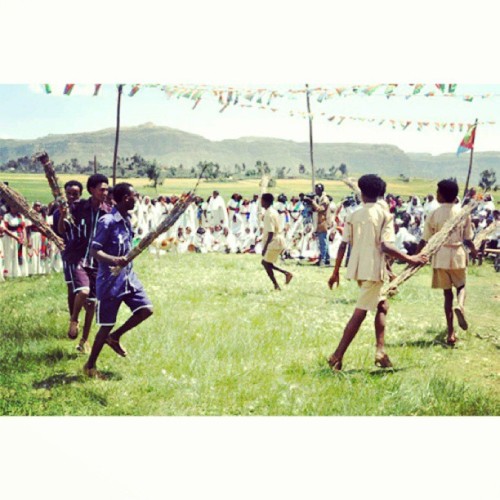
Geez New Year.  September 11. It does seem odd to have a New Year’s celebration in September, but it’s because of a difference in calendars and a “leap month” of sorts that falls at this time.  One of the key traditions at this time is to take a bath.  (My kids are already not impressed.) But in Eritrean tradition and culture, taking a bath on this day washes the body of any bad vibes and ensured a healthy body for the year to come.  The girls will often play drums and sing songs for coins that they can use to buy jewelry and accessories to decorate themselves for the New Year celebrations.  Special New Year prayers are said and the evening ends with a bon fire. 

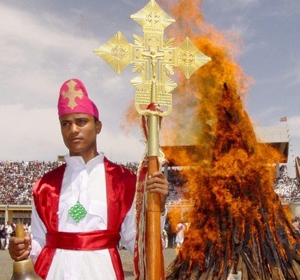
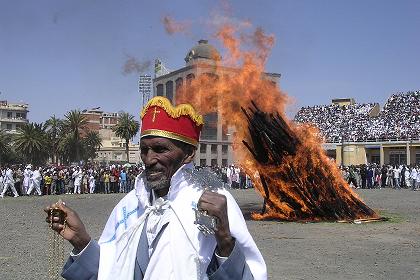
Finding of the True Cross.  September 27. Also called Meskel Holiday.  Tradition holds that Queen Helena (or Saint Helena) was the one who found the actual cross used in the crucifixion after having a dream that told her to make a bonfire and its smoke would guide her to it.  So, naturally bonfires are common practice on this day based on the story.  People also try to interpret their own symbols in the smoke and make predictions based on the direction the smoke is blowing.  


Eid ul-Adha.  Varies.  Also called Feast of the Sacrifice, this Muslim holiday is centered around the story of Abraham as he was preparing to sacrifice his only son to God but was stopped at the last minute.  It’s common for an animal to be slaughtered around this time, keeping part of the meat, giving part of the meat to family, and giving part to charity. 


Christmas Day.  December 25.  While the Orthodox Church celebrates Christmas on January 7, other denominations celebrate Christmas on this day.  Eritreans start their shopping a few weeks before Christmas and decorate their homes and businesses.  Some families slaughter a goat or a sheep during the holiday season.  One of the largest traditions is that families get together and share meals together, complete with coffee (I’m certainly ok with that) and popcorn and panettone (an Italian sweet bread often served at Christmas; I think it’s good). Christmas morning is when everyone exchanges gifts and visits family. 

Up next: art and literature