Showing posts with label mat weaving. Show all posts

Thursday, April 4, 2019

ESWATINI: ART AND LITERATURE

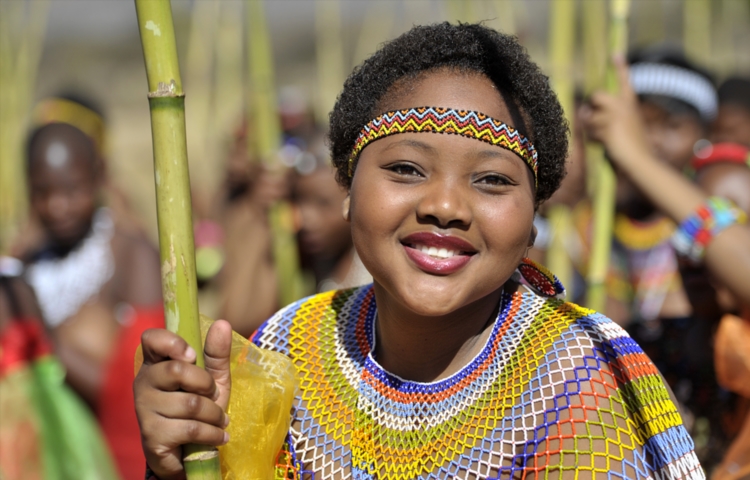
I love beads. The colors, the shapes, the materials they’re made with. The variety is infinite. They tell a story, show a social distinction, and are sometimes just simply decoration. Many African cultures make and utilize beads in different ways, like they do in Eswatini. Beads are used in both jewelry making (like in the colorful ligcebesha) but in used in their clothing (like a type of ceremonial skirt called an indlamu) and in their hair.

Weaving arts are also a thing as well. Many of their woven goods are made from different kinds of dried grasses and generally have some kind of utilitarian function: brooms, baskets, and mats (like the emacansi or tihlantsi).


Pottery is also pretty popular. Most of these pots are made from clay (called tindziwo) and mainly used for storing water, cooking and food storage, and making beer. There is a strong handicrafts industry for the people who make clay pots as well as the jewelry makers, woodworkers, glassblowers, weavers, and others. And many of these workers are women, allowing slightly more economic stability for many families.


Literature from Eswatini is generally written in either English or in Swazi. However, works in either language is somewhat limited. For a long time, the only books that were available about the country were written by Brits who have been there. And that creates a cyclic downfall of not having very many people study their literature because there aren’t that many examples. There are obviously some novels, short stories, and poems being published, but it’s rare that it hits any kind of international recognition, outside of authors living in diaspora and perhaps regionally.


Some critics point out that there is a difference in addressing certain cultural and social aspects with a critical voice in novel form that doesn’t quite pan out the same way as it does in short stories. One author who takes more of journalistic fiction form for telling women’s stories is Sarah Mkhonza. I read some excerpts of interviews with her on The Woyingi Blog. She never aimed at being political, but rather she interviewed women and encouraged women to write about their reactions to women characters and the scenarios they find them in, and many of their responses were many times based on personal experiences. She touches on topics of AIDS, women supporting themselves as independent beings, individuality, and domestic abuse. She’s most known for her 2008 novel Weeding the Flowers.


Other authors include Stanley Musa N Matsebula, whose 1989 novel Siyisike Yinye Nje (We Are in the Same Boat) brought the topic of gender inequality into the forefront of conversation. James Shadrack Mkhulunyelwa Matsebula is credited with encouraging other writers to use the Swazi language as the language for telling their stories.

Up next: music and dance

Wednesday, July 9, 2014

FIJI: ART AND LITERATURE


The earliest form of art found in Fiji is pottery.  Men typically excavate the clay used for pottery, but for the most part, the women are almost solely the potters. They will often have to work the clay by adding sand, kneading it, and letting it dry to get it to just the right texture needed to form pottery.  Unlike other cultures, Fijians do not glaze their work; instead they take certain plants and rub it onto the finished product to give it a varnished look as well as a waterproof quality.

By the time a girl growing up in the village reaches the age of ten, she will be taught mat and basket weaving. Palm fronds or pandanus leaves are usually used for this because of their abundance on the island. These mats are vital to every home: it’s used as floor coverings, bedding mats, fans, and baskets.  In fact, they are so important to the home, the mat’s quality and quantity are included in the “wealth” of a family and often given as gifts at weddings, funerals, births, and other special events.

A type of cloth made from stripped bark from trees is known as masi or tapa. Mostly from mulberry trees, women will take this bark, strip it, soak it, beat it to a pulp (literally), and roll it out, like paper.  This fabric is then used for many purposes, such as ceremonial wear, wall decorations, wall decorations, tablemats, handbags, etc.

Woodcarving is also an important art in Fijian history, albeit a declining one. One of the most important pieces of woodcarving in Fijian society was the war club. It was a highly decorated instrument that not only doubled as a weapon, but as a symbol of authority and used in ceremonial dances. Today, yaqona bowls (also called tanoa) are some of the most commonly carved works of art.

In many countries that were under European rule, they were also introduced to art in a modern, European sense. And many of these countries also go through a period of revival of the traditional arts, especially when they are granted independence. It wasn’t so with Fiji. The main reason being that they never stopped pursuing their traditional art forms. And while there may be Fijian painters and sculptor actively working and creating European-style art, traditional arts still won out over European-influenced styles and techniques overall.

Fijian literature didn’t get started until just before they separated from Britain. The University of the South Pacific wasn’t founded until 1968, when Fijians had the opportunity to learn creative writing and literature courses were available. Before this, Fijian literature mostly only existed as stories passed down by word of mouth. Soon after independence, publishing companies and literary magazines popped up around the islands. Literary societies started promoting not only their own writing but also literature of the Pacific Islanders in general. Much of Fijian literature is either written in English, Fijian, or in Hindi (and some poets even mix languages).

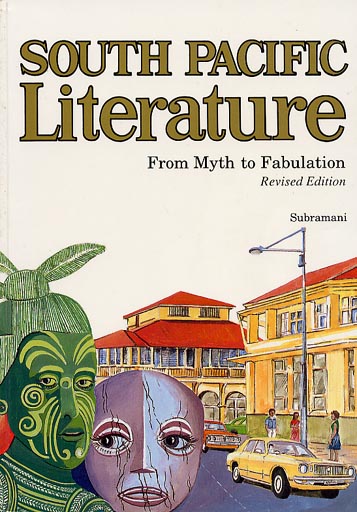
Some of the well-known authors from Fiji include Raymond Pillai (short stories), Subramani (short stories, novels), Pio Manoa (poetry), Vilsoni Hereniko (playwright), Satendra Nandan (poetry, novels), Sudesh Mishra (poetry), Larry Thomas (playwright, director), and Joseph Veramo (novels, short stories).
Up next: music and dance