Showing posts with label painting. Show all posts

Wednesday, September 20, 2017

POLAND: ART AND LITERATURE


Many of Poland’s traditional arts are known around the world. One of the things that stands out is their elaborately decorated Easter eggs. The eggs are painted with either complete scenes or with complex geometric designs. Other eggs are drained and blown out and are then carved with very complicated looking, delicate designs. Kudos to the people who can do this without crushing the eggs. Some of them almost look like lace. 

 
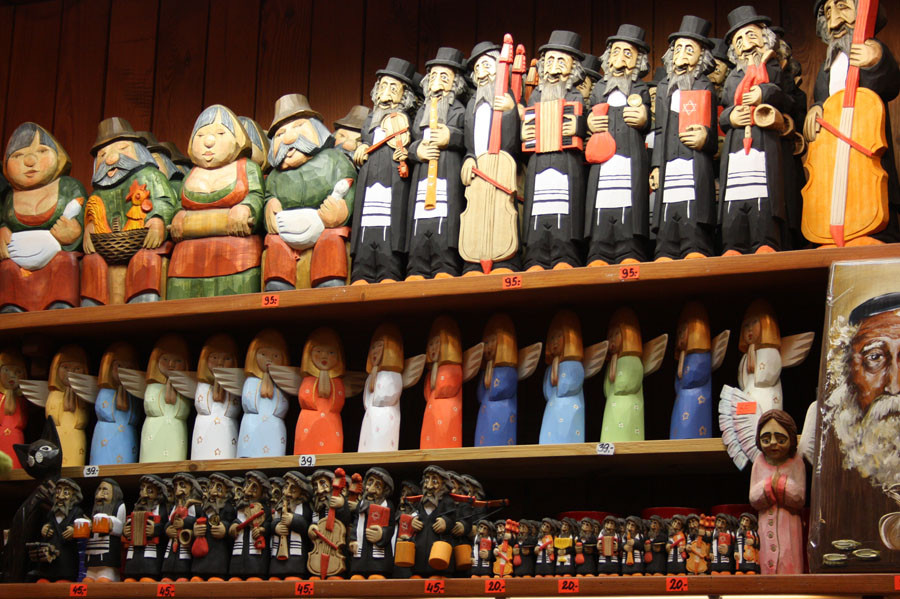
Wood carving is also a common thing here as well. And nothing made of wood is off limits for a carver. Door frames, utensils, tools, sculptures, furniture, and whatever else they can find are fair game. Be careful who you lend your knives to, I guess. 

Paper cutting is also an art form that gained popularity during the early 20th century, only because colored paper wasn’t as readily available before then. People, mostly women, would cut designs and folk pictures out of paper and layer the colors. Although I bet they’re forever picking up tiny bits of scrap paper off the floor.


Felt art is an artform that’s making a comeback, apparently. I typically think of felt as in ornaments, bags, gloves, and hats, but they also make necklaces, shoes, blankets, and other things out of felt. Suddenly, I really need something felt.


Poland has a strong tradition in painting and other visual arts for a long time. Polish artists have kept up with the various artistic movements that were popular throughout Europe, yet adding their own flair to it. Some major names in the art world include Jan Matejko (military and political events), Jozef Chełmoński (Realism), Jacek Malczewski (Symbolism), Stanisław Wyspiański (Symbolism), Tadeusz Makowski (Cubism), Władysław Strzemiński (avant-garde, constructivism), and Henryk Stażewski (avant-garde, constructivism). Famous sculptors include Magdalena Abakanowicz, Katarzyna Kobro, Xawery Dunikowski, and Alina Szapocznikow.


by Jan Matejko -- I just saw this memed with a caption reading "ready for the holidays but still has finals."


Although most Polish literature is written in Polish, there are other writers who write in/have written in Belarusian, Ukrainian, Latin, Yiddish, Lithuanian, German, and even Esperanto (a constructed language created during the late 1800s by the Polish-Jewish ophthalmologist, L. L. Zamenhof). The earliest literary works did not come until after the spread of Christianity took hold. Most writings at this time were chiefly religious in nature.


As the Renaissance period developed, many foreign writers began to pour into Poland; the newly opened University of Kraków attracted many of the brightest minds all over Europe. Latin classics and poetry were viewed as the basis of a good education during the Baroque period, and as Poland entered the Enlightenment period, the country itself was heading in a downward spiral. Romanticism followed during the early part of the 1800s, which was largely built upon a sense of independence and nationalism. National poets became popular during this era. 


I'm down with this.

Related to the Romantic period is the period of Polish Positivism. It grew out of the failed uprising again the Russians in 1863, essentially pushing skepticism, reason, equal rights, and feminism. After WWI, new avant-garde styles developed out of the quickly changing climate of European culture and politics. However, most writers stopped writing freely during WWII. Many left for other countries; many of the ones who stayed were often involved in underground printing presses, reporting on resistance movements. When they were under Soviet control, all texts and literature were strictly censored. It wasn’t until after independence and into the transition to a democratic country did writers enjoy the freedom of the press again.


Wisława Szymborska

There have been four Polish authors who have won the Nobel Prize for Literature: Henryk Sienkiewicz (1905), Władysław Reymont (1924), Czesław Miłosz (1980), and Wisława Szymborska (1996).


Up next: music and dance

Wednesday, November 26, 2014

GRENADA: ART AND LITERATURE

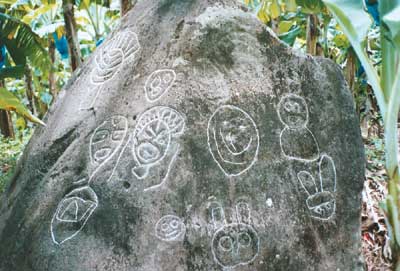
Although the earliest people here, the Carib Indians, were driven away or died there to avoid the first option, they left a part of them behind: their art. The Caribs etched important events of their daily lives into the sides of cliffs, in caves, and other areas around the islands.


Painting is huge on the island of Grenada. And who can blame them? They have a wonderful backdrop of some of the most beautiful scenery to paint. Whereas most painters typically use canvas as the main medium to paint on, Grenadian artists don’t stop there. These artists have been known to paint on a variety of mediums: wood, metal, cloth, bamboo, and even the calabash (a type of gourd). St. George’s has several art shows and showcases throughout the year bringing hundreds of visitors to local artists. Some of the most influential painters in Grenada are Canute Caliste, Elinus Cato, and John Benjamin MBE.

by Elinus Cato

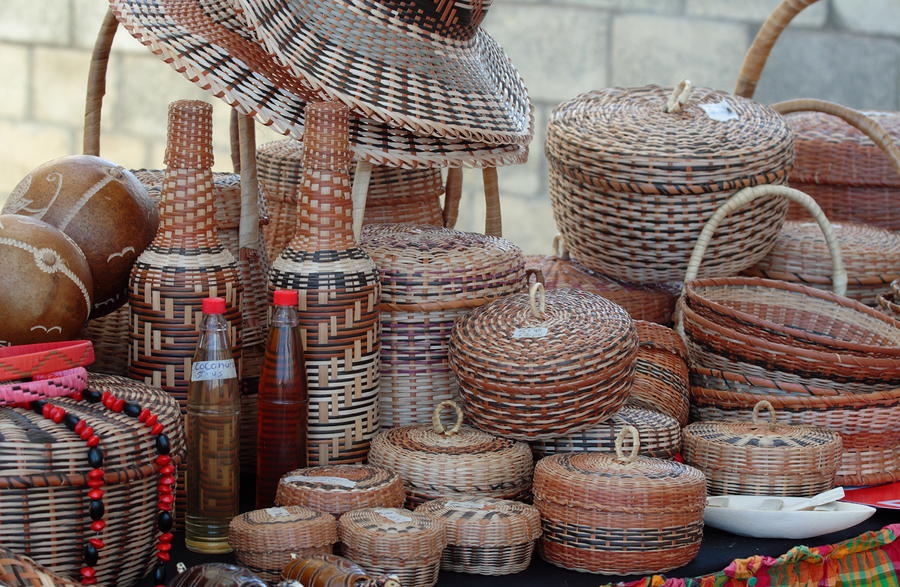
Woven crafts are also very popular, especially in the tourist markets. However, items such as hat, purses, placemats, and baskets are also regularly used in the average Grenadian home as well. You’ll find most of these items are made from wicker, straw, or bamboo. 

Woodcarving is also especially popular as well.  Many of these items are also used in the home, like bowls of all sizes, kitchen utensils (wooden spatulas, wooden spoons, etc.), or furniture. Typically, these items are made from mahogany or red cedar but other types may be used.


As with most other Caribbean countries, jewelry is an art form going back centuries. Known for jewelry made from local materials, black coral and turtle shell are common materials from these islands. Actually, shells of all types are used in jewelry, as well as wooden beads and even paper beads. 

Storytelling is at the heart of Grenada’s literary traditions. This tradition is closely tied to the African traditions that were brought over during the Slave Trade.  Today, the vast majority of Grenadian literature is written in English, but some of it is in French Creole. Literary festivals, such as Spice Word Literary Festival and Poetry Slam, are held throughout the year to showcase the best of what this island nation has to offer.


Tobias S. Buckell is a science fiction author who was born in Grenada. He is most known for being the author of the sixth book in the Halo series, Halo: The Cole Protocol. As successful as he is as a writer, he suffers from dyslexia.


Merle Collins was actually born in Aruba, but later moved back to Grenada since her parents were Grenadian. She got her bachelor’s degree in English and Spanish in Jamaica, her master’s degree in Latin American studies in the US, and her Ph.D. in Government in the UK. She has spent many years teaching and was active in the Grenadian Revolution. Collins has published literary and social commentaries, poetry, short stories, and novels.


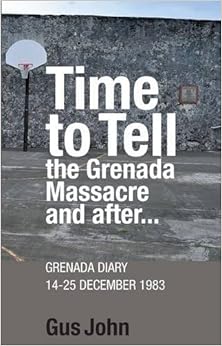
Gus John is a writer, educator, and social commentator. He was born in Grenada and later moved to the UK where he was instrumental in writing and advising on the problems with the education of minorities. He worked closely with various groups aimed at curbing youth violence and has written many articles and books on the subjects of education, race, violence, the Caribbean, and the inequality persistent in all of these things.


Up next: music and dance

Thursday, December 19, 2013

DOMINICA: ART AND LITERATURE


The earliest art in Dominica was created by the native Carib (or Kalinago) peoples.  Clay pottery was very common for many uses, and they were painted with earth-based natural colors, mostly red, ochre (a yellowish-brown color), white, brown, and black. These dyes were made from rocks, various plants/flowers, charcoal, wood, etc.  Annatto, which is often used in food and gives it a dark reddish color, is not only used in food, but also as body paint as well.


The capital of Dominica is Roseau, which is French for “reeds.”  It’s not hard to believe that since the French tended to name cities after what they saw in a place (which are reeds), then basket weaving would also be a craft that was done in every family.  Baskets are versatile, and they certainly can make work easier.  But they’re also an art form. 

Carving is also a common art form in native art as well and can be seen in stone, wood, and bone.  Bas-relief carvings can be seen on the sides of large rocks, which include drawings called petroglyphs. 

By Honychurch -- I love this piece!

Today, modern forms of art include painting and sculpture.  Like other art of the Caribbean and Central/South America, Dominican artists tend to use bright colors in their work. Caribbean landscapes, people, and scenes of everyday life are universal themes of Dominican paintings.

Mural paintings and public mural art are also seen throughout the island. Nationalistic themes and scenes depicting a brighter future and the best parts (or overcoming struggles from the past) can be seen throughout the island. 

Honychurch at work.
One artist that I came across who thankfully had the most information on Dominican art that I found is Lennox Honychurch, a Dominican artist. There is a lot of information on his website –you can check out his beautiful paintings and murals. Check it out at www.lennoxhonychurch.com.

Honychurch also wrote a book called “The Dominica Story” – a comprehensive history of the island. It was originally devised as a mini-series for radio in the mid-1970s, but it’s been revised many times for print.  It’s available through Amazon, but the sellers on there want a lot for it: the cheapest one I found was $99.51.  I might put in a request for my library to purchase it since I see they don’t have it either. 


Born in Roseau, Phyllis Shand Allfrey, can trace her family back to landing in the West Indies in the 1660s.  She’s most widely known for her novel The Orchid House (1953), she also worked as a journalist and editor for two local newspapers.  Allfrey was also involved in politics as well – founding the Dominica Labour Party and was also elected to the West Indies legislature in 1958 (pre-independence days), making her the only women who was elected to serve in this federation. 


Jean Rhys is probably the best-known author to come from Dominica, and her novel Wide Sargasso Sea is probably her most acclaimed novel. I have this book listed in my reading list but haven’t got to it yet. It’s written as a prequel to Charlotte Brontë’s novel Jane Eyre (which I absolutely loved!).  Rhys was born in Roseau to her Welsh father and her Creole mother (Creole at that time was used to refer to white people who were born on the island, whether they were mixed or not.) When she was 16, her parents sent her to stay with family in England to be educated there.  Her instructors were constantly frustrated that she would never speak “proper English” and her accent often left her out on outside and ridiculed.  She was later “coached” in writing short stories by her friend, English novelist Ford Madox Ford (whose book The Good Soldier is on my reading list as well.) 

Up next: music and dance

Saturday, July 6, 2013

COLOMBIA: ART AND LITERATURE


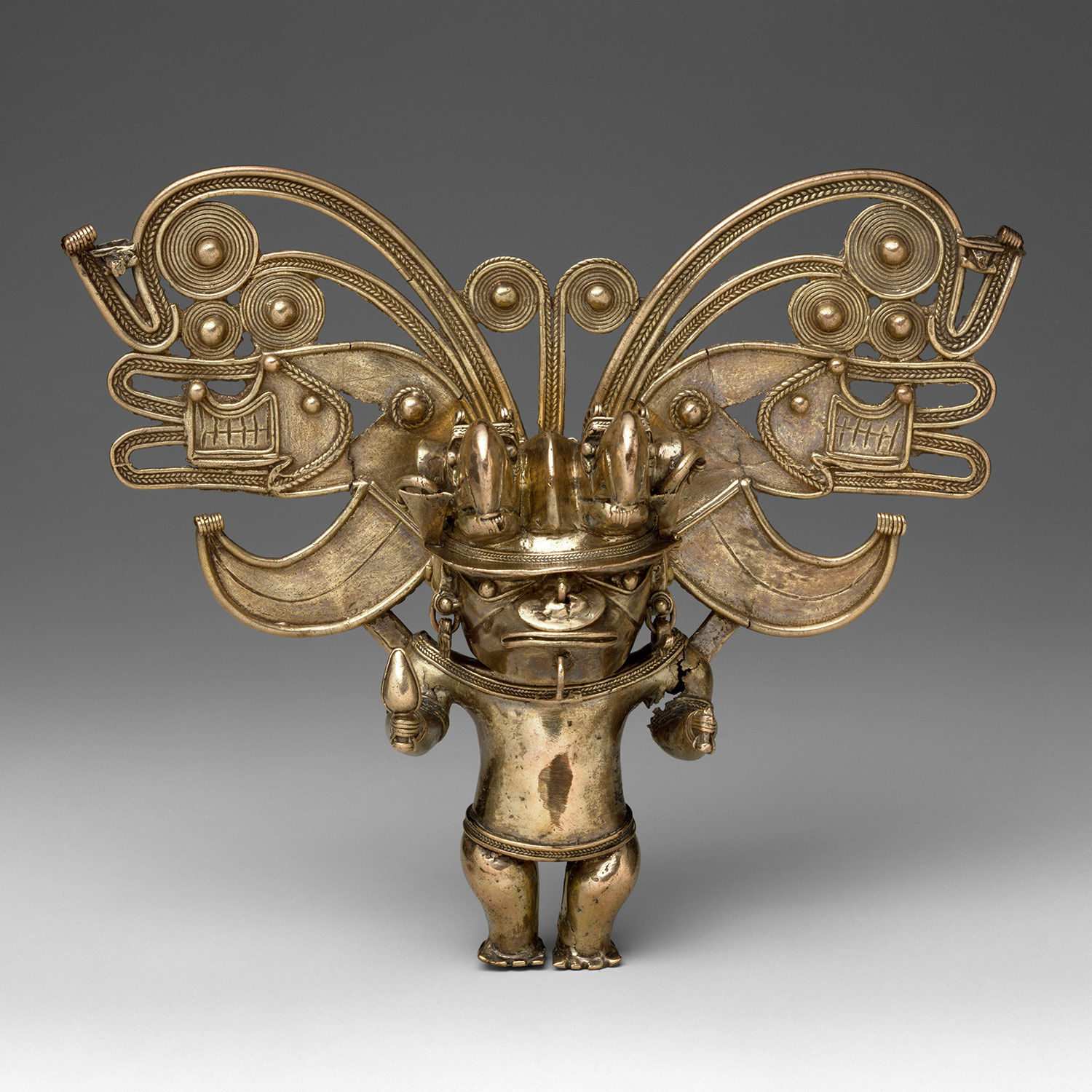
As far as pre-Colombian art goes, there are always the usual mediums: pottery and stonework. And there’s one addition here: goldwork. There were such extensive goldwork pieces found – large pieces, small pieces – that it’s no doubt this was the basis for the El Dorado myths. However, the vast majority of the pieces that have been found were mostly for religious purposes, as well as for jewelry and adornment. The thing that makes gold so coveted and valuable is that it doesn’t rust, and it’s quite malleable when heated, making it easy to shape. One of the Muisca chiefs would cover himself with gold dust for special ceremonies and was therefore called El Dorado. However, most people thought El Dorado, or “The Lost City of Gold” was an actual place, leading numerous Spanish conquistadores to travel to this area in search for this infamous place, all for naught. Many of these gold pieces are housed in the Museo del Oro (Museum of Gold) in Bogotá, Colombia.

From cave paintings to abstract art, painting is also an important facet of Colombian art. The earliest colonial paintings were mostly religious-based in nature and included both canvas paintings and mural paintings. It later gave way to the rococo style, for which one popular form of painting was the portrait. Practically everyone had one. It was sort of the thing. One of the most prominent painters at this time was Joaquín Guttiérrez.
Botero's version of the Mona Lisa. 
After independence and with the subsequent European influences, many of the art styles and movements of Europe were also carried on in Colombia. Modern art is generally embraced and found as public art throughout the country. One of the most famous artists is the still life artist Fernando Botero. One thing I noticed about his signature style of painting is that the people he paints are always depicted as plump, overweight, chunky. They often show the absurdity, irony, and realism of the moment. His style is called boterismo, named after himself. 
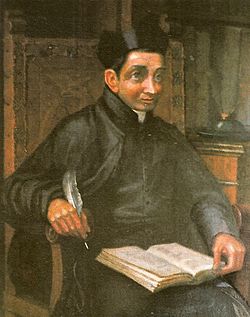
Juan de Castellanos
Early literature in Colombia mostly consisted of poetry – mostly religious in nature – and historical accounts. Actually, the longest poem ever written in the Spanish language is called Elegías de Varones Ilustres de Indias by Juan de Castellanos. Following independence, the trend in literature was to follow the Romantic genre taking dominance in Europe. Like other areas in the Americas and Europe, the trend in literature towards the end of the 19th century and early 20th century was to write about peasant life, lifestyles of the working class, and the daily struggles they felt. Of course, they were also critical of the government and its response to these issues. This movement in Colombia was called costumbrismo.


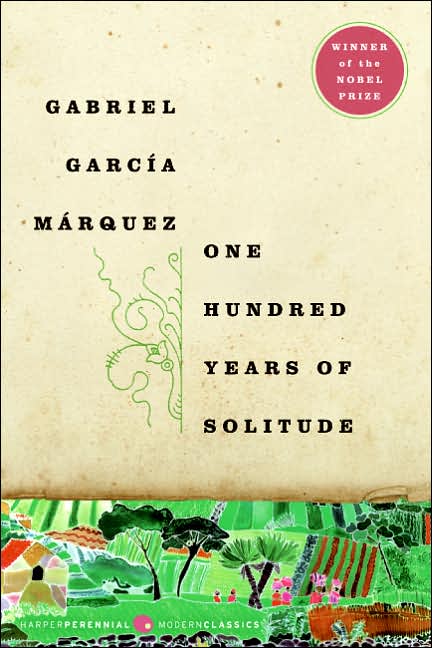
As the 20th century rolled on, various smaller literary movements and variations came and went. Probably the most famous Colombian author is Gabriel García Márquez. Winning the Nobel Prize for Literature in 1982, he’s most famous for One Hundred Years of Solitude and Love in the Time of Cholera, both of which are on my massive reading list, but I haven’t got to yet. Along with Márquez, many writers in Colombia, like Álvaro Cepeda Samudio, Eduardo Caballero Calderón, and Manuel Mejía Vallejo also worked as journalists.

Up next: music and dance