Showing posts with label Christian holidays. Show all posts

Tuesday, September 2, 2014

THE GAMBIA: HOLIDAYS AND CELEBRATIONS


New Year’s Day. January 1. Many of the younger crowd go out to The Strip in Banjul, celebrating until the early hours of the morning. However, I’ve read that it’s not the best area to be in at night in a crowd; it’s pickpockets galore and requires a lot of police action pushing the crowd forward. A lot of other people choose to stay closer to home or friend’s homes, eating a good dinner and having drinks. Fireworks are shot off at the stroke of midnight. People also visit markets and other activities around this time as well. 

You should check out the blog www.travelwithkat.com for a lot of good insight into staying in The Gambia.
Mawlid/Prophet’s Birthday.  Varies. During the day, people will recite meaningful verses from the Quran and participate in Gamo, religious gatherings that start in the evening and last until the next morning.

Independence Day. February 18. This marks the day that The Gambia, the first country taken control by the British, gained its full independence from Britain in 1965. (This is also my husband’s birthday, just not the same year.) Parades, especially through MacCarthy Square in Banjul are an annual tradition. The country is decorated in the flag and its colors. Historical presentations and storytelling about the events that took place are often shown with traditional cultural and musical presentations.


Good Friday/Easter. Varies. Although Christians are a minority in The Gambia, most shops and other businesses are closed on this day, except for essential businesses and shops. Most Christians will attend special Good Friday services, generally a solemn day. Easter is far livelier. Christians wake up early to attend special services in the morning. Part of the traditions is to drink the juice from the baobab called nanburu. It’s passed on to neighbors and friends as a way of giving alms.

Labour Day.  May 1. This holiday celebrates the worker and the labor movement in general. It’s also a time when labor issues are addressed as well.
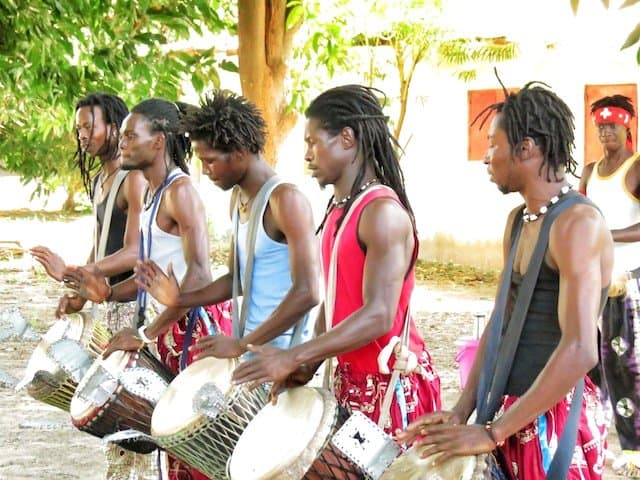

Africa Day.  May 25. This day was founded after the Organization of African Unity was established. This was the predecessor of the African Union. Each year, there is a theme celebrated by most African countries and those who live in its Diaspora. Many Gambians will dress in traditional clothes and participate in cultural performances, African drumming, and other cultural/historical displays.

Revelation of the Qur’an (Laylat al Qadr). Varies.  Also called Night of Power or Night of Destiny. This holiday celebrates when the Qur’an was revealed to the Prophet Muhammad. Many Muslims also believe that this night marks how the next year will go for them. Most people often spend this evening praying for mercy and salvation and special blessings for the coming year.


Eid al Fitr. Varies. This day marks the end of Ramadan, the Muslim month-long fasting period; also called Koriteh in The Gambia. People will wear new clothes to attend special prayer services at their local mosque. Giving alms is also a commonplace event; needy people will often congregate outside of mosques to take advantage of these generous acts. Children will often go door-to-door asking for treats or money as well.

Revolution Day.  July 22. In 1994, Lt. Yahya Jammeh led a coup to take over the government, and the people later elected Jammeh as president. A park in Banjul, formerly known as MacCarthy Square, was renamed July 22 Square. A public art piece called Arch 22, commissioned by the president, is one of the most famous pieces in the city of Banjul. In the past, there have been cultural displays around the capital and other cities in the country, but many criticize the holiday, citing that it celebrates the military coups.


Assumption.  August 15.  Known as Sang Marie in The Gambia and Senegal, this holiday is based on the Christian view that this is the day Mary, mother of Jesus, was raised into heaven after her death. Christians will often attend special Assumption services at their church.  In Banjul, some churches in the area will gather together during the late afternoon at the Arch 22 to begin the procession. Following this, the atmosphere changes to more of a festive aura with music, dancing, and food/drink lasting until late into the night.

Eid al Adha. Varies. Also called Tabaski, this holiday is almost as big as Christmas. Based on the story of Abraham almost sacrificing his only son, animals are slaughtered in a religious ceremony in order to divide up its meat, giving some to family, friends, and charity. A lot of money is spent on new clothes and little gifts for loved ones.

Ashura.  Varies. Also called Islamic New Year. Ashura’s roots are different depending on whether you are a Sunni or a Shia. For Sunnis, it marks the day that Moses was saved by the Egyptians and the day that Noah finally left his ark. For Shias, it marks the martyrdom of Muhammad’s grandson, Hussaine ibn Ali. Many people choose to fast on this day and recite verses from the Qur’an, and others use this day to visit friends and family. It’s also customary to wish people good health and well-wishes for the coming year.

Christmas tree made of recycled bottles. It reminds me of one of those Redneck Christmas Trees made from beer cans. Still kind of  cool, though, especially with the lights.

Christmas.  December 25.  Many of the Christmas decorations that are put up in people’s homes and cities resemble those of European or Western style: Christmas lights, tinsel, holly, etc. Restaurants and hotels may bring out special menus for the Christmas season, full of delicacies and other specialty items. Banjul is famous for its Fanal parades, where children and adults float boats made of paper and bamboo. Dancing is also important to the season and many different kinds of indigenous dances are performed in the street and during festivities.

Up next: art and literature

Monday, May 5, 2014

EQUATORIAL GUINEA: HOLIDAYS AND CELEBRATIONS


January 1. New Years Day. Most people celebrate it like the rest of the world. The Ministry of Information, Culture, and Tourism puts on a fabulous fireworks display. It’s free and broadcast throughout the country. 

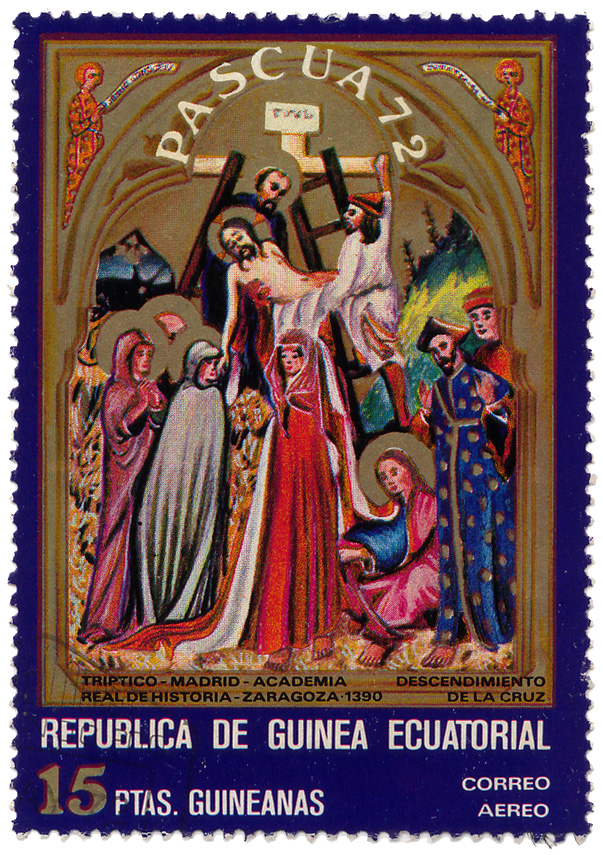
Varies. Good Friday / Easter. Good Friday goes by several names (Mourning Friday or Black Friday); it represents the day Christians believe Jesus was crucified on the cross. Most Christians will attend a special Good Friday mass and spend the day in solemnity. Easter is considered the most important holiday for Equatoguinean Christians. Since this is the day that Christians celebrate Jesus being resurrected from the dead, many people spend the day (or at least morning) in church services and visiting family and friends later. 


May 1. Labour Day. Also called International Worker’s Day, this holiday is designed to celebrate the worker and discuss labor issues.  Both public and private businesses are closed on this day. 

May 25. Africa Day. This holiday was created in 1963 with the creation of the African Union. The African Union itself was designed to bring all 53 member states together to deal with issues regarding economic issues, crime and trafficking issues, and poverty that affects everyone in the African community. It’s also designed to celebrate the spirit and vivacity of Africa. Celebrations vary, but it is celebrated in both Africa and its Diaspora with games, music, food, and dances for everyone. Seminars and panel discussions are often held during this time to discuss pressing affairs.


May 30. Corpus Christi. Corpus Christi is the Christian celebration of the Holy Eucharist, or Holy Communion. Many Equatoguinean Christians will attend a special mass on this day.

June 5. President’s Day. This is the birthday of President Teodoro Obiang Nguema Mbasogo. In 1979, he led a successful coup d’état to oust his uncle, the first president of the country. Large celebrations are held in his honor, including lavish meals and cultural programs.  


August 3. Armed Forces Day. This holiday commemorates the historic coup led by now President Mbasogo. It also honors the members of the country’s military (army, navy, and air force). Most often, this day includes military parades and memorials to its veterans.

August 15. Constitution Day. The original constitution was drafted and accepted in 1982, identifying the country as a one-party state. The president’s term is seven years, and the legislators’ terms are for a period of five years. However, in 1991, they added an important referendum to the constitution making the country a multi-party state. 


October 12. Independence Day. This day commemorates Equatorial Guinea’s independence from Spain in 1968. They changed their name from Spanish Guinea to Republic of New Guinea, and then again to Equatorial Guinea. One of the key events is the president’s address, honoring all of the nation’s fallen soldiers. Military parades and cultural displays of music, dance, and art are presented in towns and cities across the country. 


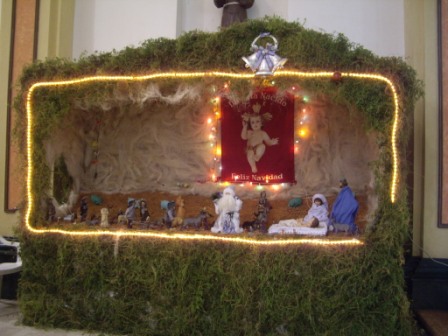
December 25. Christmas Day. Equatoguinean Christians start shopping well in advance, like many other countries do. They decorate their homes for the season in lights, ribbons, and balloons. Christmas Eve is a big night: people attend a special mass, which includes a lot of singing that carries over long after the service is over. People sing and dance their way to the early hours of the morning. Christmas Day itself is spent visiting family and friends to exchange gifts and share meals.  Traditional music and dance is often incorporated into the holiday celebrations.

Up next: art and literature

Monday, November 18, 2013

DENMARK: HOLIDAYS AND CELEBRATIONS


There are many holidays in Denmark, some with days off and others that are not officially observed with a day off.  I’m listing in detail the ones where you do get a day off. I’ll just list in brief the others the ones where you still have to show up to work.

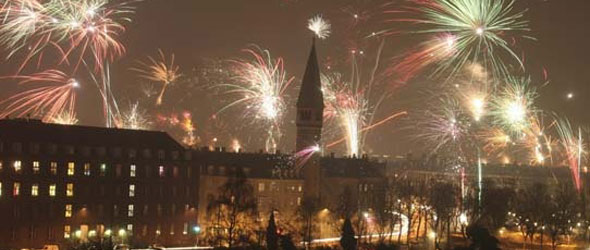
New Year’s Day (January 1):  According to the law, most shops and businesses close at 3pm on New Year’s Eve.  A lot of people start the evening off with an elaborate homemade meal, followed by a lot of alcohol. (Sounds like my kind of night.)  Traditionally the Queen gives a televised speech at 6pm on New Year’s Eve night, and the stroke of midnight is welcomed with champagne and kransekage (a type of almond ring cake), and of course, fireworks, and then probably more alcohol.


Maundy Thursday (varies, 3 days before Easter): According to the Bible, Maundy Thursday is the day during Holy Week in which traditions say this is the night in which Jesus offers Holy Communion to the Disciples during the Last Supper.  Some churches hold evening services followed by a meal together because of this. And the Danish word for this day literally translates out to “clean Thursday,” possibly stemmed from Jesus washing the feet of the disciples before the meal. 

Good Friday (varies, 2 days before Easter):  On this day, candles are not lit inside the churches due to the solemn nature of the day, commemorating Jesus’ crucifixion and death. A special service is held in the evening, although some hold their services at 3pm.  There is usually a reading of the Passion and choral singing. 


Easter Sunday (varies):  This is the day Christians believe that Jesus rose from the dead.  Many homes have been decorated in green and yellow, and you’ll see Easter eggs everywhere.  Another Easter tradition that kids do is a series of teaser letters starting a few weeks before Easter. These are anonymously written with a verse as to the identity of the author, signed by only a series of dots, each for the number of letters in your name. After three letters, the recipient has to guess who the author is, and if you guess right, you get a chocolate Easter egg. Church services are attended in the morning followed by an elaborate meal for lunch.  This usually consists of chicken, lamb, fish, vegetable dishes, cheeses, and a lot of beer.

Easter Monday (varies):  This day is more or less a continuation of Easter. There are also special services in which readings from the Bible are a common way of retelling the stories of what happen after Jesus was resurrected. 

General Prayer Day (varies, 4th Friday after Easter): Also known as Great Prayer Day.  Basically, they took a lot of minor Christian feast days and other holidays and rolled them all into one day.  Many churches ring their bells on the eve of this day, and people will often eat a type of bread called varme hveder.  Some people used to walk the ramparts of the city, but nowadays most people walk along the waterfront areas. This is also a common day for churches to hold confirmations.


Labour Day (May 1):  Not everyone gets this day off; only the blue collar workers get to enjoy a free day.  A lot of people attend labor meetings to discuss the labor issued at hand. Labor unions will join other labor unions in marches celebrating major labor reforms in the past.

Ascension Day (varies, 39 days after Easter):  This holiday takes place 39 days after Easter and commemorates the Christian belief that this is the day which Jesus Christ ascended into heaven after rising from the dead.  Traditionally, this is also the day in which the Easter candle (also known as the Paschal candle) is extinguished.

Constitution Day (June 5):  This holiday goes back to 1849 and the signing of the Danish constitution establishing the country as a constitutional monarchy.  Some political meetings and functions may be held on this day, but generally, it’s not a huge holiday.  It also happens to be the same day as Father’s Day. 


Pentecost (varies, 7 weeks after Easter):  Pentecost is thought of as the foundation of the Church.  Because of the proverbial correlation between Jesus and the sun, many people stay up all night to wait for the sun to rise.  In some of the rural areas, it was a common time to whitewash all the buildings.  In recent times, large Whitsun procession through the streets of Copenhagen. 

Whit Monday (varies, day after Pentecost): Often considered the second day of Pentecost, it got its name from wearing white baptismal fonts on this day.  It’s a common time for people to be baptized. 


Christmas (December 24-26): The use of candles at Christmas goes back to pagan days and the early days after Christianization. In fact, they utilized and merged many pagan traditions in with Christian traditions.  And from the beginning, this has always been a holiday that is centered around family.  They do put up Christmas trees (a tradition borrowed from nearby Germany) and decorate their homes with paper decorations and make sweets for the entire month of December.  However, Danes have become friends with the Christmas “nisse,” a mythical old man who wears a grey sweater, grey pants, red stockings, and a red cap who will hand out good fortune in exchange for porridge.  (Hmm, I have some grits in my cabinet. Wonder if that works? And he sort of seems like an old professor I had in college.) Several other traditions, like mistletoe and Santa Claus, were introduced from other countries.  Of course gifts are exchanged, and there are many other smaller traditions like paper Christmas hearts, singing Christmas carols, the Christmas lunch featuring herring, and a lot of sweet and succulent and savory foods.

Now, here is a brief list of other holidays celebrated in Denmark:  Crown Princess Mary’s birthday (February 5), Valentine’s Day (February 14), Fastelavn (varies, 7 weeks before Easter), Palm Sunday (the Sunday before Easter), April Fool’s Day (April 1), Occupation of Denmark (April 9), Queen Margrethe II’s birthday (April 16), Princess Benedikte’s birthday (April 29), Liberation Day (May 5), Crown Prince Frederik’s birthday (May 26), Prince Joaquim’s birthday (June 7), Prince Henrik’s birthday (June 11), Day of Valdemar and Reunion Day (June 15), Saint John’s Eve (June 23), Halloween (October 31), Saint Martin’s Eve (November 10), Saint Lucy’s Day (December 13). 

Up next: art and literature

Monday, August 26, 2013

CÔTE D’IVOIRE: HOLIDAYS AND CELEBRATIONS


New Years Day (January 1): Some of the churches and mosques have a special services to bring in the new year at the stroke of midnight, and the people often wish each other the gift of peace for the coming year. Given the political events and civil war in recent years, that’s a huge wish to place for everyone. Afterwards, the parties continue with fireworks displays, ever-flowing beer, and music and dancing until the sun starts to rise again. Many people send well wishes and even gifts to their closes friends and family around this time.


Prophet’s Birthday (varies): Also called Mawlid or Maouloud.  Along with 47 other countries of the Muslim world, Côte d’Ivoire also holds the Prophet’s Birthday as a public holiday. (I think I finally figured out why in a lot of the Islam-based websites I read that the initials PBUH was after the Prophet’s name almost every time it was written: I’m fairly certain it stands for “Peace Be Unto Him.” But correct me if I’m wrong.)  On this day, Muslims decorate the mosques and their homes, reciting special prayers, reading passages about his life, and many people will also prepare food to give to the poor and/or other acts of charity.

Easter Monday (varies):  Starting days before Easter itself, these celebrations are an important time for most Ivoirian Christians. Maundy Thursday is often spent washing the feet of new believers to the church. Many people use Good Friday as a day for going door-to-door evangelizing and trying to encourage non-members to convert. In the US, Easter Saturday is generally quiet, but in Côte d’Ivoire, many people stay up all night to sing, dance, and pray their way into Easter Sunday, which starts out with special, often larger, services held at the church.  Often, the Easter stories are tied together with the underlying message of hope. Afterwards people continue celebrating with a large meal (often with rice and meat) with friends and family. Easter Monday a declared day off of work and school, most likely to recuperate from the intense celebrations for the past few days.


Labour Day (May 1): Celebrated with many other countries on this day, Labour Day is a day to celebrate the workers of the world and to address the state of labor and labor issues.  Currently, among some of the larger labor issues Côte d’Ivoire faces involve the use of child labor, despite government efforts to curb and regulate the issue, it still happens. Civil war and political strife often makes it hard on people to feel that child labor is a necessary decision in order to make ends meet, and resources just aren’t available to both businesses and families. It’s estimated that 46,000 children are employed as child laborers under inhumane conditions, often trafficked in and abused, instead of attending school. Many of these abuses take place on the cocoa bean plantations – Côte d’Ivoire is the world’s leading producer of cocoa. (On the other side of the coin, Europe is the leading importer of cocoa – various reports list Germany, Switzerland, and Great Britain among the top chocolate consumers of the world.) Like similar situations elsewhere in Africa and the world (and even the US), issues of labor and education are far more complicated and interwoven to have a simple solution.

Ascension (varies): This celebration occurs 40 days after Easter and is traditionally celebrated by Christians as the day they attribute to Jesus’ ascension into heaven.  Schools and businesses close for the day. There may be special services held at churches for people to attend.

Whit Monday (varies): Also known as Pentecost Monday.  Traditionally held on the 50th day after Easter (hence, PENTE-cost), there is often a special church service held where many hymns are sung in honor of the day.  The traditional belief behind this day is that 50 days after Jesus was resurrected, the Holy Spirit came to the disciples and gave them the “gift of tongues.” The name Whit Sunday (or Whit Monday) came from the wearing of white clothes by the newly baptized. 


Independence Day (August 7): Celebrating its independence from France in 1960, Côte d’Ivoire certainly packs the whole day with festivities for everyone. Outdoor community festivals are planned with parades, a variety of food and drink, music and dancing, cultural displays, soccer games, and fireworks in the evening. Some of the more popular foods include aloko (bananas fried in palm oil) and a local palm wine called Bangui (not to be confused with the capital of Central African Republic). The town decorates businesses and homes with the national colors and hangs the flag everywhere. 

Revelation of the Qur’an (varies): Also known as Laylat al-Qadr. It’s the night traditionally attributed to being the night when the verses of the Qur’an was revealed to Muhammad. Many recite extra prayers and read passages from the Qur’an. The Qur’an doesn’t necessarily cite a date for this day, and it’s celebrated in slightly different ways depending on whether you’re a Sunni and Shia.  But generally it is celebrated on an odd-numbered day during the last ten days of Ramadan.  


End of Ramadan (varies): Also known as Eid al-Fitr, this day is marked by a huge feast celebrating the end of Ramadan, the month-long fast of Islam.  Special prayer services are held at the mosque to mark the end of Ramadan and are followed by an elaborate feast with friends and family.  A large variety of foods and drinks are displayed on the table, and it certainly depends on where you live and how much money you have as to what particular foods are served. Many people also give small gifts to the children at Eid as well.

Feast of the Sacrifice (varies): Also known as Eid al-Adha or Tabaski. It’s tied to the story of Abraham’s willingness to sacrifice his only son simply because God had asked him to, all to stop the sacrifice at the last minute.  There are several prayers that are read on this day and special prayer services are held. People dress in their best clothes on this day, and one tradition is to slaughter an animal and divide the meat into keeping some for your own family, giving some to other family members, and giving some to the needy as an act of charity.  Those who don’t have the opportunity to slaughter an animal in this ritual will often donate money to charitable organizations to purchase food for the needy instead.


All Saint’s Day (November 1): This is a Christian holiday in honor of all of the saints. Many saints already have their own feast days (especially in the Catholic tradition), so this day is to honor all of the saints who do not have specific feast days. On this day, all who are able will usually attend a special mass.

National Peace Day (November 15): Somehow, this holiday hasn’t been written about much, but generally from what I’ve gathered, this is a holiday that the government has set aside to working together to try to regain Côte d’Ivoire as a peaceful nation. In light of the instability that has taken place over much of the past decade or so, regaining peaceful footing is something they are striving and working towards on a long-term path.  It may be later than sooner, but I’m hoping that they will achieve peace and stability again.


Christmas Day (December 25): One tradition in Côte d’Ivoire is that people will gather at their church on Christmas Eve night to participate in a huge festival that lasts until the early morning hours. There’s feasting, singing, dancing, skits, games, music, prayers, and stories. Sometimes the kids will find a corner and fall asleep (which I’d probably be with them. As I’ve found, partying in your 30s is far lamer than how I partied in my 20s.).  They don’t do the commercialism associated with Christmas that you find in the Americas and Europe – in fact, gifts aren’t really exchanged all that much.  (Often they will exchange gifts with people for New Years.)

Up next: art and literature