Showing posts with label Igbo. Show all posts

Thursday, March 23, 2017

NIGERIA: ART AND LITERATURE


Nigeria’s art traditions go back thousands of years. And while some of it was tied to religious purposes, there are many objects that are used for everyday purposes. Different tribes in Nigeria excelled at different arts, although there are many traditions that span the entire region.

 
Archaeologists have found evidence of pottery dating back to 100BC and terra cotta wares from about 800AD. Many of these pots have complicated carvings on them. In many cultures, the potters were women. Terra cotta was also used to make sculptures, but these statues and figurines were also made from other materials such as bronze, brass, and ceramic. The Nigerians also made masks out of bronze and copper as well.


Masks were also an important part of Nigerian culture. Most of these masks were made from wood and painted in a variety of styles. The Yoruba masks are probably the most well known (or at least the most well preserved). It’s thought that if you wear these masks at funerals or other ceremonies, then it appeases the gods. (Or at least your introvert soul.)


Nigerians are also known for their brightly colored cloths. The dyes are made from a number of natural plants in order to get the color they are looking for. There are differences in the dying and weaving techniques among different tribes. Of course, there are other smaller carvings and handicrafts that are also created by Nigerian artists: woodcarving, ivory carving, and woven baskets are also commonly found in the home.
by Emeka Okereke
There are many Nigerian artists who are quite known for their work in a variety of mediums. A few of the more prominent ones today include Victoria Udondian (painter, fashion designer), Emeka Okereke (painter, photographer), Adamu Waziri (animator for Bino & Fino), Karl Ohiri (photographer), Wura-Natasha Ogunji (performance artist), Lucy Azubuike (photographer, performance artist), Marcia Kure (painter), Adaku Utah (performance artist), Otobong Nkanga (photographer, painter, performance artist), and Nnenna Okore (sculptor).
by Nnenna Okore
Literature in Nigeria is mainly written in English, but there are many writers who write in a number of other regional languages like Hausa, Urhodo, Igbo, and Yoruba. Scholars have divided Nigerian literature into four periods. The earliest is known as the 14 Kingdoms (from about 10th­­­­–19th century), followed by the Sokoto Period (19th–20th centuries), Colonial Period (early part of the 20th century), and the Post-Independence Period (latter part of 20th century to today).


There were many writers who emerged from the earliest period who laid the groundwork for writers for centuries to come. Some of the most important writers to emerge from this period include Ibn Furtu (late 1500s), Muhammad ibn Masani (1600s), Abdullahi Suka (1600s), and Sheikh Jibril ibn Umar (1700s). 


Today, there have been many 20th and 21st century writers who have had a tremendous impact on not on Nigerian and Anglophone literature in and of itself but on an international level as well. Probably one of the most well-known authors from Nigeria is Chinua Achebe. I (and probably most college English majors) had to read his famous novel Things Fall Apart. And while I tried to fake my way through the book at the time (that’s what you get when you double major in English and Music), I went back years later and re-read it for real. And I ended up reading No Longer at Ease and Arrow of God after that. He’s sometimes referred to as the Father of Modern African Literature. In 2007, he was awarded the Man Booker prize for his lifetime achievement and influences to African literature. 
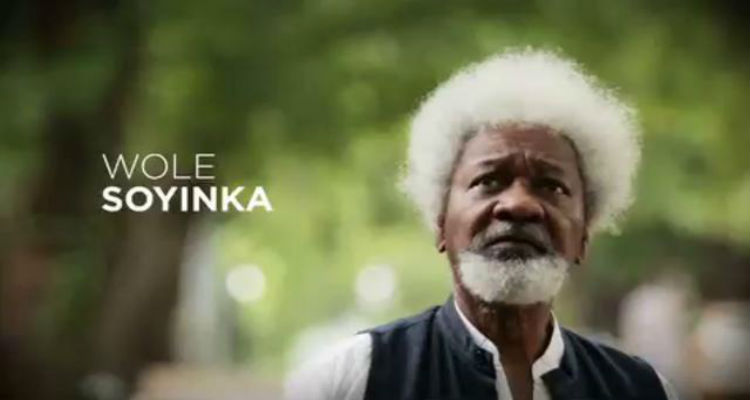


Another Nigerian author worth mentioning is Wole Soyinka. He has written many plays but also several memoirs, poetry collections, essays, and a couple of novels. Although he mainly writes in English, he is a Yoruba speaker. Soyinka was recognized for his contributions to literature in 1986 as he accepted the Nobel Prize for Literature. This made him the first African to be awarded this prize.

Up next: music and dance

Sunday, March 19, 2017

NIGERIA: THE LAND AND THE PEOPLE


Most of my searches when I was researching its neighbor Niger also popped up a ton of hits for Nigeria. I was forced to sift through them to find what I was really looking for. And now it’s relevant. This is a country that has made world news many times, but most of the time when it does, it’s not pleasant. In recent years, Boko Haram has pushed it back into the news once more. And of course, there’s that Nigerian prince who’s been trying to e-mail us to hold some of his money for a small kickback since the late 1990s. As tempting as that sounds, I’ll pass. Just because I’m not really into scams. But it leads me to wonder: it can’t be all bad and scammy, right? I know there’s more to this country than this.

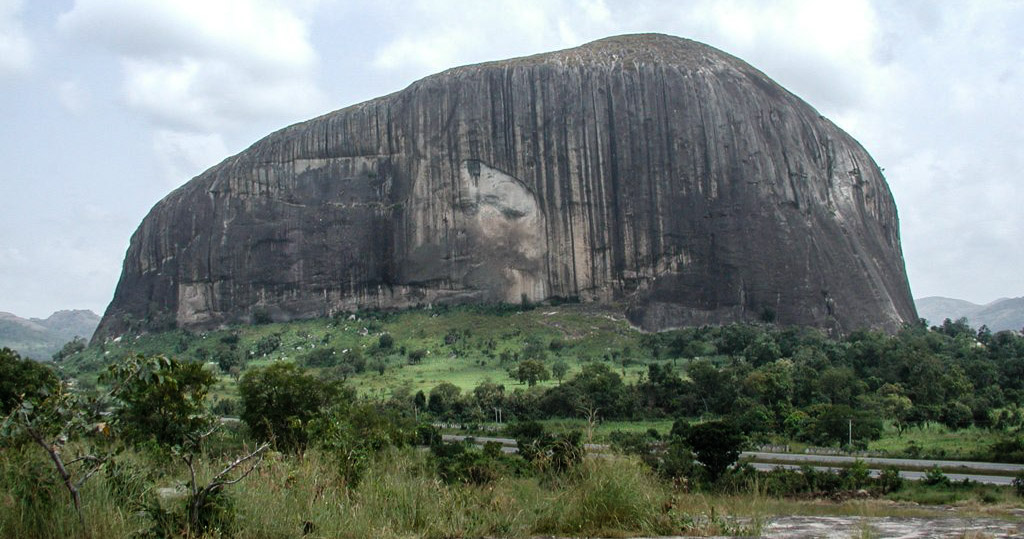
Zuma Rock

Similar to its neighbor Niger, the name Nigeria is stemmed from the Niger River. The name Nigeria is often contributed to Flora Shaw, a British journalist. 


Nigeria is located in West Africa, surrounded by Benin to the west, Niger to the north, a small border with Chad to the northeast, Cameroon to the east, and a coastline on the Gulf of Guinea. The two main rivers that run through Nigeria are the Niger River and Benue River, which come together to form a Y. The country has quite an extensive array of landscapes: highlands, plateaus, hills, mountains, coastal plains, swamps, savanna, and desert. 

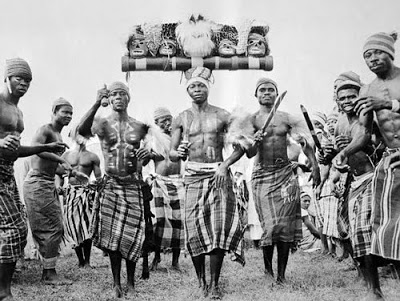
Pre-colonial Igbo


One of the earliest civilizations there was the Nok Civilization, who were known for their terracotta figures. Later on the Hausa and Kanem-Bornu Empires prospered as trading posts between the Northern and Western African regions. The Igbo Kingdom of Nri strengthened its presence during the 10th century until the time the British arrived in the country. The Nri had a huge influence on Igbo culture. The Yoruba Kingdoms flourished in the southwest corner the country. The Benin Empire rose during the 15th and 16th centuries. And then the Portuguese and the Spanish arrived. The city of Eko later became known as Lagos (thanks, Portuguese). The Europeans who arrived began to trade, and unfortunately, that included the Slave Trade. Ports along the Nigerian coast were some of the largest slave trading posts. Slavery was also present in their agricultural sector as well, mostly in the palm wine production plants. By the late 1800s, British claims in Africa began to grow, and they made their claim to Nigerian lands, and in 1901, it became a British protectorate. There were several clashes between the Nigerians and the British. The country eventually split into the Northern Protectorate, the Southern Protectorate, and the Lagos Colony. Christian missionaries did arrive, and while they did have their influence, the British were pretty insistent about not interfering with the established Islamic influence on the culture, especially in the north. After WWII, Nigerians began to push for their own sense of nationalism and independence from the British, which they gained in 1960. However, the country was pretty divided along ethnic groups: Yoruba in the west, Igbo in the east, and Hausa in the north. There were several coups in the mid-1960s, which partly led to a civil war, lasting from 1967­–1970. Oil was discovered in 1970, but it was no match to the military juntas and conflicts that lasted from that point to the end of the 1990s. However, they regained their sense of democratic process in 1999, which ended over three decades of military rule. 

Abuja

Lagos may be the largest city in Nigeria (its metro area is actually the largest on the African continent), but the capital city is Abuja. The capital actually used to be in Lagos, but it moved to Abuja in 1991. Abuja is one of the many planned cities that are also national capital cities. While Lagos is located along the coast in the southwest corner of the country, Abuja is more centrally located. The city is the center of government, commerce, and media, and there are several universities and entertainment spots throughout the city.


Business and financial district in Lagos

In 2014, Nigeria passed South Africa as having the largest economy in Africa. However, years of military rule, corruption, and mismanagement gave the country a slow start. Today, it’s classified as a mixed economy emerging market. Nigeria has the advantage of its abundant natural resources, the second-largest stock exchange in Africa, their oil supply, and well-developed sectors in transportation, communications, legal, and financial fields. Agriculture still employs nearly 30% of its population, but manufacturing, mining, and the service industry serve as an important source of available jobs. However, there are many Nigerian families who depend on remittances from abroad.


Because of Nigeria’s history of being a British protectorate, the dominant religion is Christianity. Both Protestantism and Roman Catholicism are found in the southern regions of the country, although the concentration areas may differ. Islam is more prevalent in the northern areas of the country, with Sunni Islam being the majority denomination. Other minor religions in the country include animism, Hare Krishnas, and various Christian denominations including Anglican and LDS/Mormon.  

This is a Nigerian cartoon that teaches about African culture. I'm going to have to check this out.

Nigeria is a multi-ethnic and multi-linguistic country. It’s estimated that nearly 521 languages have been spoken in this country (nine of these have become extinct). Many people in Nigeria speak several languages, and although they may speak their own languages in the home, English is the official language of the government, commerce, and education and serves as a lingua franca in some cases. (There are a couple of English-based Creoles that also serve as lingua francas.) The major languages spoken in Nigeria are Hausa, Igbo, and Yoruba, but there are many others that are utilized in some capacity. 


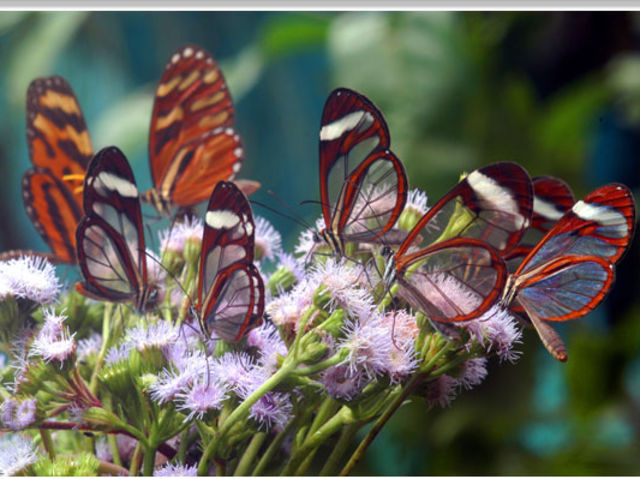
In reading articles about Nigeria, I came across a few things that caught my attention. Nigerians were building boats for the Songhai Empire’s fearless leader (based in Mali) Mansa Abubakari II’s expeditions to the Americas decades before Columbus arrived. And apparently if you’re looking to have twins, find a Nigerian, and more specifically someone of Yoruba linage: their bloodline has the greatest chance of having twins. It’s also home to the most butterflies in the world. And in a few days, I get to write about an author who I first read in college and went on to read several of his books.


Up next: art and literature