Showing posts with label Roman Catholic. Show all posts

Sunday, August 7, 2016

MEXICO: THE LAND AND THE PEOPLE


For obvious reasons, Mexico and the US have a special history and relationship. For me personally, I dated a guy from Oaxaca once a long time ago, and recently my husband and I have talked about what it takes to move to Mexico. Especially if Trump becomes “president.” Hey, at least there will be a wall separating us from him. But regardless of what people think about it, Mexicans are now becoming one of the largest immigrant groups to the US. In fact, both of my neighbors on either side of me are from Mexico, and they are great neighbors. So, while it tends to be a topic of discussion and sometimes vitriol, I really want to delve into the real Mexico and what it means to be Mexican. 

 
The name Mexico comes from the Nahuatl language. Nahuatl is the language of the Aztecs and sometimes referred to the Aztec language, especially in older books. In Nahuatl, Mexihco refers to the heartland of the Aztec Empire, sometimes called the Valley of Mexico and its people, the Mexica. There are a number of other theories and disputes by historians and linguists on the actual meaning of Mexihco and other possible origins of the name Mexico. 


Mexico is included as part of North America. It shares a long border with the United States to the north (following along the Rio Grande for much of the way). It also borders Guatemala and Belize in the south. It’s eastern side touches the Gulf of Mexico, and Cuba is not far from the city of Cancún on the Yucatan Peninsula. The Pacific Ocean lies to the west, along with a peninsula known as Baja California. Mexico has several mountain ranges that rise out of the landscape, and it also is the reason that Mexico has several active volcanos as well. The climate varies so much across the land: from the cooler, drier areas high in the mountains to the much warmer tropical rainforests of the Yucatan. 


One of the first civilizations in Mexico was the Olmecs. They are often seen as the predecessors to the Mayans, another major civilization spanning southern Mexico and Guatemala. They were responsible for the domestication of maize, beans, and tomatoes, which helped facilitate the transition to more of an agricultural-based society. The Olmecs were also known for their brutal ballgames and the Mayans were mostly known for their famous calendar, which was brought to everyone’s attention in 2012 (since it was “predicted” that would be the end of the world). The Aztecs came along a little later and became an important civilization not only in Mexico, but in much of North and South American history. “Aztec” actually refers to several different groups of people who generally lived in the same area. The Aztecs were mostly remembered for their sacrificial practices. They were also known for having to deal with the Spanish as they made their way across the land in order to conquer it. The famous Aztec king Montezuma fell to the hands of the Spanish, and the Spanish (unintentionally?) infected them with smallpox due to the fact that the Aztecs had no natural immunity to it. The Spanish moved in and took over their capital of Tenochtitlan, which eventually became the city of Mexico City. The country was later included in the Viceroyalty of New Spain, which also included many areas around the Caribbean, Central America, and other areas. Under Spanish rule, the face of Mexico would change. Europeans and native Mexicans would intermarry and create the mestizo class. In 1810, Mexico finally declared its independence from Spain. Like a lot of countries, their first decades were met with economic strife, which was partly the cause for the Pastry War (hmm, sounds like the loser gets a nasty raisin pie). Anyway, there were several wars and battles fought that led to gaining and losing land, including losing Texas to the US. The Mexican Revolution took place during the early days of the 20th century, and the country then spent pretty much the rest of the century under a one-party rule. The 2000 election changed all that when Vicente Fox won. Today, Mexico is a highly diverse and modern country.


Mexico City is a global city and a major financial and economic area in the Americas. With an urban area of roughly 20 million people, it’s about the same size as São Paulo, Brazil. Not only is it the oldest capital in the Americas, it’s one of two that was built by the Amerindians (the other being Quito, Ecuador). Actually, the city has just passed a number of liberal rulings in recent years: same-sex marriage, abortion, no-fault divorce, some forms of euthanasia, and other measures. It’s actually quite a diverse city and every bit of a modern city. There are significant populations of Arab, African, European, and Amerindian/Mexicans throughout the city and Mexico itself. Mexico City is also the home of the largest population of Americans outside of the US. It’s a cultural center of the country, especially for art, higher education, museums, theatres, and media. But it’s also a commerce, government, and sports center as well. (Mexicans love their soccer and bullfighting.)


This country is a leading global economy, making it the 11th largest country by PPP (purchasing power parity) and having the 15th largest nominal GDP. Some of the largest industries that drive the Mexican economy include electronics, auto manufacturing and parts (it produces the most vehicles in North America believe it or not), communications, science and technology, energy, transportation, and tourism.  


Roman Catholicism is the dominant religion in Mexico, but there are also a number of other Christian denominations. It’s actually the second largest Catholic population in the world, behind Brazil. There is also a growing number of non-religious people. Because Mexico is a widely diverse country, there are small numbers of Muslims, Jews, and Buddhists in Mexico as well. 


The national language is Spanish, and Mexico is the largest Spanish-speaking country in the world. But there are a number of other indigenous languages spoken in Mexico as well. Many people also speak Nahuatl, Zapotec, Mixtec, or Mayan languages. When I dated that guy from Oaxaca, and I listened to him speaking with some of his friends, and I couldn’t understand anything they were saying, recognizing it wasn’t Spanish; they all spoke one of the indigenous languages of Oaxaca—he told me that state alone has nearly 90 languages spoken there. 


There is so much about Mexico that I already know. I read James Michener’s “Texas” and “Mexico” years ago, both of which cover much of Mexican history. Mexican cooking and Mexican fusion is extremely popular as is many Mexican musicians. Reggaeton is certainly gaining popularity here in the US. (I love reggaeton, by the way, so I’m one of them.) Even in moderately sized cities, there are Mexican grocery stores and bakeries. Their presence is everywhere, even outside of the major urban areas. Spanish is the most widely studied second language in the US. I know it’s been hard to narrow down what recipes I’m going to pick for Mexico because everything sounds amazing.  But I’m going to try…as I look for ways to go there myself.

Up next: art and literature

Monday, June 22, 2015

ITALY: THE LAND AND THE PEOPLE


When I was studying music in college, I took a course called “Diction for Singers” that was required for vocal students. This was a class aimed at teaching singers how to pronounce words in the languages that singers use the most, and the first foreign language we tackled was Italian. Our professor rolled out the trusty old white board and wrote the word “Italy” at the top. We were each to tell one thing that we associated with the country. Answers ranged from “spaghetti” to “opera” to “the mafia” to “fashion models.” And then she bought us all pizza. That was a great class. 


It’s thought by many historians that the word Italia is stemmed from Greek and other local dialects to mean “land of the young cattle” or some variant of that. Many tribes in the southern regions of the Italian peninsula used the bull as their symbol. Other major Greek historians attribute Italy’s name to being named after Italus, an ancient king. 


Italy is in southern Europe, directly touching the countries of France, Switzerland, Austria, and Slovenia. It is directly across the Adriatic Sea from Croatia, Bosnia and Herzegovina, Albania, and Greece. The island of Sicily is across the Mediterranean Sea from Malta and Tunisia, and the Italian island of Sardinia lies just south of the French island of Corsica. It's often referred to as "The Boot" because of its shape. 


Italy’s earliest inhabitants more than likely were Greek explorers. The capital city of Rome was platted on the Tiber River around 753 BC, which became the center of the Roman Empire. This empire was one of the most powerful empires in the history of the world, spreading its claims across Europe as far north as English and Ireland to the borders of the Persian Empire and across North Africa. With the establishment of the Roman Empire came the establishment and spread of Roman Catholicism, which was the focal point of the Crusades. During the 14th and 15th centuries, Italy saw huge growth in terms of culture, science, and the arts during what became known as the Renaissance. During this time, the presence of city-states throughout the peninsula began to take hold. The Renaissance also brought about a period of discovery—Italian explorer Christopher Columbus discovered the Americas (although he was paid by Spain to do so and all claims went to Spain), and explorers throughout Europe were exploring South America, Africa, and East Asia. It was also a warring period; the Italian city-states met with invading armies from Spain and Austria and others during this time as well. By the mid-1800s, Italy participated in a number of wars and battles, eventually unifying many of its city-states to become a new unified Italy in 1861 (For reference, this is the same time the US was engaging in its own Civil War. It’s also the same year that Charles Dickens published Great Expectations.). Italy played its part in the appalling Great African Land Grab (as pushed by the Italian Socialist Party of the time) that several other European countries jumped into during the latter part of the 19th century. Italy set up stakes in Somalia, Eritrea, and Libya. During WWI, Italy aligned itself with German and Austria-Hungary, forming the Triple Alliance. By the time Italy entered WWII, Benito Mussolini and his National Fascist Party were leading the country. He invaded Ethiopia, aligned themselves with Germany and Japan, and was a supporter of the Franco government of Spain. Eventually, they were defeated in Africa as well as at home. Climbing out of the tragic losses of WWII, Italy declared itself a republic in 1946. Slowly, their economy began to grow again, only to suffer through decades of civil and social unrest. While Italy struggled to steady its economy after the 2008 Economic Crisis, there still remains issues of corruption in politics, political parties, and elections.


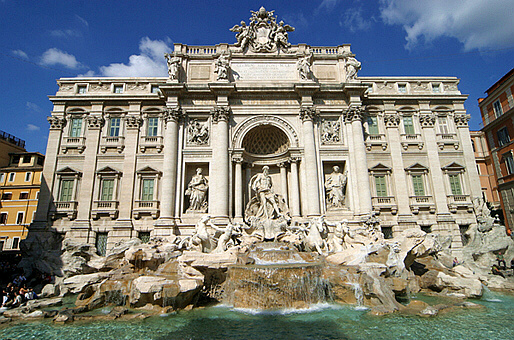
Italy’s capital city, Rome, is one of the most well known cities in the world. And it’s one of the oldest. Vatican City, the city-country where the Pope lives, is located wholly within the city of Rome, making it the smallest country in the world. No matter where you turn in this city, you can’t help but run into ancient ruins and iconic world-famous buildings next to modern wonders. If you’ve read Dan Brown’s Angels and Demons, it mentions many of these pieces of public art. Its historic city center is on the UNESCO’S World Heritage Site list, but that’s not the only one—Italy has the most World Heritage Sites than any other country (Italy has 50 sites that made the cut; China came in with 47 and Spain with 44.) According to mythology, the city of Rome was named after its first king, Romulus. But there are also a number of other theories as to how it was named. Historically, Rome was the center of thought, of art, of music, of culture, of religion, of government. It’s no different today. Some of the most visited sites in the city are from locals as well as tourists. Rome is also now home to booming high-tech industries, financial services industries, and media industries, not to mention the numerous educational facilities, high fashion, performing arts and cinema, haute cuisine, and sports venues that are spread throughout the city. 


Italy’s economy contributes to its status as a highly developed country, ranking third in the Eurozone area and eighth in the world. This country is known for its manufacturing companies across several markets. Italian-made cars are among some of the most coveted vehicles in the world. Companies such as Ferrari, Alfa Romero, Fiat, Lamborghini, Maserati, Bugatti, Ghia (like Karmann Ghia), and Vespa are familiar to many car enthusiasts. High-end fashion means big bucks in places like Rome, Milan, Florence, and Naples. Names like Armani, Dolce & Gabbana, Gucci, Fendi, Moschino, Prada, Versace, Max Mara, and others are considered top of the line. Italy is also a destination for culinary aficionados from across the world. It’s also the world’s leading wine producer (I need to go investigate this). Italy’s science and technology sector is a major economic boost, but there’s a reason for that. This country has a long history of producing scientists, mathematicians, and inventors whose names may or may not sound familiar: Leonardo da Vinci, Galileo Galilei, Leonardo Fibonacci, Alessandro Volta (invented electric battery), Guglielmo Marconi (invented radio), and many others who have won numerous prizes and awards for their works and who have contributed to our global understanding of science and math. 


By far Roman Catholicism is the most practiced religion in Italy, and it’s understandable since this is where it got its start. Not the mention this is where the Pope lives (kind of; well, he’s super close by). But there are more than just Catholics living in Italy; there are many followers from other religions represented in this country: Protestants, Jews, Muslims, Buddhists, Hindus, Sikhs, and Bahá’ís. 

Ciao = Hello

Italian is the most widely spoken language and the official language of education, government, and business. While there are many dialects and regional variants of Italian throughout the country, there was a general standardization of the language due to the expansion of television and other media during the 1960s and 1970s. Outside of Italian, there are several languages that have officially been recognized (although some of these languages are used only in a few areas): Sardinian, Occitan, Ladin, Friulian, Franco-Provençal, French, Croatian, Slovene, Greek, German, Catalan, and Albanian. 


As a foodie I am super excited that I have finally landed on Italy. And through the large numbers of Italian immigrants to the US, we now have access to and familiarity with many of their prized culinary delights. Even some of their culinary terms have now become commonplace in the English language. Here are just a few you may recognize: espresso, cappuccino, latte, macchiato, parmesan, pizza, mozzarella, asiago, romano, pomodoro, bruschetta, fresco, basilico, peperoncini, pepperoni, gelato, panini, caprese, rigatoni, manicotti, mostaccioli, prosciutto, farfalle, spaghetti, alfredo, fettuccine, orzo, rotini, capellini, fusilli, fiori, penne, pancetta, focaccia, ciabatta, mascarpone, vermicelli, ziti, lasagna, linguine, gnocchi, pasta, porcini mushrooms, radiatori, pane, panettone, macaroni, formaggio, vino, salami, ditalini, tortellini, gemelli, ravioli, tiramisu, cannoli, and calzone. So, just like when my professor made us realize how much we already knew about Italy, there was still much we didn’t know or think about. And that’s where I come in.

Up next: art and literature
Saturday, August 10, 2013

COSTA RICA: THE LAND AND THE PEOPLE


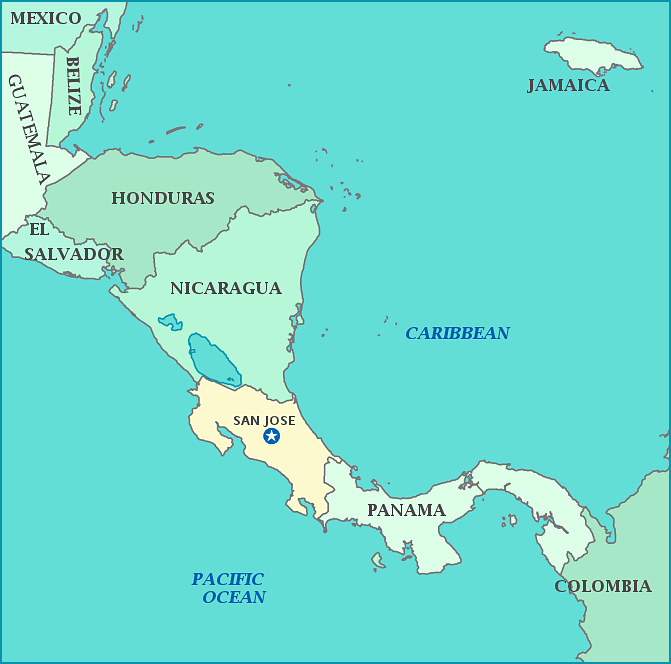
It’s the country with no army. And one of the greenest countries. And one of the happiest places in the world. Literally meaning “rich coast,” Costa Rica lies in Central America, between Panama and Nicaragua, touching both the Caribbean Sea and the Pacific Ocean.  As part of the Ring of Fire, Costa Rica is home to several volcanoes (some are still active), the highest being Irazú Volcano. Its tropical climate is partly the cause of it being one of the most ecologically diverse countries in the world.


It’s not exactly sure who gave Costa Rica its name, whether it was Christopher Columbus or other Spanish conquistadors who landed later. It was mostly controlled under the Guatemalan province of the Viceroyalty of New Spain (what is now Mexico). And then it was part of the Viceroyalty of New Grenada (what is now Colombia) for a while. The country pretty much lacked all of the things the Spanish were looking for – namely silver and gold – so they in turn pretty much left it alone. It was generally thought to be one of the poorest areas in all of Spanish-run America. When Spain lost the Mexican War for Independence, things started changing quickly. Costa Rica changed occupiers several times before gaining its own independence in 1847. In 1948, a dispute regarding an election led to a 44-day civil war, which led to the deaths of nearly 2000 people. The next year, the entire army was abolished. Since then, the country has enjoyed relatively peaceful times.  In fact, last year, they even abolished recreational hunting. (The US South has probably crossed them off of their vacation destinations. – I’m joking, for crying out loud. Although it’s probably truer than not.)


The Central Valley is home to Costa Rica’s largest city and capital, San José. The metro area has about 2.1 million people – about the same size as Houston, Texas. Most people live in the suburbs and work in the city, but even at that, it’s one of the safest cities in that region. It’s quite the center for cultural arts: home to several colleges and universities, theatres, museums, parks, zoos, as well as stadiums and sports arenas and of course, the center of government.


Because it was originally claimed under Spanish rule, the most widely spoken language is Spanish.  However, two of the more commonly spoken indigenous languages – Mekatelyu and Bribri – are also recognized as regional languages. Mekatelyu is actually a Jamaican Creole that was brought to Costa Rica by Jamaicans who moved to the area as migrant workers. It is actually a transliteration of the phrase “make I tell you,” which is loosely “translated” as “let me tell you” in standard English. Bribri is the language spoken by the Bribri people native to Costa Rica. Unfortunately, there are only about 11,000 speakers left. English is also learned in school because of its importance as a global lingua franca and tourism and is understood by many Costa Ricans.


Like most countries in Central and South America, Roman Catholicism is the dominant religion, followed by Protestantism (which together make up about 84% of the population). However, the growing number of other ideologies that are practiced freely in Costa Rica seems to rise. About 11% of people consider themselves irreligious, not having any particular feeling towards any one religion at all; about 2% practice Buddhism, and the bottom 2% follow a variety of other ideologies, religions, and philosophies.


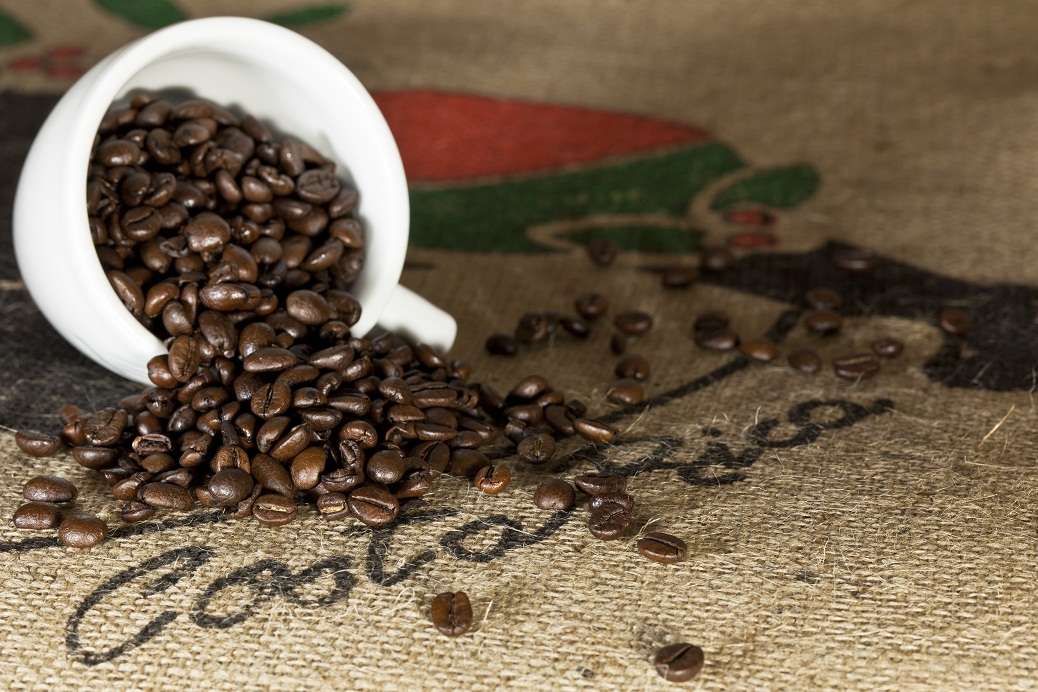
Costa Rica is a developing country, just recently opening its doors to global companies like GlaxoSmithKlein, Intel, and Proctor & Gambel. It also is famous for its coffee beans, most notably the Costa Rica Tarrazú beans. I have some of this right now. It’s a little more bright-flavored than others, usually a medium-dark coffee. I really like it. Costa Rica has also grown to be a popular destination for ecotourism, tours set up specifically surrounding its flora and fauna.


This is one country that has a lot to boast about. It has one of the lowest death rates in the world. About 97% of the country has access to clean water, and 95% has adequate sanitation, which helps in lowering the risk of infectious disease to an intermediate level. Because it’s a tropical country, certain diseases such as dengue fever and bacterial diarrhea are still found though.  The AIDS rate is also fairly low. Since the country enacted it’s own version of Social Security in 1941, it also granted its wage-earners universal health care. (However, waiting lists tend to be long to see certain specialists and so on, so people can choose their own private health insurance to avoid these waits.) 


I know a couple of people who have been to Costa Rica (one of whom has told me the beer Imperial is the best!), and from this preliminary reading, I’m completely intrigued.  I think I’d be happy there. (Only three more decades until retirement!) Well, for one, I’m always a little happy with a country that votes for a woman as president (we’re still waiting for one, maybe in a couple of years, perhaps?).  Costa Rica’s president is Laura Chinchilla (who happens to have the same birthday as my late father-in-law). She got her masters degree from Georgetown University (Washington, D.C.), and her husband is actually Spanish-Canadian.  It really is a small world. There are a lot of things that Costa Rica is doing well, and I’m really excited to delve into its culture this week, and of course end with some salivatingly delectable food. (Side note: I came across an article from NBC Nightly News dated a couple years ago reporting a study that said people don’t salivate at the thought of good food. I don’t know. I just looked at my recipes, and I just did. So, there.)
 
This one's for you, Beth. 

Up next: holidays and celebrations