Showing posts with label St. Stephen's Day. Show all posts

Monday, July 21, 2014

FINLAND: HOLIDAYS AND CELEBRATIONS


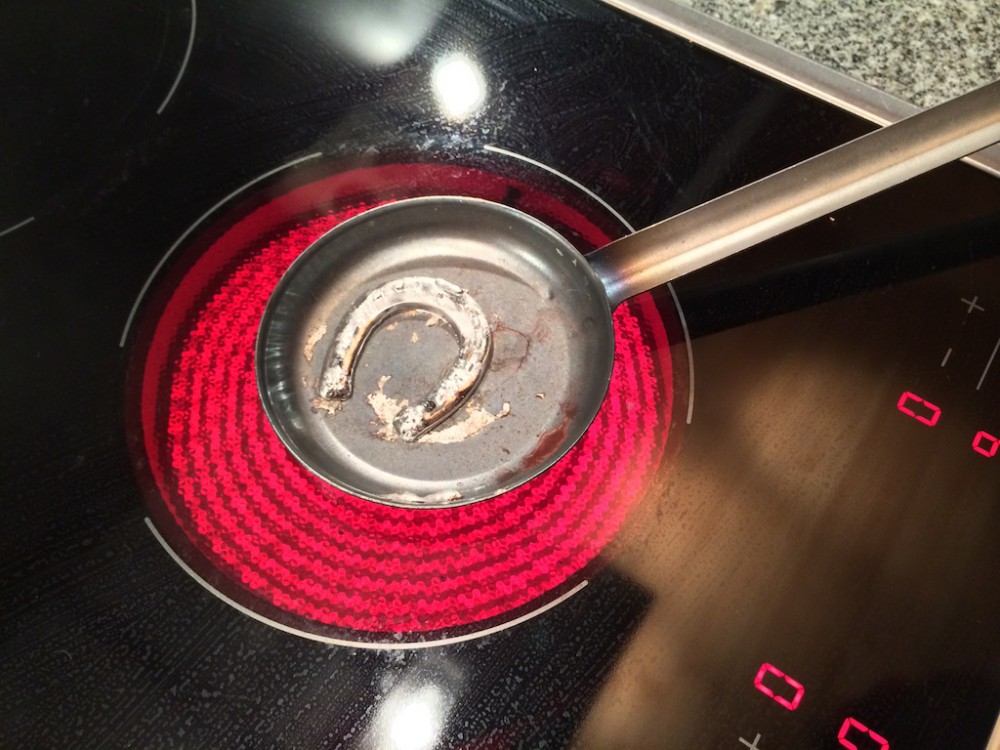
New Year’s Day.  January 1. New Year’s celebrations are huge and celebrated in larger-than-life fashion. Cities and towns and organizations will hold their own fireworks displays. Some people choose to celebrate at home, but others attend huge New Year’s parties held in bars, clubs, or restaurants; or even gala New Year’s balls. Some of the informal parties may include smörgåsborg of simple hot and cold dishes and desserts accompanied by tea and coffee (yes, please. I’ve traditionally served Brazilian feijoada on New Year’s Eve, but I may try smörgåsborg this year.). Champagne toasts are common at the strike of midnight. Large crowds gather in Senate Square in Helsinki to bring in the New Year.  One tradition is the casting of the tin. People will get a small piece of tin and have it melted and cast in the shape of a horseshoe, a symbol of good luck.  And of course, there are a lot of “predict the future” superstitions that are said and adhered to as well.


Epiphany.  January 6. This is the day that Western Christians often attribute to as the day when the Three Wisemen (or Magi) visited the baby Jesus.  Other Christians celebrate this day as the day Jesus was baptized and the marking of Jesus’ first miracle during the wedding at Cana. Churches may hold special services or events for this day.


Good Friday/Easter/Easter Monday.  Varies. In Finland, Good Friday is extremely solemn. Traditionally, many activities were banned on Good Friday (although it’s somewhat relaxed a little these days): you didn’t visit friends or laugh too much or dance; lighting a fire to cook was forbidden too, so you would make a lot of food the day before to last for a few days. Holy Saturday used to be thought of as the day that witches would come down from the mountains, so bonfires would be lit to ward them off. Easter Sunday starts off with Easter egg hunts for the children. Instead of the Easter bunny leaving chocolate eggs, they believe a cockerel [a young rooster] leaves the eggs instead (which sort of makes more sense than a rabbit).


May Day. May 1.  May Day in Finland is related to the pagan celebration Walpurgis, also seen as a spring holiday. And for those who love calm and quiet, this holiday may not be for you. The night before, people head to pubs and restaurants, bringing the party aura with them to the streets. Wild hats and masks are donned, along with balloons, pom-poms, noisemakers, and horns. It’s almost like a Finnish Carnival. And of course, there’s always my old friend and enemy: alcohol. Pickled herrings and fritters are commonly eaten on May Day. This day is doubly celebrated as Labor Day, a day to celebrate the worker.

Ascension Day.  Varies. This is the day Christians believe that Jesus ascended into heaven after being resurrected.  The day falls 40 days after Easter. Some churches hold a special service to formally extinguish the Pascal Candle (or Easter Candle). Some churches even bless fruits and vegetables on this day.

Pentecost.  Varies. Also called Whitsunday, this day is 50 days after Easter, or 10 days after Ascension.  This day marks the end of the Easter season and is celebrated as the day that the Holy Spirit presented itself to the disciples. It’s also a common day for baptisms.  In some areas of Finland (as well as Estonia), eggs are also dyed at Pentecost, because hens often don’t lay their eggs until around this time.


Midsummer Eve/Midsummer Day.  Varies. This holiday is a celebration of the hopes for a good harvest and for light (the farther north you go, the sun doesn’t set in the summer at all). Since the old days, bonfires were lit the night before to ward off the evil spirits and to hope for good crops. People will set up their outdoor parties around these bonfires, including dancing and eating. The Midnight Sun myth is often retold: a young maiden picked seven flowers on the longest day of the year and put them under her pillow, and when she slept, her future husband showed up in her dreams. And everyone takes the traditional swim at night in the lake or sea. This holiday has now been moved to the Saturday that falls between June 20 and June 26. It’s not an official holiday, but it’s very important to the people of Finland.

All Saint’s Day.  Varies. Traditionally, this has been a feast day honoring all of the saints. It’s also treated as a day to visit the gravesites of loved ones and to take care of the grave.  Normally held on November 1, it has been moved to the Saturday that falls between October 31 and November 6.


Independence Day.  December 6. This day celebrates Finland’s declaration of independence from Russia in 1917.  The day starts with the official raising of the Finnish flag at Tähtitorninmäki in Helsinki as everyone else displays their own flags around their home.  A large presidential reception, held at the Presidential Palace with nearly two thousand guests, is broadcast on television. People will also visit war memorials if they can, or watch the TV broadcast of the movie The Unknown Soldier. Family and friends gather together to share traditional foods.

Christmas Eve/Christmas Day.  December 24-25. Lapland in northern Finland is known for their reindeer, so it comes as no surprise that Finnish children know Santa Claus must be a Finn.  It’s said that he descends from the top of Mt. Korvatunturi near the town of Savukoski.  And of course, they know that Finnish children are the first to receive their gifts on Christmas Eve. For the few weeks before hand, families will decorate their homes, make all kinds of desserts and savory treats. One tradition takes place in the city of Turku; the Declaration of Peace is read just after the cathedral bell strikes noon. After lunch on Christmas Eve, many people head out to the sauna in the afternoon. Dinner is a selection of roast or pork, vegetables, sweets, rice pudding, and mulled wine. Gifts are handed out on Christmas Eve (a tradition we adopted in my family so that the grown-ups can sleep in Christmas morning), and Christmas Day is spent at home with family.


St. Stephen’s Day.  December 26. St. Stephen is the first Christian martyr. One tradition on this day is to take sleigh rides drawn by horses through the streets. An older tradition is having parades for the forthcoming brides, which is why it was also a popular day to be married. Now, there are dances held at restaurants and dance halls as a modern continuation of that tradition.

Every Sunday. All Sundays are considered official holidays but not so important as the others. When the government reduced the workweek to 40 hours per week, Saturdays were also considered a quasi-holiday as well. Shops can be open on Sunday, but usually on a shorter schedule (from noon to 6pm or so).  Finland also has a number of Flag Days, a sort of de facto holiday where you display the flag.

Up next: art and literature

Monday, October 21, 2013

CZECH REPUBLIC: HOLIDAYS AND CELEBRATIONS


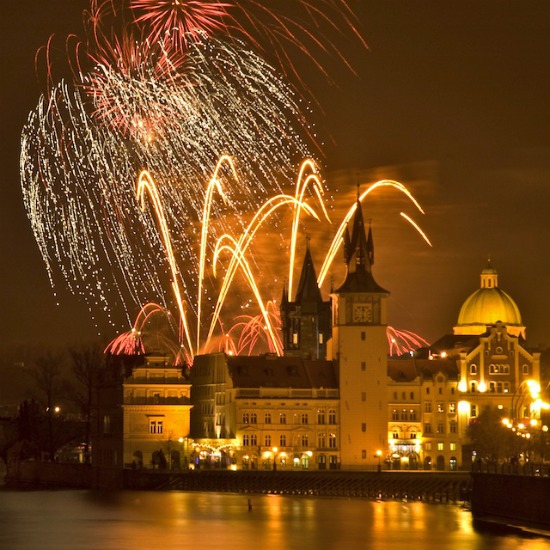
New Year’s Day / Restoration Day of the Independence Czech State (January 1):  Most Czechs like to close their year or bring in the new year – depending on how you look at it – with the usual ways that other countries do it.  Elaborate parties held in bars, clubs, and restaurants are very popular, and many of these places have special New Year’s specials on prices and dishes on their menu.  Some people who prefer not to spend their evening in the hustle and bustle of the bar crowd may opt for saner activities such as theatre performances or the opera. There is also a lot of live music and concerts taking place but many of these sell out quickly, so people have to buy tickets well in advance.  But regardless, most adults adhere to the tradition of toasting champagne at the stroke of midnight, followed by fireworks and other pyrotechnic reverie. It also happens to be Restoration Day, the day that Czechoslovakia separated into Czech Republic and Slovakia (also sometimes referred to as the Velvet Divorce).


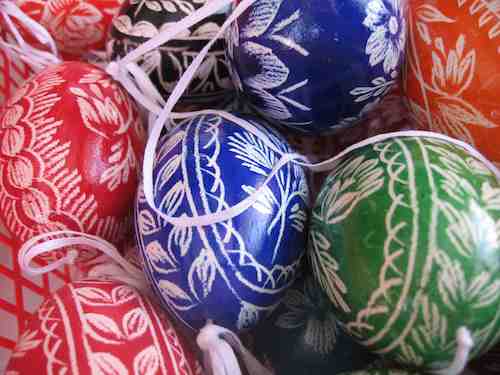
Easter Monday (varies): Easter is always celebrated for two days in the Czech Republic: both Sunday and Monday. During the Communist years of Czechoslovakia, the holiday was relegated to being a holiday about spring. And even in the post-Communist era, and in respect to the fact that most Czechs aren’t that religious, it took a while for the Christian-based traditions to slowly return.  One tradition you’ll find is highly-decorated, hand-painted Easter eggs.  Another tradition is to take pussywillow and braid them together to form a whip. The boys would go caroling on Easter Monday and symbolically whip the girls on their legs (and possibly may also throw a little water on them as well – another tradition in certain areas). Yeah, I’m sure the girls just really looked forward to this. It used to be that farmer’s wives would use the whip to whip not only the livestock but also everyone else in the house. (Something tells me, this tradition actually lasted for far more days than just these two.)


Labor Day (May 1):  The Czech Republic celebrates Labor Day on the customary day for many of the world’s countries. Of course, most people have this day off of work, and government offices and schools are closed for the day.  Many cities will hold parades, and politicians always feel compelled to give speeches regarding the state of labor at that time. Just yesterday in The Prague Post (“The Czech Republic’s English-language Newspaper”), there was an article about how the Czech Republic is the third-worst European country when it comes to slavery (just after Albania and Montenegro).  It not only mentioned foreign workers who have had their papers taken away and only working for food and accommodation, but also the number of Czechs who are taken to other countries and forced to work under similar conditions. 

Liberation Day (May 8):  This holiday marks the end of the European involvement in WWII in 1945 (also known as VE Day).  Most of the traditions on this day are memorial services, headed by various government leaders. The president heads one of the largest memorial services in Prague.


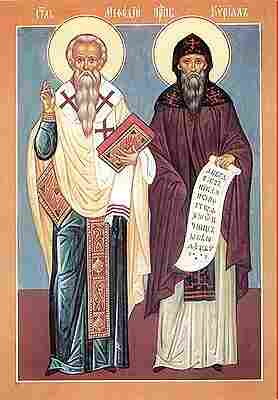
Saints Cyril and Methodius Day (July 5): Saints Cyril and Methodius were two monks who were often attributed as creating the Glagolitic and Cyrillic alphabets (the same alphabet used by Russian and other languages).  In many of the Slavic countries, these two are commemorated as national saints.  The holiday was originally on March 9, but Pope Pius IX moved the date to July 5.


Jan Hus Day (July 6): Jan Hus was a religious reformer living before Calvin or Luther. He had a lot of problems with the Catholic Church at the time, aligning his ideas against the Church’s regarding ecclesiology (a theological term meaning the origin of Christianity in relationship to Jesus, salvation, its leadership, etc.), the Eucharist (also known as Holy Communion), and other topics. Obviously the church doesn’t like dissidents, and after a trial, he was burned at the stake in 1415. Jan Hus wasn’t just a theologian and martyr: he also introduced some important additions to the written Czech language in the form of diacritic marks. The hacek and accent marks over certain letters reformed the language into what we are familiar with today.

St. Wenceslas Day (September 28): Wenceslas I (also spelled Wenceslaus) was the Duke of Bohemia; and yes, it’s the same Wenceslas as in the Christmas carol “Good King Wenceslas.” His younger brother assassinated him in 935, stemming from an argument between the two and later took the role as Duke himself. Many towns and cities will hold street festivals in honor of St. Wenceslas, which include food, drink, games for kids, cultural displays, and many restaurants will have a special St. Wenceslas Day menu.  Museums and galleries may also open their doors to allow people to come visit for free. 


Independent Czechoslovak State Day (October 28):  This is the day that the state of Czechoslovakia was created in 1918.  (61 years later, I was born on this day.) The creation of the country of Czechoslovakia was created out of the end of WWI, with the fall of the Austro-Hungarian Empire.  It would also find solidarity at the end of WWII when they banded together to oppose the German occupancy. However, this day isn’t really celebrated with the vigor of other independence days. Czechs mostly spend this day relaxing in their own ways with no parades or large festivities. A few politicians may make a speech here and there, mostly about the importance of looking back and remembering their history and their future together. 

Struggle for Freedom and Democracy Day (November 17):  There are two major events that took place which poses as the basis for this holiday.  The first is the student demonstration against the Nazi occupation in 1939, and the second are the 1989 demonstrations that acted as the beginning of the Velvet Revolution.  Because both of these demonstrations were student-led, this day is sometimes referred to as World Students Day, which stresses the importance of non-violent political change. 


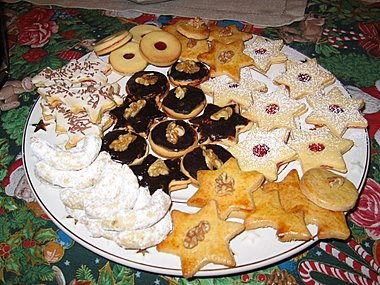
Christmas Eve and Christmas Day (December 24-25):  Gifts are often placed under the Christmas tree that is brought in and set up during the afternoon of Christmas Eve.  They’re opened later that evening – which really cuts down on the amount of time to be poked and prodded and peeked at.  At the end of Christmas dinner, usually consisting of roasted carp and fish soup (which is odd that the food of choice is seafood, given this is a landlocked country), a bell is rung, signifying that it’s time to open presents. And of course it wouldn’t be Christmas without its array of sweet treats. Another tradition is that they like to make predictions for the coming year using different traditions based in superstition, such as a girl throwing her shoes over her shoulder and if it points towards the door, it means she’ll get married soon.  Since most Czech people are non-religious, its original Christian meanings are often generally substituted for generosity and good will. 

St. Stephen’s Day (December 26): Often referred to as the Second Day of Christmas. It’s a Christian feast day in honor of St. Stephen, the first Christian martyr.  In the carol “Good King Wenceslas,” the lyrics speak of how he trudged through the rough winter weather to give alms to peasants on this day. (The familiar melody for this carol incidentally is from a 13th-century Finnish songbook and the lyrics are about spring. Some of these songs/poems are also found in the poetry used in Carl Orff’s Carmina Burana, one of my all-time favorite works.)

Up next: art and literature

Monday, June 18, 2012

AUSTRIA: HOLIDAYS AND CELEBRATIONS


Austria, a country where the majority of the people currently is or identify themselves as Roman Catholics, does have a majority of the same kinds of holidays that other primarily Christian countries celebrate. There are very few national holidays, however.


New Years Day. January 1. Also called Sylvesterabend, after St. Sylvester. Traditionally, many Austrians enjoy a punch made of cinnamon, sugar, and red wine -- all my favorites! Other people will burn mortars in order to keep evil spirits away, a tradition you'll find in many cultures worldwide. Eating a dinner of suckling pig is considered to bring good luck, as well as green peppermint ice cream in the shape of a four-leaf clover. People will also sing New Years carols on New Year's morning. It also marks the beginning of the carnival of Fasching, which goes on until Lent. That's a lot of partying. Some people will also pour molten lead into a bucket of water and make predictions based on the shapes. Some people can find good (or bad) luck anywhere, I suppose.

Epiphany. January 6. Epiphany falls twelve days after Christmas. It marks when the three wise men visited Jesus, bring gifts of gold, frankincense, and myrrh.

Easter Sunday. Varies. The night before Easter, some people light fires and gather around it to sing songs and dance around it. Easter morning begins with a fabulous Easter brunch to celebrate the end of fasting. The kids will search for Easter eggs and they also follow the Easter bunny myth as well. They will make two different kinds of eggs, though. One kind is decorated but with the intention of being able to eat later. The other kind is hollowed out and decorated with paints and glitter, using ferns and flowers as stencils and is attached to ferns as decorations.


Easter Monday. Varies. This is mostly for a day of rest and to spend with family. I’m sure many people will take the opportunity to spend it outside, weather permitting of course. Not all countries have Easter Monday off, but Austria is one that does.

Labor Day/May Day. May 1. Labor Day is celebrated in similar fashions to other countries, with parades sponsored by various political and labor groups and organizations. It’s also the same day as May Day, the traditional first day of spring and is related to Walpurgis Night.


 Ascension Day. Varies (39 days after Easter). It’s a day for Christians to celebrate Jesus’ ascension into heaven. This is always on a Thursday, so people will often enjoy a long weekend because of it. If you do work on Friday, it’s often a quieter day of work than usual. There are special services at area churches for those who attend.

Whit Sunday. Varies. It’s a day regarding the decent of the Holy Ghost to the disciples of Jesus, according to Christian traditions. It’s also to mark the beginning of the Pentecostal season in the church. Many people will spend the day with family doing something together, such as picnicking or doing something outside.

Corpus Christ. Varies (60 days after Easter). A holiday to celebrate the Holy Eucharist, or communion. Many Christians attend special services in order to be served communion, which is the belief by taking wine and bread, they are receiving the body and blood of Jesus Christ.


Assumption of Mary. August 15. It’s the festival in honor of Mary’s ascent into heaven following her death. Spectacularly decorated festivals and parades followed by fireworks will take place on this day, and vary from country to country.

Austrian National Day (day of neutrality). October 26. Their holiday is a little different than other national holidays, where many would celebrate independence from another country or the signing of a constitution. This one is celebrating the fact that Austria has declared themselves neutral from all international conflict: a feat that I highly commend. Sometimes I wish we were neutral. Many people will hang flags and attend parades.


All Saints Day. November 1. It’s a celebration of all the saints, especially those who have no other holidays, sort of a catch-all holidays for saints. Many people will visit the gravesites of loved ones and light candles in their memory.

Feast of Immaculate Conception. December 8. It celebrates the immaculate conception of the Virgin Mary. Traditionally, it’s celebrated on December 8, nine months before Mary’s birthday on September 8. I don’t see how nine months before Mary’s birthday should mark the immaculate conception, but ok. (Shouldn’t it be nine months before Jesus’ birthday?) This also marks the first day shops can begin the Christmas shopping season. That wouldn’t go over well in the US, where I’ve seen Christmas stuff out at Halloween. (cough, cough, corporate greed, cough, cough)


Christmas Day. December 25. People wait to decorate for Christmas on Christmas Eve by putting up their tree then. None of this putting it up weeks in advance. Caroling is popular and you can hear caroling groups all over during this time. Kids open presents left by Santa Claus. The traditional Christmas meal is carp or sausages. Just invite me to dinner, please. I’ll even forego the gifts, the food is enough.


St. Stephen's Day. December 26. It’s a day to commemorate St. Stephen, the first martyr according to Christians. It’s also related to Boxing Day, which is celebrated in many countries.

Resources:
Wikipedia: "Public holidays in Austria" “Feast of Immaculate Conception” “St. Stephens Day”


 Day: http://www.123newyear.com/newyear-traditions/austria.html