Showing posts with label ceramics. Show all posts

Thursday, April 2, 2020

THAILAND: ART AND LITERATURE

Thai art can be traced back to its early days that have been discovered, from earthen pots dating to 2300 BCE to archeological findings dating to much earlier. As Buddhism became the established religion in Siam, as it was called prior to the early 20th century, Buddhist art became one of the main art forms and may have even depicted the style in which people were portrayed. Statues and sculptures in Buddha-like poses were commonly built, from small ones that can fit on a desk to the reclining Buddha at Wat Pho in Bangkok, measuring at 45m x 15m (147ft x 49ft).


Ceramics held many purposes, many of them for holding water and food preparation. However, different ethnic groups had their own styles of formation, materials they used, and ornamentation/design. And these things also changed through time, too. Many of these used a variety of red and black clays, and some may or may not have used glaze. In the early days, these ceramics were often traded with their neighbors. In more recent centuries, ceramics were painted with bright colors and gold on top of the glazed enamel.


Traditional painting in Thai art is for the most part influenced by Buddhism. It also tends to be two-dimensional. But it wasn’t all solely Buddhist-related materials: there were plenty of paintings depicting life at the time and folklore stories as well.


Thailand has some unique architecture for both common homes and for their temples (called wats). Traditional houses were built on stilts to allow for flooding during the rainy seasons and used as storage at other times. Wat architecture has changed throughout the centuries but all have an enclosing wall, which is designed to close it off from the secular world (isn’t that the point of all walls?). Regardless of its era, wats are typically highly decorated with carved designs and can be elaborately painted (often with gold).


Early literature in Thailand is almost exclusively written in Thai and mostly in the form of poetry. Although it was a highly developed artform, many works were lost when the Ayuttahaya fell in 1767. The epic poem of Thao Hung Thao Cheuang (although Laos takes claim for it) was one whose style was unique among other forms of poetry in Thai and Lao literature and would go on to influence the greater literary styles of Southeast Asia. Most prose at this point was basically just historical accounts, court records and the like.

Scene from Ramakien

During the 1400s and 1500s as Buddhism and Hinduism spread into Thailand, the Thai language borrowed influences from Indian languages such as Sanskrit and Pali. Poetic styles were also expanding to include different styles like using humor to portray different moods. Thailand did have one epic story called Ramakien, which was basically their rewritten version of the Hindu story Ramayana. (Apparently, there weren’t many plagiarism laws back then, huh.) It played a huge part in creating the dramatic arts that are known today.
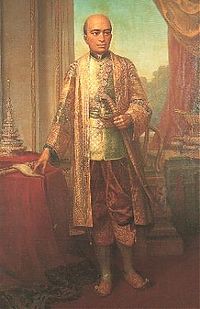
King Rama II
The Ayutthaya period saw quite a bit of expansion in poetry and several epic works came out of this period. King Rama II, who ruled after this during the early 1800s, wrote quite a bit of poetry and plays himself, so it was no surprise that he supported poets and the arts in general. He wasn’t the only king who was a writer: King Rama V and King Rama VI were also writers, both mainly in prose.
Duanwad Pimwana
During the 20th century, the literary trend started shifting into more light literature. However, longer works of a more serious nature have promoted some authors into the limelight. A few authors of note include Duanwad Pimwana (award-winning female novelist, poet, journalist), Siburapha (newspaper editor, novelist, human rights activist), Prabda Yoon (filmmaker, novelist, magazine editor, translator), Chart Korbjitti (award-winning novelist and short story writer), Khamsing Srinawk (writing as Lao Khamhom, short story writer and novelist), and Pira Sudham (novelist, short story writer, poet).

Up next: music and dance
 

Wednesday, September 7, 2016

MOLDOVA: ART AND LITERATURE


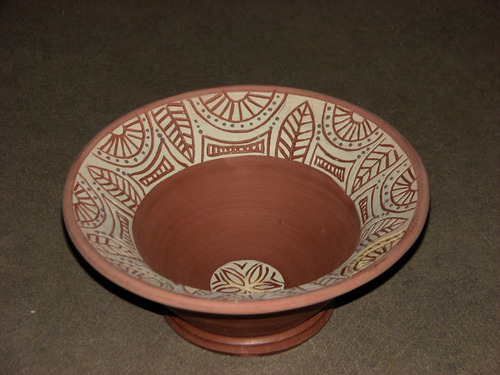
Moldova has a very arts-rich history, and the arts are an important part of their culture. Their art is divided into several genres; one of them is called decorative arts, which includes handicrafts, pottery, ceramics, metalworking, traditional clothing making, etc. One art that they are particularly known for is their ceramics. Ceramic bowls and pots were used for preparing and cooking food and for food storage as well. Moldovan ceramics differs a little from other ceramics traditions in the fact that their ornamentation is made up of lines, dots, and circles like no one else does. Their choice of colors, ornamentation, and basic form sets their ceramics apart from the others. 

I think I need this.
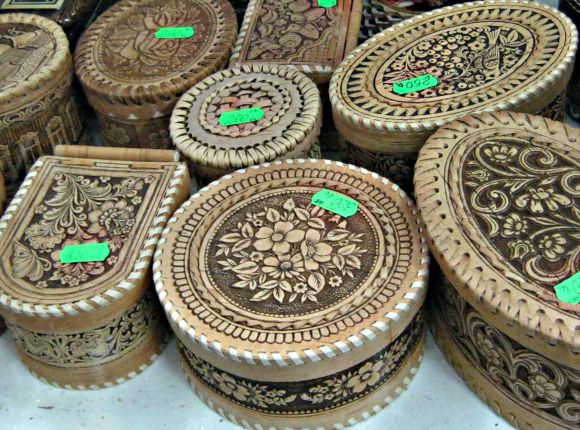
They also have a strong tradition of woodcarving. Quite a bit of their woodcarving is for household objects such as tables, chairs, other pieces of furniture, utensils, and tools. But Moldovan woodcarvers are also known for carving the support pillars in their homes or porches. Just hope they don’t carve it too thin! 

I really need these, too.

For women, embroidery has long been an art that has been passed down generation to generation. And really, up until recent decades, there wasn’t a home where the woman didn’t decorate something with embroidery. Things like pillowcases, tablecloths, curtains, towels, and women’s blouses are examples of some of the objects women typically embroider. Some of the motifs include floral designs, animals (butterflies, chickens, ram horns), or other natural designs (rivers, trees, mountains). Many women also just embroider geometric or zig-zag designs as well. 

And this shirt, too. I think I need to start saving my money to go to Moldova.
Many Moldovan artists today work with a number of mediums from painting to sculpting to graphics and computer arts. Many of the top colleges and universities offer arts programs, and art galleries dot cities and towns across the country. 

by Mihai Grecu (1916-1998)
Literature in Moldova shares not only a common language but many literary traditions with Romania. The earliest works we know of go back to the Middle Ages to about the 10th or 11th centuries. During this time, written works were pretty much religious texts. And it was also written in what’s called Old Church Slavonic. The first book in Moldova to be published was Kazania, which was published in 1643. However, a translation of the Psalms into Romanian was published not long after this. 


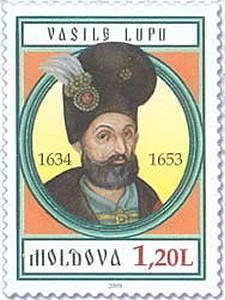
The 15th–17th centuries saw quite a bit of changes to literature during this time. A prince by the name of Vasile Lupu established a university and several publishing houses, not to mention establishing some of the earliest laws in Moldavia. Later on, historical works and chronicles began to take hold, documenting the history of the land. 


This carries us into the 18th century where secular works began to take a foothold. More dictionaries and language books also were produced during this time. Storytelling and lyric poetry was becoming more common, especially love stories and stories of social struggles. The first newspapers began being published during the 19th century. 


During the Soviet years, writers were still producing works. Much of these works came in both prose and poetry forms and often discussed the revolution. During WWII, literature was still produced without hesitation in all genres: children’s lit, epic novels, essays, short stories, poetry, and other genres. There was also a rise in literature from Bessarabia and a slight rise in literature written in Gagauz, mostly available from the efforts of Mihail Ciachir who put together the first Gagauz dictionary and grammar book during the 1920s and 1930. In the early 1990s, another surge in Gagauz literature took place after independence.
 
Ion Druta
Today, Moldovan writers span all genres and styles. Some Moldovan authors of note include Ion Druta, Emilian Bukov, Leonid Corneanu, Samuil Lehttsir, Gheorghe Asachi, Ienachitsa Vacarescu, Demitrie Cantemir, and many more.

Up next: music and dance