Showing posts with label stick dances. Show all posts

Sunday, August 28, 2016

MICRONESIA: MUSIC AND DANCE


Micronesian music in general is largely based on vocal music. And the music from Federated States of Micronesia encompasses much of these traditions as well. There are a number of other instruments utilized, but vocals seem to be the main part. A few of the traditional instruments heard in their music include the conch shell horns, sticks, and a few drum-like percussion instruments. But really, their vocal music is the dominating factor here, especially coming in the form of chants. 

 
Much of their music is based on mythology and ancient rituals, so its no surprise an ancient myth says that music comes from trances and dreams rather than music theory and composition. Traditional music comes in a variety of styles, and because there isn’t a written language (they use Roman letters now, but originally there wasn’t), these traditions are passed down from generation to generation. 


Although the islands on a whole share cultural ties, each island has their own variations when it comes to dancing. There are two main types of dances: standing dances and sitting dances. One of the variations these dances have are divided upon are who the performers are. Some islands have dances where men, women, and children all perform together, but others are only for men or only for women. Stick dances are an important part of Micronesian culture. They are especially popular on Chuuk, Yap, and Pohnpei. The island of Yap has a particularly strong dance heritage. One rare dance is the Moonlight Dance from the island of Chuuk. One reason it’s rare is that both men and women dance together, and it only happens during a full moon if the village chief gives permission to do so. It was used as a way for young people to meet. Apparently, it’s important to meet, but not that often. Like a staff meeting or paying bills or something. 


There were a few bands I found on Spotify, but I found others on YouTube. With influences from European, Asian, and American music, much of their music today reflects these global changes on their music and culture. For one, they tend to use modern instruments and styles in their popular music. Styles like reggae, rock, and hip-hop have seeped into their musical styles, still maintaining a definite Micronesian flair. I did find several reggae artists on Spotify. I was never really sure if my searches were drawing artists from the Federated States of Micronesia or the region of Micronesia. Regardless, I tried my best and I’m sure they’re listened to in the FSM. The first one I listened to is Chiko. He sang in a mix of English and whatever his native language is. I kind of liked it, even though the quality of the recording wasn’t the greatest, which is kind of rare for Spotify. It sounded like the copies you sometimes got when CD burners were still new: that sort of buzzing, cracking, or popping that sometimes happened on top of the music when you burned CDs.


Another artist I liked was Ozeky. Apparently, he’s pretty popular, and I can see why. Most of his music was a chill reggae style of music. From what I can tell, he also switches between singing in English and singing in Chuukese. 


The problem with some of these searches that I ran into, especially on Spotify, was that I wasn’t sure I was actually pulling up the right artists. I looked up a band called Vroom Vroom, but the music almost sounded like early MIDI files or music used in early video games. I mean, that could be how they actually sound. I don’t know. It could also be a bad cover of their music, or just some music from another group or album called Vroom Vroom. Who knows? 


I also listened to a rapper called F.O.S. There were just singles listed on Spotify, but a few of them were hip-hop and a few were electronica. So, I’m not exactly sure what the deal is. Don’t get me wrong, I liked what I heard, but I questioned whether he does both styles or what exactly is going on here. It’s cool either way. Maybe I shouldn’t ask so many questions and just enjoy the music. But it does turn out that I think he's British, but I'm not sure if he has ties to the islands or not. Still, I like this song. 


One band I came across that was mentioned over and over again on some forum asking about the top five Micronesian bands was ReChuuk. I found a bunch of videos on YouTube. They’re a little bit island reggae with a little bit of rock subtly mixed in at time. I’m guessing the language they sing in is Chuukese, just based on the name of the band. 


Relinda is another Chuukese musician. Her music is steeped in reggae but has more of a pop sound. I also saw Danny mentioned as another favorite Chuukese musician. I’m sure there are many more musicians from FSM out there. These are a just a few.

Up next: the food!

Saturday, June 18, 2016

MARSHALL ISLANDS: MUSIC AND DANCE


Music has played an important part of Marshallese culture for centuries. Each island had its own set of songs, but one type of music that generally bound them all was a type of chant called roro. These chants were essentially sung to provide guidance and were sung for a variety of situations such as navigation and when a mother was going through labor. The lyrics varied by island, but the style was the more or less the same. 


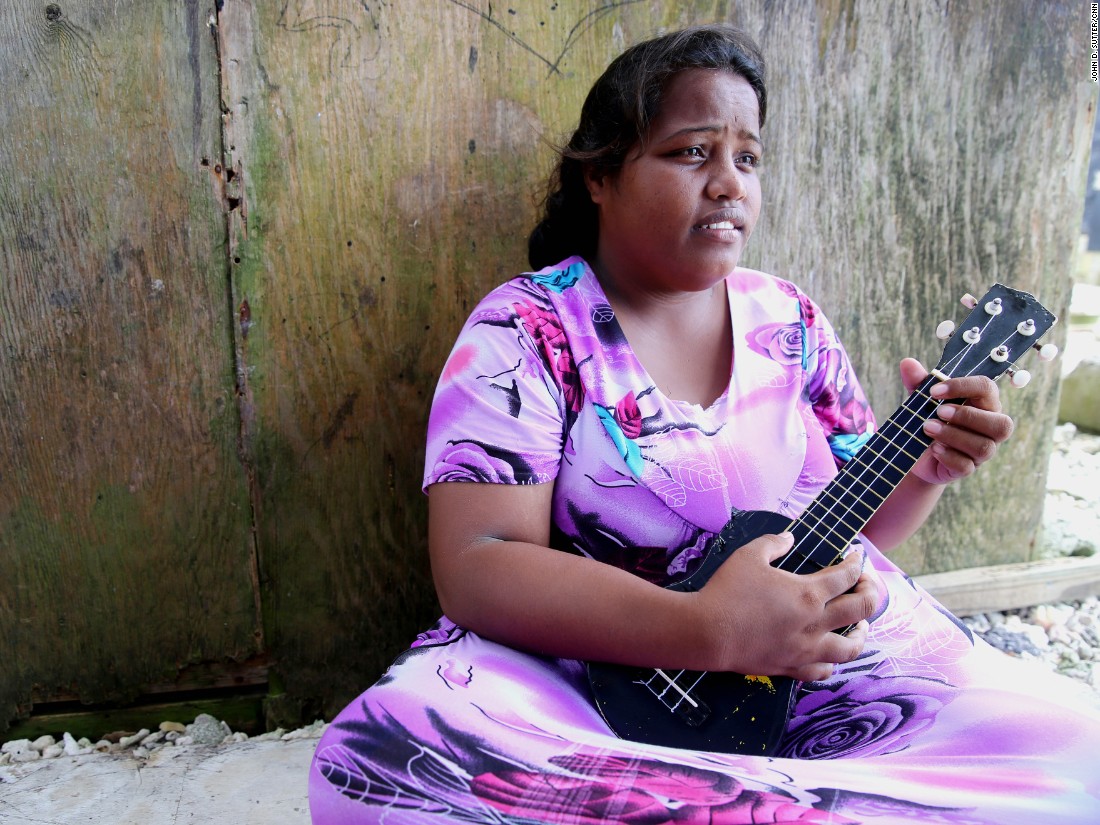
Although drums and other percussion instruments may not be as common on other Micronesian islands, drumming is an important part of Marshallese music. One type of drum that is especially used is an hourglass-shaped drum with a head only on one side. They also utilized different kinds of flutes and conch shells as well, not to mention simple clapping and knee/body slapping. Ukulele music is especially popular in the islands. Music of the Marshall Islands is very much vocal-based, like other Micronesian, Melanesian, and Polynesian traditions. As Europeans visited the islands, they introduced certain instruments like guitars as well as European musical forms and religious music. 


The Marshallese also love dancing. One dance called the beet has its basis in early Spanish dances. In the beet dance, men and women stand in parallel lines and do a side-step, which creates a difficult, complex rhythm to the dance steps. The Jobwa perform a type of stick dance that is only performed for special occasions.  


Bands today often utilize these ancient roro chants and other indigenous musical styles; they merged them with more modern instruments and traditions. There weren’t many bands I came across, but I did find a few on YouTube. One I came across is called Iroij Lablab Amata.Kabua. Their sound from the one song I heard is upbeat with a definite “island” sound to it. A few others I found in this quasi-reggae, quasi-pop, quasi-traditional category include Kili Excess, Alson Morris, Shirleyann Loeak, and Lamaran. 


Another band I came across is called Lastevo. The one song I came across was kind of an electropop style song. I kind of liked it. They also listen to other popular bands that hail from other nearby Pacific Island countries.

Up next: the food

Saturday, September 19, 2015

KIRIBATI: MUSIC AND DANCE


Music in Kiribati has had some of the least Western influences in comparison to other countries around it. Therefore, folk music is still a pretty dominant form of musical entertainment for these islands. I-Kiribati utilizes both vocal and instrumental music in their folk music traditions.


As far as vocal music goes, vocal music and chanting especially is commonly used. Many of the lyrics revolve around love, weddings, religion, war, and patriotism as well as songs for children. Native instruments are made from materials that can be found on the island. Often they would use a various percussion instruments and even use themselves as percussion instruments in the form of body percussion (I wonder if it’s like beat boxing?). The British did introduce Western instruments while they were there, and today they do incorporate the guitar and other instruments into their music. Oftentimes, music and dance went hand in hand. 


Dancing is extremely important to I-Kiribati people. From what I’ve read, it seems that dancing may be the one cultural art that single-handedly represents the people, the lifestyles, and their history. They are famous for their stick dances. These stick dances are often danced to songs that are based on semi-historical topics and legends. Other dances are often danced on top of a hollow wooden box that’s often used as an additional percussion instrument. A lot of dancing involves a lot of hip movements, often reminiscent of visuals of Hawaiian dancing. 


Although there is quite a bit of information about traditional music available, there really isn’t that much out there about any contemporary musicians from Kiribati. For the first time since I started this blog, I don’t have any musicians to make a Spotify playlist for this country. I did manage to come across a few musicians who have some videos on YouTube. One musician I found is Bata Teinamati. He is thought by many to be an instrumental figure in shaping the music of Kiribati and promoting traditional music education. I listened to a couple of his songs, and the two I sampled seem to use synthesizers and have a general “island” feel to them but with elements that reminded me of old religious songs. 


I also found a rapper who calls himself Bwenaman. I listened to a couple of his songs; he sings in a mix of Gilbertese and English. His songs, to me, are more of a mix of reggae and R&B, although he does have rapping in some of his songs (to be honest, I’m not sure if it’s him or the other featured musicians on the track, but I have a feeling it’s the others). His song “Shake It Girl” is pretty catchy if you like dancehall style reggae.

I’m sure there are other bands and musicians from Kiribati because I’ve found mentions and cameos in Google searches and YouTube. But there just really isn’t any commercialized music from Kiribati available from what I could find. There’s actually a British band I came across called Kiribati. They’re not bad, but not what I was looking for.

Up next: the food