A blog inspired to teach my children about other countries and cultures through their food. It also includes music, arts, and literature from those countries as well.
Music in Tanzania has long borrowed and been influenced by musical styles from a number of different groups who traveled through the area. Many of their traditional instruments are similar to those that are fairly ubiquitous throughout the broader region. This includes common ones like the mbira, goblet drums, rattles, and tuned drums. And some instruments (or variations of instruments) are specific to certain ethnic groups. Modern music utilizes many of the modern musical instruments we see today.
One of the most popular musical genres in Tanzania is Taarab. Coming from Islamic roots, it uses several instruments that are popular in the Middle East, like the oud and the qanun, but also uses a lot of African percussion instruments and European guitars, and even instruments from East Asia (like the Japanese taishokoto). The melodies were mainly Islamic songs mixed with ancient Swahili songs. It started to really gain popularity in the late 1920s, and by the 1960s, Taarab groups had started to modernize it a bit and introduce it to other nearby countries.
Tanzania is a multi-ethnic country, and each ethnic group has their own styles of traditional dance. These traditional dances were passed down from generation to generation and told stories or represented a facet of life. In modern society, they’ve been somewhat lost to the younger generations, but there are dance troupes out there trying to teach people their history.
Starting in the 1930s, Cuban rumba and other Latin genres began to make its way into Tanzania, and it was really popular! Bands started forming and performing this new music, often calling themselves jazz bands, even though many of them didn’t play jazz. They stayed popular as dance music bands throughout the 1980s and 1990s.
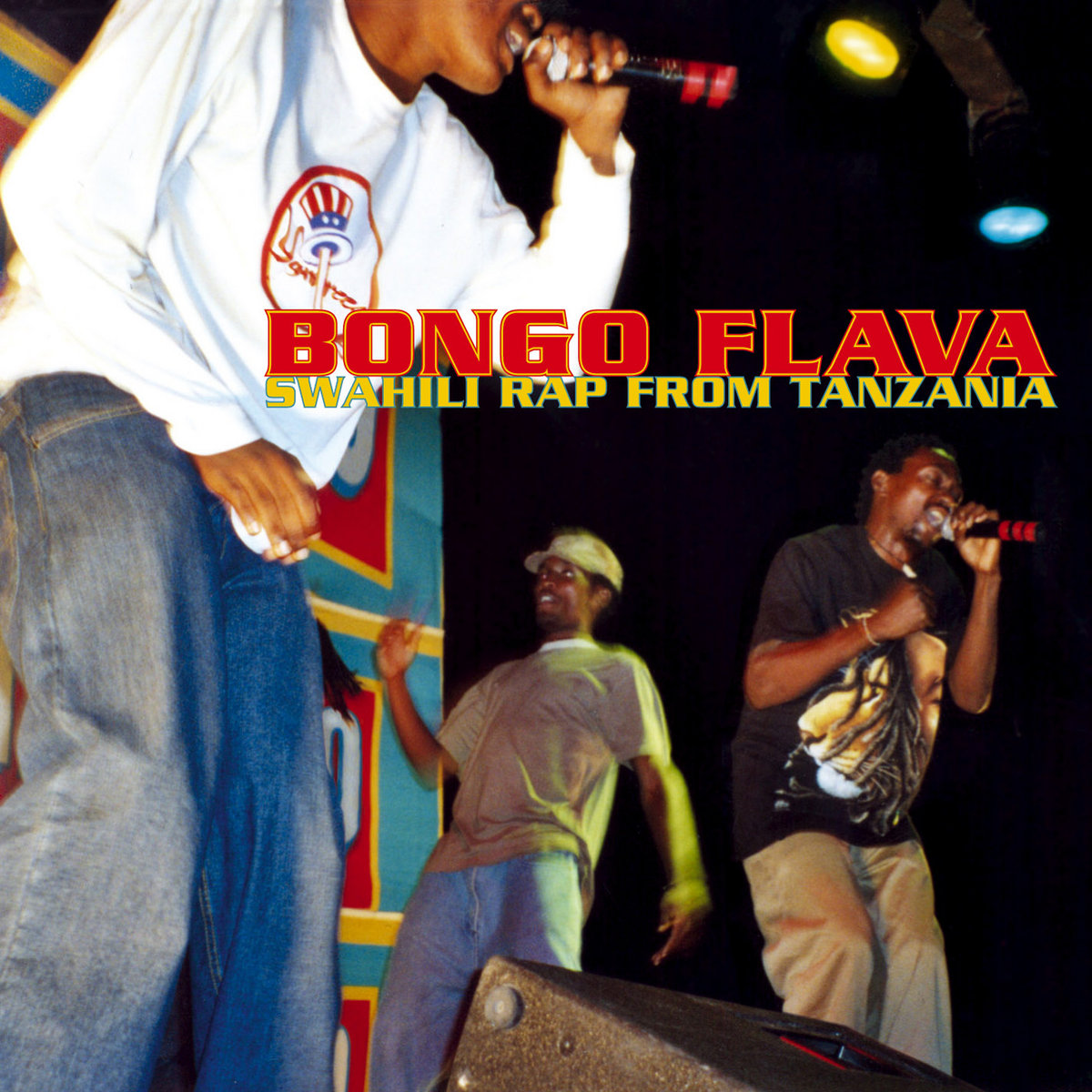
Today, quite a few new genres have gained in popularity, based on European and American styles mixed with their traditional sounds and instruments. Bongo Flava developed during the 1990s as a mix between hip-hop and reggae and mostly sung in Swahili. Hip-hop is equally just as popular, with Dar es Salaam being one of the centers for hip-hop musicians to thrive. Likewise, reggae here has been influenced by African and Caribbean roots but with its particular Swahili flair added to it. By the way, Freddie Mercury of the band Queen was born in an Indian community on Zanzibar. They tried to do a big celebration for him, but plans were shut down because of his openly gay lifestyle, seeing how homosexuality is illegal there.
Ras Nas
I found quite a few artists on Spotify that I took a quick listen to. I started with a bit of reggae from Ras Nas. It’s pretty chill, and I really liked it. You can really tell that he makes use of the guitar using African styles and rhythms behind some of it. He used English and Swahili (I’m guessing) both in his songs.
I found a couple of hip-hop artists. I checked out Juma Nature. There weren’t too many of his songs posted on there, but the ones I listened to were pretty catchy. One was a little more chill, and one was a little faster. Obviously, I don’t know what he’s saying, but I liked the cadence and inflections. The other one I listened to was X Plastaz. They incorporate more Maasai rhythms and styles into their music. It was pretty catchy and put together well from what I heard.
Vanessa Mdee
Now for the big genre: Bongo Flava. First of all, there’s a nice playlist on Spotify. And some of the artists I sampled (and some are on that playlist) include Vanessa Mdee, Diamond Platnumz, Harmonize, Dully Sykes, and Nandy. I really like this genre. I feel like it’s something I could listen to while driving with the windows down. Like a summer playlist if it would ever get warm and stay warm.
The music scene in Kenya spans many different genres,
including various styles from across other areas of Africa as well as
influences from the Caribbean, Europe, the Middle East, India, and the
Americas.
Taarab music from Zanzibar is quite popular in Kenya. This
is a style of music that is influenced by various styles from northern and
eastern Africa, the Middle East, and India. However, the city of Mombasa has produced
a few famous taarab musicians. Kenya also listens to a lot of the music coming
out of the Democratic Republic of the Congo, especially styles like soukous and
zouk. Guitars were brought into the country early on, and playing styles have
been adapted to incorporate the local and native rhythms. They even developed
their own ways of playing the guitar in order to create different effects and
sounds. As Congolese, American, Caribbean, and British music began to
infiltrate their sounds, their playing styles incorporated all of these
elements.
Starting in the 1970s-1990s, various types of pop began to
emerge. Many of these pop musicians infused traditional and other pan-African
styles into their American/British-style pop music.
Kenya also has a keen love for reggae music. Influenced by
other African reggae styles as well as Caribbean reggae, there have been many
DJs breaking into the music industry here promoting reggae music on the radio.
Many radio stations often have specific programs just for reggae music. Kenya
has also produced a number of hip-hop artists and rock bands, many which have
seen some success in Europe and the Americas. They also have a few successful
DJs specializing in house music, drum and bass, and other similar genres.
Because Kenya has a large number of ethnic groups living here,
there are a variety of dances that are particular to a specific group of
people. The Maasai are known for a type of circle dance that involves jumping
up high in the air while dressed with a ton of beads. The Isukuti are known for
dancing at every ceremony and special occasion. The Agikuyu are known for their
dance, the mwomboko, which is characterized by slow, decisive steps similar to
a waltz. The Chakasha is danced in the coastal regions and often to taarab
music. The Akamba usually dance to drums and flutes while stamping their feet
and shaking their shoulders.
While Spotify didn’t have several of the bands and musicians
I tried looking for, they did have quite a few. The first group I listened to,
which was filed under the genre called “hotel pop” is called Them Mushrooms. The
name alone cracks me up. Their music, however, is a kind of a cross between
reggae and 80s elevator music. Some songs are better than others. I think it
has to be an atmosphere thing: if I were in an outdoor bar in Mombasa or
Nairobi drinking with friends, enjoying the cooler evening breezes, and this
was playing, it would make the evening authentic. Sitting in my car in
Indianapolis in the parking lot of a stripmall, not so much. They do have a
song (and an album of the same name) called “At the Carnivore.” Please, for the
love of all that’s sacred, tell me what this song is about. It just sounds way
too happy with a name like that. (To be fair, there was a Japanese song I once
knew that had a great melody line but was about cutting off your arms or
something.)
I also listened to hip-hop group G.rongi’s album Position Ya Power. His flow is pretty
good, and the style reflects American style hip-hop, but there are also songs that
take in elements of reggae as well. He often raps in both English and from what
I can tell, Sheng (the creole language of mixing English-Swahili). Although the notes on the video above says that the song "Mokorino" is the first hip-hop song in Kikuyu. He’s also made
some notoriety by collaborating with American rapper Nas. Another rapper I
listened to was Nonini (the album The
Godfather of Genge). Generally, there were several similarities between
Nonini and G.rongi as far as style goes. However, Nonini is one of the artists
primarily recognized with genge music. Genge is a style of hip-hop centered
around Nairobi and is often sung in Sheng.
Mighty King Kong is one of the most well-known reggae bands
in Kenya. Their rhythms and instrumentation are stylistically African. They do
tend to sing in English more than any other language. However, from what I
listened to, their style of reggae seemed more like early 1990s reggae. I also
listened to Ras Naya & Free Island. I liked this one a little more. It did
have more of a Caribbean feel to it. (Perhaps I have an unconscious bias toward
Caribbean reggae? I try not to.)
Kenya also has an alternative/indie rock band called Murfy’s
fLaw (yes, that’s spelled right). I really like this band; I listened to the
album Hello Light. And another reason
why I love them so much is because the lead singer is a female. And I’m so excited
that iTunes sells this album for $9.90. I’m definitely going to have to buy
this album. I’m not even sure I can live without it. This is some great stuff. Strangely
enough, there is also a band called The Beathogs who hail from Nairobi and play
a sort of mix of funk, soul, Ramones-esque early punk, and rockabilly. I kind
of like it though, but it makes me feel like I should be going on a road trip
through the Midwest in the dead heat of summer with the windows down and the
wind in my hair, sipping on an “ice cold co-cola.”
I also listened to a band called Sauti Sol. To me, it was
hard to place this band in a category. (“Afro-Pop” might be the term.) There
were some slight elements of indie rock with the use of acoustic guitar, but
the rhythms and percussion instrumentation was definitely stemmed from
pan-African beats. They rely heavily on vocal harmonization, which really adds
to the acoustic effect of the music. However, I found this video that was produced this year, and it's completely different from what I listened to. This song is pretty catchy.
The band aptly called Just A Band kept me entertained. I
suppose I would put this in the house music category but with elements of drum
and bass. They sometimes sample lines from other famous songs, which is cool,
but sometimes I think it needs to be mixed a little better in places. It seems
like the vocals were too loud in one of the songs I heard. But overall, I can
get behind this. My husband really liked some of the songs off of this album. I really liked the songs "Life of the Party" and "Doot Doot," but I couldn't find the videos to them.


:format(jpeg):mode_rgb():quality(40)/discogs-images/A-1212089-1539967330-6878.jpeg.jpg)