Tuesday, June 18, 2013

CHINA: HOLIDAYS AND CELEBRATIONS


Many of these holidays in China are based on the Chinese lunar calendar.

New Year (January 1).  This New Year’s Day is celebrated with the rest of the world, but with much less fervor than the Chinese New Year later on.  Government offices, schools, and other businesses are closed.  Some people do light off fireworks at midnight, though.


Chinese New Year (varies/January or February):  Also called the Spring Festival, even though it generally is celebrated at the end of January or beginning of February.  Starting days before, people clean their homes from top to bottom in preparation for getting rid of bad vibes and bad spirits.  It’s a time for visiting family and sharing a specially prepared meal together.  Fireworks are a popular feature for the holiday.  Red is considered a lucky holiday, and many people give gifts of money in red envelopes. 

Lantern Festival (varies): This holiday is the official ending of the Chinese New Year. Children (and adults too, I suppose) go out at night carrying paper lanterns to the temples. Poems and riddles are printing on the lanterns. Some places have larger festivities than others, the city of Chengdu being one of them. They are famous for their large lantern in the shape of a dragon.


Zhonghe Festival (varies):  Also known as Dragon Raising Its Head. This holiday goes back to the Chinese agrarian culture. In their culture, the dragon is thought to be the leader or king of all of the animals and is also thought to be the ancestor of humans. (I know a few slimy people who make me think there might be some validity in that.) Because they also believed that dragons caused it to rain, it’s become a festival for farming and planting and honoring the earth in hopes for a good harvest.

International Women’s Day (March 8): Celebrated in China since 1975, women are presented with flowers and children will help out with household chores. Women are rewarded with a half-day off, and some towns will hold small festivals and mountain climbing competitions.

Arbor Day (March 12): Much along the same lines as Arbor Day in most other places in the world, it’s also known as National Tree Planting Day.


Qingming Festival (varies/April): Also known as Chinese Memorial Day or Tomb Sweeping Day. Its name also denotes that this is a time for people to go outside and enjoy the fresh air. It’s a time to celebrate their ancestors by visiting their gravesites. Family members will often leave gifts including food and drink on the grave. Kite-flying is a popular activity to do around this time. At one time, people would carry burning paper or incense, but that has given way to carrying flowers, to the relief of fire marshals everywhere.

Labor Day (May 1): Also called May Day, many towns and cities hold festivals and celebrations for people to come out and enjoy. There are also speeches and special TV entertainment during the evening.

Youth Day (May 4): This day coordinates with the May Fourth Movement (as opposed to Star Wars Day, “May the Fourth Be With You”). This day is in remembrance of the May 4, 1919 anti-imperialist protests by students in Beijing, mostly in protest of the Treaty of Versailles, which among other things, allowed Japan to hold on to territories in Shandong, a peninsular province between Beijing and Shanghai; these territories had been surrendered by Germany. This day also is for Youth Day, a day intended for youth over age 14 to study hard and reward those students who are doing exceptionally well.


Children’s Day (June 1): Many museums and parks have special programs for children, and it’s a day that many parents take their kids out to learn about Chinese history and culture. There are also programs and shows of children's choirs and dance recitals and other activities for and by children. 

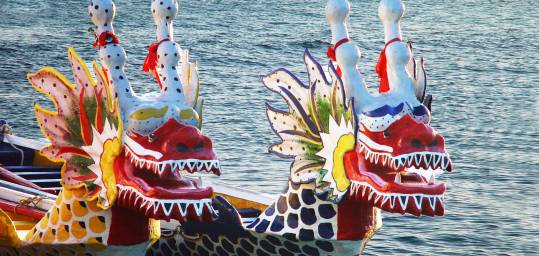
Dragon Boat Festival (varies/June): Also known as Duanwu Festival. It’s held around the summer solstice time, because in Chinese culture, both the sun and the dragon represent male energy (likewise, the moon and the phoenix represent female energy). So, this day where men are racing long boats with the ends sporting large dragonheads and the entire boat is painted like a dragon. The pilot episode of the children’s show Nihao, Kai-lan is called “Dragon Boat Festival.” I know this show well.


CPC Founding Day (July 1): This holiday is for the First National Congress in 1921. The actual site in Shanghai of this first meeting is now a museum. It more or less seems like a meeting of the leaders of the Communist Party, and even today, it remains so. The current General Secretary is Xi Jinping.

China National Maritime Day (July 11): 2005 marked the 600th anniversary of Zheng He’s first voyage. He was a sailor and navigator during the Ming Dynasty (1368-1644) who traveled around the world, on seven voyages, just to show what strength China held. 600 years is such a long time, it’s hard for me to imagine. In the United States, we think of something that is 200 years old as “old,” but when I was in Japan, I went to a house that was 900 years old. I can’t even fathom that level of “old.”

Army Day (August 1): This is in commemoration of the Nanchang Uprising in 1927. This was the first major incident in the Chinese Civil War. It was basically between the communists (the Kuomintang) and the anti-communists. It’s become more like what Veteran’s Day is in the US. Some places offer free admission for soldiers and their children.


Double Seven Festival (varies): Also known as Qixi Festival or sometimes, Chinese Valentine’s Day. It’s based in the mythological story of a cowherd and a weaver girl who meet each year on this day. (It is also the basis of Tanabata in Japan and Chilseok in Korea.) Basically, the cowherd met a beautiful girl who escaped from heaven to look for fun; they fell in love and got married. The Goddess Mother got mad that she married a mortal and forced her to return to Heaven. Saddened, the cowherd’s ox told him that if he killed the ox and wore his fur, he could enter Heaven to look for her, which he did, and it made the Goddess Mother really mad. So, she scratched a line to keep them away forever – creating the Milky Way – but on one day a year, all of the magpies in the world formed a bridge so that they were able to meet again for a moment. (There’s no mention of the dad in this story, but maybe he was indifferent to the whole situation and just kept his mouth shut, and she created some other celestial body for him – a black hole, perhaps. Maybe?)

Ghost Festival (varies, late August): Sometimes called the Hungry Ghost Festival, it’s the day when all of the ancestors from the lower realm come out. Some of the rituals and traditions seem similar to the Qingming Festival back in April. Many people release paper boats and lanterns on the water, and offerings of incense and food are left on the gravesites. Many families will often have elaborate meals, leaving an empty seat for the deceased person. The origins are similar to O-bon in Japan.

Mid-Autumn Festival (varies/September or October): Also known as Moon Festival, it’s held around the time of the autumnal equinox. Eating mooncakes around this time is very popular. Lanterns, lion dances, incense, dragons, and moon watching are also popular around this time.


Chongyang Festival (varies/September):  Also known as the Double Ninth Festival. This festival takes place in autumn and celebrates the Yang, or male energy or positivity. Chong means double. People will have parties and the symbol for this day, the chrysanthemum, is placed everywhere. One popular event on this day is mountain climbing and cake. I’ll personally just skip the mountain climbing and stick with the cake.

National Day (October 1): One of the most popular traditions on this day is to gather at Tiananmen Square and watch the raising of the flag. (Yes, this is the same Tiananmen Square that that brave guy stood in front of the tank, whose images are still etched in my mind from watching it unfold on TV.) Festivals go on all day with fireworks displays at night. The festival generally lasts three days and is because there are a lot of indulgent foods around this time, it’s also referred to as Golden Week.

Up next: art and literature

Sunday, June 16, 2013

CHINA: THE LAND AND THE PEOPLE


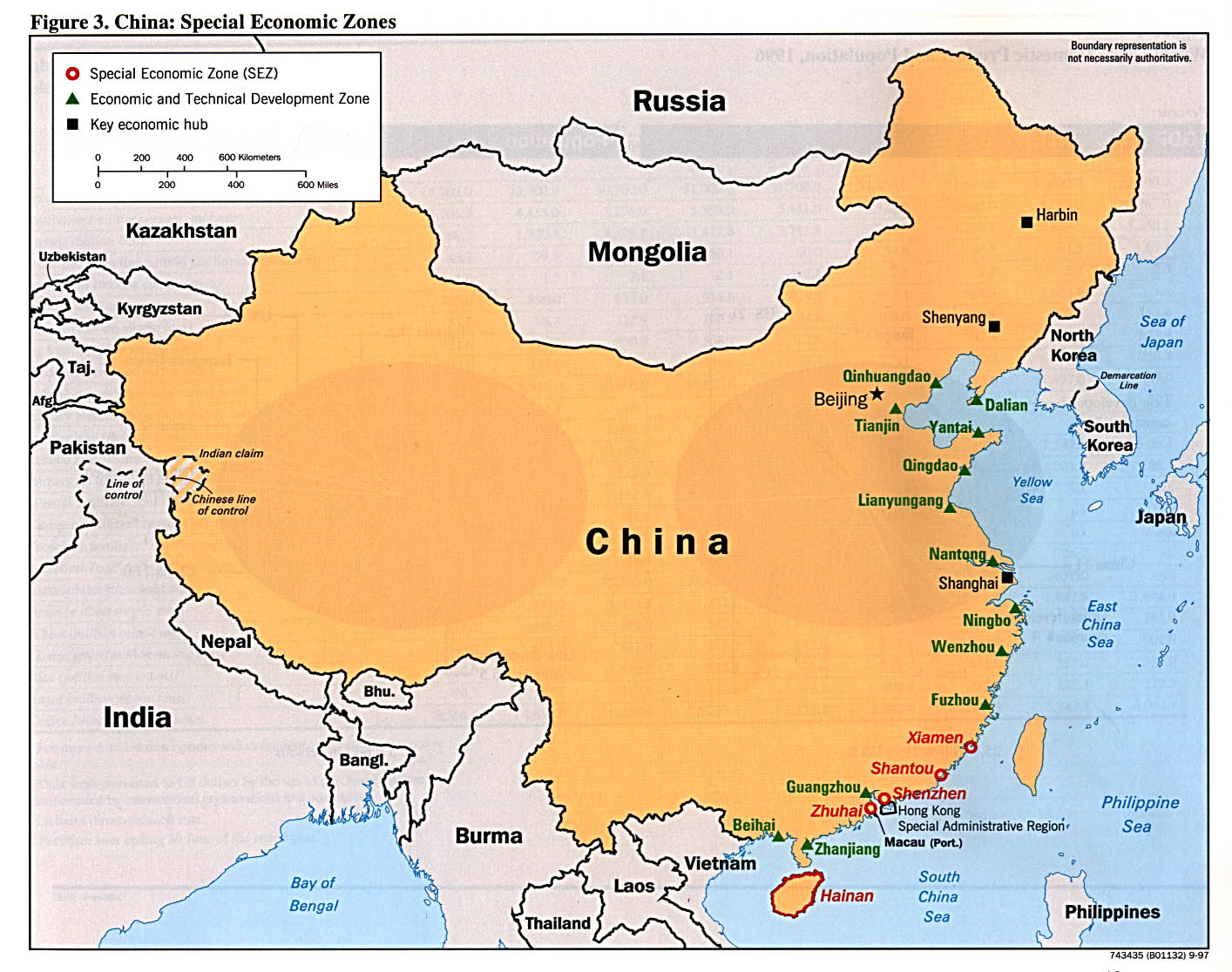
China is one of the most ancient places on earth, full of firsts and number ones. It’s the largest country by land situated entirely in Asia. It has the largest population in the entire world – at over 1.35 billion! It ties Russia with the most bordering countries at 14 (which are Mongolia, Russia, North Korea, Vietnam, Laos, Myanmar, India, Bhutan, Nepal, Pakistan, Afghanistan, Tajikistan, Kyrgyzstan, and Kazakhstan). It was a key inventor of paper and printing, gunpowder, and the compass. They also developed bells, pottery and cookware, forks, chopsticks, daggers, lacquer, noodles, silk cultivation and processing, coffins, rice and soybean cultivation, acupuncture, the zodiac, hand grenades, banknotes, blast furnaces, Mahjong toothbrushes, cast iron, chemical warfare, crossbow, dominoes (my husband would be happy), exploding cannonballs, fishing reels, flamethrowers, tofu, domestication of goldfish, helicopter rotors, harnesses for horses, incense, inoculation of small pox, the junk (type of boat), kites, landmines, matches, natural gas as fuel, negative numbers in math (bet the banks loved that), oil wells, pig iron, playing cards, puppet theatres, fireworks, menus in restaurants, rockets, tangrams, tea cultivation,  chain drives, and toilet paper. (I don’t know if ALL of that was true or not whether they “invented” it, but perhaps it’s more accurate to say that these things were developed by the Chinese.) So, we have a lot to thank the ancient Chinese. It’s this ingenuity that has developed our world as it is today.


Chinese history is divided into dynasties, which is when a series of rulers come from the same family. For the most part, these dynasties start about 2850 BC and last until 1912, with some notable exceptions where different groups were warring, etc. In 1912, Sun Yat Sen (part of the Kuomintang) was named the head of the country and took control from that moment on, establishing the Republic of China. Chiang Kai-shek forcibly took control of the established government in the late 1920s, and the Kuomintang under him moved the capital to Nanjing. In 1949, Mao Zedong pushed the country into the realms of communism, a philosophy that it still holds today. Mao Zedong was responsible for leading the Cultural Revolution, which was the push to get rid of capitalism; people were displaced and tortured, relics were destroyed, and cultural/religious sites were desecrated.  While China has opened itself up in certain ways with the rest of the world, censorship and oppression are still quite a common occurrence to ordinary Chinese.


The island of Taiwan (formerly “Formosa”) wants to be fully independent, but China has threatened to use military force if they make any actual formal declaration of independence. China considers them another province. Taiwan actually has one of the better economies in Asia and differs from China in the fact that it ranks highly in freedom of the press, health care, education, and human development.


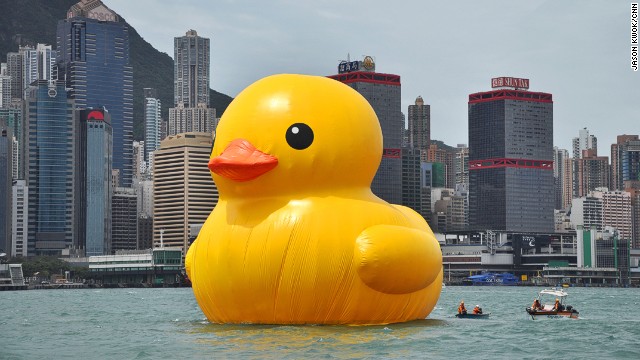
Hong Kong is one of the most densely populated areas of the world. There are 7 million people living in 426 square miles. That’s like almost like forcing all of the residents of the Philadelphia, PA metro area to move into existing San Antonio, TX – no expansions, no San Antonio residents can leave, everyone just squeezes in and pretends they all enjoy it. Britain once had control of the island, and then signed a 99-year lease on it (with the exception of it being occupied by Japan during WWII), giving it back to the Chinese in 1997 when the lease was up. Hong Kong boasts one of the highest average IQ rates in the world, one of the longest life expectancies, one of the most traded currencies, highest per capital incomes, and ranks high in human development and quality of life. And yes, they do have a giant floating rubber duck in its harbor. 


Macau, along with Hong Kong, is also considered one of China’s special administrative areas. It also has a very high life expectancy and human development. The Portuguese actually had control of this area, so this is why you’ll find many Portuguese-speakers in Macau. The Portuguese handed this area over back to the Chinese in 1999. There's been a number of casinos going up in the past several years in Macau.


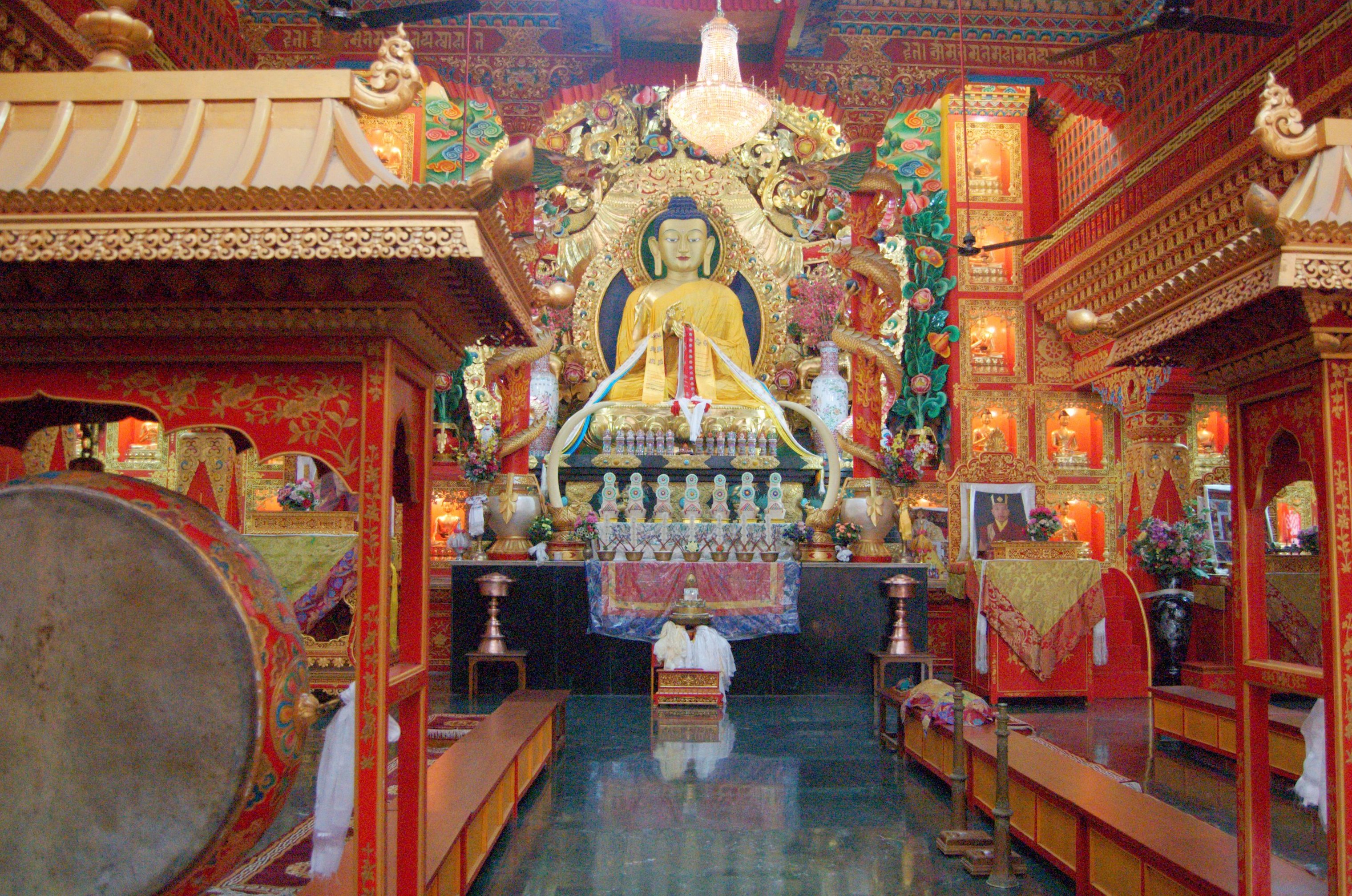
Tibet is a one of the western provinces in China that most people are at least familiar with by name because it’s made the news many times for wanting its independence as well. Tibetan Buddhism dominates the culture and lifestyle of Tibetans, and the have their own language that is very different from other Chinese provinces. Tibet was actually an autonomous region until the 1950s when they were forced to assimilate to “mainland” Chinese ways of life. There are several “free Tibet” groups out there in support of the autonomy and independence of Tibet.


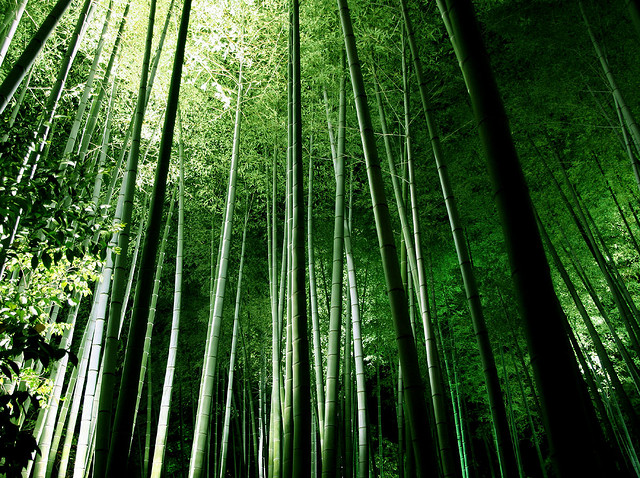
Because China is such a large country, the landscape and climate varies greatly. The Gobi Desert covers part of China and Mongolia in the north and it can be quite cold in the northern regions near the Russian border. The southern areas of China are generally more subtropical and subject to seasonal monsoons. And this also causes China to have a fairly diverse flora and fauna. China is also famous for its bamboo forests and its pandas.


Over 70% of the people speak Mandarin Chinese, and the remaining 30% speak varieties of Chinese like Wu (Shanghaiese), Yue (Cantonese), Min, Xiang, Gan, and Hakka. Not all of these varieties are mutually intelligible with each other, but Mandarin is used as a lingua franca. China also has 56 ethnic groups living within its borders, with Han being the largest. In fact, Han Chinese is the largest single ethnic group in the world.

Taoism is probably the most widely adhered to religion in China, although a large number of Chinese people consider themselves non-religious. Buddhism does follow as a close second, but there are a number of other religions practiced in China, such as Christianity, Islam, Shamanism, and folk religions. Technically speaking, freedom of religion is on the books, but it remains subject to disagreement on the validity of this.


It almost seems that the US and China have a love-hate relationship. We do know a lot about China and its culture without having to do a lot of research. And a lot of this has entered our mainstream cultural as well. We have several Chinatowns across the country, as well as in other countries. Chopsticks, Chinese character tattoos, the Chinese film industry, the Great Wall, dragons, various martial arts (namely kung fu and ta’i chi), the zodiac, ping-pong tournaments, and Chinese food are something we’re all familiar with. But I’m hoping to find something new about this, something I didn’t know before. And I’m hoping that others will see China in a different light as well.

Up next: holidays and celebrations

Sunday, June 9, 2013

CHILE: THE FOOD


I really needed this to go well today. See, on Friday my car died on the way to work. I got it started, but we later found out that basically blah blah blah, the transmission has to be rebuilt, blah blah, $1800 bill. (Glad my husband was talking to the guy.) So, I had to rent a car for the first time (and found out my corporate “discount” cost me more in the end than if I just went without it and got a weekly rate. Go figure.).  So, it’s been a fairly stressful last couple of days. I really needed this to go well today.
 
Kids making circles. As opposed to running in circles which is what they usually do. Usually with their heads cut off, kind of like how chickens do. Except chickens will stop at some point. 
And it did. I started out making the bread: pan amasado. I was really happy getting back to a yeast bread after doing fry breads for the past several countries. For this bread, I cut the recipe in half, simply because I thought six cups of flour was a lot. Although, I added too much water at the beginning (because I forgot to cut that in half too), so I did really have to add a lot more flour to stop it being so sticky.  It also called to add melted shortening, which I hate using shortening. I can’t wipe it off my fingers – it’s worse than baby poop. But it actually rose after the first rest! My favorite part is when I get to punch down the dough. It’s like I become a kid again for about five seconds. After my momentary lapse into childhood, I divided the bread into eight circles and let it rest again. I had the kids help me make circles and punch it down. When it came out of the oven, it was practically perfect. Slightly hard on the outside, soft on the inside. The best kind of bread.
 
Pan amasado. In English, this means the most perfect bread that goes with everything. Or something like that. (Ok, technically, it means "kneaded bread.")
The next dish I made was a chilled avocado soup. All of the ingredients seemed mostly like how I make my guacamole dip: avocados, shallots, lime juice, coconut water, cilantro leaves, parsley, and a generous pinch of cayenne pepper. Then I mixed it all in a blender to make it smooth. My kids were like, “Uh, what kind of smoothie is THAT?”— I only use my mini blender for making smoothies. (I can make some damn good smoothies, especially my peach pie smoothie and my cantaloupe rum smoothie). And unfortunately since I only have a mini blender, I could only mix a little at a time. It was the first time non-fruits went into it. (Well, technically, I think avocados are fruits since they have pits like peaches and apricots.) After it chills, it’s topped with crushed walnuts and cilantro. (The recipe called for chives, but I forgot to get some.) I thought it was really good, and in fact, even my finicky four-year-old liked it.
 
I've not eaten too many cold soups, except some cold noodles soups in Japan. But this surprised me and was very good. 
Finally, the main dish. For this, I chose pastel de choclo – a chicken and corn bake/casserole. It starts out boiling the corn in milk, then putting it in my blender again, stirring in basil, sugar and salt. In a different pot, I mixed chicken broth, shallots, red bell pepper, carrot, black pepper, garlic, and a couple bay leaves, letting it simmer for 15 minutes. Then I added in some salt and the chicken and parsley and cooked for another 10 minutes (taking out the bay leaves afterwards). Then I put this mixture in the bottom of a casserole dish (which may have been a little too large for this dish) and topped it with the pureed corn mixture and baked it. I wasn’t sure if it was supposed to set up more than mine did, but the taste was outstanding. It could’ve used more chicken, though.
 
Not much to look at, but you don't have to look at it to enjoy it. The enjoyment is in the taste. Duh. 
Of course, it wouldn’t be complete without Chilean wine. I tend to get a lot of my groceries from Meijer stores, and they had a whole section on Chilean wines. Granted, it was kind of small, but they had some at least. I chose Long Country’s (a nickname for Chile, for obvious reasons) moscato red. I’ve been a fan of moscatos for a while now, but I’ve never had a moscato red before. It was very good. I think I’ll definitely go back and try more. Like when this bottle is empty.
 
It's such a colorful meal. Love everything about it! 
Sometimes things don’t go as planned. And sometimes you get lucky and they do. And sometimes you just go to Plan B, or C, or D. As long as you have a plan, you’re never half as bad off. This meal was really good, and even though things are a little stressful with my car situation and how much it costs, life’s still good. Sometimes I think that as long as we’re eating well, life’s not as bad as it could be. And eating well doesn’t mean really expensive meals. All of the ingredients by themselves weren’t that much (except I’m still trying to figure out what happened to the price of chicken. When did the prices skyrocket on that!? And I’m sparing everyone on my rants about food subsidies.) I was very happy with this meal. Definitely on the do-again list (minus the burns to the fingers).  Now I’m just patiently waiting for lunch tomorrow so I can eat the leftovers. Until then, I'll end this with some Easter Island humor:


Up next: China

CHILE: MUSIC AND DANCE


Music in Chile has influences from the native Mapuche, other Andean influences, as well as European influences.  The northern part of Chile was once the cultural capital of the ancient Incan civilization. 

Easter Island out in the Pacific is one of the most isolated islands in the world. Its nearest neighbors are hundreds of miles away, and it’s actually considered part of the Polynesian groups of islands. It’s most famous for its choral music, and they have competitions each year. Their music uses accordion music and guitars as well as other indigenous instruments that are closely related to Polynesian traditions.


Among common Chilean styles of traditional music, “the most popular airs” is called the cueca.  There are certain characterizations that define a cueca: always in a major key and is in 6/8 with the accompaniment in 3/4 which would give it a syncopated feel. The last note of the melody line will always end on the third or fifth of the chord, never the octave, which is somewhat different from Western music where the desire is to end on the tonic. But outside of those main things I just mentioned, the rules are pretty lax on the rest of it. A related form is called the tonada is differentiated by a having more of a fluid melodic section in general and is not intended to be danced to.


Although the cueca is found in neighboring countries as well, the corresponding dance is the considered the national dance of Chile. Its origins are linked to both Spanish and African influences. The dance is more or less a love dance – one intended on finding the right partner and is likened to mating “dances” between roosters and hens. While there are regional variations, the dancers wear traditional clothing and never touch, except for a handkerchief that is passed between the couple. I know I’ve written about other dances using handkerchiefs, but I can’t remember offhand which country it was from. I’m sure there are many variations around the world.

The 1960s brought about a sort of new era of Chilean music: popular music. In the beginning, musicians began to push traditional music (especially of the Andean regions) again, creating a new genre called Nueva Canción Chilena. However, the lyrics to many of the songs were pretty much a social statement of the time, criticizing how things were run – many popular poets doubled as lyricists. (Reminds me of the character Pedro Tercero Garcia in House of the Spirits by Isabel Allende that I mentioned in the last post.) In fact, many of these poets and musicians were under much scrutiny and targeted by the Pinochet administration in the 1970s.


Of the recent music, I found a couple albums that I really enjoyed. Since I’m such a huge fan of punk and ska, I found the album No Transar by the band Los Miserables. It was really hard to find them on iTunes, though. I kept coming up with the Spanish version of the movie Les Miserables. But alas, I did find it, and I might buy it. Another album I found is called Los Presidentes by the group La Ley. This album sounds a lot like reggaeton, which I’m also a huge fan of since we have a lowrider truck that we take to car shows (like, next weekend). I thought this might a good addition to my music collection. I also found the album Kaos by Anita Tijoux (or sometimes written as Ana Tijoux), which is a mix of pop, old school house, and old school hip-hop. Although, I think at times, she reminds me of MIA as far as her cadence goes. I also found the album 1977 on iTunes for $5.99 – I bought this album and absolutely love it. I think it’s won some awards and was featured on the show Breaking Bad. Both my husband and I are really into that jazz/hip-hop sound, and this is perfect for chilling out to. So glad that I bought this.

Up next: the food!

Friday, June 7, 2013

CHILE: ART AND LITERATURE


Chilean art has a long history, starting with pre-Columbian art (that is, art prior to the arrival of Christopher Columbus). This type of art includes pottery, cave drawings, and body art. Most of the art was created for either for two reasons: religion or social. Many of the designs and figures used, including the body painting, was used for religious ceremonies.  

Of course Easter Island is most famous for its large stone-carved heads called mo'ai. Although we call them "Easter Island heads," they actually also contain a torso and upper part of the legs (as if they were kneeling). There are about 887 statues on the island that have been accounted for. Each of these statues were created in honor of deceased heads of families. Of course, my kids call it "Squidward's house." 


The arrivals of Europeans led to a new era in art. Different styles that were used in Europe were introduced in colonial Chile as well. Soon, there were many different schools popping up around newly formed South American cities. Most of the early subjects of these paintings were either portraits, landscapes, or of some sort of religious background. The Spanish Jesuits were responsible for the teaching of much of the arts in Chile during these early years. (Every time I hear about the Jesuits, I think of the book Candide.)
 
by Jose Gil de Castro
Throughout the years, many foreign-born painters have made their home in Chile starting in the 1800s. Painters from Germany, France, and other South American countries soon made their name in Chile and influenced another generation of painters. Some of the more prolific names that made their mark were José Gil de Castro, Mauricio Rugendas, Raymond Monvoisin, and Ernesto Chartan de Treville. Two Chilean artists of this same time were Manuel Antonio Caro and Vicente Pérez Rosales. 
 
by Raymond Monvoisin
In the early part of the 20th century, a group of artists came together to form The 13 Generation.  The group took many of the styles that were indicative of the pre-Columbian era and combined it with creating art for a social statement. Much of their art was aimed at the working class and farmers to portray their lives and struggles. While each artist has their own particular style, some general characteristics include the use of wider brush strokes and darker colors to signify the darker times. And since they were also influenced by the art schools of Europe, many of the European artistic movements were also happening in Chile as well. There are several artists who were identified as members, but some of them were Arturo Gordon, Ricardo Gilbert, Otto Georgi, Judith Alpi, Agustín Abarco, among others. Other artist groups popped up throughout the decades, and new artistic styles and movements passed through Chile as well, including realism, surrealism, cubism, etc.


Chilean literature has certainly made its mark across the world. Two of the most famous Chilean writers are poets Pablo Neruda and Gabriela Mistral. I first came across Pablo Neruda several years ago. I was grading the essay portion of standardized tests, and one question was regarding a poem by Pablo Neruda. I think it was called “We Smelled the Cordwood.” I wrote a parody of the poem that included the random things kids wrote in their essays and the jokes my grading team had. Pablo Neruda would be proud. I’m sure of it. He won the Nobel Prize for Literature in 1971. Interestingly, he almost always tried to write in green ink, the color he associated with hope and desire. He was also a prominent member of the Communist Party, which didn’t win him many friends in high places. When Augusto Pinochet took over in a coup (whose extreme censorship and curfew was responsible for the deaths of nearly 3200 people and another 29,000 who were tortured under his regime, not to mention the roughly 1500 people who just wound up missing), Pablo Neruda was hospitalized with cancer. There’s a bit of controversy over whether Neruda did in fact die of heart failure related to cancer, or if he was helped along by members of the Pinochet administration. I even read about new findings as recent as last year. The Italian film Il Postino is about Pablo Neruda’s time in exile while on an island near Sicily; he befriends the postman and introduces him to love poetry. I’ve not seen the film yet, but I have heard of it. (And I promptly added it to my Netflix queue.)


Gabriela Mistral was not only a poet, but also an educator and a feminist. She won the Nobel Prize for Literature in 1945, and so far is the only Latin American woman to do so. In fact she was only the fifth woman of all the winners to covet the esteemed prize. She had left and lived in France and Italy as well as worked in other countries, almost exiled from her own country.  She’s most known for her Poemas de Chile (Poems of Chile) and for Su Nombre es Hoy (His Name is Today). Her face is printed on the 5000 Chilean peso bill.


A couple of months ago, I had just finished reading House of the Spirits by Isabel Allende. I didn’t know anything about this book or the author before I read it, and I absolutely fell in love with it. Later, I watched the movie made in 1993 that had an outstanding cast to it, but I thought it was a terrible rendition of the book. One, they left out characters, and experiences that happened to the granddaughter in the book happened to the daughter in the movie, and so on; Two, there were far too few scenes with Antonio Banderas in it. Although Allende was born and raised in Chile, she moved to the US after marrying and American, and she’s currently an American citizen. Throughout the years, she’s won numerous awards, prizes, and nominations, most notably the Chilean National Prize for Literature in 2010.

Up next: music and dance

Monday, June 3, 2013

CHILE: HOLIDAYS AND CELEBRATIONS


If you don’t like holidays, Chile may not be for you. There are around a million. (Ok, not really.) They also have partial holidays for elections. Employers are required to give employees at least two hours off of work to go vote. Good thing they don’t live in Florida or Ohio.

New Years Day (January 1). New Year’s is a big deal in Chile. Many people will use this time to travel to the coastal cities. The city of Valparaíso is famous for its fireworks display at the stroke of midnight. People like to gather for New Year’s parties with lots of food and drinks to cheer in the new year. Chileans have several different traditions. Some people carry a suitcase at the stroke of midnight in hopes of travel opportunities for the coming year. Some people partake in the tradition of eating lentils and grapes.


Good Friday/Holy Saturday/Easter (varies). In Chile, people don’t eat meat except for fish for the entire weekend. There are church services held for Good Friday. Holy Saturday, like in the US, is more of a quiet day, when people are preparing for the Easter celebrations the next day. Easter Sunday, for most people, starts out with special services held at their church. The celebrations last all day with elaborate luncheons and dinner and family gatherings.

Labor Day (May 1). This day is a day off in honor of all of the workers of the world. In Chile, it’s a time to discuss job growth and labor issues. Most people enjoy the day resting or doing some kind of recreation.


Navy Day (May 21). This day commemorates the Battle of Iquique in 1879, which was part of the War of the Pacific. The day is also the day in which the president gives his State of the Nation address. Special programs are held in Santiago, Valparaíso, and Iquique. 

St. Peter and St. Paul (June 21). This day is in honor of Saints Peter and Paul, and the martyrdom that took place in Rome. In Chile, these are the patron saints of fisherman, and the larger celebrations take place in Valparaíso and other cities along the coast.


Our Lady of Mount Carmel (July 16). The title Our Lady of Mount Carmel refers to Mary, mother of Jesus. She is the patrol saint of Chile. This is a relatively new holiday, established in 2007 in order to replace Corpus Christi (not the one in Texas. As far as I know, it’s still there.)

Assumption of Mary (August 15). This is the feast day that is associated with the ascension of Mary into heaven after she died. 

National Holiday (September 18). This holiday commemorates the First Government Junta in 1810. It started just after Napoleon imprisoned King Ferdinand VII and was seen as the first move toward independence. In Chile, it’s called Fiestas Patrias, or sometimes called Dieciocho (“the 18th”). Because Army Day is the next day, many businesses and schools close for the entire week.  It’s also a time for many cultural activities highlighting Chilean literature, arts, music, dance, theatre, cuisine, and traditional dress. Towns have festivals with parades and people gather for barbecues. Public buildings and towns decorate the streets with the national flag and colors.


Army Day (September 19). Treated like an Armed Forces Day, military parades are common throughout the country, the largest being in Santiago at the Parque O’Higgins, named after one of the founding fathers. The air force performs air shows as well.

Columbus Day (October 12).  For many, Columbus Day commemorates his landing in the “new world” and is often claimed as the first European, even though we know that’s not true by any means.  For the many natives in these areas that were wiped out from the Spanish conquistadors, it’s more of a day of mourning. That goes for the Mapuches as well – the largest indigenous peoples. In recent years, there have been protests toward more Mapuche rights and fairness. In many countries in Latin America, the holiday is refered to as Dia de la Raza (“day of the race” or “day of the [Hispanic] people”). 


Reformation Day (October 31).  It strikes me somewhat odd that Chile would celebrate Reformation Day when the vast majority of the country is Catholic.  But they chose to do this for the growing number of Protestants in Chile.  Growing up as a Lutheran, I’m quite familiar with what Reformation Day is.  This was the day that Martin Luther nailed his 95 theses on the door of the church at Wittenburg, Germany.  It was basically a list of things he wanted the church to change.  He never intended to break away from the church; his intention was to root itself on what the Bible was teaching. 

All Saints Day (November 1).  This is a traditionally Catholic holiday in honor of all the saints, especially those who do not have their own feast days.

Immaculate Conception (November 8).  As a non-Catholic, this holiday is a little difficult to wrap my head around.  But apparently, it’s in celebration of the conception of Jesus in the Virgin Mary.  It takes place nine months before the Nativity of Mary, which is held on September 8. 


Christmas Day (December 25).  Like other countries, Chilean cities and towns become very busy as the shopping season commences.  People decorate their homes, and families spend time with each other sharing large meals, and of course presents. Many families open their presents at midnight, early Christmas morning.  A lot of the traditions we do in the US are also found in Chile: Santa in the reindeer-drawn sleigh coming down the chimney, Christmas cards, carols, Christmas movies and cartoons, etc.

Banking holiday (December 31).  Banks and other businesses in the financial industry are closed on this day. Other people still have to show up to work, but certain businesses may choose to have shortened work days.

Up next: art and literature 

Sunday, June 2, 2013

CHILE: THE LAND AND THE PEOPLE


When I was in high school, a friend of mine did a homestay in Chile. She told me that she absolutely fell in love with the fruit. It was so much fresher than what we can get in the grocery stores, far more succulent. And there were all kinds of fruit that we don’t normally have access to either.  Her host mom knew that she liked a certain kind of fruit so much – which one, I don’t remember; we graduated a bajillion years ago – that she secretly packed some in my friend’s suitcase to take back to the States so she could enjoy it when she got home – a surprise, so to speak. So when customs officials riffled through her suitcase and found the forbidden fruits, they certainly gave her a rough time, thinking she was some kind of exotic fruit smuggler. Needless to say, she was certainly surprised. (My customs official was much nicer coming back from Brazil – he saw I was heading back to Indianapolis and caught me up on the last few Colts games, scores and all.)


Chile is a long, skinny country on the Pacific side of South America, bordering Argentina, Bolivia, and Peru. (And one of two countries in South America that DOESN’T border Brazil.)  It also includes a few islands, most notably Easter Island. Easter Island is known for the giant somewhat-square-looking stone-carved heads; or as my kids call it: Squidward’s house. It also contains Robinson Crusoe Island – Alexander Selkirk was stranded here as a castaway in 1704, where he lived in solitude for over four years. Inspired from this story, Daniel Defoe published Robinson Crusoe about 15 years later. The country is 2700 miles long and only 217 miles wide at its widest point. To travel from north to south is almost the same distance between Indianapolis, IN and Quito, Ecuador. And because it’s so long, the climate and landscape varies drastically.  The north contains the Atacama Desert, one of the driest places on Earth. The southern areas are covered in jagged islands and fjords and claims to lands in Antarctica, although these claims are not recognized by all countries. Because Chile lies in the Pacific Rim of Fire, it has several active volcanoes and is subject to earthquakes and tsunamis. Not to mention that the Andes Mountains wind its way down the west side of South America, dividing Chile and Argentina. (Ironically, Andes mints has nothing to do with the Andes. It was created by a Chicago candy company, and originally named Andy’s mints after the owner. But people thought it was creepy to give candy with a man’s name on it, so he changed it to Andes mints. The End.)


This area has been inhabited for about 10,000 years. The Mapuche are distinguished from others for resisting assimilation into the Incan Empire. The first European to set foot on what is now Chile was none other than Ferdinand Magellan in 1520 (the namesake of the Strait of Magellan), and of course others followed. Spanish explorers landed there in search of silver and gold, and although they didn’t find any, they just claimed the entire place for Spain. (Sounds like “gold and silver” was their version of “WMDs”, huh?) It would remain that way until – several wars and skirmishes later – they would declare their independence from Spain in 1818. 


The capital and largest city in Chile is Santiago. Although this is the official capital of the country, where the executive and judicial offices are held, their Congress actually convenes in nearby Valparaíso (pronounced vahl-pah-rah-EE-so, as opposed to the city in northern Indiana, val-puh-RAY-zo).


Because the country was controlled by the Spanish for a couple of centuries, the established language is obviously Spanish, and like most other Spanish-speaking countries, most Chileans (about 70%) identify themselves as Roman Catholic.


Chile is one of the more economically stable countries in South America. One of the things that Chile is famous for – besides fruit – is wine. And I’m really excited about this. They aren’t far from the Mendoza region of Argentina which produces from very good wines (I just had a malbec from Mendoza a few weeks ago, very good.). I’m excited for the food; I think it may stretch my family’s tastes though. I have a feeling that there is a lot more than meets the eye to this long, skinny country – unless you’re coming in from the Pacific, then it’s short and fat. I think it’s all in perspective.

Up next: holidays and celebrations