Sunday, July 7, 2013

COLOMBIA: MUSIC AND DANCE


Colombia’s diversity is a direct impact on the diverse influences of its music. Each region has it’s own styles and variations even among the styles that are popular throughout the entire country and other areas in Central and South America and the Caribbean. Overall, Colombian music tends to be a mix of African, American, indigenous traditions, Caribbean (mostly Cuban and Jamaican), and European (mostly Spanish).

Cumbia is one of the most popular forms from Colombia (even though for years, I thought it came from Mexico). With its roots from the Atlantic side of Colombia, it originally just consisted of percussion and vocals, but later added saxes, brass (trumpets, trombones), and keyboards. Some musicologists have their theories that it may be related to a dance called the cumbe from Guinea in West Africa. This dance is characterized by wearing shackles on the dancer’s ankles which represent slavery. Cumbia actually hit a peak of popularity in the 1940s and 1950s. 


Vallenato is another musical form that shares its origins on the Atlantic coast side of Colombia. According to tradition, its roots are stemmed from a music contest where Francisco el Hombre defeated Satan. (Um, sounds a lot like Charlie Daniels’ “Devil Went Down to Georgia” to me.) Vallenato bands consist of accordions, guacharacas (like a stick with notches carved in it and scraped with a metal fork-like device), and the caja vallenata (a larger version of the bongo drum). I found this video that gives an excellent explanation as to what vallenato is, what it stands for, and the inspirations behind it. 


Dancing is very important to Colombian society, with several different types of dance that have become popular. Besides the cumbia and vallenato dances that accompany the styles mentioned above, salsa dancing, merengue, and bambuco were also common dances in Colombia.

I guess I had been a fan of Colombian music for a while and didn’t know it. Years ago, my sister gave me a CD of Carlos Vives, and I absolutely loved it (except that I thought he was from Chile for some reason). I recently borrowed a copy of the El Rock de Mi Pueblo album, and I absolutely love it. I REALLY like it. In fact, I made a copy for my sister who’s been really sick lately.  I’ve become a huge fan of accordion music as I got into my 30s, and Colombian music makes good use of it.


My kids love Fanny Lu, who does more pop music. I copied the CD Dos from the library, but I also liked the album Felicidad y Perpetua. I think she looks like the chick from that British group The Ting Tings. We’ve known about Shakira for over a decade here in the US – she’s known all over the world. I’ve liked some of her songs, but her voice quality always threw me off. Occasionally, it sounds like she closes her throat while singing, and as a former music major and voice principle when I was in college, closing your throat is a no-no. But my kids like her. I’ll spare them lectures in correct vocal techniques.


I also came across the Afro-Colombian hip-hop group called ChocQuibTown. I found the album Oro at the library and have listened to it for the past three days straight. It’s a little bit Latin, a little bit funk, a little bit hip-hop – and it’s put together really well. Everything I love. I may end up buying their album Eso Es Lo Que Hay because my husband liked a few songs off of that album too.


Several years ago, a friend of mine had somehow received a copy of the 2001 Latin Grammy nominees CD, something I wouldn’t think he would normally listen to. On the winner list was Juanes for the album Fijate Bien for winning best rock solo vocal album of the year. So, I knew of him, but didn’t realize he was Colombian (I see a running theme here…).


I was also fairly impressed with a couple of other groups that I found along the way. I liked Palenke Soundtribe and Sidesteppers whose styles were closer to a mix of house music and Colombian traditional styles. I found a couple of rock/punk bands that I added in my playlist: Doctor Krápula and La Pestilencia. For some reason, I’m always fascinated by two music styles in other countries: hip-hop and punk/ska, and I was really happy that Colombia had something to offer here for my collection. 

Up next: the food

Saturday, July 6, 2013

COLOMBIA: ART AND LITERATURE


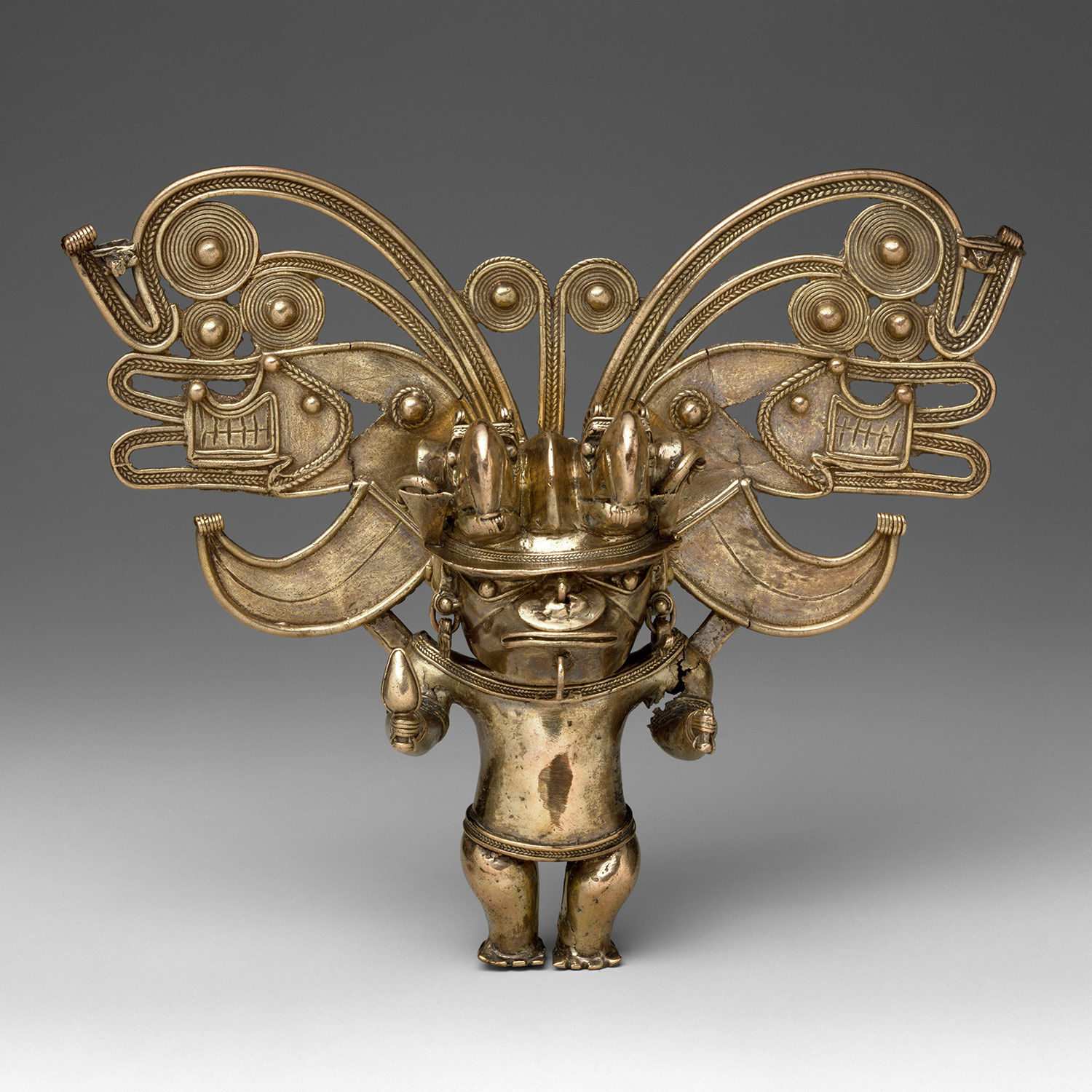
As far as pre-Colombian art goes, there are always the usual mediums: pottery and stonework. And there’s one addition here: goldwork. There were such extensive goldwork pieces found – large pieces, small pieces – that it’s no doubt this was the basis for the El Dorado myths. However, the vast majority of the pieces that have been found were mostly for religious purposes, as well as for jewelry and adornment. The thing that makes gold so coveted and valuable is that it doesn’t rust, and it’s quite malleable when heated, making it easy to shape. One of the Muisca chiefs would cover himself with gold dust for special ceremonies and was therefore called El Dorado. However, most people thought El Dorado, or “The Lost City of Gold” was an actual place, leading numerous Spanish conquistadores to travel to this area in search for this infamous place, all for naught. Many of these gold pieces are housed in the Museo del Oro (Museum of Gold) in Bogotá, Colombia.

From cave paintings to abstract art, painting is also an important facet of Colombian art. The earliest colonial paintings were mostly religious-based in nature and included both canvas paintings and mural paintings. It later gave way to the rococo style, for which one popular form of painting was the portrait. Practically everyone had one. It was sort of the thing. One of the most prominent painters at this time was Joaquín Guttiérrez.
Botero's version of the Mona Lisa. 
After independence and with the subsequent European influences, many of the art styles and movements of Europe were also carried on in Colombia. Modern art is generally embraced and found as public art throughout the country. One of the most famous artists is the still life artist Fernando Botero. One thing I noticed about his signature style of painting is that the people he paints are always depicted as plump, overweight, chunky. They often show the absurdity, irony, and realism of the moment. His style is called boterismo, named after himself. 
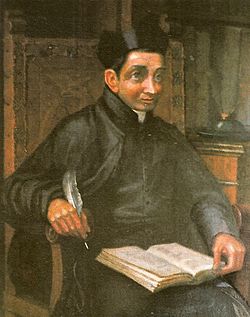
Juan de Castellanos
Early literature in Colombia mostly consisted of poetry – mostly religious in nature – and historical accounts. Actually, the longest poem ever written in the Spanish language is called Elegías de Varones Ilustres de Indias by Juan de Castellanos. Following independence, the trend in literature was to follow the Romantic genre taking dominance in Europe. Like other areas in the Americas and Europe, the trend in literature towards the end of the 19th century and early 20th century was to write about peasant life, lifestyles of the working class, and the daily struggles they felt. Of course, they were also critical of the government and its response to these issues. This movement in Colombia was called costumbrismo.


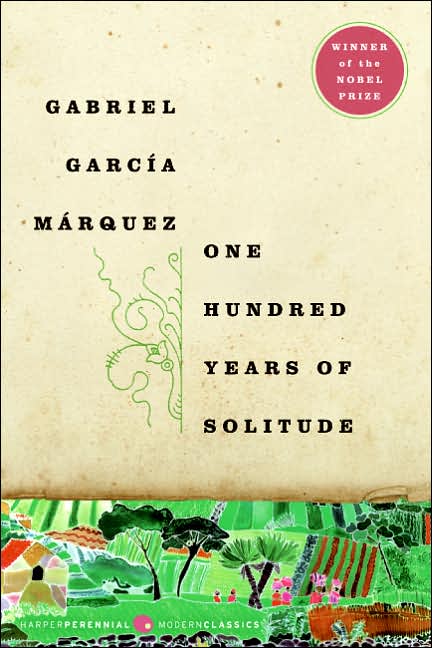
As the 20th century rolled on, various smaller literary movements and variations came and went. Probably the most famous Colombian author is Gabriel García Márquez. Winning the Nobel Prize for Literature in 1982, he’s most famous for One Hundred Years of Solitude and Love in the Time of Cholera, both of which are on my massive reading list, but I haven’t got to yet. Along with Márquez, many writers in Colombia, like Álvaro Cepeda Samudio, Eduardo Caballero Calderón, and Manuel Mejía Vallejo also worked as journalists.

Up next: music and dance

Wednesday, July 3, 2013

COLOMBIA: HOLIDAYS AND CELEBRATIONS


If you’re Catholic, you get a ton of holidays since 2/3 of the holidays are Catholic in nature.

New Years Day (January 1): Most Colombians bring in the new year by spending it with friends and families. Some people go to clubs, bars, and restaurants to party, others hold private parties. Colombia has a few traditions that caught my attention. One of them is to wear yellow underwear for prosperity and wealth. And if you really wanted twice as much, then you’re supposed to reverse it and wear it. (Um, no.) Another tradition is to eat 12 grapes, one for each month of the year and making a wish each time you eat a grape. The kicker is that you have to eat all 12 grapes within the first minute. So, at the stroke of midnight, you better be eatin’ and wishin’.  


Epiphany (January 6): Several countries celebrate Christmas on January 6, where they see this as the day that the three kings came to visit the baby Jesus. Because of this, sometimes this day is also known as Three Kings Day. In the Christian church, the color for the Epiphany season is white, so it’s a pretty popular color at this time.

St. Joseph’s Day (March 19): This Catholic holiday is the feast day in honor of St. Joseph, the husband of Mary. While not much is written about him, it is said that he was the husband of Mary. Some countries (namely Spanish, Portugal, Italy) also celebrate Father’s Day on this day, but I couldn’t find whether that tradition was adopted in Colombia or not.


Maundy Thursday/Good Friday/Easter (varies): In Colombia, Holy Week is a huge deal. Many people will attend special church services where they reenact the Last Supper. Good Friday is usually spent in a solemn manner, attending services. There are even a few who attend Holy Saturday services. Easter Sunday is the culmination of the Holy Week festivities, starting the day early with Easter Sunday mass, followed by large, elaborate meals with family and friends.

Labor Day (May 1): Joining most of the rest of the world, Colombia also celebrates Labor Day on May 1. It’s a day for giving the workers a rest, and it’s also a day for discussing the state of labor and labor issues going on at that time.

Ascension of Jesus (varies): Observed on the Monday that is six weeks and a day after Easter. It’s the Catholic feast day in commemoration of the belief that this is the day in which he ascended into heaven.

Corpus Christi (varies): Observed on the Monday that is nine weeks and a day after Easter.  It traditionally falls on a Thursday. This Catholic holiday is in regards to their belief that the body and blood of Jesus represents his Spirit in the Holy Eucharist, or Communion. There is usually a procession held by the church on this day.


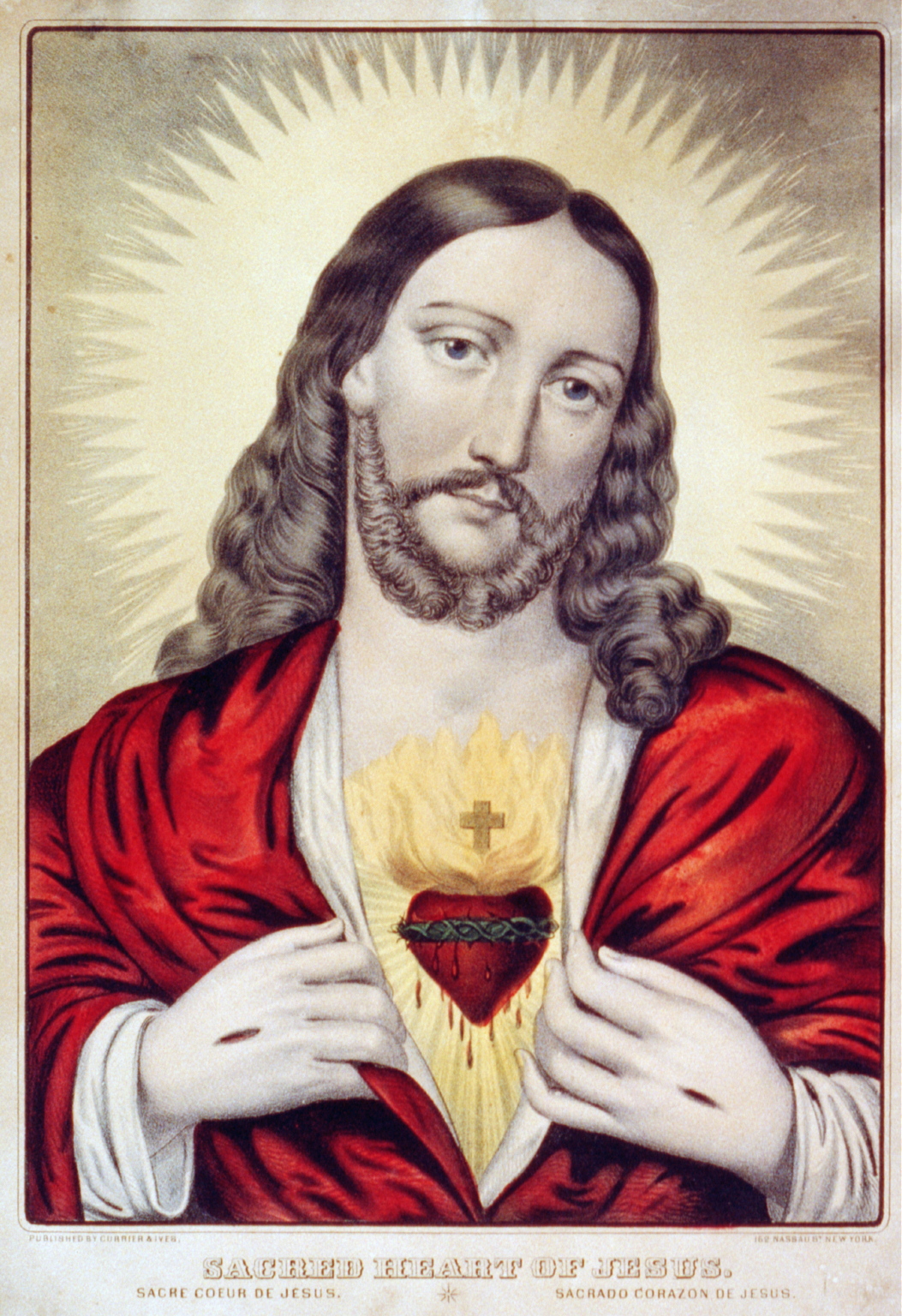
Sacred Heart (varies): Observed the Monday that is ten weeks and a day after Easter. This day traditionally falls on a Friday. This holiday is generally based on Jesus’ heart (like, the organ in the body) as a symbol for his spiritual love for humanity. There’s a lot of symbolism surrounding the crown of thorns, the sword that pierced his side, blood, fire, flaming hearts, etc. Wonder if flaming hearts are anything like The Flaming Lips?

Saint Peter and Saint Paul (June 29): This is a Catholic holiday that is based on the martyrdom of Saints Peter and Paul that took place in Rome.

Independence Day (July 20): This day marks the declaration of independence from Spain back in 1810. People generally hang the Colombian flag up and everything is decorated in yellow, blue, and red. Military parades march through the streets, and the day is spent relaxing with friends and families. Music and free concerts fill up parks and other outdoor venues while local festivities, parties, and barbecues are the happening thing.


Battle of Boyacá (August 7): This is the “other” independence day. It’s actually in remembrance of battle in which Simón Bolívar’s army defeated the Spanish king’s army in 1819. It’s considered one of the major battles in South American history since the subsequent independence of Venezuela, Peru, Ecuador and the creation of Bolivia was a result of this win.  Many of the traditions held on the Independence Day on July 20 are repeated for this day.

Assumption of Mary (August 15): A popular Catholic holiday and principle feast day for the Virgin Mary. It’s believed that this is the day Mary ascended into heaven after her death.

Columbus Day (October 12): Known as Dia de la Raza (Day of the [Hispanic] Race), this holiday has been celebrated since 1921 in Colombia. It commemorates Christopher Columbus’ landing in the Americas. Schools and government offices are closed for the day; many people take a moment to teach children about the historical reasons for celebrating this day.  Some people protest on this day because of the resulting slavery and genocide of the native peoples by Columbus’ men.


All Saint’s Day (November 1): This is the Catholic holiday is the feast day for all of the saints that don’t have their own separate feast days. It’s sort of a catch-all holiday.

Independence of Cartagena (November 11): While the largest celebrations take place in Cartagena since this city’s independence led to the entire country’s independence. A large national beauty pageant is the highlight of the day, complete with a fireworks display at night. Parades, music, and food highlight this festival that is held in various cities across Colombia.

Immaculate Conception (December 8): This is the Catholic feast day in regards to their belief that this is the day which is nine months before when they believe the baby Jesus was actually born. So, in essence, this is the day he was conceived.


Christmas (December 25): In Colombia, Christmas traditions are driven with a strong Catholic basis. People put their Christmas trees up on December 16 (NOT at the end of November, mind you. I’m looking at you, United States) as the beginning of Novena, a nine-day period of prayer. Most people celebrate Christmas with a midnight mass on Christmas Eve night, and everyone shares a special meal, usually consisting of a chicken soup called Ajiaco as well as an assortment of other savory and sweet treats before sharing gifts.

Up next: art and literature

Sunday, June 30, 2013

COLOMBIA: THE LAND AND THE PEOPLE


A little over a decade ago now, I read a story about a motorcyclist who wanted to drive from the United States to the tip of South America and back. In order to keep track of where he was, his family followed him through his credit card transactions. When he got through Panama and was driving through Colombia – his entry into the South American continent – he was kidnapped by Colombian rebels and forced to hike through the jungles in the rain carrying his gear with assault rifles at his back. After five terrifying weeks, they finally let him go, keeping the bike of course.  The embassy helped him get his passport and certain papers back, and his friends rallied together to send him a new bike. When asked if he was going to return back to the US, he replied (and I’m paraphrasing), “Hell, no. I’ve come this far, and I’m not letting those jerks ruin my trip.” Wow. Of course he’s an ex-Hell’s Angel. (Can you tell?)


Colombia is the only country in South America that touches both the Caribbean Sea and the Pacific Ocean. It borders Panama, Venezuela, Brazil, Peru and Ecuador. Geologically, the land varies from beautiful beaches to Andean mountain views. Since Colombia lies on the famed Ring of Fire, it’s the home of active volcanoes and also frequent earthquakes as well. Columbia is one of the most ecological diverse countries in the world. Part of the Amazon rainforest extends itself into Colombia as well as being part of the drainage points for both the Amazon River and Orinoco River. (Every time I read about the Orinoco River, I think of that Enya song, “Orinoco Flow.”)

Colombia has some of the oldest artifacts and antiquities found in the whole world. The largest indigenous populations were mainly the Muisca (which is how I mistype the word “music/musica” all the time), Quimbaya, and the Tairona. The Spanish explorer Vasco Núñez de Balboa was the first European to actually explore the area and see the Pacific Ocean from South America. While it was known by several names throughout its history, Colombia was essentially named after Christopher Columbus. Colombia (as part of the colonial name of New Granada) declared its independence from Spain in 1810 but wasn’t fully recognized until nine years later. The famous Simón Bolívar (and namesake of the country of Bolivia) became the first president of Colombia at this time. Colombian history from this point forward is marked by several periods of civil unrest and political fighting between rebel forces/vigilante groups and government forces. Of course, it hasn’t always been this way: there were periods of peace, too.
I love the windswept hair forward. A man ahead of his time. 
Colombia is ethnically diverse, with roughly a little less than 40% of its population coming from European roots, 10% from Africa, and the rest coming from indigenous peoples. And when you have such a diverse population, you also have large numbers of mixed and mestizo populations as well to consider. The national language is Spanish, spoken by over 99% of the country, but there are also 65 indigenous languages and two creoles that are also spoken. You’ll also find English spoken on the islands of San Andrés and Providencia Island. Like most Latin American countries, Roman Catholicism is the dominant religion, but they also have followers of all of the major religions found as well.


The capital city is Bogotá, a city of about 7.6 million people (a little less than Chicago’s urban area).  Nicknamed “The Athens of South America,” this world-class city boasts many prominent universities, museums, libraries, restaurants, theatres, sports arenas, and historic architecture. Bogotá was named a World Book Capital in 2007, the second in the Americas (after Montreal, Canada). The city (and country) has really made a push towards decreasing violent crime and crime in general in hopes that this results in increased tourism, which has already started to rise.


There are some pretty famous things and people that have come from Colombia: Juan Pablo Montoya (race car driver), John Leguizamo (actor), Shakira (musician), and many other musicians, scientists, and writers who have impacted our world. Colombia shares its wonderful coffee with the rest of the world (remember Juan Valdez?). I’m pretty sure I have a special place in my heart for all of the coffee-producing countries. I just know I’m pretty sure the meal is going to be incredible, just like my Colombian playlist on Spotify. And my husband is going to teach me how to grill. (Again.) So this should be interesting all around.

Up next: holidays and celebrations

Sunday, June 23, 2013

CHINA: THE FOOD


Well, I was hoping that I would’ve had my Explorerback from the shop, but it turned out to be this long, drawn-out, highly-unnecessaryfiasco. The first shop closed down for good, so they moved my vehicle to theother shop on the other side of town. Fine, but now I think they’re jackingaround and taking their sweet time getting my vehicle fixed. Ugh, seriously? Ilove my rental car (2012 Kia Soul), but it’s already depleted our savings justto get around. So, once again, I really just needed this meal to go well. Andit certainly did. 
 
Even with nothing in them, they are nearly perfect. I'm thinking these may also make good mini-sandwiches. 
I started out with the bread: Chinese steamed buns.I love getting these at the Chinese buffet place we go to, and they’re aparticular favorite of my husband. It started out with dissolving the yeast inthe water and then adding a cup of flour, letting it rest for an hour. Then youmixed in the sugar, oil, and the rest of the flour, and let it sit for another2 hours (which I only waited about an hour). After dividing it into twosections to form a log, I cut 12 “rolls” out of it. Each roll was flattenedinto a disk. I brushed some sesame oil onto it and folded it in half, using afork to press the open edges shut. Then it’s time to steam it. My husband and Ihad to figure out the best way to do this since I don’t have a steaming basket:we used a colander hung over the side of a large pot with the lid on top. Itseemed to do the job. At first I was thinking, “Oh, it doesn’t look like theyset up,” but when I tried to take them out, I could tell they were much firmedthat they looked. And the flavor was so wonderful and yeasty. One variation Ikept running into while searching for recipes is to fill these rolls with piecesof meat, such as barbecued pork, but I kept these plain.
 
As cool as a baby cucumber and shrimp and lo mein. 
Then I made sesame noodles. I used lo mein noodlesfor this and boiled them in 2 cups chicken broth and 2 cups water. The saucethat goes on it was modified a little bit based on whether I could find all theingredients. So, my sauce included sesame oil, soy sauce, rice vinegar, peanutbutter, chili powder, salt, and sugar – and a splash of water. The sauce ismixed in with the noodles so that it’s all covered. I mixed in some choppedscallions, baby cucumbers, and sautéed shrimp. This is eaten cold, which sortof concerned me whether the family would eat it, but they certainly didn’t seemto mind. In fact, it’s been so hot lately that it was perfect.
 
They loved this. Now I know where my new bargaining point is. 
And lastly, we had jiaozi (Chinese dumplings).There are many varieties out there, but I chose ones with ground pork and freshcut chives. The pork-chive mixture is put in the middle of wantons – I boughtalready packaged wantons to save time – and then folded around the filling. Aswe found out, we made 44 dumplings, and it’s really important not to overfillthem. To cook them, we dropped each one in boiling water and when they floated,they were done. I wish everything were so easy to tell if they were done. Therecipe suggested using black vinegar with these to dip them in, but I justpoured a little soy sauce on them. And they were delightful. If I wasn’t sofull, I wanted to eat more. My daughter ate more than me, I think.  (And of course, I had Tsingtao beer toaccompany this fine meal, as it only seems appropriate.)
 
Life is just a bowl full of dumplings.
Perhaps we are at an advantage that we are alreadyaware of many Chinese foods because we’re inundated with Chinese take-outplaces no matter where you live. And a few people are lucky enough to live nearone of the various Chinatowns. In fact, my husband, a native Chicagoan, took meto the Chicago’s Chinatown on our first date. I’d love to take the kids backthere one day. I kept looking for “authentic” recipes, not Americanized Chineserecipes. But then it left me wondering where we ever draw the line on what isauthentic. It’s used a lot in food advertising. And even in the US, we havedebates over what constitutes as chili or baked beans or cole slaw. Does itreally mean that one is authentic and others are not? Are variations considerednot authentic because it’s outside of the norm? It’s hard to say. So, I madethe food, authentic or not, and it was good. And it tasted just like, if notbetter, than the Chinese food I’ve had here in the States. And maybe one day,I’ll have the opportunity to go to China and try these dishes myself. Authenticor not.
 
Better than most restaurants.  

Up next: Colombia

CHINA: MUSIC AND DANCE


Chinese music is some of the oldest music in the world. It can be traced back nearly 7000 years. Traditional music is written on the pentatonic scale (like using only the black keys on a piano) and was either played solo or in small ensembles.  The instruments are generally divided into three types: woodwind and percussion (paixiao [panpipes], gongs, bells, dizi [type of transverse flute], paigu [sets of 3-7 tunable drums]), bowed strings (erhu [2-string bowed “violin”], banhu [a 2-stringed instrument, looks similar to a banjo]), and plucked strings (guqin [7-string zither], yangqin [a Chinese version of the hammered dulcimer], konghou [Chinese harp], pipa [Chinese 4-stringed lute]).  Vocal music tends to rely more heavily on melody rather than harmony.  The style of singing is something that is normally disapproved of in Western music: vocalists tend to use a thin singing voice, which results in a non-resonating tone, or utilizing falsetto (usually heard when men try to sing higher than normal, sounding as if they were singing the female lines).


Chinese opera still remains quite popular as a cultural art. I first heard Chinese opera when I was in college studying world music as a music major at Indiana State University. It was really hard to get used to since the vocal quality and instrumentation (ok, mostly the vocal quality) was very different from Western music, which is what we’re mostly used to listening to. I think the thing about the Chinese opera that makes it hard to listen to is that the vocals are often guttural followed by high-pitched tones. It’s exactly why I don’t like some contemporary art music for the same reasons: there’s no cohesion.  But it's not all terrible; there are often a lot of acrobatics and choreographed fight scene that are pretty cool. Like a Chinese West Side Story. 


As Chinese students started studying abroad in the early part of the 20th century, they started bringing back Western classical music, and soon several conservatories popped up to teach music in this style. Symphony orchestras and jazz were soon making its way into the culture of China. However, it would all be put on hold when the Communist Party took control in 1949. Pop music and Western music were considered the bane of Chinese traditional music. Pro-communist music was pretty much the only thing that was allowed to go without criticism. After the Tiananmen Square protests in 1989, pop and rock music made a huge push, especially in the revolutionary sub-cultures of China. Even now, it has limited airplay and is still looked down upon by the higher-ups.


The father of Chinese rock is often attributed to Cui Jian, who was the first one to use electric guitars in his music. A 2003 performance with The Rolling Stones solidified this feat. A band called Tang Dynasty is one of the few metal bands that came on the scene in the early 1990s. Even a couple of punk rock bands became fairly popular: Brain Failure (which I really like; they were discovered in the US by one of my other favorite bands, Drop Kick Murphys) and Hang on the Box (which reminds me a little of the Cambodian-American band Dengue Fever). Hip-hop artists have also made their mark, especially in the larger cities and in Taiwan. One of the most notable ones I found is DJ Hot Dog. Some songs totally reminds me of 90s hip-hop.


Dance is also very important and has important functions and meanings in Chinese culture. Probably the most well-known dance would be the dragon dance that is seen at the Chinese New Year. The dragon itself is made from paper and/or other materials constructed on lightweight hoops, originally wood but now aluminum and other lightweight materials. A special team is required to bring the dragon to life and make it move. They can range in length from 25m to 70m (about 82-230 ft). The smaller ones of course are used for more acrobatic movements while the larger ones are used more for ceremonial purposes and large parades. Different patterns in which the dragon moves have different names and meanings.


Another dance that is often performed similar to the dragon dance is the lion dance. Many times, they’re confused for one another, but the lion dance requires two people, and the dragon dance needs the help of many. The costume is construction is a little different in that the people are actually inside of the costume (like how we see the two-person horse costume in the US), as opposed to the dragon dance where they are lifting it up with poles attached to the frame. In China, there are basically two forms of this lion dance: a northern lion and a southern one. (There are also varieties of this dance found in Japan and Indonesia as well.)  The colors and designs used vary from region to region and they will often have more than one lion performing together.


Up next: the food!

Friday, June 21, 2013

CHINA: ART AND LITERATURE


In most art museums, the Chinese art section is one of the fairly larger sections. And Chinese art spans many different kinds of mediums. Some of the more common types of art are pottery, jade work, painting, sculpture, and calligraphy.


Paintings and calligraphy go back to the beginning, and the subject matter and styles vary from dynasty to dynasty. These paintings can be seen on folding screens, fans, and hanging scrolls. Many scenes depicted daily life or court life.


Ceramic art and pottery more than likely had its primary roots in functionality, redefining storing and preparing food and medicines. The whole invention of pottery is significant because people now had a way to cook and store food. But it also doubled as art in its design as well as creating it for the purpose of giving it as a gift. The Chinese also were known for their lacquer ware as well, which is when you see small boxes or other items that appear highly glossed.


Silk textiles and jade used for jewelry and carvings are also commonly found in Chinese art. Most people – including me – often think of jade as being a green stone, but it can actually range from reddish to various shades of green to milky white depending on the soil it was extracted from.


One of the largest and most impressive collections of sculptures ever found in the world is the famed Terracotta Army. (Terracotta is a type of earthenware, a clay-based ceramics that is porous when it’s fired. It can be either glazed or unglazed. I always think of flowerpots when I think of terracotta.) It was found inside of the tomb of the first Qin emperor – there were over 7000 life-size statues of soldiers buried. The amazing part is that each one is unique and different from each other, almost like they were based on real people.


Painting art among other types of cultural arts took a hit under Mao’s Cultural Revolution, but it later regained popularity. Many works of art, including paintings, pottery, and sculptures were destroyed during these years. The sentiments are a little more relaxed today than it had been in China’s past, but there is still an aura of censorship surrounding freedom of expression that remains today.

The earliest of Chinese literature is mostly philosophical and historical in nature, court documents and religious texts and such. One of these early books was the I Ching, or the Book of Changes. It’s more or less and divination manual and based on eight trigrams. (An example of a trigram are the black lines found on the South Korean flag.)


Poetry is also a very common form of Chinese literature. One of the earliest collections is called the Shijing, commonly thought to have been edited by Confucius. The structure of these poems is in couplets, with four symbols to a line. Each character is only one syllable. Each dynasty has it’s own styles and variations. I did have a small laugh, a chortle if you will, that one of the famous poets of the Song dynasty is Su Shi. Although the Song dynasty did bring about the practice of “travel prose,” writing about travels and the adventures of the journey; one example is Su Shi’s “Record of Stone Bell Mountain.” If you were well educated – probably part of the court and upper class – during the Ming and Qing dynasties, then classical poetry was a skill that you were expected to learn and excel at. It was a normal part of society.


There are four novels that are considered part of the canon of classical Chinese literature: Dream of the Red Chamber by Cao Xueqin, Water Margin by Shi Naian, Romance of the Three Kingdoms by Luo Guanzhong, Journey to the West by Wu Cheng’en. 

During the New Culture Movement was the beginning of a literary change from the classical language to using more vernacular speech in writing. Literature in general took a hit during Mao’s Cultural Revolution years. Any written work that even hinted at humanitarianism or freedom was immediately quashed. And in many cases, the authors were treated as dissidents and dealt with in terrible ways. Today there are many Chinese writers, both in China and as residents abroad. One of my favorite authors is Chinese-American author Amy Tan. I’ve read her books Joy Luck Club, The Kitchen God’s Wife, and The Hundred Secret Senses, all of which are very good.


In Taoism, the God of Culture and Literature is known as Wenchang Wang. He’s normally depicted as an elderly man with two attendants: Tianlong, or Heaven-Deaf; and Diya, or Earth-Mute. He’s the one that students and writers look to for inspiration and help just before exams.

Up next: music and dance