Saturday, August 10, 2013

COSTA RICA: THE LAND AND THE PEOPLE


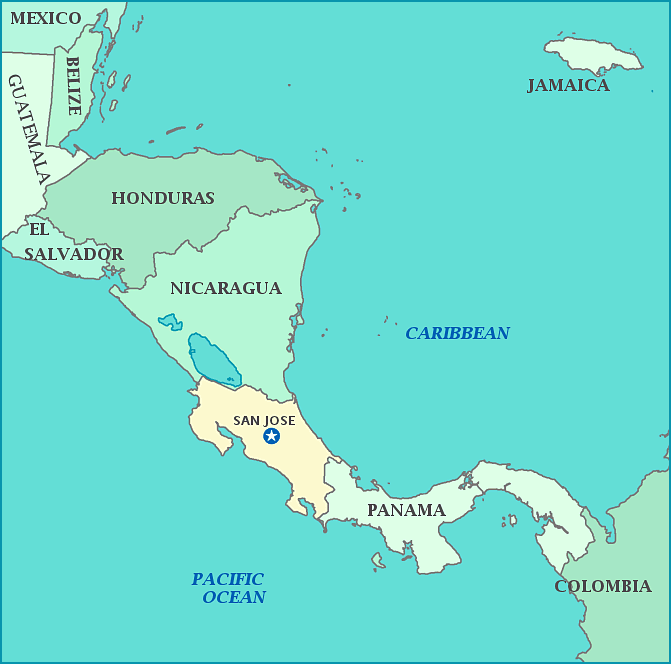
It’s the country with no army. And one of the greenest countries. And one of the happiest places in the world. Literally meaning “rich coast,” Costa Rica lies in Central America, between Panama and Nicaragua, touching both the Caribbean Sea and the Pacific Ocean.  As part of the Ring of Fire, Costa Rica is home to several volcanoes (some are still active), the highest being Irazú Volcano. Its tropical climate is partly the cause of it being one of the most ecologically diverse countries in the world.


It’s not exactly sure who gave Costa Rica its name, whether it was Christopher Columbus or other Spanish conquistadors who landed later. It was mostly controlled under the Guatemalan province of the Viceroyalty of New Spain (what is now Mexico). And then it was part of the Viceroyalty of New Grenada (what is now Colombia) for a while. The country pretty much lacked all of the things the Spanish were looking for – namely silver and gold – so they in turn pretty much left it alone. It was generally thought to be one of the poorest areas in all of Spanish-run America. When Spain lost the Mexican War for Independence, things started changing quickly. Costa Rica changed occupiers several times before gaining its own independence in 1847. In 1948, a dispute regarding an election led to a 44-day civil war, which led to the deaths of nearly 2000 people. The next year, the entire army was abolished. Since then, the country has enjoyed relatively peaceful times.  In fact, last year, they even abolished recreational hunting. (The US South has probably crossed them off of their vacation destinations. – I’m joking, for crying out loud. Although it’s probably truer than not.)


The Central Valley is home to Costa Rica’s largest city and capital, San José. The metro area has about 2.1 million people – about the same size as Houston, Texas. Most people live in the suburbs and work in the city, but even at that, it’s one of the safest cities in that region. It’s quite the center for cultural arts: home to several colleges and universities, theatres, museums, parks, zoos, as well as stadiums and sports arenas and of course, the center of government.


Because it was originally claimed under Spanish rule, the most widely spoken language is Spanish.  However, two of the more commonly spoken indigenous languages – Mekatelyu and Bribri – are also recognized as regional languages. Mekatelyu is actually a Jamaican Creole that was brought to Costa Rica by Jamaicans who moved to the area as migrant workers. It is actually a transliteration of the phrase “make I tell you,” which is loosely “translated” as “let me tell you” in standard English. Bribri is the language spoken by the Bribri people native to Costa Rica. Unfortunately, there are only about 11,000 speakers left. English is also learned in school because of its importance as a global lingua franca and tourism and is understood by many Costa Ricans.


Like most countries in Central and South America, Roman Catholicism is the dominant religion, followed by Protestantism (which together make up about 84% of the population). However, the growing number of other ideologies that are practiced freely in Costa Rica seems to rise. About 11% of people consider themselves irreligious, not having any particular feeling towards any one religion at all; about 2% practice Buddhism, and the bottom 2% follow a variety of other ideologies, religions, and philosophies.
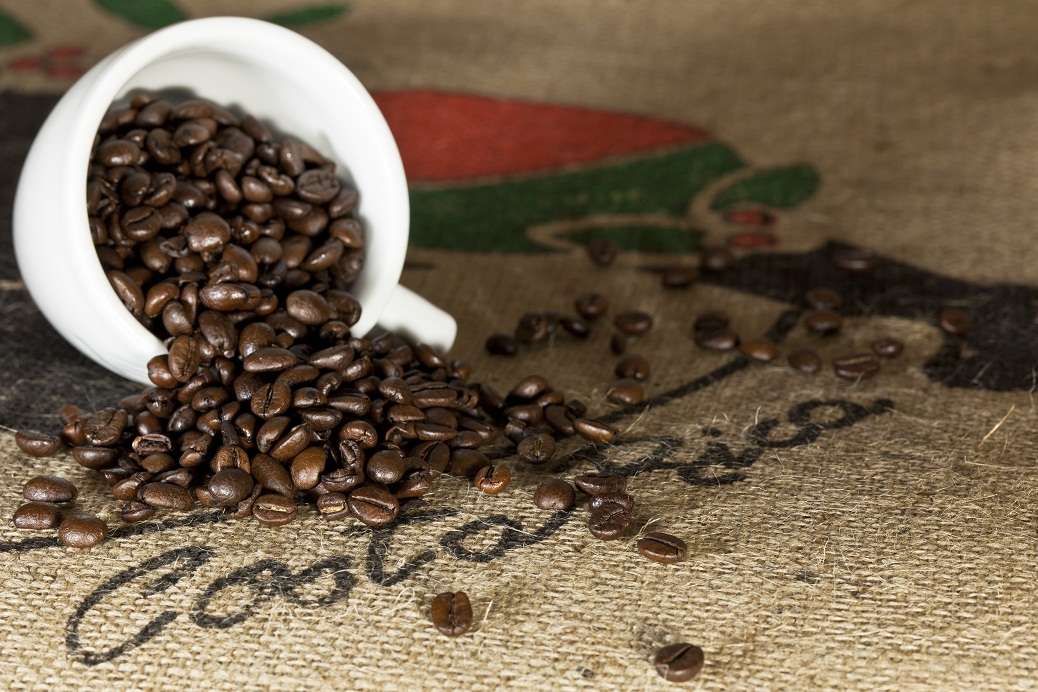


Costa Rica is a developing country, just recently opening its doors to global companies like GlaxoSmithKlein, Intel, and Proctor & Gambel. It also is famous for its coffee beans, most notably the Costa Rica Tarrazú beans. I have some of this right now. It’s a little more bright-flavored than others, usually a medium-dark coffee. I really like it. Costa Rica has also grown to be a popular destination for ecotourism, tours set up specifically surrounding its flora and fauna.


This is one country that has a lot to boast about. It has one of the lowest death rates in the world. About 97% of the country has access to clean water, and 95% has adequate sanitation, which helps in lowering the risk of infectious disease to an intermediate level. Because it’s a tropical country, certain diseases such as dengue fever and bacterial diarrhea are still found though.  The AIDS rate is also fairly low. Since the country enacted it’s own version of Social Security in 1941, it also granted its wage-earners universal health care. (However, waiting lists tend to be long to see certain specialists and so on, so people can choose their own private health insurance to avoid these waits.) 


I know a couple of people who have been to Costa Rica (one of whom has told me the beer Imperial is the best!), and from this preliminary reading, I’m completely intrigued.  I think I’d be happy there. (Only three more decades until retirement!) Well, for one, I’m always a little happy with a country that votes for a woman as president (we’re still waiting for one, maybe in a couple of years, perhaps?).  Costa Rica’s president is Laura Chinchilla (who happens to have the same birthday as my late father-in-law). She got her masters degree from Georgetown University (Washington, D.C.), and her husband is actually Spanish-Canadian.  It really is a small world. There are a lot of things that Costa Rica is doing well, and I’m really excited to delve into its culture this week, and of course end with some salivatingly delectable food. (Side note: I came across an article from NBC Nightly News dated a couple years ago reporting a study that said people don’t salivate at the thought of good food. I don’t know. I just looked at my recipes, and I just did. So, there.)
 
This one's for you, Beth. 

Up next: holidays and celebrations

Sunday, August 4, 2013

REPUBLIC OF THE CONGO: THE FOOD


Well, it’s back to school time. Indianapolis Public Schools are on that balanced schedule, which I like a lot, but I would’ve never thought that we’d be going back to school on August 5. At least for this year, we have all of her school supplies and some new uniforms before the first day. I think we’re ready for 2nd grade. And so, on this final day of summer break, I can’t think of a better way to end the summer and get ready for the new school year than by being in the kitchen all day.
 
Aww, she's growing up. She's learning to cut butter into the flour. And complaining that it feels gross.
So, I was somewhat at a loss when it came to looking for a bread recipe. Whenever I can’t find a type of bread, I start expanding my searches to include pastries as well.  I did manage to find a tart called Tarte Banane Congolaise, or Congolese Banana Tart. I had never made a tart before, or really even made my own pie crust before. So, I thought maybe it would be good for me to learn. AND, I realized at the last minute that I don’t have a tart pan – and all I could find was some pie tins at the grocery store. So, pie tins it is. The dough for the crust starts out with cutting butter into the flour, something I taught my daughter how to do today (after listening to her complain how gross it felt). Then we added the sugar, an egg, and just enough milk to bring it all together. After that, we had to cover it in saran wrap (or a large plastic baggie since I didn’t know we were out of saran wrap) and chill in the refrigerator for an hour. Even afterwards, the dough was still SUPER sticky; I had to add another half-ton of flour just to work with it. But I did manage to form it to the pie tin that I had. After I baked the crust for about 15 minutes, I added the sliced bananas (and I couldn’t resist topping it with some ground cinnamon), and baked it for another 10 minutes. The edges were browned, and I was worried about burning it. It seems a little weird that there wasn’t any sauce or anything, or that the bananas weren’t smashed. There were parts of the recipe where I wondered if there were some typos in it (like when it mentioned to put it in the oven at 1900 degrees C. Pretty sure they meant 190, unless burning my house down was in the plan.)  But it looks amazing regardless. And it was a hit with the kids and me.  Would’ve been better a la mode.
 
Again, I'm thinking this may be my breakfast. Someone needs to buy me some ice cream. 
The main meal for this is called mwamba.  It’s basically a stew of various meats (I chose chicken and lamb), tomatoes, chilies (I just used a can of green chilies), and onions. Everything is sautéed in a skillet for about 45 minutes. A note on the recipe said that mwamba that is made with chicken is almost always served with rice, and that mwamba made with lamb and other meats are almost served with a side of fried plantains. So, I suppose it’s rice and plantains for us then!  This style of one-pot cooking is pretty common in a lot of African recipes that I’ve seen.  And it’s pretty common in my house too. It’s always our “the days before payday” kind of meal, where we throw whatever little bits of vegetables and meat together and put it over rice. You really can’t go wrong there. 
 
Mwamba on rice surrounded by fried plantains. 

And who doesn’t love fried plantains, really? I’ve had them plenty of times but have never made them myself. This recipe called to dip the sliced plantains in a mixture of ground ginger, salt, and pepper, then fry it in a skillet of hot oil.  The ground ginger was what did it.  Some batches had different amount of sauce on it, so I have some that look more “burnt” than others, but they were all so tasty.  This is the second time I’ve worked with plantains, and I’m always amazed that I think they smell like cucumbers. 
 
Fried plantains: the ginger must be the secret ingredient. 
This was a good meal. And I’m glad that my daughter helped some. And as I’m sitting here completely full and can barely move, I can’t help but be thankful for that feeling. There are a lot of people out there who don’t get enough to eat in their day, especially in countries such as Congo-Brazzaville – and yes, and in our own communities as well. What I’ve learned from these countries is how to make big meals from ingredients that you can find for fairly cheap (minus that lamb that I bought at the grocery store yesterday). My family and I are certainly better off than many people, but in this country, we’re probably closer to the bottom than middle. But I’ve realized to eat a good meal with family is one of the things that binds all of us, no matter where your place is in the world, economically and geographically.

Up next: Costa Rica

REPUBLIC OF THE CONGO: MUSIC AND DANCE


Rooted in the musical styles of central and western Africa, Congo is no stranger to a strong music and rhythmic background.  Some of the more common instruments are xylophones and marimbas, as well as the mvet, which is somewhat of a cross between a zither and a harp, except that it has one or two gourds that act as resonators. Of course, they also use a variety of drums and percussion instruments as well. 


Much of the music that is played and listened to in the Republic of the Congo is highly influenced by its neighbor with a similar name, the Democratic Republic of the Congo (or DRC). One style called soukous is a major influence on the music scenes of most major cities in central and western Africa. Soukous is a sort of cross between Cuban rumba, American jazz, and traditional Congolese music.  It rose to popularity in the 1950s and 1960s as it entertained the dance halls across this area and still remains as one of the favorite styles of African music in general. 


American- and French-influenced hip-hop is also highly popular with artists such as Bisso na Bisso and Passi. I really like the group Bisso na Bisso; I found the album Le 15 Mai 99 on Spotify and have listened to it a dozen times. I also found it on iTunes for $8.99. I like their style: you can tell it’s been influenced by soul, by jazz, by blues, by Latin music – but that may be the soukous speaking. It’s catchy, and I like it. I might buy the album one day (even though I’m not a huge fan of live albums and generally avoid them, but this one might be an exemption.) The video above is the song "Tata N'Zambe," and every time I hear it, I think they're saying "zombie." Two other groups that bear mentioning are Extra Musica and Les Bantous de la Capitale.


The Congolese has used dance as a means of expression since the earliest of days. The Kyébé-Kyébé dance of the Mbochis tribe is one of the more famous dances. Another famous dance is the traditional stilt dance used with brightly-colored puppets.  During the 1920s and 1930s, people would come out on Sunday afternoons to the different cultural centers of Brazzaville – the largest being the Grande Place in Poto-Poto – and hold these large dance competitions. Drummers would line up and perform different rhythms that were indicative of their particular section of the city or tribal background (like the walla rhythm that is commonly used by the Kongo people), and while just about anyone could join in the dances, many of the serious dancers dressed in full traditional costumes. They’d go on all afternoon and at the end, there would be a prize for the best dancers. I found this video (above) and would LOVE to find something like this to show my kids. The costumes are amazing, and it makes me think that this is where the choreographers who did The Lion King live-stage version of the musical got their inspiration. 

Up next: the food

Thursday, August 1, 2013

REPUBLIC OF THE CONGO: ART AND LITERATURE


While doing research for this, I’ve discovered that many of the embassy websites have a lot of valuable information. And I also discovered the Travel.State.Gov website, which is an extension of the US Bureau of Consular Affairs. It has a plethora of important information on country info as well as international travel advisories from war/fighting to weather related. Another cool website I discovered was IfItWereMyHome.com. It’s interesting to compare two countries together to put it in the perspective if you lived somewhere else. Ok, that concludes my public announcement. Let’s move on to more aesthetic topics, like art and literature.

Congo-Brazzaville is known for two types of art: sculpture and painting.   Different tribes of people had their own distinct styles of sculptures. Many of these sculptures of made of different types of wood: the Teke people carved their ancestral spirits out of wood using geometric shapes. They were also famous for making masks as well. The Kongo tribes were famous (or infamous) for creating their statues with nails and knifes sticking out of the sculpture. I guess that’ll teach people to keep their hands off.


Congolese painters have always shown a great interest and propensity for the arts and especially using a wide array of influences.  Congo has many female artists who have rose above in the art world to be nationally and internationally well-known in their field. One well-known painter, Rhode Bathe-Scheba Makoumbou, is the daughter of another famous painter, David Makoumbou. Her oil paintings portray women and their social life and daily activities. But not only does she paint, she also extends herself as a sculpurist. Her main mediums are sawdust and woodglue fixed on a metal frame. She tries to capture the traditional village life at risk of disappearance due to the quick urbanization that’s taking place. Some of the other woman artists making a difference are Yolande Motse Akanati (who does jewelry making, fashion designing, perfuming, as well as painting) and Tatiana Tsolo (who also portrays women, but from the point of view of their feelings and surroundings: love, nature, etc.)
 
"La Polygame" by Rhode Bathe-Scheba Makoumbou

One of the most famous painting schools dedicated to African painting is Brazzaville’s own Poto-Poto School of Painting. Overall, one of the most common focuses are depicting the rural as well as the urban life of the people of Congo.

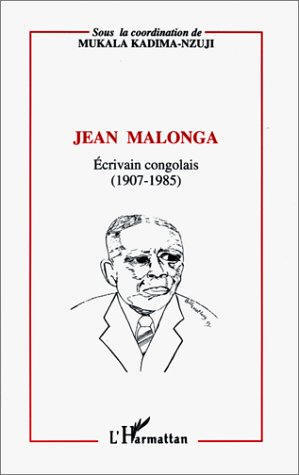
Most literature from Congo-Brazzaville is written in French and started to emerge on the scene during the 1950s. Jean Malonga is often considered one the fathers of Congolese literature and has influenced many others. His most famous work that brought him to the forefront as well as the genre of modern Congolese literature is Coeur d’Aryenne, published in 1954. The focal point of his work, as well as the works of many of his contemporaries, was the black identity that was taking place during the colonial period. Keep in mind, these works were emerging at the same time talk was going on of the independence that would take place about six years later.


After gaining independence, the country faced new problems, and of course there was a new identity, which had its affect on Congolese literature. Congolese started making their way onto the scene, coming as novelists, journalists, playwrights, and poets. Guy Menga was one of the first playwrights, first publishing his works in the 1970s.  Henri Lopès is another writer who made distinct points on the comparisons and contrasts between life before and after independence, especially regarding its contribution to the literary arts. He’s had several works published over the past 40 years and is currently serving as ambassador of the Republic of Congo to France.

One author and professor, Alain Mabanckou, is a perfect example – and probably the most famous – of Congolese diaspora writers. Because of political instabilities and poor conditions past and present, many writers and artists were forced to flee the country in order to continue their art. And many just stayed where they ended up finding refuge even when things started to get better in Congo. Mabanckou used to teach at the University of Michigan but is now currently at UCLA (University of California at Los Angeles).


And while there are far more male writers than female ones, there have been many female writers to make their names known and hold their own ground in the literary world. Katia Mounthault is one of the more famous women writers from Republic of the Congo. Paule Etoumba (poet) and Adèle Caby-Livannah (short story writer) are two other women writers who have graced us with their take on insight of Congolese life from the female perspective.

Up next: music and dance

Monday, July 29, 2013

REPUBLIC OF THE CONGO: HOLIDAYS AND CELEBRATIONS


Certain holidays are celebrated by everyone with a day off (New Years, Easter, Labor Day, Independence Day, All Saint’s Day, and Christmas). The other days are generally recognized (and even other holidays that aren’t mentioned here), but if a business chooses to work on that day, it must pay its workers overtime to do so.

New Years Day (January 1): New Year’s Eve also coincides with Republic Day in this country.  Most people do the usual celebrations: meet up with family and friends for a special meal and drinks to bring in the new year. Everyone wishes everyone good prosperity and fortune for the upcoming year.

Easter (varies): Because this country is majority Christian, Easter is a widely-celebrated holiday all over.  Many people start their day off by attending special Easter services held at their church, followed by a special dinner and spending time with friends and family.

Easter Monday (varies): Government offices and schools are closed on this day, and people generally spend it resting and relaxing with family and friends.


Labor Day (May 1):  The Republic of the Congo celebrates Labor Day along with most of the rest of the world with a day off. It’s also a day where labor issues and jobs are discussed.  Some of the issues at hand include child labor (especially in rural areas and agricultural/fishing work environments), forced labor, work conditions, creating a minimum wage for agricultural workers, and weak unions causing prohibited worker demonstrations.

Ascension Day (varies, 40 days after Easter):  This is the Christian celebration based on the belief that 40 days after Jesus rose on Easter, he then finally ascended into heaven. 

Pentecost Sunday (varies, 7th Sundays after Easter): Many Christians believe that Pentecost is the “birthday” of the church itself. Before this, there were merely followers of Jesus, but it wasn’t organized. So this is beginning of the organized church as we sort of know it.


Reconciliation Day (June 10): There isn’t a lot of information on this holiday specifically.  All I found was that it’s the commemoration of 1991 Conference on National Sovereignty, which I also learned was basically the beginning of the transition between Congo as a one-party controlling state to Congo as a multi-party democratic state.

Independence Day (August 15): Also tied in with the Three Glorious Days, this holiday celebrates Congo Brazzaville’s independence from France in 1960.  The Three Glorious Days took place just prior to the declaration of independence and were the three days of rioting against then Prime Minister Youlou after he established a one-party state and one legal trade union. After those three days’ fighting, he and some of his main supporters were arrested by the military and forced out of participating in political affairs again.


All Saints Day (November 1): Because around 50% of the population is Catholic, many Congolese celebrate All Saints Day.  This celebration is for all saints, especially those who do not already have a specific feast day. 

Christmas Day (December 25): Christmas in the Republic of the Congo doesn’t quite have the same luster as it does in wealthier countries. For those who can afford it, Christmas is often celebrated with roast beef or mutton. Some people in the coastal city of Pointe-Noire receive gifts of fresh vegetables, exotic fruits and fresh catfish. (Who wouldn’t love THAT? That sounds like the best gift ever.) Special Christmas services are held at churches where children perform nativity skits. 


Up next: art and literature

Saturday, July 27, 2013

REPUBLIC OF THE CONGO: THE LAND AND THE PEOPLE


It’s a country known by several names: Congo, Congo-Brazzaville, Republic of the Congo. Technically speaking, this probably should’ve went in the R section, but I put it in the Cs because I’ve always just called it Congo. I put its neighbor with a similar name, Democratic Republic of the Congo, in the Ds section, so I think we’ll get to it in November.  

Located in central Africa on the Atlantic coast, this rain-forested country is surrounded by Gabon, Cameroon, Central African Republic, Democratic Republic of the Congo, and the small exclave of Angola called Cabinda. It lies in sub-Saharan Africa along the equator, but I’ve been watching the weather there this past week, and I’m amazed that their weather isn’t much different than ours in Indianapolis (although we’ve been having slightly unseasonably cool weather this week – it’s been gorgeous!): in the mid 60s at night, mid 70s-lower 80s during the day.


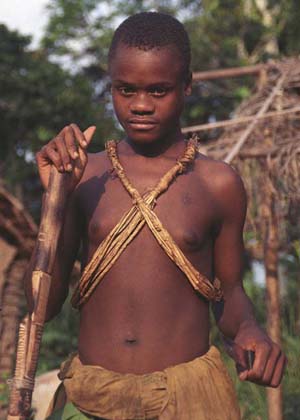
Originally inhabited by various Bantu-speaking tribes and Pygmy tribes, the Portuguese and then the French “discovered” the country while traveling down the Congo River, a major river system in this part of Africa and the second-longest in Africa itself.  Through colonization, the land went through many name changes: Congo Colony, French Congo, Middle Congo, French Equatorial Africa. They gained independence from France in 1960, taking the name of Republic of the Congo and quickly joined ranks as another one of the world’s socialist-leaning-into-communist countries (under the name People’s Republic of the Congo). While there were coups and shift changes in their politics, the Congolese wouldn’t fully come to the fight for democracy until the late 1990s.


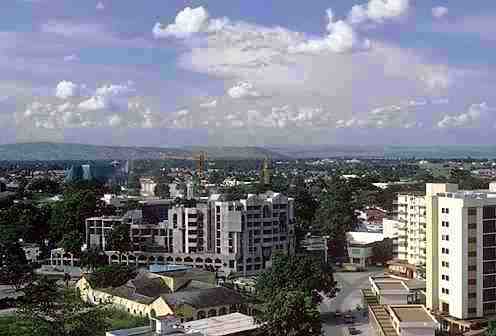
The capital city is Brazzaville, which lies on the Congo River. Just across the river is Kinshasa, the capital city of Democratic Republic of the Congo. I wondered if these were the two closest world capital cities – coming in at nearly a mile apart – but I think Vatican City and Rome would actually be the closest, since one is inside the other. The city of Brazzaville is named after an Italian-French explorer by the name of Pierre Savorgnan de Brazza. It’s certainly the largest city, and only one of few other cities of any significant size. About 70% of Congolese live in urban areas. (It’s a sister city to Olathe, Kansas, by the way.)


Because the French controlled the area for so long, the national language is French, but they also utilize several local languages and dialects as well. Linguistically speaking, this country has around 62 languages that are spoken. The local languages of Lingala and Kituba are used as a lingua franca (both of which are related to Kikongo, the most widely spoken language). The Kongo are the largest ethnic group, making up nearly half of the population (whose namesake probably lends itself to the name of the river, which also is the basis for the name of the country). Pygmies only make up about 2% of the population, but remain a watch group as a victim of human rights violations. Another effect of the French can be seen in the fact that most of the Congolese are followers of Christianity, with nearly half the population Catholic and over 40% Protestant.


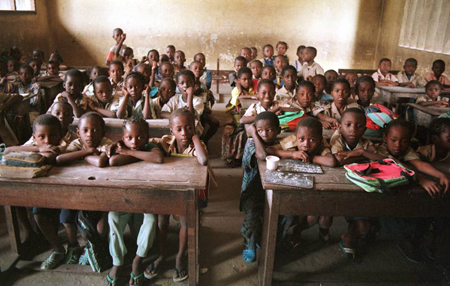
There are a lot of problems concerning the environment due to deforestation, water pollution (along with poor sanitation lead to greater spread of communicable diseases), and air pollution from vehicle emissions. Outside of the cities, farmers try to survive mostly on subsistence farming and some try their hand in the oil industry. It’s still not that much. Their economy and their government experience frequent fluctuation and widespread poverty, and rely on foreign aid for help. Infant and maternal mortality is a problem, as is AIDS and the high risk for diseases such as hepatitis A, typhoid fever, malaria, African sleeping sickness, and rabies. There aren’t enough doctors, especially in the rural areas.  Their life expectancy is only 58 years old, which both of my parents have passed. Education is an ongoing problem. Children are required to attend until the age of 16, but there are always costs involved, especially for those who want their kids in a better school, and many cannot afford it. Teacher training is also insufficient in many cases, so kids don't always get the best education, especially for those who are poor. 


I think my own personal challenge in this is trying to do searches for Republic of the Congo and not come up with results for Democratic Republic of the Congo. It’s been slightly frustrating so far. But not too bad. I did find some recipes, so I’m pretty excited about that (I did have to settle for a tart instead of an actual bread, but I’m certainly ok with that. Who complains about tarts?). I have a feeling this country will amaze me in a quiet way.

Up next: holidays and celebrations

Sunday, July 21, 2013

COMOROS: THE FOOD


This was a culmination of some of my favorites: island food and African food.  We’ve been having some really hot weather here in the Midwest, our first 90 degree days of the summer, so I think it was appropriate for this meal. Actually, it’s been warmer here than it has been in Comoros. If there's one running theme in Comorian cuisine that I noticed is the heavy use of coconut milk. 

There are couple of other blogs out there that are generally doing the same thing that I am. I usually take a look and see which dishes they chose, and for the most part, I try to do something different. Just so readers can get a more rounded look at the cuisine and culture. However, I couldn’t find any true bread recipes for Comoros. I thought I finally hit a roadblock. I did run across both of these other blogs, and realized I think they both used the same bread: mkatra foutra. So, I broke my own unwritten made-up rules and used this recipe too. It’s a yeast-based bread, which uses coconut milk as the liquid in this. It does call for it to rest for an hour, but it was still a really sticky dough. I had to use a lot more flour in it to work with it at all. My hands were truly a mess, a preschool kid’s dream. After the dough rests, I made a patty-like shape out of the dough and put it in the skillet with melted butter until it turns a golden color.  When I first laid it in the skillet, I then sprinkled sesame seeds on it and again when I turned it.  These were very good, and they were even better with a little caramel syrup on them!
Lightly fried bread, sweetened with coconut milk, complimented with toasted sesame seeds. Goes perfect with coffee.  
 The main dish I made was Comorian chicken curry, or poulet à l’Indienne. Much of Comorian cuisine is influenced by Indian and Middle Eastern cuisines as well as other pan-African cuisines. This starts with browning the chicken then removing it from the skillet. In the same skillet, I sautéed onions, a poblano pepper (in lieu of chilies), and minced garlic, and then added cardamom and cloves. The recipe actually called for whole cloves and cardamom pods, but I didn’t get them since I had the ground spices at home already. (After a $2300 repair bill for my transmission and rental car expenses, I’m trying to save as much as I can where I can.) Then I added the chicken back in and a can of diced tomatoes. While that was simmering, I mixed some cumin and saffron into some Greek yogurt and layered it on top of the chicken mix in the skillet. Adding a final touch of salt and pepper, I let it simmer for an hour. Most of the time, people think of curry as being spicy, but it doesn’t necessarily have to be spicy, as much as it’s spice-ful (if that’s a word). The smell was absolutely wonderful, a spicy and sweet aroma that filled every corner of my kitchen. My husband complained that it was a little “too bold” but I have no idea what he was talking about. I just nod and smile when I don’t understand him.
 
The final meal: chicken curry, coconut rice, and mkatra foutra bread. 
To go with this, I made riz au lait de coco de Comores, or what I call Comorian coconut rice. It was fairly easy to make; it’s essentially the same way I make steamed rice, but instead of water, I used coconut milk. But I think using the coconut milk makes it a little harder. It boiled a lot faster than I imagined, and I think it didn’t take nearly as long as the recipe called for. I think it may have contributed to the fact that the rice got a little scorched on the bottom of the pan.  But it still went well with the chicken curry. 

To go with all of this, I made a drink for myself. All of the island countries have some of the best drinks. I found a recipe for a drink called Punch Coco. (I’m sure Coco Chanel might have suggested a different name.)  It sounded wonderful, mixing coconut milk, sweetened condensed milk, lime juice, white rum (I used a vanilla rum), with a pinch of cinnamon and nutmeg as garnish. Well, it called to mix all of this in a shaker with ice then add the garnish (and a vanilla pod, but I didn’t feel like paying $7 for just two pods). I don’t have a shaker (I should get one though), so I just mixed it in a glass and stirred. It wasn’t quite the same: the lime juice caused the coconut milk to break up, and it became clumpy. What I should’ve done was put it in my blender to break up the ice and mix it lightly. It tasted good at first, but I found that mixing the vanilla rum in pre-made mocha iced coffee was a far better drink.
 
Rich, frothy, thick -- the vanilla rum was a good idea. 
For a country that I knew very little about, and most people I know haven’t even heard of, this turned out to be a very interesting country. And it falls into the category of countries that I wish were more stable so that I could go visit them (assuming I ever have a time when my kids aren’t sucking every last dime out of me). Tourism in this country is still struggling because of the instability of the government, but I’m hoping that they will gain some governmental and economic stability in the future, not only for its own citizens, but for people who want to visit this tiny gem in the Indian Ocean. I liked the music and the food, and it sort of prides me that I now know some random facts about a place most people didn’t realize exist. Who knew this small group of islands had so much to offer?

Up next: Congo