Showing posts with label Horn of Africa. Show all posts

Wednesday, October 31, 2018

SOMALIA: THE LAND AND THE PEOPLE

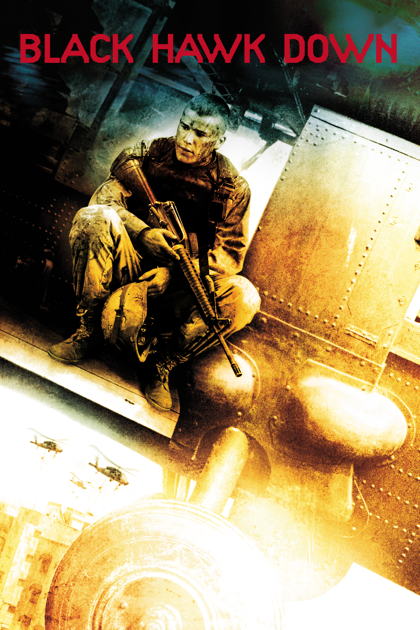
If you've ever seen the movie or read the book Black Hawk Down, you'll know about Somalia's civil war and political struggles of the early 1990s. I watched it when it first came out. I'm not super huge into war movies, mostly because I'm not a fan of war. I remember it being "based on a true story," which I found out later was up for debate. The main issue was that the movie told the story from an American point of view, so it tended to change other people's likenesses and distort some of the facts of what happened. It practically implied the Americans saved the day all by themselves, which wasn't exactly the case. In fact, even many of the American soldiers who were there dispute the way the film portrayed the events.


Somalia means "land of the Somalis," the majority ethnic group in this area. However, where the term Somali comes from exactly still remains uncertain. Some historical linguists think it might be related to the phrase sac maal, meaning "cattle herders," or it might possibly stem from Samaale, a legendary patriarch.


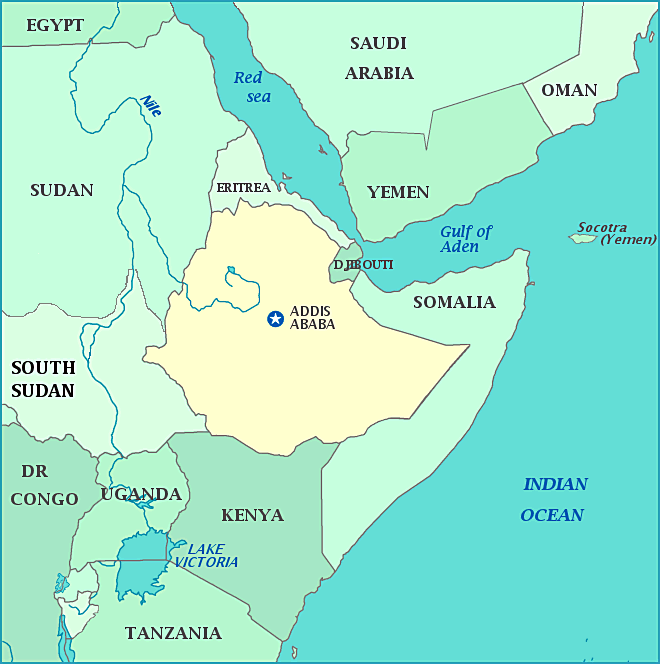
Somalia lies on the Horn of Africa, an area of northeastern corner of the African continent that sticks out into the Indian Ocean/Arabian Sea. It has the longest shoreline of any African country and shares a border with Djibouti to the north, Ethiopia to the west, and Kenya to the southwest. The southern half of the Ethiopian border is somewhat disputed. The country is divided into different regions, almost like states, but instead of fighting for autonomy with the country like a state or province would hold, they're fighting for autonomy outside of the country. Maybe I'm wrong on that. It’s a little confusing. In the north, you have the regions of Somaliland and Puntland. Below that you have Galmudug and a Central Regions State. In the southern regions, you have a South West State and Jubaland that borders with Kenya. Somalia, no surprise, is warm and hot most of the year, depending on your proximity to the equator. However, in some of the highland plains and mountainous areas, the temperature can drop below freezing in December. Depending on where you are, the climate is generally arid or semi-arid, with definite rainy and dry seasons. (Not many options here. As half-Scottish/half-German, I would probably just burst into flames.)

People have inhabited this area of Africa since the Paleolithic era, or roughly about 50,000 years ago. The ancient land of Punt was a thriving society that traded with Egypt, Greece, India, and other European and Asian peoples. They were really known for their gold, frankincense, spices, ivory, and myrrh. Islam was introduced to the area, and the Masjid al-Qiblatayn mosque is one of the oldest mosques in Africa. Through the 16th century, port cities in Somalia were among the most popular trade spots in Africa with long-established trade relationships between many countries and kingdoms. It was a hub for the most prized of goods, a connection between west and east. And although the areas in what is now known as Somalia have been included in many different sultanates and kingdoms, the most disrupting one was after the Berlin Conference of 1884, otherwise known as the Scramble for Africa. Certain European countries began to carve out bits of Africa for itself to colonize, and by "bits of Africa," I mean entire countries and regions. As expected, it didn't go over well. The Italians moved in and called it Italian Somaliland and brought in their fascist rule. However, the British invaded and took over several areas controlled by the fascist Italian government. After WWII, British kept control of what was British Somaliland and Italian Somaliland as one of their protectorates. As things started changing in Africa, the two protectorates joined together and were finally granted independence in 1960. There was quite a bit of turbulence and conflict during the early years as an independent country, which finally resulted in a civil war that began in 1991. The part of this civil war when American troops and others coordinated a raid trying to capture the military leader Mohamed Farrah Aidid was what the brunt of Black Hawk Down was based on. Although there has been a push for more stability in Somalia, there are still some issues with political stability and pirate attacks (even though it has really dropped in recent years) as they struggle to get out from being a “fragile state” country.
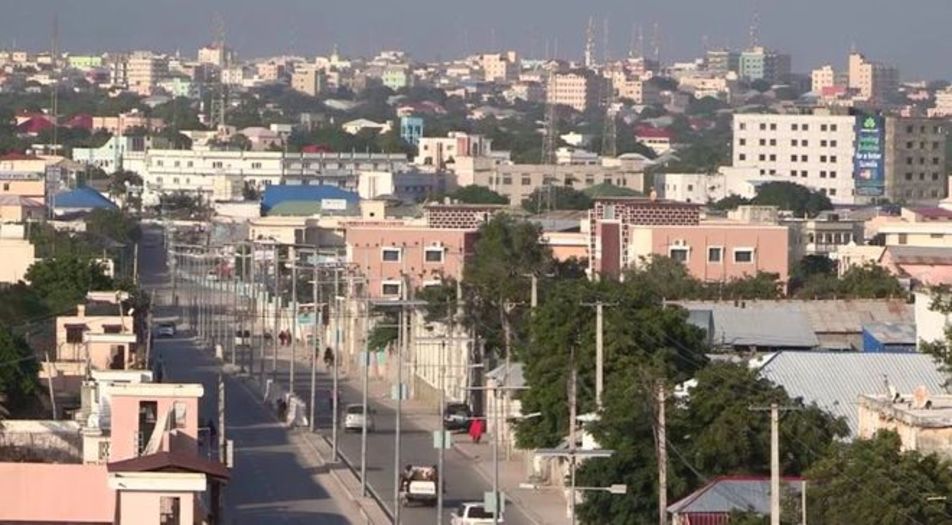

With nearly 2.4 million people, Mogadishu is the capital and largest city in Somalia. The name comes from Persian meaning “seat of the Shah.” However, the locals call it Xamar (or Hamar), meaning “tamarind.” (I thought calling a city by a fruit was weird until I remembered The Big Apple.) Although the city has taken quite a hit through its many conflicts, civil wars, and disturbances over the years, it remains the center of the government, commerce, higher education, transportation, media, and sports & culture. Famous residents include the supermodel (and widow of David Bowie) Iman and award-winning rapper K’naan.


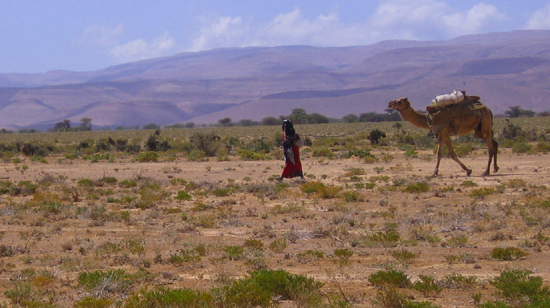
For many centuries, Somalian port cities served as major trading hubs between Europe, Africa, the Arab Peninsula, and Asia (mainly India). Fast-forward to today, their economy has shown growth and improvement even after years of civil war, which usually wrecks the economy. Their economic drivers mainly include agriculture (in particular, livestock), telecommunications, and remittances from abroad. Agriculture employs nearly 65% of the workforce, and an estimated 80% of Somalians still live nomadic lifestyles. The nomadic or semi-nomadic communities raise much of their goats, camels, cattle, and sheep. In the post-civil war era, there has been a shift from more government-run industries to more privately run ones. Factories like meat processing plants, canneries, and other manufacturing have been on the rise, especially in the urban areas. There have been some natural gas and oil deposits found as well as deposits of uranium.
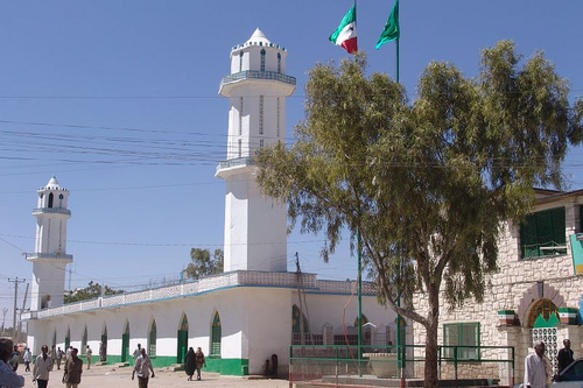

Nearly the entire country's popular adheres to Islam, with the majority following the Sunni branch. Sufism, the mystical side of Islam, is also practiced by many people in Somalia. Sharia law, where law is steeped in Islamic principals, is the basis of their legislation. Christianity makes up only a very small percentage here, and that's probably only because of the British and Italian influences. Likewise, followers of other religious ideologies like indigenous animism, Buddhism, Judaism, Hinduism, or just people with no religious affiliation also come in very small numbers here.


The two official languages of Somalia are Somali and Arabic. Somali, the native language of the Somali people, is a Cushitic language and related to other nearby languages like Afar, Oromo, and Saho. The Somali language has went through several scripts, but its current script is actually one that was developed for it and introduced in 1972. Arabic, however, became an official language from its history with the Arab countries through trade and a mutual religion. Two minority languages spoken in certain communities are Bravanese (a Swahili dialect of the Bravanese people) and Kibajuni (a Swahili dialect of the Bajuni people).

While there are certainly many disturbing facts concerning Somalia’s poverty, civil unrest, and lack of resources, it’s a country rich in history, traditions, and culture. I’m excited to take a closer look at this country that tends to only make the news when it’s something unsavory. So, let’s look at all the other things that’s going on.


Up next: art and literature

Sunday, June 22, 2014

ETHIOPIA: THE LAND AND THE PEOPLE


Growing up in the 1980s, Ethiopia was synonymous to extreme drought, famine, and poverty.  I can remember seeing this on the news as an elementary student and was really stunned by it. Nearly eight million people were affected by this, and some estimates say around one million people didn’t survive. 


The ancient Greek name for the area, Aithiops, appeared several times in Iliad and Odyssey, as well as the Bible and the Koran (but also mentioned by its other names).  It’s thought that the word is derived from the words for “I burn” and “face.” This place is also known by many of its ancient names: Kush, Nubia, Aksum (also spelled as Axom), Habesha, and Abyssinia.  (There’s an Ethiopian restaurant in Indianapolis called Abyssinia. I haven’t been there yet, but I definitely want to go after I’m done to see how close to –or how far from– authentic that I got.)


Ethiopia lies in the Horn of Africa, surrounded by Sudan, South Sudan, Kenya, Somalia, Djibouti, and Eritrea.  The land is highly diverse.  The Great Rift Valley runs through Ethiopia (and is visible from space), surrounded by lowlands, steppes, semi-desert areas, the highlands and mountains, as well as tropical forests.  Lake Tana is the source for the Blue Nile, which runs north and empties into the Mediterranean Sea.  Several species of animals are listed on the endangered and vulnerable animals list, such as the Ethiopian wolf, the African wild dog, African elephant, cheetah, and the spotted hyena.

Ethiopian wolf
Ethiopia is the cradle of human civilization.  The earliest known modern human remains have been found in the southwestern part of the country, now called the Omo remains (most famously, the remains named Lucy). Originally it was part of the D’mt lands mentioned in Ancient Egyptian times.  Sometime during the first century AD, the Aksumite Empire emerged in Ethiopia and Eritrea; some historians consider this one of the greatest empires of the world. Ethiopia was second only to Armenia in adapting Christianity as its official religion. 


Ethiopia went through a period between 1755-1855 called the “Age of Princes,” which isolated them from other countries. The emperors were merely puppets for the war lords. They later overtook the ruling party and changed the established language of Amharic to Afaan Oromo. It didn’t end until the British got involved and established Emperor Tewodros II in power; Ethiopia began to sit at the world table once again. Under the reign of Menelik II, Ethiopia made great strides to modernize the country. In fact, he was the first African to drive a car. He entered an agreement with Italy to recognize them as a sovereignty if they would be able to control an area in the north (now Eritrea). However, Italy expanded its border areas just prior to signing the papers, which led to fighting where the Ethiopians defeated the Italians. Haile Selassie I became emperor in 1930. They quickly entered the Italo-Abyssinian War, and although they defeated them again, they were still placed under Italian occupation. Although the Italians briefly occupied the country, Ethiopia remains one of two countries in the world who were never invaded and conquered (the other is Russia). The British stepped in again and recognized their full sovereignty.  Slavery was abolished in 1942, and they annexed Eritrea twenty years later.  From 1974-1991, Ethiopia quickly joined the Communist bloc of countries.  In May 1998 (the month and year I graduated from high school), they entered into a two-year-long war with Eritrea, severely crippling their economy.  And just in the past couple of years, Ethiopia has once again been hit with another extremely detrimental drought.

Haile Selassie I -- recipient of TIME magazine's "Person of the Year" 1935. 
The capital city of Addis Ababa (meaning “new flower” in Amharic) is the largest city in Ethiopia and is actually a chartered city (a city and a state).  The African Union is also based here.  Because of the city’s proximity to the equator, the temperatures remain fairly consistent. However, the strange thing is that the highest recorded temperature was 90ºF in 1996. (I think we hit that mark a couple days last week.) It’s also Africa’s highest city; most people are surprises at how cool and cold Addis Ababa can be.  The diverse, multilingual city has roughly 2.7 million people. Home to several universities and private colleges, it is also the site for the main government offices, several museums, a large public market, sports stadiums and racetracks.  Addis Ababa has the honor of housing the world’s largest pre-fab building, Shengo Hall (used for conventions and large meetings). There are several options for public transportation: taxis, buses, air, and train for getting to and around the city.


Even though years of drought has negatively impacted Ethiopia’s agricultural industry, their economy is still listed as one of the fastest-growing economies in the world. Ethiopia produces more coffee than any other country in Africa.  It’s believed that the coffee plant also originated in Ethiopia (the story goes that a shepherd watched his goats eat a coffee plant and became increasingly restless).  Starbucks is a huge partner with Ethiopian coffee producers. They’re also one of the largest producers of livestock, also exporting khat (a plant legal in the Horn of Africa, but considered a controlled substance in the US, Canada, and other countries), gold, leather, sesame seeds and is gearing up be a leading exporter of flowers and plants.


There may be nearly ninety languages spoken in Ethiopia.  The mostly widely spoken one is Oromo, followed by Amharic.  Because there are so many ethnic languages spoken across the country, the 1995 Constitution of Ethiopia established Amharic as the official working language of federal government and was the language of primary school education.  Many of the out-lying areas utilize other regional languages in their schools and businesses.  The Ge’ez script (sometimes called Ethiopic) is used in writing, the only country to have its own unique script (besides Eritrea who also uses it as well, but their cultures have similar ties). English is the most common foreign language taught in schools.


Ethiopia still has many Christian followers to this day, and it also has the oldest Muslim community in Africa as well.  And actually, there was a sizable Jewish population in Ethiopia as well up until the 1980s when most moved to Israel.  (It’s thought by some that these might be part of the Lost Tribes of Israel.)  The Ethiopian Orthodox Tewahedo Church is by far the largest Christian denomination.   While Rastafarianism got its start in Jamaica during the 1930s, Ethiopia remains its spiritual homeland. They basically worship Haile Selassie I as Jah (short for Jahweh). 


Ethiopia is famous for producing some of the world’s greatest marathon runners. It might have something to do with the fact that 70% of Africa’s mountains touch the lands here. Because of their proximity to the equator, there is very little change in when the sun rises and sets throughout the year.  In Ethiopia, they traditionally measure time by when the sun rises. So, instead of it being 7:00, they’ll call it 1:00.  I think that’s more confusing than when I had to convert military time into normal people’s time at Japanese train stations.  Both of those fall into the category of “Please Don’t Make Me Do Math.”  And because of their calendar differences, they are the only country on a 13-month calendar. (Again, with the math.) But luckily, what’s not super complicated are the recipes I found for next week that have me so hungry already – with the notable exception of trying to find teff flour.  It’ll be an adventure for sure. 

Up next: holidays and celebrations

Sunday, May 18, 2014

ERITREA: THE LAND AND THE PEOPLE


When my father-in-law passed away, one of the things I told my husband to make sure he picked up for me was this old elementary school geography textbook, last copyrighted in 1987, which was on his bookshelf in the living room.  Where he got it, I don’t know. I was in first grade that year.  The country of Eritrea was not yet a country at that time.  However, Yugoslavia and Czechoslovakia were still countries, Germany was still divided, Yemen was also still divided, Hong Kong was still a British territory, and Russia hadn’t broke up yet.  Myanmar was still Burma, Cambodia was still Kampuchea, and the DRC was still called Zaire. Not to mention other countries that had yet to be: South Sudan, East Timor, Montenegro, and Kosovo. Things have changed a lot in my lifetime. And back in my day, maps were easier to fill in for tests. I feel for my kids. 


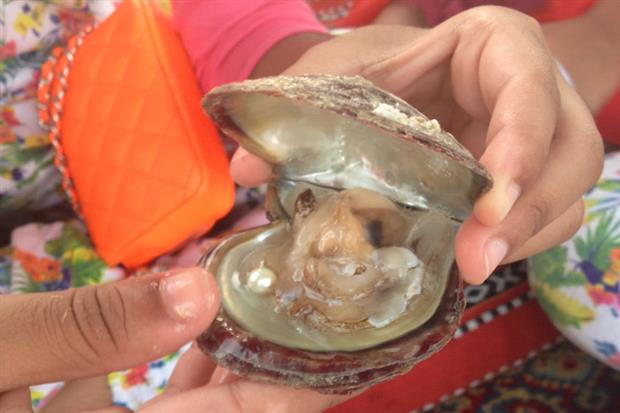
The name Eritrea is actually the Italian pronunciation of the Greek name for the area, Erythrá.  However, it’s pronounced Ertra in the local language of Tigrinya.  The country lies on the Horn of Africa, surrounded by Sudan, Ethiopia, Djibouti, and the Red Sea.  The western fertile lands are accompanied by the hot, arid eastern coastal plains, which spread to the slightly drier and cooler highlands in the South.  The Dahlak Archipelago, consisting of two large islands and 124 smaller ones in the Red Sea, are the sites of ample fishing, pearl diving, and eco-tourism. Pearl fisheries in the Red Sea have been famous since the Roman Empire was around.  (Only about four of these islands are inhabited.)  A few years ago, Eritrea announced that it was going to place all of the coastal regions and all 350 islands it controls under environmental protection, the first country to do so. 


The ancient Egyptians likely included Eritrea as part of the land called Punt. It was later called D’mt (sometimes written as Damot) and was known for their advances in agriculture and development of iron tools and weapons. Some scientists also believe this area is home to some of the oldest human bones ever found, the cradle of civilization. Throughout the centuries, the people living in what is now Eritrea have been invaded from all sides: southern Arabians (probably from Yemen), the Ottomans, the Portuguese from Goa (in India), the Italians, and the British. Toward the end of the 19th century, the Italians took control of the area (along with Ethiopia and part of Italian Somaliland) and renamed it Italian East Africa.  However, the British kicked the Italians out during the beginning of WWII and took over.  Eritrea was counted as one of Ethiopia’s provinces so that Ethiopia would have access to the Red Sea; however, tensions between the two countries grew until they entered into a 30-year war resulting in Eritrea gained its independence in 1991. Even today, tensions are still shaky between the two countries. 


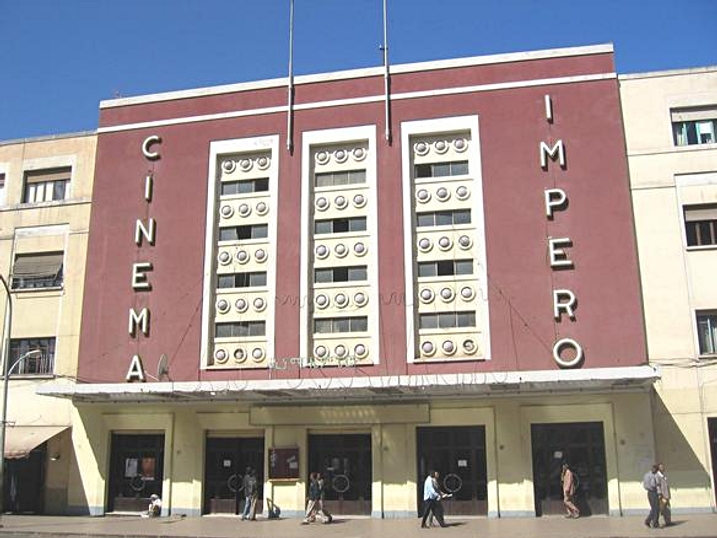
The capital of Asmara, also known as Asmera by the locals, lies in the middle of the country.  Originally a Tigrinya and Tigre settlement dating back to around 800BC, it’s become known for its Italian architecture left over and preserved from the colonial days, many utilizing the art deco style.  The city is modern in almost every sense: from contemporary public art and architecture to museums, sports arenas, shopping, higher education, and the arts. 


Recently, Eritrea’s economy has seen a significant jump, mostly based on its gold and silver mining industry as well as cement manufacturing. Years of war has taken its toll on the economy with a decline in able workers killed in action as well as inadequate and destroyed infrastructure from the resulting damages.  However, even during the war, they did their best at maintaining certain aspects of infrastructure: paving roads, bridge repair, etc.  They do have their own railway and airlines, but it’s not yet reliable; service is infrequent and sporadic. 


While technically there’s not actually an established official language, the local language most widely spoken and used as a de facto national language is Tigrinya.  Tigre and Dahlik are also used in certain areas of the country.  Arabic is also listed as a de facto national language because of its proximity and relationship to Arabian countries. English is used as a working language and taught in schools along with Italian, which many people can still speak and understand.

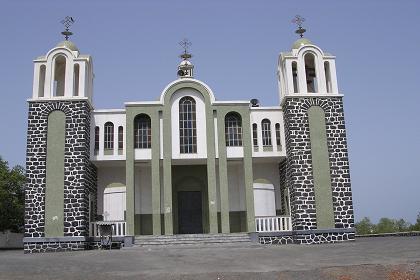
The vast majority of people in Eritrea follow Christianity, followed by Islam, but the percentage of followers vary.  Eritrea only allows people to adhere to specific sects of these religions.  For Christianity, you must be part of the follow: Eritrean Orthodox Tewahedo Church, Catholicism, and the Evangelical Lutheran Church; and for Islam, it must be Sunni.  You have to register for any other denomination. If your sect is deemed too radical (Jehovah’s Witnesses, Bahá’í, Seventh Day Adventist, and many others), then you cannot practice freely. If you are caught practicing an unregistered religion in private, you can be imprisoned for an indefinite amount of time. 


Along with this idea, media freedom places Eritrea at the bottom of the list in comparison with all other countries in the world. It’s the only African country to have no privately-owned news media – whether it be in print, radio, or television.  There are absolutely no foreign journalists living in the capital since the ban of independent news agencies in 2001. The only news comes from the single-party state-owned news agency, only telling you what they deem is important. 


One interesting (yet sad) thing I read was that during the Ptolemaic times of ancient Egypt, they used to keep hundreds upon hundreds of elephants in Eritrea in reserve for times of war.  However, during the latter half of the 20th century, no one saw a single elephant in the wild.  Many think they were either killed from the Ethiopian-Eritrean war or fled elsewhere because of the war.  (A herd of about thirty were spotted in 2001, and it’s believed that the elephant population may be around a hundred now.)  Another thing I read is that the port city of Massawa literally means “shout really loudly.” I’m always interested in interesting city names and their literal translations.  (I just found out recentlly that Brazil has a city named Não-Me-Toque, or Don’t Touch Me.)


I’ve found my recipes – the food sounds spicily amazing. I know I’m going to love it.  My family, on the other hand, will probably be plotting to bury me alive.  There’s a lot that I don’t know about Eritrea, but I’m really excited to find out more. I have a feeling that there are some really cool things here. 


Up next: holidays and celebrations

Saturday, November 30, 2013

DJIBOUTI: THE LAND AND THE PEOPLE


Ah, Djibouti. It’s long been the “butt” of many jokes for English speakers.  These jokes were usually placed at the  “bottom” of my joke list, though. However, I’m going to put this “behind” me, get it out of my system, and move on; I will do my best to look forward and not to the “rear.” 


Djibouti is one of four countries that make up the Horn of Africa, along with Somalia, Eritrea, and Ethiopia. The country itself is fairly small, slightly smaller than the US state of Massachusetts.  Djibouti lies on the Gulf of Aden and the southern entrance to the Red Sea. There are eight mountain ranges, the highest being Mousa Ali (which includes a volcano), and the entire country is covered by desert.  The climate is hot in the winter and hotter in the summer. The name “Djibouti” is named after the capital city of the same name. Although linguists aren’t exactly sure, but there is reason to believe Djibouti may be related to the Afar word gabouti, which is a doormat made of palm fibers, or possibly stemmed from “Land of Tehuti,” the Egyptian god of the moon.


Some historians believe Djibouti (and surrounding areas) is the place the ancient Egyptians called Punt (or Puntland), who was a major trading partner with Egypt at that time. (I wonder if people from Punt were called Punters. – Sorry, a little football joke.) This area was mostly inhabited with the Somali and Afar peoples.  The Ifat Sultinate is one of the major ancient kingdoms to reign in this region and of course there were several others afterwards.  In the mid-to-late 1800s, the French came in and set up their French administration in the capital city, later taking over and renaming the country French Somaliland (rather unoriginal, considering there was an Italian Somaliland and British Somaliland as well.) Several decades later in 1967, it was renamed again to French Territory of the Afars and Issas.  (Slightly wordy, it was at least more reflective of the original peoples). The people held a couple of referendums regarding their independence, but finally in 1977, Djibouti became its own country.  Although there was some political conflict that led to fighting starting in the early part of the 1990s, it had generally been resolved in the 2000s in an agreement of power.  Djibouti does hold the only US military base in sub-Saharan Africa, which is a key base in the assistance in the global watch on terrorism.    


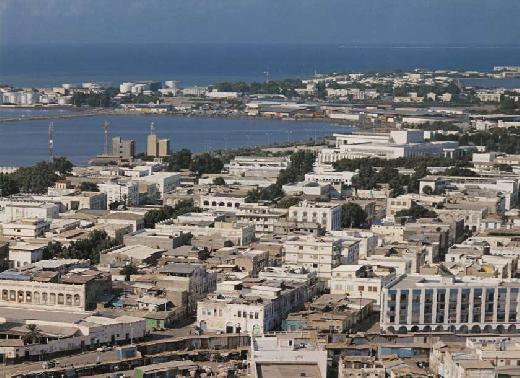
The capital city of Djibouti City has about 600,000 people – roughly the size of Portland, Oregon.  This seaport is known for its sand beaches, which are major tourist spots.  The city is also known its many markets, many of which are open-air markets selling everything from fabrics, woven goods, and jewelry to fresh meats and vegetables and grains. Much of the culture and architecture is a mix of Somali, Arab, and French styles and traditions.  Soccer is pretty popular, and they have a stadium that holds many international sporting events. Djibouti City is also a financial hub for many up-and-coming businesses in all fields.


By far, Djibouti’s largest trade partners are neighboring Ethiopia and Somalia. Djibouti also refines about four million tons of salt from the Lake Assal region annually – which also happens to be the lowest point in the entire continent of Africa.  With the help of Chinese investment, they are looking to expand the salt industry.  They do have problems with high unemployment; some estimates put it around 50%.  Because of persistent problems with drought causing an unfavorable environment for growing, most of their food is imported from other countries.  This also causes the country to have a lot of long-term debt they have to deal with.


While Arabic and French are official languages, most people also speak Somali or Afar as a first language.  Different dialects of Arabic are also found spoken in Djibouti, mostly in immigrant populations, as well as other minority languages.

The vast majority of Djiboutians practice Islam – about 94% of the population. In fact, the Constitution of Djibouti specifically lists Islam as the state religion, with Sunni Muslims making up the largest group and non-denominational Muslims being the second.  The remaining 6% of the population are Christian – there is a small Catholic population overseen by the Diocese of Djibouti.


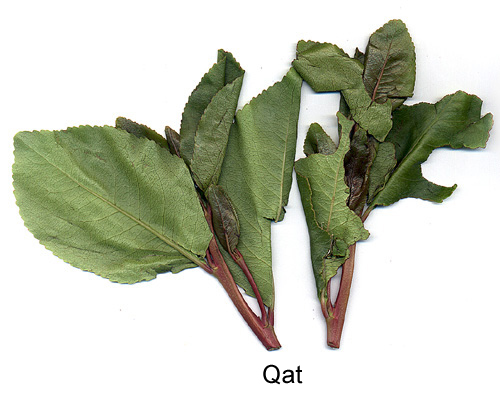
 I read that one of the common “pastimes” in Djibouti is qat chewing.  Qat (also spelled khat) is a medicinal plant, when chewed gives narcotic effects.  In fact, it’s banned in a lot of European countries (weirdly enough, not the UK).  It’s also banned in the US, but from what I could gather, it will be seized but not for the reasons you might think: it’s not seized as an illegal substance, but because “it’s labeling fails to bear adequate directions for use” according to the Federal Food, Drug, and Cosmetic Act. Sounds weird… So, while I may not be getting so local as to chew some qat, but I am looking forward to eating some Djiboutian food and learning more about a country that up until now has long just been relegated to geographical jokes.

 Up next: holidays and celebrations