Showing posts with label basket weaving. Show all posts

Wednesday, December 13, 2017

RWANDA: ART AND LITERATURE


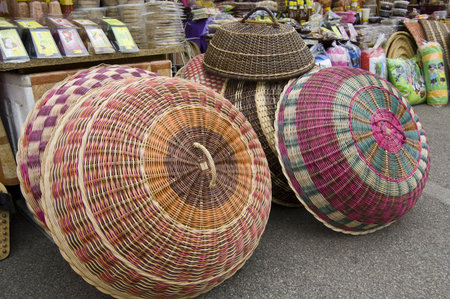
Traditional arts mostly consist of crafts, and especially functional ones. Many of their arts are similar to other cultures in this area. Weaving is one of the key crafts and is seen in woven baskets and bowls. The weavers will often weave in designs into whatever it is they’re creating using different colored fibers. 

 
Pottery and wood carving are also common and used in a number of ways from utensils to tools. They’re well known for their carvings of figurines. These arts, which continue today, give a connection with their past.


One strange art is a cow dung art called imigongo. The dung is mixed with different kinds of soils and natural materials to give it different colors and then painted into geometric shapes. Typically, the colors are black, grey, white, and red, although sometimes you’ll see a yellowish-beige color every now and then. 


Most of the literature of Rwanda is written in either Kinyarwanda or in French. For much of their history, their stories were told orally. And of the works that were written down, it was divided into two categories: formal and non-formal. Formal works included official documents, religious texts, etc. Non-formal works were basically popular stories.


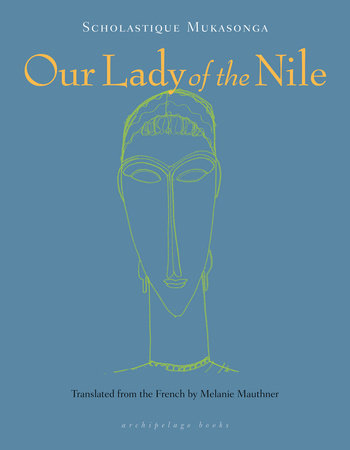
A few of the major authors from Rwanda include Alexis Kagame (a historian who also covered poetry and mythology), Benjamin Sehene (novelist, mostly about the Genocide), Scholastique Mukasonga (famous for her novel Our Lady of the Nile), and Saverio Naigiki (known for his autobiography and his novel L’Optimiste).

Up next: music and dance

Wednesday, June 14, 2017

PALAU: ART AND LITERATURE


Palau’s culture is a very important part of their society. Although many of its cities and areas have modernized itself, they never forgot what it means to be Palauan. And like much of the island and coastal societies, the sea is integrated into pretty much everything they create when it comes to their traditional arts. 

 
Many of these arts were centered around functionality. A style of weaving using the leaves of plants such as palm fronds and pandanus was used to create items such as baskets, mats, and bags that they used in everyday life.


Jewelry is not only worn as decoration or because it is pretty, it served a purpose. Many styles of jewelry also indicates a social status in the form of necklaces that serves as money. Some of the materials they use include seashells, turtle shells, wood, and other natural materials.


Although not quite as used today, canoe building was once an important part of Palauan society. There were a couple different types of canoes depending on its purpose, whether it was for war or to transport people from island to island. Although many were constructed plainly, there were some that had designs painted on them.


One type of woodcarving that is popular in Palau is the storyboard carving. These are usually found on the local meetinghouse, otherwise known as the bai. These storyboards tell the myths, folklore, and history of a particular place. In fact, the entire bai is typically painted and covered in decorative designs and storyboards. Many of these bais have fell into disrepair, but some have been preserved quite well. 


That pretty much transitions me to Palauan literature. When it comes to the literary traditions in Palau, most of the works from this area are written in either Palauan or in English.  In the early days, most stories have been passed down from generation to generally through word of mouth. In many of the villages, after all of the work has been done for the day, the elders would tell folklore stories as entertainment. The storyboards mentioned earlier illustrate these stories.


Poetry has probably been the strongest literary style developed in Palau. However, there aren’t that many examples of published works by Palauan authors for either poetry or prose. One literary blogger whose blog I like reading did manage to get her hands on one book by the Canadian author Susan Kloulechad. Her husband is from Palau, and they lived there for 20 years. However, there are several tourist guides, and GoodReads lists several books that take place in Palau.

Up next: music and dance

Wednesday, April 20, 2016

MALAYSIA: ART AND LITERATURE


While Malaysian art is similar to the art of other nearby countries and cultures, it has its own distinct styles. And even within Malaysia, each region has its own distinct variations. In the rural areas, handcrafted woven baskets are common. Because many people practice Islam, and it’s forbidden to depict prophets and deities in Islam, most of the baskets and tapestries are decorated with colorful patterns and geometric shapes rather than people. It’s also common to find elements of nature like flowers and grasses. 

 
Malaysia is known for its textiles, namely in the practice of songket, pua kumbu, tekat, and other traditional patterned batik fabric. Each style is a variety of dying threads and weaving them. For example, batik is generally based on dying techniques with different strands of thread, and songket uses various metallic threads. Jewelry is also popular and often uses gold or silver, adorned with gems, beads, or pieces of leather, depending on the region. 


Clay pottery is an art dating back to antiquity. The shape of each piece depends on its purpose. Woodcarving is also an old art in Malaysia and one surrounded in superstitions and rituals. Although some areas of eastern Malaysia are known for wooden ceremonial masks, woodcarving is far more used as ornamentation. Woodcarvers spend years learning to have a special bond with the wood. The buyer also has to have a special bond with the wood as well, so there are several rituals that carvers and buyers go through just to get started on a project. It’s like dating or something. 


Because Malaysia is so multicultural, you can also see its diversity come out through its arts and especially its architecture. Chinese and European architectural styles certainly had its effects on its buildings, and there are many Indonesian styles utilized for the purposes of simply being a tropical country. One example of this is the houses on stilts with large windows that can be opened and tall roofs to allow for air flow. Indian and Middle Eastern influences are seen in colorful tiles and large courtyards. 


Literature in Malaysia is mainly written in the Malay language. Before written language was introduced in the form of Jawi (the Arabic-based script used for Malay), stories were told orally. But afterwards, they began to write down these stories that were mainly based on Hindu and Buddhist moral stories. 


Poetry is an art practiced in Malaysia. There are three main types of Malay poetry: mantera (like a mantra), the syair (4-line stanzas rhymed a-a-a-a), and the pantun (quatrains with 8-12 syllable lines).
 
Sejarah Melayu
The earliest known works include Sejarah Melayu and Hikaya Rajit Pasai, both written during the 15th century. Up until the 19th and 20th centuries, literary topics tended to involve religion or stories from the courts. The 20th century brought about some significant changes in Malaysian literature. The government classified Malaysian literature into three categories: literature written by Malays in the Malay language (called “national literature”), literature written by Malays but in Chinese, Tamil or another regional language of the country (called “regional literature”), and literature written in any other language (called “sectional literature”). 

A. Samad Said, considred Malaysia's national poet
The latter part of the 20th century brought about a change in topics. Race, the economic state, and everyday life were becoming an important part of Malaysian plot lines. Female authors were starting to emerge as well as the expansion of literature in other languages like Chinese and English. Some names of writers to look for if you’re interested are A. Samad Said, Abdullah Munshi, Abdul Rahim Kajai, Harun Aminurrashid, Abdullah Sidek, Ishak Haji Muhammad, Usman Awang, Poesy Liang, Khoo Kheng-Hor, Khasnor Johan, Huzir Sulaiman, Fatimah Busu, Abdullah bin Abdul Kadir, Ee Tiang Hong, and Abdullah Hussain.

Up next: music and dance

Wednesday, September 2, 2015

KENYA: ART AND LITERATURE


Craftwork is quite popular around Kenya, and it’s important to note that every group of people have their own skills and artistic styles. Much of their art work may be tied to their region, their ancestry, and their religion. Although there are many areas hit hard by poverty, there is a sense of pride in their craft work. While originally, many of these crafts were designed as home wares, and certainly some of these objects still decorate Kenyan homes, but today many of the handicrafts and sculptures are made with the tourists in mind. Wood carvings are popular, and many of the most common items are of animals or people (especially the iconic African figures, such as a woman carrying a basket on her head).  Besides wood carvings, there are also soap stone carvings. Soap stone is a material that is often mined in the western regions of Kenya and has to be wet sanded and polished and dyed. 


Other handicraft objects include jewelry, especially brightly colored beadwork. They also use a lot of cowry shells, which has a special meaning in many of the Kenyan cultures. Maasai spears and shields are also popular items tourists buy, although a little more difficult to take home.


One art lies in the tradition of making drums. Drumming and percussion instruments are an important part of Kenyan society, and with this there are many different types of drums that are often decorated with geometric designs on the outside or with tassels and rattles. 


Basket weaving and gourd carving are not only beautiful, but it’s also functional. Baskets are various sizes and shapes are used to store food while gourds are mostly used for storing liquids. 


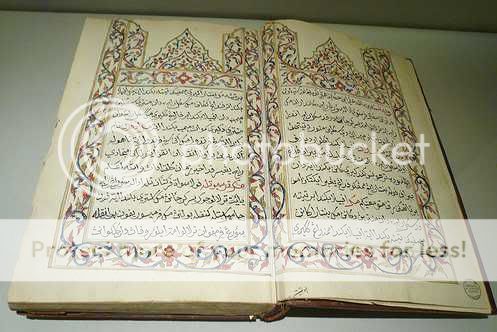
Kenyan literature is primarily written in either English or Swahili, the two official languages of the country, although you may also find books written in other local languages. Swahili was actually written in the Arabic script during its early days. The language was spread along the coastal areas by fishermen, and as trade with Oman and other Arabian countries ventured into the area, Swahili adopted many Arabic words into its own language. The Story of Tambuka (Utendi wa Tambuka) is one of the earliest examples of poetry from this area, written in 1728, and is an example of Swahili written with the Arabic script. As the Europeans arrived later, the language script was changed over to Roman letters as it is today. 


Swahili literature generally fell into three styles: poetry, novels, and drama. Because of the ties between Swahili and Arabic, there are a few similarities between the two styles of poetry, but they are essentially as different as the languages are. What started out as oral narratives soon became the early forms of novels, but these were generally in the form of histories and other nonfiction works. However, written fiction in Swahili didn’t really make its entrance until the 1940s. 


There are many Kenyan writers who have emerged in the literary field. When Ngugi wa Thiong’o wrote his novel Weep Not, Child, it was the first English-language novel published by an East African writer. Although he writes in English, he also writes in his native language of Kikuyu. Thiong’o is also known for his novels The River Between (which is required reading for schools) and A Grain of Wheat. 


Perhaps because of its exoticness or its picturesque view of what non-Africans view as being “African,” Kenya has long been the setting of many other books by authors from abroad. Quite possibly, the most well known of these would be Out of Africa by the Danish author Isak Dinesen (writing under the nom de plume Karen Blixen). If you want to read other books set in Kenya, you might also want to check out Coming to Birth by Margorie Oludhe Macgoye, The Flame Trees of Thika by Elspeth Huxley, and West With the Night by Beryl Markham.

Up next:  music and dance

Wednesday, July 9, 2014

FIJI: ART AND LITERATURE


The earliest form of art found in Fiji is pottery.  Men typically excavate the clay used for pottery, but for the most part, the women are almost solely the potters. They will often have to work the clay by adding sand, kneading it, and letting it dry to get it to just the right texture needed to form pottery.  Unlike other cultures, Fijians do not glaze their work; instead they take certain plants and rub it onto the finished product to give it a varnished look as well as a waterproof quality.

By the time a girl growing up in the village reaches the age of ten, she will be taught mat and basket weaving. Palm fronds or pandanus leaves are usually used for this because of their abundance on the island. These mats are vital to every home: it’s used as floor coverings, bedding mats, fans, and baskets.  In fact, they are so important to the home, the mat’s quality and quantity are included in the “wealth” of a family and often given as gifts at weddings, funerals, births, and other special events.

A type of cloth made from stripped bark from trees is known as masi or tapa. Mostly from mulberry trees, women will take this bark, strip it, soak it, beat it to a pulp (literally), and roll it out, like paper.  This fabric is then used for many purposes, such as ceremonial wear, wall decorations, wall decorations, tablemats, handbags, etc.

Woodcarving is also an important art in Fijian history, albeit a declining one. One of the most important pieces of woodcarving in Fijian society was the war club. It was a highly decorated instrument that not only doubled as a weapon, but as a symbol of authority and used in ceremonial dances. Today, yaqona bowls (also called tanoa) are some of the most commonly carved works of art.

In many countries that were under European rule, they were also introduced to art in a modern, European sense. And many of these countries also go through a period of revival of the traditional arts, especially when they are granted independence. It wasn’t so with Fiji. The main reason being that they never stopped pursuing their traditional art forms. And while there may be Fijian painters and sculptor actively working and creating European-style art, traditional arts still won out over European-influenced styles and techniques overall.

Fijian literature didn’t get started until just before they separated from Britain. The University of the South Pacific wasn’t founded until 1968, when Fijians had the opportunity to learn creative writing and literature courses were available. Before this, Fijian literature mostly only existed as stories passed down by word of mouth. Soon after independence, publishing companies and literary magazines popped up around the islands. Literary societies started promoting not only their own writing but also literature of the Pacific Islanders in general. Much of Fijian literature is either written in English, Fijian, or in Hindi (and some poets even mix languages).

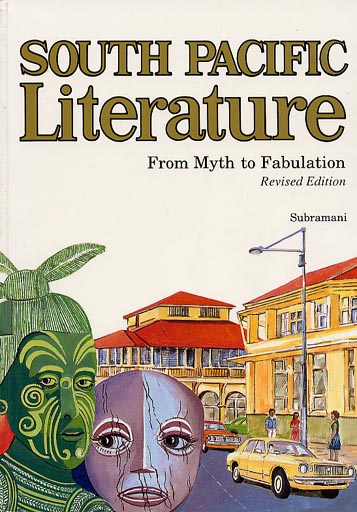
Some of the well-known authors from Fiji include Raymond Pillai (short stories), Subramani (short stories, novels), Pio Manoa (poetry), Vilsoni Hereniko (playwright), Satendra Nandan (poetry, novels), Sudesh Mishra (poetry), Larry Thomas (playwright, director), and Joseph Veramo (novels, short stories).
Up next: music and dance