Showing posts with label bauxite mining. Show all posts

Monday, March 18, 2019

SURINAME: THE LAND AND THE PEOPLE

If you’ve ever looked at a map of South America, there are three small countries in the top right corner. The one on the left is Guyana, which I covered already. The one on the right is French Guiana, which is one of France’s overseas territories. And the one in the middle is Suriname. While most of South America speaks Spanish or Portuguese, these three are the ones that are outliers. Guyana’s official language is English, French Guiana is French, and Suriname is Dutch.

 
Its name is most likely based on the name of the indigenous people, Surinen. When the British arrived, they set up settlement on the Suriname River, except they spelled it Surinam. However, the Dutch changed the English spelling by adding the final “e” to the name. Even at that, the version without the “e” still exists in certain instances and names. In Dutch, however, it’s pronounced something like “soo-ri-NAH-muh.”
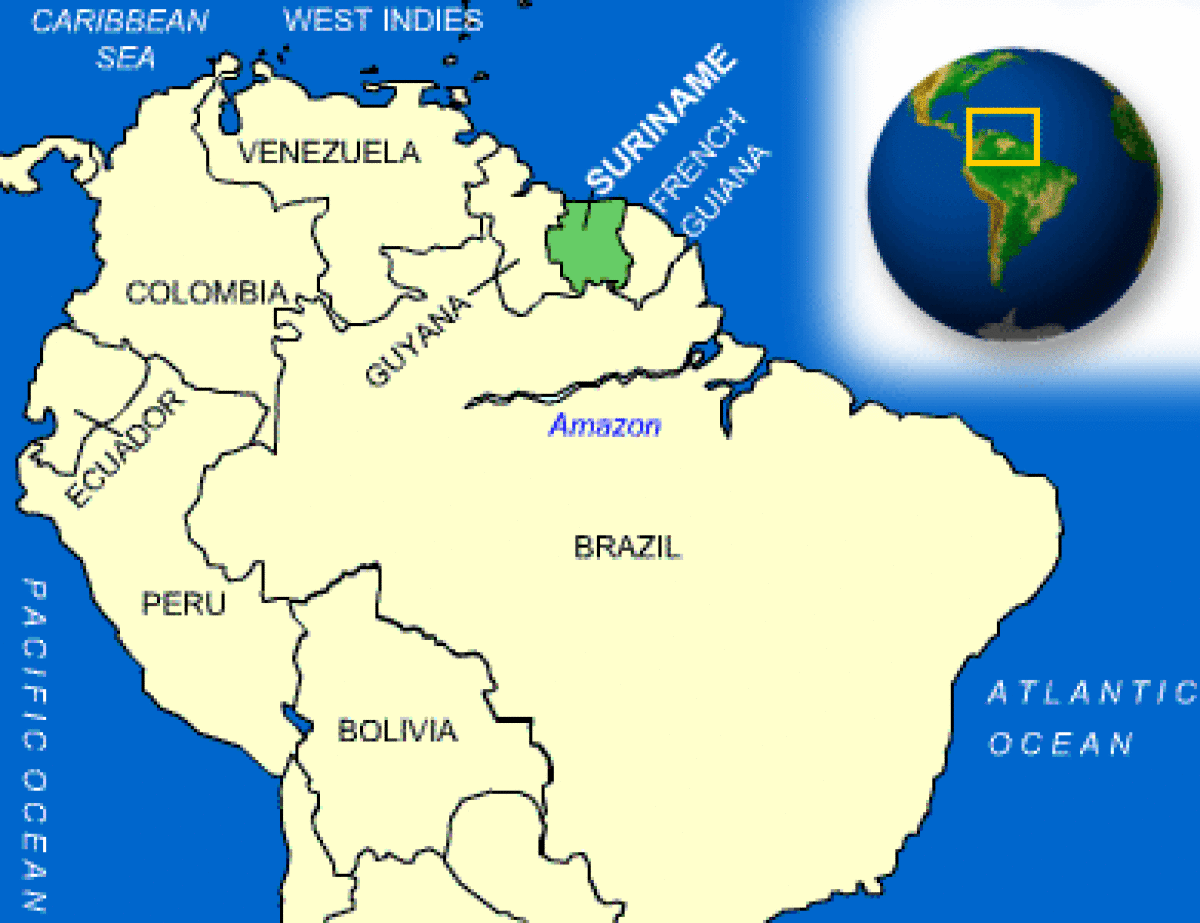

As I mentioned, Suriname is located on the northeastern coast of South America. It’s bordered by French Guiana to the east, Brazil to the south, and Guyana to the west. Its coast touches the Atlantic Ocean. Culturally, it’s considered part of the Caribbean community and one of the few mainland countries to be part of it. The land is fairly diverse, with low mountains, savannahs, and rainforests. Because the country lies only a few degrees north of the equator, it has a tropical climate and is quite humid (there are probably no good hair days here.)
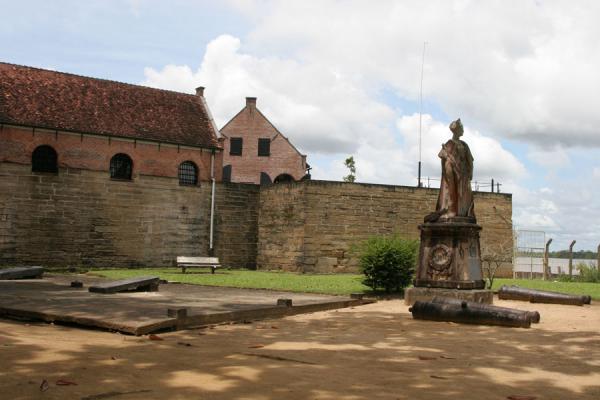
part of Fort Zeelandia in Paramaribo
The Arawak and Carib tribes were the first inhabitants in Suriname, first arriving around 3000 BC. During the 16th century, the Europeans really started moving into Caribbean, doing the usual things: exploring, exploiting, stuff like that. The British, Spanish, and French were the first to really sweep through the Caribbean, but the British and Dutch were the main ones creating communities in this area where Suriname is. And as expected, they butt heads over who controls what in the Western Hemisphere, eventually leading to a treaty granting the English access to what’s now New York City, and the Dutch access to what’s now Suriname (that’s one helluva deal). By the late 1600s, the Dutch started bringing in African slaves to work their plantations. The thick rainforests helped make it easier for many of these African slaves to escape, and with the help of other native tribes, they were able to establish their own tribes. Called Maroons in English, these Maroons often raided the plantations to recruit others, which led to quite a bit of hostility between the two groups. Slavery was abolished at the same time it was in the US, but the emancipation process took about a decade to fully put in place since their economy was largely based on their mega plantations. To help with this shortage of exploitable labor, the Dutch brought in large numbers of laborers from India and Indonesia to take up some of the slack (you know, other brown people, but this time they didn’t “own” them). During WWII, the US actually set up camp in Suriname to protect the bauxite mines (one of the main sources for aluminum). During the middle part of the 20th century, Suriname began talks of independence, which was finally granted in 1975. Their early years weren’t easy; by 1980, they underwent a military coup with several counter-coups that followed. Even today, there is still corruption and scandals attached to leading officials, but you know, what’s new.  


The capital of Suriname is Paramaribo, a coastal city of roughly 250,000 people. Nearly 90% of the people live in this city or along the coast. The city lies at the mouth of the Suriname River and is named for the Paramaribo tribe who lived there originally. It stems from the Tupi-Guarani words for “large river” and “inhabitants.” The city is fairly diverse, having significant populations of Asian (Indonesian, Chinese, Indian), European (Dutch, Portuguese), African/Maroons, Lebanese, mixed race, Brazilians, and Guyanese. The historical part of the inner city is listed as a UNESCO World Heritage site.


Although agriculture is one of their higher economic drivers (mainly in rice, shrimp, and bananas), bauxite mining remains as one of their more important sources of revenue. Tourism and especially ecotourism are high, with most of the tourists coming from the Netherlands. They also have some gold and oil as well. However, with the instability of the government, the stability of their economy has been affected because of this too. Although they saw some steady growth during the 1990s, it’s kind of slowed down in the past 20 years or so.


Roughly half the people are Christians in Suriname, mainly Roman Catholic, Pentecostal, Moravian and other Protestant denominations. Because of the large numbers of Indian immigrants, Hinduism is also a significant religion in Suriname, along with a large number of the Indonesian and Indian populations who practice Islam. A few other religions are practiced (like various Afro-American beliefs) and a few people who don’t adhere to anything.


Over 60% of the people speak Dutch, which is the official language, and the other 40% of the people speak it as a second language. Sranan Tongo is an English-based creole used as a vernacular language, spoken mainly by the Creole population and generally used in the streets. Caribbean Hindustani is also used by people who were originally from India and surrounding areas, which is actually a dialect of Bhojpuri. Several of the Amerindian languages are still used along with English, Chinese, and Portuguese.


Suriname has a low population compared with other countries in South America, and part of that is because nearly 90% of the country is covered in rainforest. It’s also known for its flora and fauna: it has more than 1000 species of trees, and it’s known for having large numbers of orchids, water lilies, bougainvillea, hibiscus, and oleanders. It’s also known for the tapir, the largest mammal in Suriname and one of the weirdest looking animals period. But what’s not weird is their food, and I’m super excited to make some next week.

Up next: art and literature

Sunday, July 5, 2015

JAMAICA: THE LAND AND THE PEOPLE


When I was first dating my native-Chicagoan husband, he couldn’t believe I had never had jerk chicken before. It quickly became one of my favorite foods. And the south side of Chicago has some of the best places to get jerk chicken. They also served with it this dense white bread that my husband loves so much (the jerk chicken places here in Indy that we’ve tried use a cheaper wheat or white bread, and it’s just not the same—the crumb is too loose). When I told him we were on Jamaica now, he begged me to find that recipe, and after some research, I found the recipe for hard dough bread (also spelled with a variety of spellings). When we got married almost 11 years ago, we wanted to take our honeymoon to Jamaica, but life got in the way, and we were never able to take a honeymoon anywhere. And now we have two kids. Maybe one of these days, we’ll all go.

 
The word Jamaica comes from its indigenous people, the Taíno people, meaning “Land of Wood and Water” or “Land of Springs.” Jamaicans themselves often refer to their island as the “Rock,” and there are many derivatives from this. [Note: this made me think of the popular drink throughout Latin America called jamaica (or flor de jamaica), pronounced ha-MY-kah, made from hibiscus flowers. But as far as I can tell, the name comes the flower being imported into Jamaica first and then Mexico. However, in the country of Jamaica, it’s called sorrel; it’s also called bissap among other names in West Africa.]


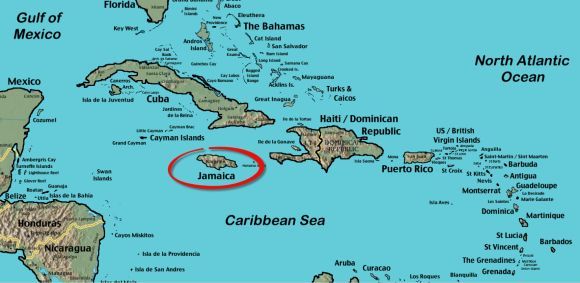
Jamaica is an island nation in the Caribbean. Cuba is to the north, Haiti to the east, the Cayman Islands to the west, and Panama and Colombia is directly south if you travel a ways across the Caribbean.


Jamaica has a tropical climate and is subject to Atlantic hurricanes; it’s been devastated many times during its history. The island’s tropical climate allows for a variety of plants and animals that thrive in this climate to make Jamaica their home. Many kinds of fish, birds, insects, lizards, and other animals are found here. The good thing is that of the eight types of snakes that are found on the island, none are poisonous (I personally would treat all snakes as poisonous and ready to eat me whole, despite its size. But that’s just me.). On the other hand, Jamaica is home to the Giant Swallowtail, the world’s second-largest butterfly. 


Like other islands in this area, the Arawak and Taíno peoples were the first inhabitants of Jamaica. Christopher Columbus landed on the island of Jamaica in 1494 and claimed it in the name of Spain. The Spanish introduced many crops to the area, such as sugarcane, a variety of citrus trees, bananas, and others. By the mid-1600s, the British had taken control and quickly brought in slaves from Africa to work these fields and within 20 years time, blacks had outnumbered the white population. During this time, Jews who were banished from their home areas in Europe saw Jamaica as a refuge and a new start and began pouring into the country. There were also a number of free blacks on the island as well, many escaping the US (like they did with the Bahamas). After the British finally abolished slavery during the early 1800s, they began shipping in Indian and Chinese workers as indentured servants to work the fields. Although the British did manage to make some changes in their labor laws (i.e. making it illegal to beat the workers, etc.), this system of labor more or less lasted until the middle of the 20th century. There were still several revolts throughout the 19th and 20th centuries, and the island remained under British control. By 1962, their efforts paid off, and Jamaica became its own country. However, it still pays homage to the queen (like Canada). With their manufacturing industry, their bauxite and aluminum industries along with tourism, Jamaica began their independence with a strong economy. However, economic changes for the worse throughout the 1970s and 1980s caused a tension that forced the country to rely on more foreign investment and support.


The capital city, Kingston, is the island’s largest city and located on the southeastern shores of the island. This city is the largest city south of the United State where the majority of its people speak English. The harbor this city is situated on, Kingston Harbour, is the seventh-largest harbor in the world. This large harbor is probably why it was chosen as the perfect location for a capital city. The city is home to about 940,000 people and is the center of government, business, education, sports and has a strong arts and culinary side to their culture. The British set up many botanical gardens across the island, and this city hosts several that are still standing.


One of the largest economic drivers in Jamaica is none other than tourism. Mining is also important with bauxite and alumina mining forming a significant portion of this industry. Along with mining, various kinds of manufacturing also employ many people in businesses such as glass production, construction, beverage processing, printing, publishing, and software and data (and other technical) processing. However, Jamaica is also a haven for music production, insurance underwriting and financial services, and educational services in the Caribbean. The island is also widely known for its agricultural products such as sugar, coffee, rum, yams, and bananas.


Because of the longstanding presence of the British on this island, Christianity remains a majority religion on this island, and this includes many different denominations, mostly Protestant. And the interesting thing is that Jamaica has more “churches” per square mile than any other country in the world. (Chicago’s south side is probably number two—if it were its own country, that is.) Jamaica is also mostly identified with the Rastafari movement, which got its start in Ethiopia and is known for its practices of dredlocks and smoking marajuana. But because there were many Indian and Chinese workers brought here in the past, there are also many followers of Hinduism, Buddhism, and Bahá’í as well as other local indigenous belief systems. 


English is the official language of Jamaica. However, most locals speak a type of Creole called Jamaican Patois. This patois uses many words from English but has also incorporated many words from African languages and Taíno (and other indigenous) languages. Many Jamaican Patois words have spread across the word with the global popularity of reggae music. 


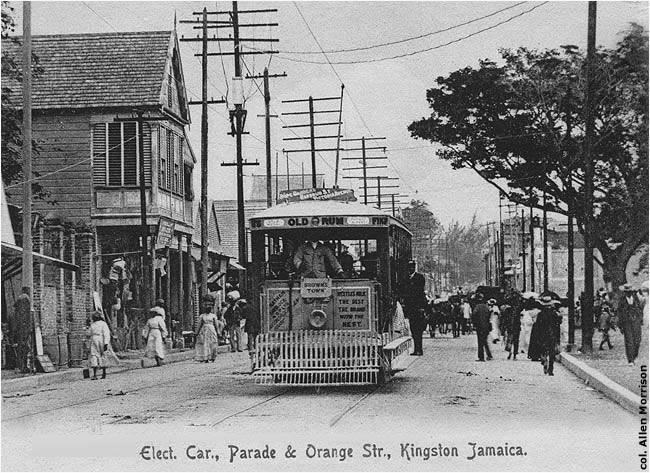
But for this small-ish island in the Caribbean, Jamaica has a lot to brag about. Jamaica was the first country to build a railroad in the Western Hemisphere. Not only did they build it, they built it 18 years before the US did. And this country first established a postal code in 1688! Jamaica was also the first country to commercially produce rum. (And I sincerely thank you for it.) Jamaica is known for its sports stars and has won numerous medals in world competitions. Among its top performs include Sherone Simpson, Asafa Powell, and Usain Bolt. The Jamaican bobsleigh team made history and was commemorated in the 1993 movie Cool Runnings. Of all the national flags in the world, Jamaica’s flag is the only one that doesn’t share any colors with the US flag. (Yes, I had to look at some flags just to make sure.) But one thing that remains true is this: this country has a lot to offer, like good food and good music for starters.

Up next: art and literature

Sunday, December 21, 2014

GUINEA: THE LAND AND THE PEOPLE

Guinea has recently made the news in a big way. It was one of three countries (along with Sierra Leone and Liberia) that were hit hard with the Ebola epidemic this year.  Although the situation seems to be fluctuating, the CDC in the US still lists these three countries under a Code Red Travel Advisory (as of last month). This outbreak actually started in Guinea and spread to the neighboring countries. So far, it’s estimated over 1500 people have died in Guinea alone from this horrible disease.


The name Guinea came from the Portuguese who were patrolling and exploring (and claiming) lands around West Africa during the 1500s. The Portuguese called this area Guiné, referring to the lands inhabited by the Guineus south of the Senegal River, as opposed to the people living in the lands north of the Senegal River who were called Moors or Azenegues.


The country of Guinea is in West Africa, surrounded by the countries of Guinea-Bissau to the northwest, Senegal to the north, Mali to the northeast, Côte d’Ivoire to the southeast, Liberia and Sierra Leone to the south, and the Atlantic Ocean to the west. The country is made up of four distinct regions: the Basse-Coté lowlands, the mountainous Fatou-Djallon (this area tends to be cooler, and these mountains are the source of the Niger River, the Gambia River, and the Senegal River), the Sahelian Haute-Guinea (the largest region of the country), and the jungle-laden Forested Region of the southeast. 


This area was controlled by many different empires in its early history: the Ghana Empire, followed by the Sosso Kingdom, and then the Mandinka Mali Empire, followed by the most successful one, the Songhai Empire who eventually fell to the Moroccans, but it ended up splitting into many smaller kingdoms. Then the Europeans arrived, and this area was eventually divided up between different countries to handle: the French (Guinea), the British (Sierra Leone) and the Portuguese (Guinea-Bissau) and Liberia (which was founded by freed slaves from the United States). Guinea remained under French rule from around 1898 to 1958 (known as French Guinea during that time) when they declared their independence and set Sékou Touré as Guinea’s first president.  Guinea was the first African country to break from French rule. They eventually broke ties with France and aligned themselves with Russia and China.  The political situation in Guinea was periods of one coup after another with delayed elections and general civil unrest. Even as recent as 2010, Guinea was experiencing coups, and large protests in the streets took place just last year.


The capital of Guinea is Conakry, a city on the island of Tombo, but the population has grown so much, the city has spilled over onto the Kaloum Peninsula on the mainland. It’s the largest city in the country, and it’s estimated that nearly two million people live here – roughly a quarter of the population.  Conakry suffers from problems with its infrastructure: power shortages and cuts in water have angered many of the residents, resulting in protests and public outrage. However, the city is home to several hospitals, universities, parks, museums, and open-air markets that are popular to visit.


Guinea’s economy is mostly dependent on its bauxite mining. When bauxite is refined, it becomes alumina, which is then smelted into aluminum.  They also have a large reserve of high-grade iron ore as well as an unestimated source of uranium.  Guinea has contracts with Russian, Ukrainian, Australian mining companies (Rio Tinto, an Australian mining company, also has a contract with a Chinese mining company. Rio Tinto just made the news a couple weeks ago in the US because Congress just signed a deal giving sacred Native American land over to Rio Tinto to mine as it pleases. It’s a horrible move; I’ll be interested to watch this story develop, but it’ll most likely not be reported on ever again.) Guinea also has sizable diamond (most are 90% gem quality) and gold mining ventures as well. There has been some oil drilling exploration in Guinea in recent years, but infrastructure problems in the country tends to plague both domestic life and business in Guinea.


The vast majority of Guineans are Muslim (about 85%). Of those, the majority are Sunni, with influences of Sufism and Ahmadiyya. A small number of Christians are also found in the country, mostly Roman Catholics, Anglicans, Baptists, Seventh-Day Adventists, and Jehovah’s Witnesses. There are also a small number of Baha’i, Hindus, and Buddhists in Guinea as well. Like other West African countries, there are many people who practice indigenous beliefs as well as either Islam or Christianity.


The official language in Guinea is French, which is used in the government and in education.  However, because Guinea is a multi-ethnic country, there are many local languages spoken in the home. Fula (also called Pular), Malinké (also called Maninka), Susu, Kissi, Kpelle (called Guerzé in French), and Toma are some of the most common indigenous languages spoken in Guinea and have been given a national language status.


Guinea has many interesting things about it. But I can’t help but asking this one question: what about Guinea pigs? I found out they are neither pigs nor from Guinea. They’re actually rodents from the Andes in South America, and there are a few theories about where the Guinea part came from (one theory is that these animals arrived in Europe via Guinea, and Europeans assumed they came from Guinea). Guinea has a rich musical history but one of the lowest literacy rates in Africa. Guinea’s cuisine is similar to many others in the region, and a couple of the recipes I chose are some that I’ve made similar dishes already, but these are with a Guinean flair. They were good the first time, and I’m sure these will be good as well.

Up next: art and literature