Monday, October 21, 2013

CZECH REPUBLIC: HOLIDAYS AND CELEBRATIONS


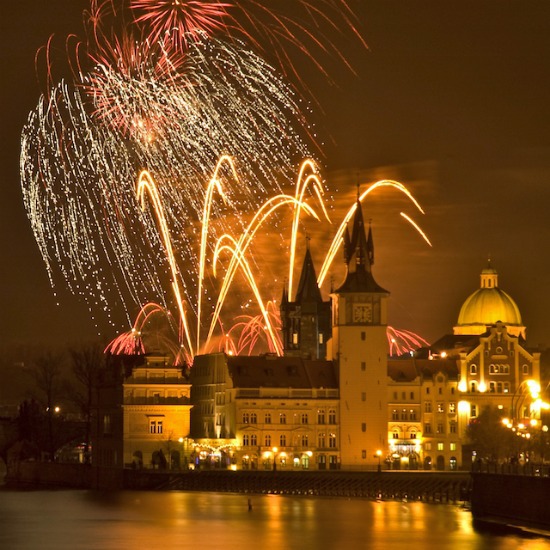
New Year’s Day / Restoration Day of the Independence Czech State (January 1):  Most Czechs like to close their year or bring in the new year – depending on how you look at it – with the usual ways that other countries do it.  Elaborate parties held in bars, clubs, and restaurants are very popular, and many of these places have special New Year’s specials on prices and dishes on their menu.  Some people who prefer not to spend their evening in the hustle and bustle of the bar crowd may opt for saner activities such as theatre performances or the opera. There is also a lot of live music and concerts taking place but many of these sell out quickly, so people have to buy tickets well in advance.  But regardless, most adults adhere to the tradition of toasting champagne at the stroke of midnight, followed by fireworks and other pyrotechnic reverie. It also happens to be Restoration Day, the day that Czechoslovakia separated into Czech Republic and Slovakia (also sometimes referred to as the Velvet Divorce).

Easter Monday (varies): Easter is always celebrated for two days in the Czech Republic: both Sunday and Monday. During the Communist years of Czechoslovakia, the holiday was relegated to being a holiday about spring. And even in the post-Communist era, and in respect to the fact that most Czechs aren’t that religious, it took a while for the Christian-based traditions to slowly return.  One tradition you’ll find is highly-decorated, hand-painted Easter eggs.  Another tradition is to take pussywillow and braid them together to form a whip. The boys would go caroling on Easter Monday and symbolically whip the girls on their legs (and possibly may also throw a little water on them as well – another tradition in certain areas). Yeah, I’m sure the girls just really looked forward to this. It used to be that farmer’s wives would use the whip to whip not only the livestock but also everyone else in the house. (Something tells me, this tradition actually lasted for far more days than just these two.)


Labor Day (May 1):  The Czech Republic celebrates Labor Day on the customary day for many of the world’s countries. Of course, most people have this day off of work, and government offices and schools are closed for the day.  Many cities will hold parades, and politicians always feel compelled to give speeches regarding the state of labor at that time. Just yesterday in The Prague Post (“The Czech Republic’s English-language Newspaper”), there was an article about how the Czech Republic is the third-worst European country when it comes to slavery (just after Albania and Montenegro).  It not only mentioned foreign workers who have had their papers taken away and only working for food and accommodation, but also the number of Czechs who are taken to other countries and forced to work under similar conditions. 

Liberation Day (May 8):  This holiday marks the end of the European involvement in WWII in 1945 (also known as VE Day).  Most of the traditions on this day are memorial services, headed by various government leaders. The president heads one of the largest memorial services in Prague.
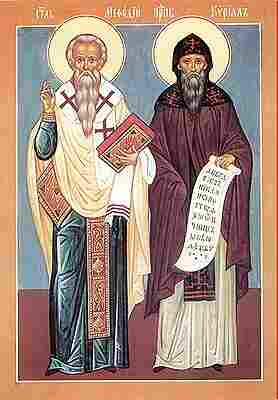

Saints Cyril and Methodius Day (July 5): Saints Cyril and Methodius were two monks who were often attributed as creating the Glagolitic and Cyrillic alphabets (the same alphabet used by Russian and other languages).  In many of the Slavic countries, these two are commemorated as national saints.  The holiday was originally on March 9, but Pope Pius IX moved the date to July 5.


Jan Hus Day (July 6): Jan Hus was a religious reformer living before Calvin or Luther. He had a lot of problems with the Catholic Church at the time, aligning his ideas against the Church’s regarding ecclesiology (a theological term meaning the origin of Christianity in relationship to Jesus, salvation, its leadership, etc.), the Eucharist (also known as Holy Communion), and other topics. Obviously the church doesn’t like dissidents, and after a trial, he was burned at the stake in 1415. Jan Hus wasn’t just a theologian and martyr: he also introduced some important additions to the written Czech language in the form of diacritic marks. The hacek and accent marks over certain letters reformed the language into what we are familiar with today.

St. Wenceslas Day (September 28): Wenceslas I (also spelled Wenceslaus) was the Duke of Bohemia; and yes, it’s the same Wenceslas as in the Christmas carol “Good King Wenceslas.” His younger brother assassinated him in 935, stemming from an argument between the two and later took the role as Duke himself. Many towns and cities will hold street festivals in honor of St. Wenceslas, which include food, drink, games for kids, cultural displays, and many restaurants will have a special St. Wenceslas Day menu.  Museums and galleries may also open their doors to allow people to come visit for free. 


Independent Czechoslovak State Day (October 28):  This is the day that the state of Czechoslovakia was created in 1918.  (61 years later, I was born on this day.) The creation of the country of Czechoslovakia was created out of the end of WWI, with the fall of the Austro-Hungarian Empire.  It would also find solidarity at the end of WWII when they banded together to oppose the German occupancy. However, this day isn’t really celebrated with the vigor of other independence days. Czechs mostly spend this day relaxing in their own ways with no parades or large festivities. A few politicians may make a speech here and there, mostly about the importance of looking back and remembering their history and their future together. 

Struggle for Freedom and Democracy Day (November 17):  There are two major events that took place which poses as the basis for this holiday.  The first is the student demonstration against the Nazi occupation in 1939, and the second are the 1989 demonstrations that acted as the beginning of the Velvet Revolution.  Because both of these demonstrations were student-led, this day is sometimes referred to as World Students Day, which stresses the importance of non-violent political change. 
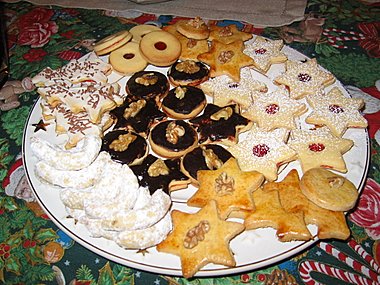

Christmas Eve and Christmas Day (December 24-25):  Gifts are often placed under the Christmas tree that is brought in and set up during the afternoon of Christmas Eve.  They’re opened later that evening – which really cuts down on the amount of time to be poked and prodded and peeked at.  At the end of Christmas dinner, usually consisting of roasted carp and fish soup (which is odd that the food of choice is seafood, given this is a landlocked country), a bell is rung, signifying that it’s time to open presents. And of course it wouldn’t be Christmas without its array of sweet treats. Another tradition is that they like to make predictions for the coming year using different traditions based in superstition, such as a girl throwing her shoes over her shoulder and if it points towards the door, it means she’ll get married soon.  Since most Czech people are non-religious, its original Christian meanings are often generally substituted for generosity and good will. 

St. Stephen’s Day (December 26): Often referred to as the Second Day of Christmas. It’s a Christian feast day in honor of St. Stephen, the first Christian martyr.  In the carol “Good King Wenceslas,” the lyrics speak of how he trudged through the rough winter weather to give alms to peasants on this day. (The familiar melody for this carol incidentally is from a 13th-century Finnish songbook and the lyrics are about spring. Some of these songs/poems are also found in the poetry used in Carl Orff’s Carmina Burana, one of my all-time favorite works.)

Up next: art and literature

Saturday, October 19, 2013

CZECH REPUBLIC: THE LAND AND THE PEOPLE


After I graduated from college a little over a decade ago, I had to figure out what I wanted to do with my bachelor’s degree in general music (non-teaching) and a minor in linguistics and English and Teaching English as a Second Language (although the last two were undeclared). I found this program – I forget the name now – where I could travel to one of three European cities to take a 4-6 week course that taught how to teach ESL and then they’d place you in a school somewhere to teach English. Since I was fresh out of college, I wasn’t able to come up with the money required for housing, tuition, and airfare to get to Europe. But when I was thinking about it, I wanted to do the program in Prague, Czech Republic. I was so serious about it, in fact, that I bought myself a book on learning Czech (I still have it on my shelf). I really do love the Slavic languages – I may start learning Czech next, right after I master Portuguese and Spanish. And as a music major, one of my all-time favorite composers is Antonin Dvorak, a Czech.


The Czech Republic lies in central Europe, surrounded by Germany, Poland, Slovakia and Austria.  The country itself is landlocked, but several major river systems and their tributaries meander their way through the country: the Elbe, Vltava, Ohre, Danube, Morava, Thaya, and Oder. These rivers either drain into the North Sea, Black Sea, or Baltic Sea. Rolling hills, forests, and farmland cover most of the countryside.  The climate is generally temperate with hot, rainy summers and cold, snowy winters – not unlike most of the Midwest United States.


The area now known as the Czech Republic once was the independent states of Bohemia, Moravia, and Silesia.  I’ve often used the term “bohemian,” meaning someone (especially artists, musicians, writers, etc) who live unconventionally.  (Actually, the term was originally French, in reference to the Romani people who they thought were from Bohemia. Some may have been, but many of the Romani or Roma people were from Romania and Bulgaria and other areas. The English term “gypsy” was from a belief that these tribes originated in Egypt, from a Middle English word “gypcian.”) The famous Duke of Bohemia, Wenceslaus I, is the subject of the Christmas carol “Good King Winceslaus.”  He was murdered by his brother in 935 AD after an argument and subsequently overtook the title.  The Black Death which took its toll on Europe during the mid-1300s, completely devastated Bohemia; some estimates say 10% of the population perished in this horrific outbreak. 


During the 1500s, it fell under the Hapsburg Empire, and later the Austrian Empire, and then Austria-Hungary. After WWI, these states together became Czechoslovakia (which is how I learned it growing up).  During WWII, Germany invaded Bohemia and Moravia and turned it into a protectorate.  The Nazis were brutal to the Czechs, killing many and shipping other out to kill them in other countries.  So it was natural that there was an anti-Nazi resistance towards their occupation.  Even after WWII ended, Czechoslovakia remained a Communist state until 1989.  The term “Velvet Revolution” is often used when describing the non-violent transition from a single-party state to a democracy.  Four years later, Czechoslovakia itself will be no more, but as the separate countries of the Czech Republic and Slovakia, also separating peacefully. Since then, the Czech Republic has enjoyed a growing economy and high quality of life.


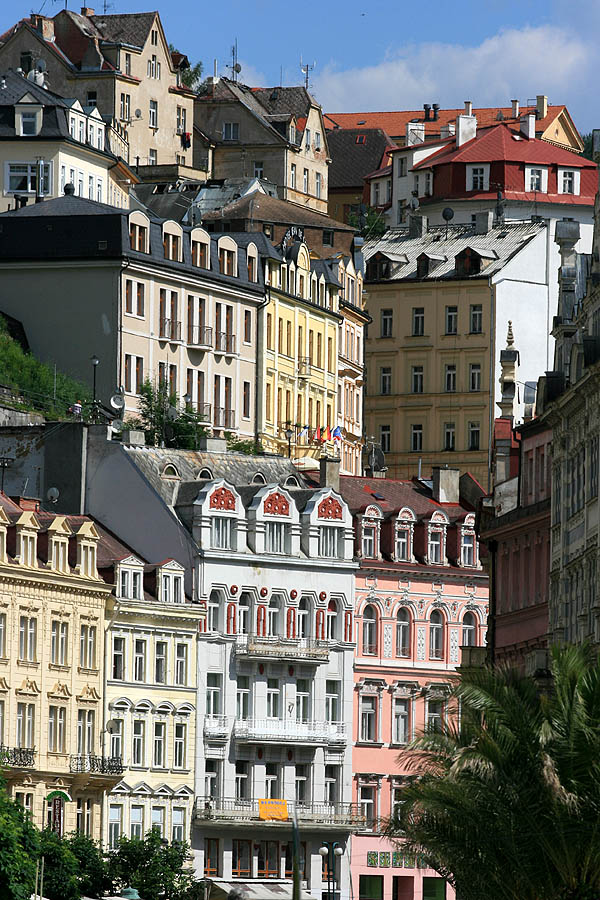
Sitting on the Vltava River, the capital city is Prague (called Praha in Czech), a city of around 2 million people if you count the larger metro area.  Prague is known for its architecture – from Gothic to modern – and especially for its cathedrals (one of its nicknames was “City of a Hundred Spires.”) Prague is not only the center of government, but also a center for the arts: from music and theatre to art and literature.  

Prague Castle
The Czech Republic is highly developed and has a high-income economy.  In comparison with other post-Communist states, the Czech Republic is one of the more stable ones today.  Its infrastructure is vastly improved with airports, railways, and extensively paved roadway systems. They also enjoy having one of the fastest Internet speeds and have the largest number of Wi-Fi subscribers in the EU (one more reason I should retire to live in Prague). The Czech Republic has long been a hot bed for scientific research.  Some of the more famous Czech scientists include such celebrities as Gregor Mendel (“father of modern genetics,” the only part of high school Biology that truly interested me), Jakub Krystov Rad (inventor of sugar cubes), Jan Jansky (discovered the classification of blood types), Josef & Karel Capek (invented the word “robot” – not exactly scientific for coining a word, but I’m including it), and Otto Wichterle & Draholav Lim (inventors of the modern contact lens – I thank them everyday).  Tourism is pretty important as well – the country in general has a fairly low crime rate. Castles (they have over 2000 of them!), cathedrals, museums, theatres, puppet festivals, and beer festivals are all pretty popular destinations. 


The official and most widely spoken language is Czech, a West-Slavic language. Before the 20th century, it was known as Bohemian in English. It’s closely related to and mutually intelligible with other Slavic languages. Actually, there’s a variety of Czech spoken in Texas which I had no idea existed, but apparently there were a lot of Czechs who immigrated there during the late 1800s.  However, there are a lot of other languages that are officially listed a minority languages: Slovak, German, Polish, Belarusian, Bulgarian, Croatian, Greek, Hungarian, Romani, Russian, Rusyn, Serbian, Ukrainian, and Vietnamese.  The vast majority of Czechs describes themselves as indifferent to religion, or just simply believes in a spiritual or life force outside of any kind of organized religion.  Of the remaining religious folk, the more people adhere to Catholicism while a smaller percentage is Protestant.


This country is surprising, and I’m in awe of what I didn’t know. For instance, 90% of Czechs graduate from high school, compared with only about 75% of Americans (and even the highest ranking state, Vermont, only graduated 85%) And I’m embarrassed to say that’s a 40-year peak for us.  Unfortunately, Czechs also have the second-highest death rate for cancer in the EU – but on the plus side, the Czech Republic has the most hospital beds per inhabitant in the EU.  Czechs also have a serious passion for mushroom hunting. I know a few who do this, but I never have gone mushroom hunting myself. I would have no idea what I’m looking for. I do know that I’m looking forward to making kolaches. There’s a place on the north side of Indianapolis called Kolache Factory, but I never went inside because I didn’t know what a kolache was. Now, I’m waiting to go after I make my own. I’m very excited about writing on the Czech Republic, the world’s largest consumers of beer.  I end this post as I grab me another cold one from the fridge.


Up next: holidays and celebrations

Sunday, October 13, 2013

CYPRUS: THE FOOD


I had been looking forward to this meal for several days now.  Whether anyone else cared or not, I knew I had something to look forward to this weekend. And I was really hoping this would go well since our cat Algeria ran out the door, and we haven’t seen her since. And of course my eight-year-old daughter is sincerely heartbroken about this. Our other cat Morocco is an introvert like my husband and I, so she’s not quite the playful, frisky cat the kids want her to be. She’s the type that’ll stare at a wall for hours. But I’m sure I can make them feel better with food. It always works with me, and my kids are merely a slow genetic leak.

The bread I made today was called Koulouri-Cypriot Village Bread, or as my husband calls it, Bread With Rocks, Sticks, Pinecones, and Other Debris.  The dough starts out with flour, salt, olive oil, ground anise seed, water, and a yeast mixture.  It’s kneaded until it becomes a sticky dough and is formed into a ball.  It needs to rest for about an hour. After kneading it one more time, I put all of the seeds – sesame seeds, poppy seeds, and caraway seeds – into a bowl with a little water.  I took my dough ball and rolled it around in the seeds and let it sit for another 45 minutes. After laying it on some parchment paper (I was surprised I even had some left), I put it in the oven for 30 minutes. It came out smelling wonderful and the black and white seeds on the golden bread looked amazing. And what’s better is the taste. The crust pulled away from the inside of the bread, and it was best when it was fresh out of the oven and steam rose out of it a bit after cutting it. I did forget to score the bread before baking, but no worries. Even my husband ate a piece and acknowledged that debris-laden bread isn’t all that bad, and can even be – what’s the word? – tasty. Seeds are actually very good for you, so I’m counting this a health food.

Picture perfect. Well, for a bread covered with rocks and sticks and debris. 

 The next dish I made was called Village Salad. It’s a simple salad filled to the brim with vegetables and flavors that can be served throughout the year (but probably best in summer. This is October, and it’s still in the upper 70s during the day).  I used chopped cherry tomatoes, sliced baby cucumbers, a little bit of onion, a half of a green bell pepper, feta cheese, some black olives, and I added a few capers that weren’t mentioned in the recipe but should have in my opinion. I gave it a good shake and topped with a little olive oil and balsamic vinegar, fresh oregano leaves, and lemon zest.  The lemon zest is what did it – it completely changed it flavor and brought out the bright notes in it and cut the acidity of the olives and vinegar. Who knew what a little lemon zest could do? 

All of my favorites. My finicky four-year-old picked out all of the feta cheese and left the rest. 
The main dish is called Afelia, or Cypriot Braised Pork.  To braise a piece of meat means to lightly pan fry it and then slowly stew the meat.  My guess is that by pan-frying the outsides, it helps to lock in the natural juices on the inside, allowing you to create a very tender piece of meat. The recipe called for pork belly, but I used boneless pork ribs instead, cut into small pieces. I placed it into a large bowl, covered it in merlot wine, added crushed coriander seeds, and a couple of bay leaves, and let it marinate for about an hour. Then I took the meat out and pan-fried it in a skillet. Afterwards, I added the marinade back into the skillet and added a little bit of cinnamon, and some salt and pepper and let simmer for about an hour (although the recipe just said 40 minutes). My daughter called it “purple pork” because it looked purple after marinating and simmering in the wine. When it was done, it was so tender, it practically melted in your mouth. The red wine was discreet and the sweet spices counterbalanced the dryness of the wine. I thought it was simply divine. 

And the best part? I still have half the bottle of wine left! 
And to go with this is a recipe I found for Cypriot rice pilaf.  Unlike the rice pilaf that I was familiar with, apparently in Cyprus, a popular recipe calls to use vermicelli in it. However, the recipe I found wasn’t exactly complete, and I had to fill in the blanks (like most of the quantities).  First I started cooking the vermicelli pasta, and after it was done, I drained the water and added some minced garlic.  Then you’ll need to half a cup and a quarter of chicken stock (because I only added a cup, and it wasn’t quite enough), a little turmeric, and some minced onion. I also added a small can of peas and carrots.  Once everything’s been stirred up and heated together, I added ¾ cup of uncooked rice and let simmer for 15 minutes.  Because I didn’t have enough stock, the bottom got a little scorched and was a little thick, but otherwise, it was really good. Once I tweak the recipe a bit, I think it could be awesome.

At least I know MY rice pilaf doesn't have MSG in it. 
The food was excellent. Definitely a do-again.  And each dish was fairly simple to make, yet each was packed full of flavor.  These would be the perfect dish to make for your next get-together, holiday, or dinner party.  Although I have to keep reminding myself that not everyone has the same discerning tastes that I do which is often disappointing. And I struggle with this.  I either need to learn to deal with them or get better friends. (Haha.) But one person who loved the food and ate the entire plate was my daughter. I suppose maybe having her helping me in the kitchen helped to take a load off of her mind about that cat.  Food is powerful: it brings people together, it separates you from the people who have dull taste buds, it makes you feel better inside and out.

Awesome meal. Now about that half bottle of wine...


Up next: Czech Republic

Saturday, October 12, 2013

CYPRUS: MUSIC AND DANCE


The early days of Cypriot music was influenced by French musicians and the music they brought to the island.  It was actually a cultural capital for a short while during the Middle Ages. Both secular and sacred polyphonic music was popular during this time. Later during the Renaissance period, there was a move to keep up with other current musical trends throughout Europe by introducing Cyprus to contrapuntal music. While under the Byzantine Empire, musical notation had its own reformation. However, it was one that was based on the early Greek notation and developed into something far more complicated that only few scholars knew how to read it correctly. 


Traditional folk music has many similarities to the music of Greece but also borrows styles and instruments from Turkey as well.  Violins are very common as well as the lute (for Greek-Cypriots) and the ud (for Turkish-Cypriots).  Other popular instruments found in folk music are the accordion, various percussion instruments, and the penny whistle.  It tends to be composed using modal scales, based off of different Arabic modes and musical styles. Greek-Cypriot music is also closely related to the music of the Aegean Islands.


Most folk music has a corresponding dance of the same name. Some of the more common dances are the thetatsia (or tatsia), syrtos (a type of line dance where the dancers hold hands in a curved line), and zeibeikiko.  The sousta is performed with violins, lyres, and mandolins. Originally danced as a marital dance in Greek, it still retains its elements of eroticism and courtship and is danced with pairs of women and men opposite of each other.  The karsilama is a suite of four dances (which is different from Greece and Turkey) performed in the standard 9/8 time signature. Some variations do have different time signatures, and the dances are different for men than women. 


From the late 1970s, metal rock has taken hold of the Cypriot music scene. Now, I’m not a huge fan of metal, but I do like some of the old 80s metal bands if there’s a solid vocalist with a clear melody 95% of the time. I found a band called Winter’s Verge that I like pretty well.  Ok, I have their album Tales of Tragedy in my Spotify playlist, and I have to admit, I’ve had some of their songs stuck in my head.  What I like is not only the hard power rock feel, but I’m always a sucker for when bands use strings in rock. It automatically gives it that goth sound and complementary cool points. In some ways, it reminds me of old Metallica from the 1990s or my husband suggested that at times, it’s reminiscent of Megadeth or Judas Priest. This song is one of my favorite ones off this album (and reminds me a little of Staind.) I’ve been debating on whether or not to buy the album off iTunes. I’m supposed to be buying theatre tickets this weekend.  I might have to buy both.


And not surprising, the rap and hip-hop scene is Cyprus is also alive and thriving.  It sort of depends on the artist, but I’ve found some artists rapping in English and some in Greek.  One artist that I found on Spotify was Lyrical Eye – I only found a few songs and most of those were collaborations and sung in English.  The style is fairly mainstream American in style.  The other one that I found was called DNA – Dimiourgoi Neas Antilipsis.  Rapped in Greek, their style does have some elements of Greek-influenced music with the use of lutes mixed with Western turntables and drum beat.  I like this artist better, but only because I love the fusion of these two different cultural elements.

Up next: the food

Wednesday, October 9, 2013

CYPRUS: ART AND LITERATURE


Cyprus’ location in the Mediterranean led to many cultures having its influences on Cypriot art. Art from the age of Antiquity is mostly relegated to pieces of pottery and jugs and ceramics.  These early styles were more typical of the Middle East. 

Then came the Greeks.  Their influence oversaw many areas of art from architecture to religious paintings.  However, more architecture influence came from French Gothic and Italian Renaissance styles. Since Rome, and Italy on a whole, was a major cultural center of the arts during the Middle Ages and Renaissance, their influence spread across wherever the Roman Empire did. With the coming of the British, their resources and opportunities of education grew as well. Many Cypriot artists studied art in London, learning new styles and bringing it back to the island.


While Greece is well-known for its ancient sculptures – and Cyprus certainly had its fair share of sculpture in the Greek style – the more popular art form is figurative painting. Art galleries and art museums are popular all throughout the island. Some notable artists are Arestís Stasí (painter and sculptor who also specializes in the restoration of antiquities, especially ancient sculptures) and Telemachos Kanthos (regarded as the Father of Modern Cypriot Painting, painted mostly the hills and rural scenes, most famous for his scenes portraying the emotion felt from the displaced people after the Turkish Invasion of 1974). 
 
by Telemachos Kanthos
Cypriot literature is mostly written in Greek, but also in Turkish, English, and even French. One of the first major pieces composed was an epic poem called Cypria back in the 7th century BC; it’s generally attributed to Stasinus.  During the Biblical times, the apostles Barnabus and Paul preached on the island, and Cyprus played a role in the book of the Bible, Acts of the Apostles. A group of laws collectively called the Assizes of Jerusalem were written in the local language and translated into French and later into Italian.  Much of Shakespeare’s Othello takes place in Cyprus during the time it was ruled by Venice. 


Modern Cypriot literature contains a lot of folk poetry as well as novels.  Some of the prominent writers from Cyprus are Kyriakos Charalambides (poet and essayist, one of the most renowned living poet, highly acclaimed), Vasilis Michaelides (often thought of as a national poet, notable as with others for writing in the Greek Cypriot dialect). One of the most notable Turkish-Cypriot author is Neşe Yaşın, whose 2002 novel Secret History of Sad Girls was banned in Northern Cyprus and Turkey (and she even received threats for it). She's an activist for peace and is active in politics. With all of this unrest about her book, I tried to Google this but couldn’t really find anything on this book. I have this interest in books that generally tick people off.

Up next: music and literature

Monday, October 7, 2013

CYPRUS: HOLIDAYS AND CELEBRATIONS


Northern Cyprus does share some Greek Cypriot holidays, but they also have off many holidays that coincide with Turkish national holidays as well.

New Year’s Day (January 1): Cyprus celebrates the coming of the New Year like most other countries, with lavish parties that go until the early hours of the morning, with a lot of drinking and special foods. Many Cypriots do make New Year’s Resolutions as well (I wonder if they’re any more successful than I am; mine usually last for about 3-4 weeks if I’m lucky. I even fail at the resolution of not making resolutions since I just made one.) Many families leave their Christmas trees up until after the New Year, and many people exchange gifts on New Years. In fact many people belief (especially if you’re part of the Greek Orthodox church) that Ayios Vassilis (or St. Basil) visits families on January 1 to deliver gifts. One tradition is to bake a sweet bread with a coin in it, and whoever got the coin in their slice was the lucky one! It could also be used for things like the dental bill you get after biting into the coin.


Epiphany (January 6):  This day has two special events in Christian traditions: the day that the three kings finally arrived to see the baby Jesus, and the baptism of Jesus by John the Baptist.  There’s also a festival common in Cyprus and in Greece called the Blessing of the Waters, which is basically end of the ban on sailing and the cleansing of the seas of these evil goblins who live in the sea tormenting “god-fearing Christians” during the festive seasons (if this were in the US, it would probably just be pollution as the cause). Part of this ceremony is to throw a cross into the waters, and men jump in and frantically look for it; whoever finds it is the lucky one.

Clean Monday (varies): Taking place seven weeks before Easter, it’s a day where people throw out their sinful ways and attitudes and stop eating foods that aren’t recommended during fasting. Sometimes it’s referred to as Ash Monday, in reference to Ash Wednesday in the Western churches as the beginning of the Lent season. In Cyprus and Greece, many people eat more shellfish during this time, and they bake a special bread on this day called lagana bread. A lot of people celebrate this outside, and kite flying is especially popular.


Greek Independence Day (March 25): This day celebrates the start of Cyprus’ fight for independence from the Ottoman Empire, fully gaining independence from them in 1832 (eleven years after this started). Many of the larger cities and towns will hold festivals, showcasing historical and cultural displays. It’s also called Greek Revolution Day.


Cyprus National Day (April 1): Also called Greek Cypriot Day or locally known as EOKA day. (EOKA is an abbreviation that becomes National Organization of the Cypriot Struggle when translated into English, which was an underground group organized for the push toward independence from the British and to rejoin with Greece [this rejoining with Greece is called enosis – I see this term a lot, and it’s a new one for me].) It marks the beginning of the guerilla war aimed at the British (both the military and the civilians).  It later turned its aim toward the Greek and Turkish Cypriots who were felt to be informers and collaborators. Generally, there are memorials held for those who were killed as a result. And for most people, they use this day as an excuse to head to the beach to have lunch and enjoy the sun and waves for an afternoon.

Good Friday (varies): Before Good Friday even gets here, people have been fairly busy during the Holy Week already, especially the women. Traditionally, the Thursday of Holy Week is spent baking traditional breads and a type of cheesecake filled with a cheese, egg, and mint filling (sorry, I’m drooling on my computer) as well as making the traditionally red-dyed Easter eggs (which make them look like tomatoes). On Good Friday, everyone takes flowers to the church and the kids, especially the young girls, decorate the Holy Sepulcher, called Epitafios. Many people will also eat a vinegar and lentil soup, since it’s been written in the Bible that the guards gave Jesus vinegar to drink instead of water. There are also processions of the ornately flower-decorated Epitafios, and each parish will compare theirs to others.


Easter Saturday (varies): Generally a quite day, many people attend a mass that is held during the day. One tradition is that during this mass, they bang the doors and shake the candleholders and make noise to signify the moment when it was announced Jesus was no longer in his grave. However, most people attend the sermon around midnight, where they take with them candles and fireworks. Churches will light a huge bon fire in the churchyard and people will greet each other with “Christ is Risen.” Christ may have been risen, but I’m pretty sure if it’s starting at midnight, I’ll be looking for a corner to curl up and sleep in.


Easter Sunday (varies): The vast majority of people attend a special Easter Sunday mass in the morning, partaking in Holy Communion.  Children play a game with the Easter eggs where they hit the eggs against each other, and the one whose egg cracks loses AND you have to give up your egg to the winner. It’s like the show Pinks: All Out for Easter eggs. Huge lunches are held with family and friends in celebration of the end of fasting, complete with a lot of roasted lamb and wine (this is MY kind of meal). Games, dances, and jokes fill up the rest of the afternoon.  Followed by more eating and drinking and a food coma.

Easter Monday and Easter Tuesday (varies): For some people, many of the same celebrations also take place on Easter Monday and Easter Tuesday as well: large gatherings of family and friends, games, music, dancing, eating, drinking, and relaxing. Some towns may hold community festivals as well.

Labour Day (May 1): Also called May Day, it’s a day to celebrate the worker and to address labor issues in Cyprus.  It’s usually a time when you’ll hear from the heads of state regarding the state of labor. Some of the issues at hand include unemployment and pay equality between the genders.

Pentecost Monday (varies): Also called Whit Monday, named after the white robes that are worn by the newly baptized on this day. The holiday falls 50 days after Easter.  While some people choose to attend a special mass on this day, most others use this day as a day of relaxation. 


Dormition of the Theotokos (August 15): Known as the Assumption of Mary in the Western church (and especially the Catholic Church), it is known as the Dormition of the Theotokos in the Greek Orthodox church, and is essentially celebrating the same thing. (Theotokos is the mother of Jesus.) There are festivals held that last for days and attending special church services are involved as well.

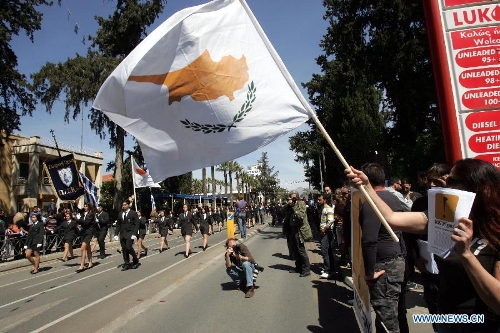
Cyprus Independence Day (October 1): After four years of war with Britain, Cyprus finally gained its independence in 1960.  Schools, government offices, and many stores are closed on this day to celebrate their country’s independence. Most towns and cities will hold parades and speeches by government officials, along with festivities that last the entire day filled with traditional foods, drinks, cultural displays, dancing, music, games, sports, and parties.


Greek National Day (October 28): On this day (which happens to be my birthday) in 1940, Italy had sent a request to Greek general Ioannis Metaxas to be able to cross the country en route to Russia, but his answer of “No” wasn’t taken very well, to say the least. (The word for “no” in Greek is “ochi,” which is why sometimes this day is referred to as Ochi Day – also seen spelled as Ohi or Oxi.) The Italians pretty much did what they wanted to in the first place, invading Greece and dragging them into the war.  The day is celebrated with parades, festivals, and church services.

Christmas Eve / Christmas Day (December 24-25): The Christmas season is a very important time of year for Cypriots.  On Christmas Eve, you’ll often hear children caroling from house to house with the accompaniment of a triangle and sometimes a flute in hopes of receiving coins or candy.  Since the days of the British, turkeys are a popular dinner item served with many of the same foods that Americans identify with the Thanksgiving meal. People would put up Christmas trees on Christmas Eve and decorate them during the afternoon. However, the tradition of waking up to presents comes on New Year’s Day, not Christmas Day. It’s also a time to bake traditional sweet breads, pastries, and other delights.


Boxing Day (December 26):  Definitely a holiday introduced by the British, many businesses are closed on this day, and some are closed on the next day as well.  Some people may even consider Boxing Day as an extension of the Christmas holiday.  Originally, this was a day where servants and tradesmen would get Christmas gifts from their employers in boxes, but nowadays, people generally use this day to relax and shop if there are any stores still open.

Up next: art and literature

Sunday, October 6, 2013

CYPRUS: THE LAND AND THE PEOPLE


South of Turkey in the Mediterranean Sea is the island of Cyprus.  The one that looks like a narwhal.  Yeah, that one. Unlike real narwhals that live in the Arctic, the island of Cyprus has much nicer weather. In fact, Cypriots enjoy 326 days of sunshine per year. (Unlike the city of Seattle, Washington, which averages about 58 days of sunshine per year. Perhaps they should vacation in Cyprus.) It’s also not far from the Syrian and Lebanese coast to the east of the island, and if you go west a little farther, you’ll run into the Greek islands, and to the south lies Israel and Egypt. 
 
Top: island of Cyprus; Bottom: a narwhal. You'll never see Cyprus or a narwhal the same.  
Where the name Cyprus came from isn’t exactly clear. It may have been from the Greek word for the henna plant, or for the Greek word for the cypress tree. Some linguists think it may also be related to the Sumerian words for copper and/or bronze (copper has been mined there for centuries). To refer to someone or something from Cyprus, the accepted term is Cypriot.


Since Halloween’s around the corner, I thought it appropriate to note that Cyprus is the home of the oldest cat remains, which were found in a tomb next to a person. This now changes our previous ideas of the feline-human relationship, even predating ancient Egypt, which was once thought to be the place of origin for domestic cats in general. Apparently cats have been using humans as servants much longer than we knew of.


The island has been changed management more times than my local McDonald’s. It started out as part of the Byzantine Empire (which is actually the Eastern portion of the Roman Empire, more or less), then it sort of became largely Greek after the Crusades. After that, it took on attacks from Arab armies and was later confiscated by the British as well. It was controlled by the Republic of Venice before it was attacked repeatedly by the Ottoman Empire. And even though it was always pretty much a divided island between Greek factions and Turkish ones, during the 1870s it was basically leased to the British until 1960 when they gained independence. Afterwards, the country remained divided into a Greek Cypriot area in the south and a Turkish Cypriot area (they tried to break free and call themselves the Turkish Republic of Northern Cyprus, but they’re only recognized by Turkey) in the north. The British still does hold on to two areas of the island: Akrotiri and Dhekalia, officially listed as Sovereign Base Areas by the British government.


The capital city of Nicosia (pronounced “knee-kuh-SEE-uh) is the largest city on the island and the center of government. After the Berlin Wall fell back in 1989, Nicosia remains to be the only divided city in the world. Ledra Street, traditionally part of a large shopping district, has been divided and shut down for several decades. The hotspot for a lot of fighting along the Green Line of demarcation, it was also part of the buffer zone between the Greek and Turkish areas. However, in 2008, it was reopened. With a population of around 310,000, there are six universities in Nicosia as well as several museums and sports facilities.


Cyprus’ economy hasn’t fared so well in recent years, since three of its main banks were pulled under in the aftermath of the Greek financial crisis. Significant offshore deposits of natural gas has been found which may mean something once it’s determined whether there is a viable means of extracting it. It’s quite possible that it may be drilled in the nearer future. Cyprus also depends on its growing tourism industry as well.


Since there are more Greek Cypriots on the island, the vast majority of the people belong to the Greek Orthodox Church.  Most of the Turkish Cypriots practice Sunni Islam.

There are two official languages of Cyprus: Turkish and Greek. Armenian and Cypriot Arabic are also listed as minority languages. Because of its history and other ties, Russian and English also have their place as common foreign languages that are studied.


The island country does enjoy a high-income economy and high quality of living, ranking high on the Human Development Index as well. Virtually all parts of the country – both urban and rural – have access to clean water and sanitation. Unemployment lies somewhere around 11% give or take a percent or two (the rates are slightly different depending on whether you’re on the Greek or Turkish side. They also have two different currencies: the Greek side uses the Euro, and the Turkish side uses the Turkish new lira.) And Cyprus’ flag has been the only country that puts their map on their flag, until Kosovo did the same in 2008.  Cyprus also enjoys one of the lowest costs of living, low housing costs, and low crime rates. I’m really excited to make Cypriot food since it's a combination of Greek and Turkish influenced cuisine. Although I’m going to try to see if I can find this cheese I keep hearing so much about called Halloumi. Seriously, it’s in almost every recipe. Must be awesome or something.

Up next: holidays and celebrations