Showing posts with label Ancient Egypt. Show all posts

Sunday, May 18, 2014

ERITREA: THE LAND AND THE PEOPLE


When my father-in-law passed away, one of the things I told my husband to make sure he picked up for me was this old elementary school geography textbook, last copyrighted in 1987, which was on his bookshelf in the living room.  Where he got it, I don’t know. I was in first grade that year.  The country of Eritrea was not yet a country at that time.  However, Yugoslavia and Czechoslovakia were still countries, Germany was still divided, Yemen was also still divided, Hong Kong was still a British territory, and Russia hadn’t broke up yet.  Myanmar was still Burma, Cambodia was still Kampuchea, and the DRC was still called Zaire. Not to mention other countries that had yet to be: South Sudan, East Timor, Montenegro, and Kosovo. Things have changed a lot in my lifetime. And back in my day, maps were easier to fill in for tests. I feel for my kids. 


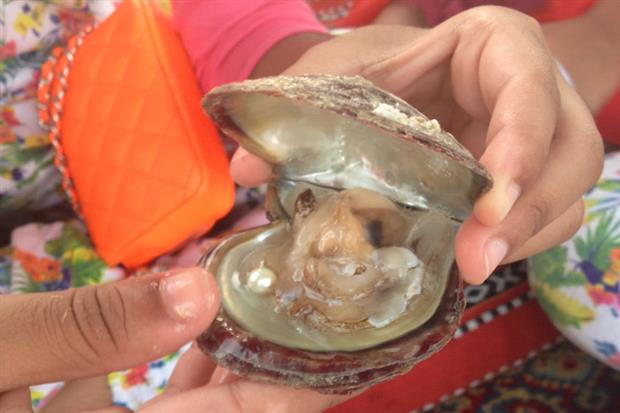
The name Eritrea is actually the Italian pronunciation of the Greek name for the area, Erythrá.  However, it’s pronounced Ertra in the local language of Tigrinya.  The country lies on the Horn of Africa, surrounded by Sudan, Ethiopia, Djibouti, and the Red Sea.  The western fertile lands are accompanied by the hot, arid eastern coastal plains, which spread to the slightly drier and cooler highlands in the South.  The Dahlak Archipelago, consisting of two large islands and 124 smaller ones in the Red Sea, are the sites of ample fishing, pearl diving, and eco-tourism. Pearl fisheries in the Red Sea have been famous since the Roman Empire was around.  (Only about four of these islands are inhabited.)  A few years ago, Eritrea announced that it was going to place all of the coastal regions and all 350 islands it controls under environmental protection, the first country to do so. 

The ancient Egyptians likely included Eritrea as part of the land called Punt. It was later called D’mt (sometimes written as Damot) and was known for their advances in agriculture and development of iron tools and weapons. Some scientists also believe this area is home to some of the oldest human bones ever found, the cradle of civilization. Throughout the centuries, the people living in what is now Eritrea have been invaded from all sides: southern Arabians (probably from Yemen), the Ottomans, the Portuguese from Goa (in India), the Italians, and the British. Toward the end of the 19th century, the Italians took control of the area (along with Ethiopia and part of Italian Somaliland) and renamed it Italian East Africa.  However, the British kicked the Italians out during the beginning of WWII and took over.  Eritrea was counted as one of Ethiopia’s provinces so that Ethiopia would have access to the Red Sea; however, tensions between the two countries grew until they entered into a 30-year war resulting in Eritrea gained its independence in 1991. Even today, tensions are still shaky between the two countries. 
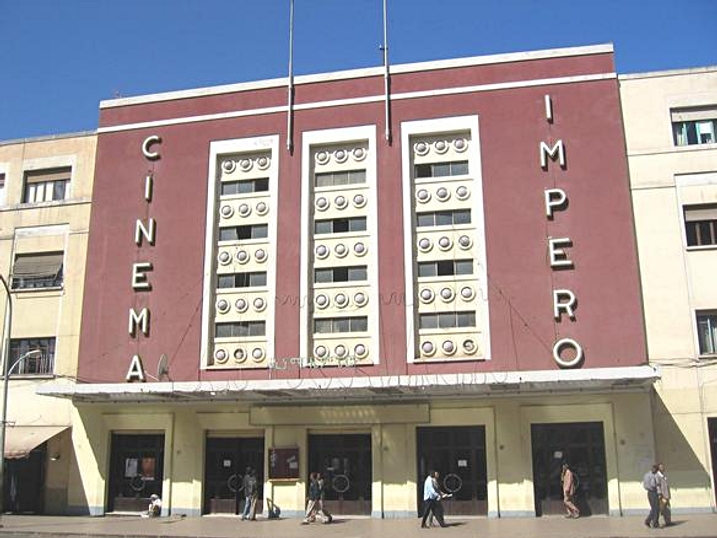

The capital of Asmara, also known as Asmera by the locals, lies in the middle of the country.  Originally a Tigrinya and Tigre settlement dating back to around 800BC, it’s become known for its Italian architecture left over and preserved from the colonial days, many utilizing the art deco style.  The city is modern in almost every sense: from contemporary public art and architecture to museums, sports arenas, shopping, higher education, and the arts. 


Recently, Eritrea’s economy has seen a significant jump, mostly based on its gold and silver mining industry as well as cement manufacturing. Years of war has taken its toll on the economy with a decline in able workers killed in action as well as inadequate and destroyed infrastructure from the resulting damages.  However, even during the war, they did their best at maintaining certain aspects of infrastructure: paving roads, bridge repair, etc.  They do have their own railway and airlines, but it’s not yet reliable; service is infrequent and sporadic. 


While technically there’s not actually an established official language, the local language most widely spoken and used as a de facto national language is Tigrinya.  Tigre and Dahlik are also used in certain areas of the country.  Arabic is also listed as a de facto national language because of its proximity and relationship to Arabian countries. English is used as a working language and taught in schools along with Italian, which many people can still speak and understand.

The vast majority of people in Eritrea follow Christianity, followed by Islam, but the percentage of followers vary.  Eritrea only allows people to adhere to specific sects of these religions.  For Christianity, you must be part of the follow: Eritrean Orthodox Tewahedo Church, Catholicism, and the Evangelical Lutheran Church; and for Islam, it must be Sunni.  You have to register for any other denomination. If your sect is deemed too radical (Jehovah’s Witnesses, Bahá’í, Seventh Day Adventist, and many others), then you cannot practice freely. If you are caught practicing an unregistered religion in private, you can be imprisoned for an indefinite amount of time. 

Along with this idea, media freedom places Eritrea at the bottom of the list in comparison with all other countries in the world. It’s the only African country to have no privately-owned news media – whether it be in print, radio, or television.  There are absolutely no foreign journalists living in the capital since the ban of independent news agencies in 2001. The only news comes from the single-party state-owned news agency, only telling you what they deem is important. 


One interesting (yet sad) thing I read was that during the Ptolemaic times of ancient Egypt, they used to keep hundreds upon hundreds of elephants in Eritrea in reserve for times of war.  However, during the latter half of the 20th century, no one saw a single elephant in the wild.  Many think they were either killed from the Ethiopian-Eritrean war or fled elsewhere because of the war.  (A herd of about thirty were spotted in 2001, and it’s believed that the elephant population may be around a hundred now.)  Another thing I read is that the port city of Massawa literally means “shout really loudly.” I’m always interested in interesting city names and their literal translations.  (I just found out recentlly that Brazil has a city named Não-Me-Toque, or Don’t Touch Me.)


I’ve found my recipes – the food sounds spicily amazing. I know I’m going to love it.  My family, on the other hand, will probably be plotting to bury me alive.  There’s a lot that I don’t know about Eritrea, but I’m really excited to find out more. I have a feeling that there are some really cool things here. 


Up next: holidays and celebrations

Thursday, January 30, 2014

EGYPT: ART AND LITERATURE


Ancient Egyptian art is one of the oldest art forms in the world and one of the most distinctive.  The art is drawn on a two-dimensional scale, and the people and objects tend to be drawn in profile.  There’s very little shading or any acknowledgement of depth.  They also utilized what’s called tiered space: where objects that are supposedly in the distance are placed higher than objects in the forefront. Sometimes people are drawn with the heads of animals that symbolize gods. 


In other arts, gold is a very important material that was used. The ancient Egyptians believed gold was a gift from the gods and that it was virtually indestructible for that reason.  However, at that time, payment for goods and services were done on the barter system – you got paid in food and clothes, so gold didn’t have much of a monetary value at all.  It was used for a variety of projects, from jewelry to sculptures, and masks.  Gold was either mined from surface mines, which are considered state monopolies in Egypt, or was panned from the river.  Actually, Egypt really didn’t produce that much gold, probably around one ton, and most of it went to the royalty.


Because of the influences from the Arab world, there are many Arab-inspired and Islam-inspired buildings throughout the country.  These buildings also tend to be geometrically and mathematically designed. The arts scene now reflects many of the arts movements throughout the world, and you can find Egyptian artists of all mediums, from painting and sculpture to modern techniques using digital arts and other contemporary styles. Egyptians are very tech savvy and use the Internet and social media to promote their art as well. 


The ancient Egyptians were the first people to develop paper from papyrus, thus giving us the book.  Their writing system, hieroglyphics, is one of the first alphabets to emerge.  Some of the more well-known books from this early period are Story of Sihune, Westcar Papyrus, and the Book of the Dead.  Early Egyptian literature usually fell into three categories: autobiographies, informative literature, and myths/stories. Many of the Coptic works were also held in libraries in Alexandria. By the eighth century, Muslim Arabs had taken control of the area and Arabic became the language most written in. They borrowed Egyptian folk tales and many of them were included in One Thousand and One Nights (Arabian Nights).


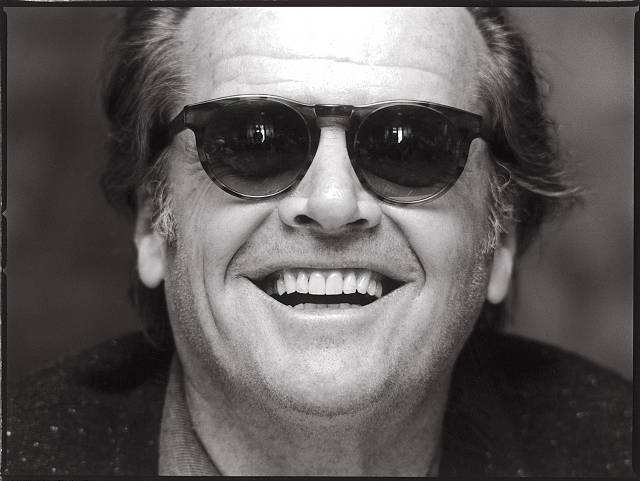
By the time the 19th and 20th centuries came along, Egypt went through a sort of Renaissance movement that hit all of the arts, not just literature. One of the most important writers to emerge from this time is Naguib Mahfouz. Mahfouz has published 34 novels and over 350 short stories, and his works often delve into existentialism. He was also the first Egyptian to win the Nobel Prize in Literature. (And I think his photo makes him look a little like Jack Nicholson.)  The novel that is often considered as the first Egyptian novel and Islamic novel is Zaynab, written by Muhammad Husayn Haykal in 1914.  It not only dealt with issues such as the relationships between men and women, but also with the relationships between laborers and plantation owners and was set entirely in Egypt. The novel was also the basis of Egypt’s first silent film of the same name that was produced in 1925. 

Naguib Mahfouz
Jack Nicholson
Up next: music and dance

Sunday, January 26, 2014

EGYPT: THE LAND AND THE PEOPLE


As an elementary student growing up, Ancient Egypt was always a frequent social studies lesson in school.  Writing our name as best we can in hieroglyphics, making representations of the pyramids, and studying about King Tut were done over and over again. And it was years later when I learned about the Library of Alexandria – it was the largest library of the ancient world and was destroyed after a series of fires. Built under Ptolemy I and Ptolemy II, it contained the Temple of the Muses (or Museion, after which the word museum comes from).  It wasn’t until 2003 when the new Bibliotheca Alexandrina was erected on the site of the original. 


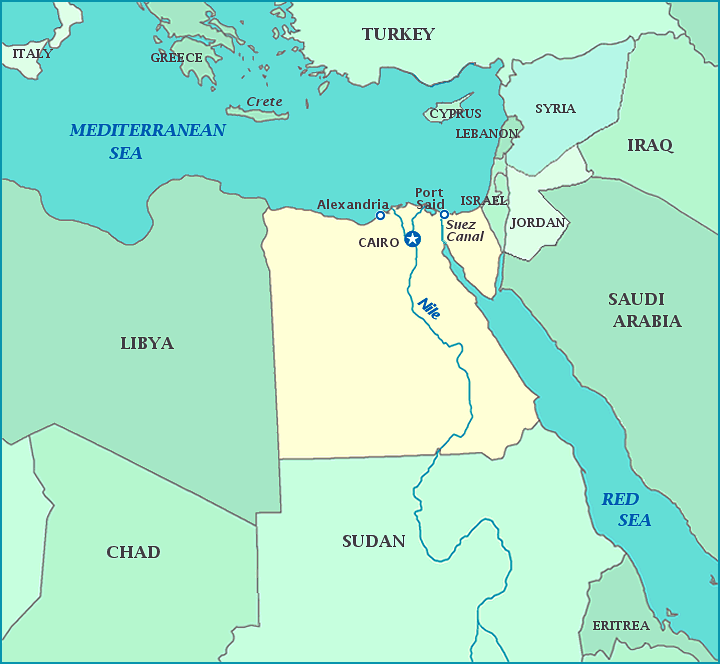
Egypt lies on the Mediterranean Sea in northeastern Africa.  It also includes the Suez Canal and the Sinai Peninsula.  The Sahara Desert covers the vast majority of the country.  Looking south, the Nile River runs from the Mediterranean Sea all the way through Sudan and its capital of Khartoum where it splits into the White Nile and the Blue Nile. The White Nile continues to meander its way through South Sudan’s capital of Juba and dumps into Lake Albert on the Uganda-Democratic Republic of the Congo border.  The Blue Nile winds its way eastward and ends in the Ethiopian countryside at Lake Tana. The river is considered the longest river in the world, and the entire river system (including tributaries) touches 11 countries. The Aswan High Dam in southern Egypt created Lake Nassar in the 1960s. And even though I always think of the river flowing southward, it actually flows north and dumps out into the Mediterranean Sea (rivers flow from high areas to low areas). In Egypt, there are very few towns and cities that are not near the Nile or the Mediterranean. 


The Ancient Egyptians called the land Kemet, meaning “black land” and referring to the fertile land of the Nile River.  Some linguists think the name came from “home of the ka (soul) of Ptah” from a variation of the ancient name for the city of Memphis, the capital of the Egyptian empire. Other linguists think it came from Latin and Greek translations, possibly meaning “below the Aegean.”  Of course early Egyptian society is considered one of the great civilizations of the ancient world. And it also played its roles in Biblical stories. The ancient Pharaohs were some of the most famous kings (and queens) in history: Menes, Hatshepsut, Akhenaten and his wife Nefertiti, Tutankhamun, and Ramesses II.  The Egyptian religion is the first to utilize monotheism (only having one main god).  Later the Greeks came in under the rule of Ptolemy who established himself as Pharaoh and this reign ended with the death of Cleopatra VII. The Romans took their opportunity to invade the country, and of course, the Persians and the Ottomans both took their turns at trying to take over, as well as the French under the rule of Napoleon.  Finally, an Albanian military commander named Muhammad Ali Pasha under the control of the Ottoman Empire expelled the French and ruled the country.  In 1914 just before WWI, Egypt was placed under a protectorate of Britain, but gained its own independence in 1922.  The early years were somewhat unstable and British presence remained for nearly three more decades. During the 1950s and 1960s, Egypt was involved in several military conflicts, including ones involving Suez Canal and Yemen.  Even up to today, changes of power and the fact that people are standing up for inequalities, corruption, police brutality, unemployment, inflation, rising food prices and other issues have led to many revolts in recent years, most notably in 2011.


The capital city is Cairo, a city in almost every sense is the epitome of a modern city.   Home to many universities, opera houses, numerous museums, shopping from low-end to high-end, international film festivals, world-class sporting venues, and like it’s sister city New York, a 24-hour city. It’s the largest metropolitan area in Africa and the Arab world, and the 16th largest urban area in the world (although some statistics put it tenth). 


Egypt mainly depends on agriculture, media and communications, petroleum, natural gas, and tourism for its economic stability.  It also relies on aid from the United States. Other sources come from the money sent back from people working abroad and from the revenues from the Suez Canal, thought to be the most important waterway in the Middle East, connecting the Mediterranean (and Europe) to the Red Sea (and Africa and the Middle East).  Egypt also relies on tourism to its famous historical and religious sites. 

Suez Canal

About 90% of Egyptians are Sunni Muslims, and Islam is considered the state religion.  And because of this, the country follows Sharia Law, or law that is based on the Islamic religion.  There’s also a small number of Shi’a Muslims as well. There are even a number of people who practice Salafi Islam: a strict, puritanical, über-conservative sect of Muslims. Cairo is known as the “city of 1000 minarets,” the towering spires protruding from mosques and almost always topped with a crown of some sort.  There is minority of Christians in Egypt as well, most of whom belong to the Coptic Church, and others Orthodox, Roman Catholic, and other various denominations.  Apparently, Egypt only recognizes Islam, Christianity, and Judaism as acceptable religions to put on your ID card, so if you’re anything else, like Bahá’í or atheist, it’s a major problem and has involved persecution in the past.


The official language is Modern Standard Arabic.  However, there are several varieties of Arabic that are spoken in Egypt, namely Egyptian Arabic, Sa’idi Arabic, Eastern Egyptian Bedawi Arabic, and Sudanese Arabic.  I imagine and hope that these are closely related and generally mutually understandable, but I know extremely little about the Arabic language except I think it’s a language that would be easier to learn if I had a teacher, as opposed to learning on my own.  Other Middle Eastern, Nubian, Berber, Afro-Asiatic, and Coptic languages are also spoken in other areas. Popular foreign languages learned in school are English, German, French, and Italian. 


Ancient Egyptians did a lot of firsts and had a lot of cool facts in their history. They first created paper from papyrus.  One of the oldest papers on mathematics was written by an Egyptian scholar. Their writing system, hieroglyphics, consists of 700 different characters and none of them are vowels, which is why we will never know exactly how it was pronounced.  (With the help of the Rosetta Stone, we were able to make a huge headway in translating what the hieroglyphics were.)  They also loved bread and regularly drank beer (a plus, for me).  The ancient Egyptians were the first ones to develop the 365-day calendar divided into twelve months based on their need to be able to predict when the Nile flooded, and they also invented clocks.  Some scholars believed the ancient Egyptians were the first to use sutures to close a wound.  They were also the first people to keep cattle.  And not to mention all of the procedures and traditions around mummification, burial, and pyramid building.  The workers who built the pyramids were well fed, had their own villages, and well compensated. The Greeks, who would often throw unwanted baby girls outside to die, found it unbelievable that the Egyptians considered all children (males AND females) blessings. I find it incredible that if a culture has all of this to offer, how could anyone call them unskilled and antiquated? I’m really excited to delve into the modern culture and its arts and see what else it has to offer.

Up next: holidays and celebrations