Showing posts with label Federated States of Micronesia. Show all posts

Wednesday, August 24, 2016

MICRONESIA: ART AND LITERATURE


As far as the culture of the Federated States of Micronesia goes, there are many similarities between the Micronesians and many of their neighbors in this remote corner of the world. It seems that certain arts are generally divided between the men and the women. The men are quite skilled at carving, and Micronesian carving art is a broad art form that encompasses many items. Woodcarving is by far the most common, but I think shell and stone carving are also present as well. Some items are small, like figurines, bowls, and canoe ornaments, but other items can be quite large like ceremonial houses. Women, on the other hand, tend to dominate textiles and jewelry such as headbands, necklaces, and bracelets. Micronesians are incredibly resourceful people. The materials they utilize for their art pretty much comes from what they readily have available to them naturally. 


One particular art form I came across is weather charms called hos from the island of Yap. These charms protected people against bad storms. It’s believed that the charms are tied to the god of water spirits, Yalulawei. So, whenever a group of people head out for a voyage, they would chant to Yalulawei in hopes of calm seas. 
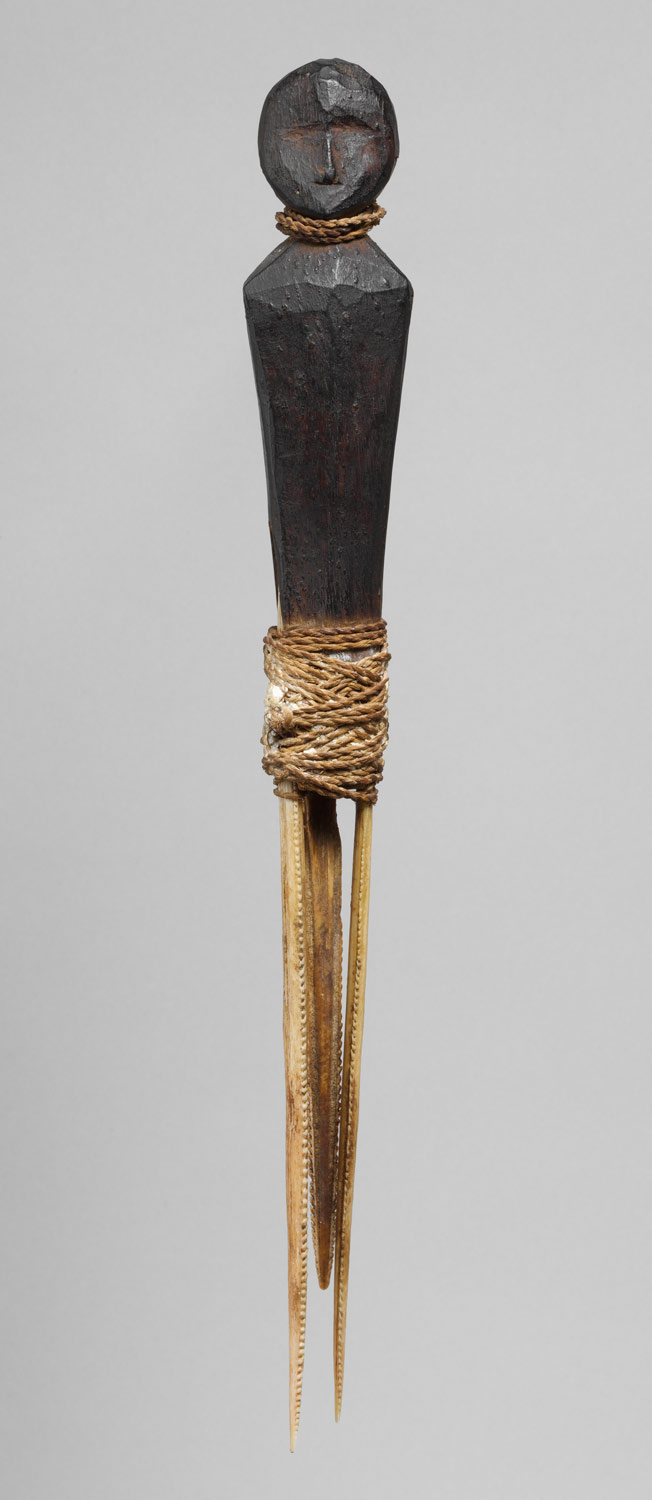
Hos from Yap
Once their culture came in contact with the Europeans and the Japanese, it changed, as it naturally would. Some art forms continued with some outside cultural influences (like weaving and some architectural aspects), but others stopped being created altogether (certain sculpting arts). Once Micronesia gained its independence, an interest in their cultural arts surged, and people began teaching these arts again. It’s a good thing there was an artistic revival because once its gone, and there are no more elderly to teach the skills and techniques, even art can suffer the dire threat of becoming extinct. It’s an important aspect of your cultural identity, no matter what that cultural identity is. 


Today, there is also a small number of artists who are skilled in contemporary arts as well. Although I’ve seen several mentions of contemporary artists hailing from Micronesia, I have not come across any particular person’s name. So, I’m thinking that these artists are only known locally and have not made it onto the international scene. Perhaps someone should fly me to Micronesia so I can write articles on their art so their names can be published. (Hint, hint…) 

 
Emelihter Kihleng
Unfortunately, there just hasn’t been that much literature written and published by Micronesian authors either. In 2008, Emelihter Kihleng, was one of the first Micronesians to publish a collection of poetry in the English language. She joined a professor from the University of Guam in the large project of creating a compilation of literature from the Micronesian islands. The literature from other island groups (notably Melanesia and Polynesia) is far more familiar, but not much of the works and stories from Micronesia have been published. Thankfully to their hard work, there is now.
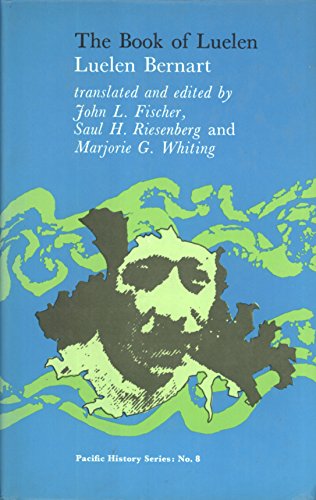

Another notable writer from Pohnpei is the historian Luelen Bernart. He’s not only Pohnpei’s first historian but the first person to publish a book there as well. When he was born, the Spanish still occupied the islands, and he died just after the end of WWII. You can imagine the changes he’s seen. He is the author of The Book of Luelen, originally written in Pohnpeian and also translated into English. I think it would be interesting to read. I did find out that it’s out of print, but there’s some more information on the book here.

Up next: music and dance

Sunday, August 21, 2016

MICRONESIA: THE LAND AND THE PEOPLE


When I was a kid growing up in the 1980s, I was fascinated by this world atlas book my mom had. It not only showed regions of countries but it gave an overview of the area with some basic stats. It also had wonderful photos of each area with captions. I must’ve read it a million times. I distinctly remember looking at the Federated States of Micronesia and being in awe of the world’s newest country. I was six years old at the time, and now thirty years later, I’m finally coming around to Micronesia again.

 
The country called Federated States of Micronesia is named after the region of Micronesia. Micronesia, from the Greek words meaning small (mikrós) and islands (nêsos), was most notably called by this name by the French explorer Jules Dumont d’Urville in 1832 (it was probably called this by others before him, but alas, d’Urville has taken all the credit). The region of Micronesia consists of several island groups and nations including the countries of Federated States of Micronesia, Marshall Islands, Kiribati, Palau, Nauru, Wake Island, Guam, and the Northern Mariana Islands (the last three being US territories). To make matters more confusing, the country of the Federated States of Micronesia are often just shortened to Micronesia (and from this point forward, when I use the term Micronesia, I’m referring to the country unless otherwise specified). Now you can impress your friends by telling them all about the difference between the REGION of Micronesia and the COUNTRY of (the Federated States of) Micronesia. 


The islands of Micronesia are located in the South Pacific just west of the Marshall Islands, northwest of Nauru, northeast of Papua New Guinea, and southeast of Guam and the Northern Marianas. The country consists of 607 islands divided into four states: Yap, Chuuk, Pohnpei (not to be confused with the ancient Italian city of Pompeii that was destroyed by the volcano Mt. Vesuvius), and Kosrae. The islands itself can range from mountainous to low coral atolls. Because these islands are in the South Pacific, they enjoy a tropical climate. They do experience heavy rainfall pretty much all year long, especially the farther east you go. They’re also likely to be hit by typhoons since they’re located along the edge of the typhoon belt (I didn’t even know this is a thing—I guess it’s the equivalent to tornado alley). 


People started moving into this group of islands about four thousand years ago. Early cultures centered around the island of Yap, on the western part of the chain. The Portuguese were the first Europeans to arrive, followed by the Spanish, who included these islands as part of their holdings in the area. The Spanish sold the islands to Germany at the end of the 19th century, which they included as part of their German New Guinea. Japan took it over during WWII; the Japanese fleet was based in the Truk Lagoon, the site of a major battle that destroyed many of the Japanese naval vessels. However, Japan was forced to relinquish the islands as a South Pacific Mandate after the war. The US administered the islands in 1947 as a Trust Territory through the United Nations. In 1979, four of the states decided to band together to form the Federated States of Micronesia, and the Marshall Islands, Northern Marianas, and Palau chose not to join. In 1986, they officially gained their independence. The Trusteeship officially ended in 1990, but they continue to have a free association with the United States. 

Palikir
The capital city of Palikir is located on the island of Pohnpei. It’s about 6 miles from the city of Kolonia, Pohnpei’s largest city and capital of the state of Pohnpei. Both cities are located on the northwest coast of the island. The city is the center for commerce and the government. There are several artificial islands nearby called Nan Madol and nicknamed “the Venice of the Pacific.” It’s the site of the 1000-yr old ruins of an ancient city, a network of roughly 100 artificial islets made of stone and coral. Palikir is also a popular spot for surfing, diving, and snorkeling. 


Micronesia depends mostly on farming and fishing, especially tuna. It’s not strong in mining, except perhaps for high-grade phosphate. They do have a sizeable tourism industry, and they also highly depend upon financial assistance from the US. Because of its dependence and ties to the US, US currency is used in Micronesia. They are also known for having the largest coins in the history of the world: the Rai stone looks kind of like a large stone doughnut. The largest is about 12’ by 1.5’ and weighs roughly 8800 lbs. Because they’re too large to move (obviously), it’s basically just verbally transferring ownership to the next person. 


The majority of the population is Roman Catholic. There is also a sizable Protestant population as well, and the percentages definitely depend on the island where some are more than others. There are also a small number of Buddhists (probably left over from the Japanese occupation) and some Baha’i as well. 


English is the official language of Micronesia. However, there are several other indigenous languages that are also spoken here as well. Each island has its own language (although I’m not sure of how mutually intelligible each language is): Chuukese (spoken on Chuuk, Pohnpei, and Guam), Kosraean (spoken on Kosrae, Nauru, and Caroline Islands), Pohnpeian (spoken on Pohnpei and the Caroline Islands), and Yapese (spoken on Yap). 

Nan Madol
I knew from looking at a map that these islands were small, but I read that in total, they only equal 271 sq mi (almost the same land area as the city of Lexington, KY). But to get a better sense of how spread out these islands are, these 607 islands are spread across a little over a million sq mi of water! Another thing I learned is that each state does its own customs, so if you are island hopping, you can pretty much expect the same level of scrutiny in each main island. However, the weather is generally nice all year long, and there are practically no tropical diseases. I’m already wondering if my job would let me work from home from Palikir?? Probably not.

Up next: art and literature