Showing posts with label Maltese language. Show all posts

Wednesday, June 1, 2016

MALTA: ART AND LITERATURE


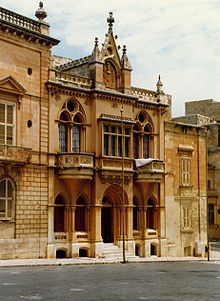
Much of Malta’s art is highly connected to the art of Sicily and Italy. The earliest temples of the Neolithic period incorporated intricate bas relief designs and mainly consisted of spirals and nature designs. Of course, they were extremely influenced by Roman art. Not only did architectural styles make their way as far as cathedrals are concerned, but frescos and decorative mosaic floor tiles as well. 

The artist Caravaggio stayed in Malta for over a year and completed at least seven paintings while he was there. He also inspired a number of Maltese artists during his stay as well. The Baroque period and the Rococo period brought along a renewed push in painting and sculpture in Malta. Each art period had its own characteristics; the Neo-classical movement promoted religious themes while the Romantic period saw a push toward nationalism. 


During the 1920s, the National School of Art was built and established by Parliament. After WWII, modern art movements from throughout Europe and other areas of the world began to make its way into Malta, and they were studied and emulated. 
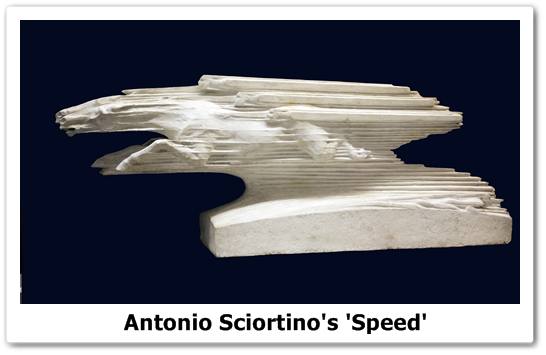


Some famous artists from Malta include Antonio Sciortino (sculptor), Melchiorre Cafà (sculptor), Amedeo Preziosi (painter), Giuseppe Calì (painter), Francesco Maltese (painter), Antoine Camilleri (painter, stamp designer, teacher), and Emvin Cremona (stamp designer, painter).

The Lords Prayer in Maltese
The vast majority of literature from Malta is written in the Maltese language. The earliest works were in the form of poetry and typically were either praise aimed for royalty or religiously themed. The Lords Prayer and catechistic texts were commonly read during the 1700s, and they were also translated into Italian, the other language used in Malta.
 
Mikiel Anton Vassalli
One patriot named Mikiel Anton Vassalli, who wrote in the Romantic style, introduced a new identity in writing, a nationalism if you will. The first Maltese newspaper wasn’t published until 1839. Although poetry has been used for many centuries, the first true epic poem written in Maltese wasn’t written until Giovanni Antonio Vassallo did so in 1842. Twenty years later, the first history book was published, and the first novel a year after that. As far as the novel goes, Malta still modeled much of its literary styles after Italian traditions, but quickly developed their own voice. 

Before the 20th century, there was a major social distinction between the use of Italian and Maltese. Italian was the language of literature, government, trade, and high culture, whereas Maltese was the vernacular, what the people used as everyday language. A shift began during the 1800s with a push toward a national identity and Maltese began to make its way into other aspects of society. 


Several writers have emerged from Malta, such as Pietru Caxaro (poet, philosopher), Ruzar Briffa (poet), Marjanu Vella (writer, poet), Anton Buttigieg (poet), Dun Karm Psaila (poet), Ray Buttigieg (poet, composer), Pierre J. Mejlak (short story writer), Francis Ebejer (novelist, dramatist), Immanuel Mifsud (poet, novelist), Joe Friggieri (poet, philosopher), Oliver Friggieri (poet, novelist, philosopher), and Carlo Gimach (poet, architect).

Up next: music and dance

Sunday, May 29, 2016

MALTA: THE LAND AND THE PEOPLE


When I was in high school, I took an interest in old films. As an aspiring actress at the time, I watched these old films not only for their story, but to watch their acting. In 1998, AFI (American Film Institute) put out a list called “100 Years…100 Movies,” revising the list in 2007. The Maltese Falcon ranked in at #23 but dropped to #31 in the updated version. It took me years to figure out the word Maltese referred to things and people from Malta, and it took me a few more years to figure out where Malta was. And unlike the Maltese Falcon in the film, the country of Malta is very much a real place. 


Although it’s not quite certain, but the name Malta is thought to have derived from the Greek word for “honey.” In fact, the name the Greeks gave for the island group is Melite, which means “honey sweet.” Other variations were based on the Greek word. However, some historians think it may have also come from the Phoenician word for “port” or “haven.”


Malta is an island group located in the Mediterranean Sea. The Italian island of Sicily is to the north, Tunisia is to the west, and Libya is to the south. The Greek island of Crete lies to the east much farther off. Although there are several islands included in this archipelago, only the largest three islands are inhabited: Malta, Gozo, and Comino. Obviously the country of Malta has a Mediterranean climate, which means that it has mild winters and hot summers. Like the Mediterranean island nation of Cyprus — which is about on the same latitude — Malta enjoys a high number of sunshine hours during the year. It averages twice the number of sunshine hours that northern European cities have. 

The site of a bombed out Opera House during WWII.
The earliest people living in the Maltese Islands probably arrived from Sicily (and more than likely the Sicani, the ancient people from Sicily.) Many of the temples and pottery found on the islands resemble examples found on Sicily. The Phoenicians, the Greeks, and the Romans all traded with Malta and each had their turn controlling parts of the island groups. It was mentioned by several historians, and was even mentioned in the Bible as the area where Paul and Luke washed up after being shipwrecked. They took the opportunity to spread Christianity to the islands, and it has remained Christian since then. During the Middle Ages, the Byzantine Empire took over the islands. They brought along Islam, irrigation techniques, fruits, cotton, and the Siculo [Sicilian]-Arabic language that would later become the Maltese language. Finally the Norman Conquest pushed its way into the area, and Catholicism was reinstated as the Muslims were pushed out. It was then ruled by the House of Barcelona, and Napoleon captured the islands during the late 1700s. The Treaty of Paris granted Malta to the British Empire, and the islands played important roles in both WWI and WWII. Malta finally gained its independence in 1964 from the British. It remained neutral during much of the Cold War and later joined the European Union and the Eurozone. 

Malta’s capital city is Valletta, located on the island of Malta itself, making it the southernmost European capital. It’s also known as The Most Humble City of Valletta. This ancient city shows evidence of the multiple changes in its history through its architecture. In the midst of these old cathedrals and palaces are buildings with modern architectural styles on modern infrastructure. The city is known for several festivals that run throughout the year. The city of Valletta is one of the densest historical cities in the world (so if you’re not a fan of being close to your neighbors, it might not be the best city for you). If you love old cities with a lot of charm, by all means, please visit. 


Before 1800, Malta mainly depended on cotton, tobacco, and a few other exports. When the Suez Canal opened, this small country saw an increase in its economy as a trade port. By the end of the 1800s, their economy was starting to falter, and by the onset of WWII, it was in serious trouble. Limestone is a major resource for Malta (like my home state of Indiana). Being an island limits its energy resources, but because of the number of sunlight hours, it has the potential to utilize solar energy even though it's not being used as much as it could be. Malta has been a popular place for film production because of its climate. The first film was filmed there in 1925, and now the government provides incentives for film companies to film in the islands. It’s also a tourist haven for obvious reasons. Today, Malta and Tunisia are discussing the possibility of oil exploration in the sea between the countries.


The constitution declares that Roman Catholicism is the state religion, although freedom of religion is also somewhat apparent. Religion may be taught in public schools, but students have the option to opt out. Even though Roman Catholicism is the dominant religion in Malta—with nearly 95% of Maltese who consider themselves Catholic—there are also Protestants, Muslims, Jewish, Buddhist, and Baha’is practicing in Malta as well. 


The Maltese language is the official language in Malta. It’s an interesting language, a cross between Sicilian and Arabic with significant borrowing from Italian and French. It’s only been the official language since 1934; before this, Italian was the official language of Malta. However, because the British also controlled the island for a long time, English has a quasi-official standing in the country as well. The vast majority of Maltese residents are bilingual in Maltese and either English, Italian, or French. 

No, you are not allowed to walk across. 
I will venture to guess that most Americans don’t know where Malta is (I at least knew it was in the Mediterranean somewhere), but this tiny European country has been the setting of many books, films, and historical events. Calypso Cave is thought to be the cave Homer mentioned in The Odyssey. Although cars drive on the left in Malta, there are many areas that are only accessed by walking. Known for its beaches and craggy coastlines, Malta is definitely one underrated place people don’t know enough about.

Up next: art and literature