Sunday, December 8, 2013

DJIBOUTI: THE FOOD


Today in Indianapolis, it feels like 18 degrees.  We’ve had our first real snowfall of the year, and we’re bracing for some Arctic air this week.  However, in Djibouti, the high is around 85, and it’s sunny.  Yeah, I miss those days…

Today’s menu was pretty low-key.  Except that I forgot I should’ve made the batter for the laxoox last night. Well, I hope science can do its thing in a few hours what should’ve happened in twelve.  I’m sure it’ll be fine.  The laxoox (pronounced "la-hoh") is a Djiboutian type of flat bread, somewhat similar to injera, which is also popular in the Horn of Africa.  The batter is somewhat similar in texture to a pancake batter and is made of all-purpose flour, wheat flour, and millet flour (for which I substituted quinoa flour that I already had – a side effect of this blog is that I now have six different kinds of flour in my cabinet at any given time).  Then I added a yeast packet, a little salt and sugar, and some water. I put the cover on my bowl and put it in the refrigerator.  To cook it, I heated up some oil on my griddle, and ladled out some into the heated griddle and spread it out with the back of my ladle until it’s about a ¼” thick or less. Unlike pancakes where you flip it once to cook the other side, you don’t flip these. Since it’s thin, bubbles will form and create holes in the dough as it cooks.  It’s really important to watch your heat because it can be easy to burn.  These can be spread with butter and honey, or they can be used to dip in the stew that I also made. I ate mine with my soup (even though I thought that the ¼ cup of quinoa flour overpowered the other flours), but later I tried it with the butter and honey, and it was really good.

I still call them my unflipped pancakes.   
I picked a recipe called fah-fah, which I’ve also seen called soupe djiboutienne.  The recipe I chose called for 2 lbs of goat meat, but another similar recipe calls for lamb.  So, guess what I chose? (If you chose lamb, you’re right. I tried curry goat once, and I thought the goat meat was kind of gamey.  I should probably try it again, since that was about a decade ago.)  I probably should’ve put the meat on the bottom, but I didn’t.  I picked a couple of lamb shoulder chops and also threw a bunch of lamb neck pieces in there as well.  The recipe also calls for potatoes, cabbage, leeks, tomatoes, garlic, green chili, onion, some salt and pepper, and some cilantro.  I actually let it simmer for 20 minutes before putting the cilantro in, and then let it simmer for another 40 minutes or more.  The amazing thing about this soup is that it is perfect for warm climates or cold climates.

Like the Sound of Music, these are a few of my favorite things.   
I think the best part of this was the soup.  Of course, I added a liberal amount of cayenne pepper on top, but I’m sure Djiboutians won’t mind.  I’ve read through several of their recipes. Spice is what they do.  I could easily do the soup with slightly less expensive cuts of meat (stew beef, for example).  It’s funny how a recipe from someplace completely different from where I am can become one that I can remake and create variations from. I’m sure that’s how recipes move and merge and spread across regions, forming variations based on what grows locally and personal taste.  Most people here think food from North Africa is pretty exotic and that I have to buy a lot of specialty ingredients for this, but this is a great example of the opposite.  All of these ingredients were rather easy to buy at any grocery store. For a country that I didn’t know much about (except that we use it as a nickname for my son, Jabari), I found it quite interesting. Perhaps once day, I’ll stop by and visit. But until then, I can just eat their soup in homage.

So, I guess this is what exotic North African food looks like, huh?


Up next: Dominica 

DJIBOUTI: MUSIC AND DANCE


The music from the Afars and Somalis, the two major ethnic groups in Djibouti, has characteristics of the music from neighboring Ethiopia (and other regions in the Horn of Africa) as well as from Arab music. 


In the Somali traditions, their music is closely tied to their oral folklore traditions. This is also true in the Afar cultures as well.  I normally think of the pentatonic scale as being distinctly Asian (the pentatonic scale is one that is built upon five notes, as opposed to most Western music which is built on a seven-note scale – the pentatonic scale is like playing all the black keys on a piano.)  I found it very interesting how Somali songs were composed. It’s not just the idea from one person – it’s a collaboration effort, a group expression.  The lyricist, the composer, and the singer all have their say and input into coming up with the song. 


A style of music called balwo was started in the mid-1940s.  Its foundation is attributed to Abdi Sinimo.  Balwo is a combination of music and poetry that often deals with love and passion.  The poetry these are generally built around a type of short poem. 


Some of the common instruments featured in Djiboutian music are the tanbura (a long-necked stringed instrument somewhat similar to a sitar and goes by a lot of different names), bowl lyre (similar to a lyre that I think of in Greek Antiquity, but most of the time larger; usually made from a gourd, shells, bones, or wood, and in many African lyres, there isn’t a bridge, so the strings will vibrate against the soundboard, creating a buzzing sound), the oud (a short-necked string instrument with a large resonating chamber, often considered the ancestor of the modern guitar, folklore says the oud was created by Adam’s sixth grandson after the death of his son), and a variety of drums. 

Popular music in Djibouti is a little harder to find. There was very little in Spotify, although there was a Wikipedia page that listed several artists.  And there are also several websites that I came up with when I did a Google search for the best Djiboutian musicians.  One musician that I did come across is Fatouma Mansour. I've found a few videos of her music.  


And I also found this:


And this, which is around two hours long, but the first few minutes remind me of the Delta Blues a bit...


There aren’t too many traditional dances that I found information for. There are a few folkloric dances out there, like in this short video.  One traditional dance of the Afar people that I did find mentioned is an oracle dance called the jenile.  This dance is tied to their ancient Cushitic religion, predating the Islam that is practiced today.  There are parts of these dances that were actually incorporated into certain ceremonies that are held in Sufi Islam (the dominant Islamic sect in this area).  As far as this dance goes, it’s not so much necessarily what we might consider a “dance” per se. The jenile, who can be a man or woman, will enter a trance and then delivers oracles.  The men will then for a circle around the jenile while chanting and clapping their hands together.  Then the men in the circle – without moving their feet – will bend forward, chanting faster and faster, until the jenile in the middle answers their questions. I think it’s more or less an example of how the arts (music, art, dance, literature) are so incorporated in their ways of life, their views on how societies work, and their views about the world in general that it’s really hard to pull it apart. 


Up next: the food

Thursday, December 5, 2013

DJIBOUTI: ART AND LITERATURE


A lot of the art in Djibouti has been influenced by Somali, Afar, French, Arab, and Ottoman arts and cultures.  Some of the oldest pieces of art are in the form of rock drawings, especially near the town of Balho.  Speaking of rocks, this is a good time to bring in Lake Abhe (sometimes spelled Lake Abbe).  It’s one of the lowest places in Africa and is most famous for its limestone “chimneys” protruding from the ground.  This area is also a hotbed for geothermal energy.  I’ve also read in two places that this is where they filmed Planet of the Apes, but I also read that it was filmed in deserts of Arizona and California. But I'm not sure which one they were talking about. So, who knows?


Some of the largest pieces of art can be found in their architecture.  Most of the buildings are Arab-influenced styles and motifs.  Plasterwork seems to be a common medium as well, usually found on ceilings, walls, and moldings. What I find interesting when taking a close look at it, it's highly mathematical. Some of these designs almost seem to be based on tessellations, although many seem to be variations on a theme. It tends to be highly decorated with reoccurring patterns, often filled with Islamic symbology. 


Like other North African countries, the art from Djibouti often utilizes geometrical shapes in its designs and motifs and bright colors. They also are skilled at woven arts such as baskets and mats as well as other types of textile arts.


Much of Djibouti’s literary history has been passed on generation to generation by word of mouth.  Djiboutians are great poets, and there are several styles of poetry that they utilize.  The gabay is a Somali epic poem that is over 100 lines long.  In a young poet’s studies, they’ve finally reached a respectable level of being a poet once they can compose and recite one of these poems. In the Afar culture, a ginnili was a kind of warrior-poet and often thought of as a diviner as well.  Poets evidently held a high status in their society.  They were also great storytellers, mostly in folk stories that are passed on orally, as well as being composers of the great battle songs. 


Many Djiboutian writers have also contributed to the world of Islamic literature.  One of the most prime historical works is Futuh Al-Habash, written by Shihab al-Din during the Middle Ages.  This important work is a leading account of the Army of the Adal Sultanate’s occupation of Abyssinia. 

Abdourahman Waberi
In modern times, there are several politicians and intellectuals who have written memoirs and works about their vision for country as well.  One of the most prominent writers today is Abdourahman Waberi.  Born and raised in Djibouti City, he later went to France to study English literature.  He did work as an English teacher while in France as well as a consultant and critic for various groups.  As the recipient of numerous awards, his latest novel Transit was also finalist for the Best Translated Book Award this year. 

Up next: music and dance

Monday, December 2, 2013

DJIBOUTI: HOLIDAYS AND CELEBRATIONS


New Years Day (January 1):  Like most places, New Year’s celebrations are a big deal. Schools and most businesses are closed on this day.  A lot of people like to bring in the new year with large parties that last until the sun rises. 


Birthday of Mohammed (varies, January-February): Also called Mawlid al-Nabi. This holiday is fairly a big deal for most Djiboutians.  In many towns, people will gather together as a community to slaughter a sheep or goat in order to give its meat to charity.  Since there is no school and most businesses are closed, many people attend special prayers at their mosque and readings from the Qu’ran are heard.


Labour Day (May 1): Also known as International Worker’s Day. It not only celebrates the international labor movements and labor unions, but also the individual workers and labor issues that need to be addressed.  One of the largest labor issues in Djibouti is the large unemployment number – most estimates are between 50-60% unemployed. Most of the people living in rural areas work in subsistence agriculture, for which there is no labor union.  Most of those who are working do not earn a living wage, and the established workweek is 48 hours/6 days a week.  There are reports of trafficked persons and forced labor.  Child labor (workers under 16 years old) is also a problem and actually against the law. But there is a shortage of labor inspectors, so no one is really punished or fined.  Likewise, there are also established safety standards and laws on the books towards this, but without safety inspectors, who’s to enforce it?


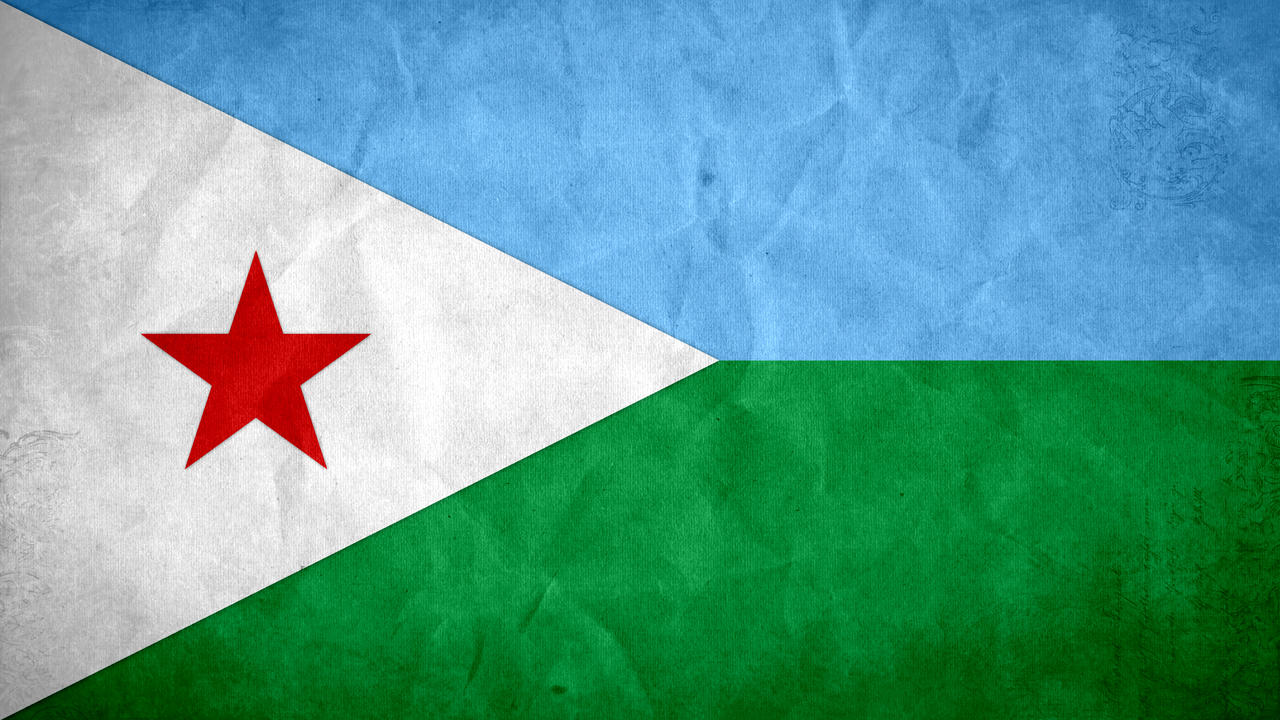
 Independence Day (June 27): This is the day which Djibouti celebrates its independence from France.  Cities and towns across the country decorate their public buildings and homes in blue, green, and white.  They actually had three referendum votes that took place in order to get enough votes to officially move towards independence in 1977 – which makes Djibouti 36 years old this year (that’s only two years older than I am!) and the third youngest country in Africa.  The day is not complete without the military parade to honor those Djiboutians who have died in battle, and a fireworks display in the nation’s capital at midnight. 

End of Ramadan (varies, July-August): Also called Eid al-Fitr; or in Somali, it’s known as Ciid Yare.  This holiday is a huge celebration that is held on the last days of the month-long fast known as Ramadan.  While people may attend special prayers at the mosque, its focal point is the huge feast people share with their family and close friends.  Children may also receive small presents, money, and new clothes. 


Muslim New Year (varies, October-November): Also called Muharram. It’s regarded as the first day of the month in which Mohammad made his trip from Mecca to Medina. However, there really aren’t any universal traditions associated with it, other than a general time for reflection.  Probably why I wasn’t able to find much info on this holiday. 


 Christmas Day (December 25): If you haven’t noticed yet, this is the only Christian holiday that made the list.  For the small number of Djiboutian Christians (as well as the small number of European and other foreign residents and US military members) in Djibouti, they usually head to their local church, which is usually decorated in lights and candles, for a special midnight prayer service and choral singing.  I’m gathering that Christmas in Djibouti tends to be slightly more focused on the religious basis of the holiday rather than the commercialism often seen in Europe and the US.  Far more laid back. However, I've also read that many Djiboutian Christians celebrate Christmas on the Orthodox calendar – January 7. 

Up next: art and literature

Saturday, November 30, 2013

DJIBOUTI: THE LAND AND THE PEOPLE


Ah, Djibouti. It’s long been the “butt” of many jokes for English speakers.  These jokes were usually placed at the  “bottom” of my joke list, though. However, I’m going to put this “behind” me, get it out of my system, and move on; I will do my best to look forward and not to the “rear.” 


Djibouti is one of four countries that make up the Horn of Africa, along with Somalia, Eritrea, and Ethiopia. The country itself is fairly small, slightly smaller than the US state of Massachusetts.  Djibouti lies on the Gulf of Aden and the southern entrance to the Red Sea. There are eight mountain ranges, the highest being Mousa Ali (which includes a volcano), and the entire country is covered by desert.  The climate is hot in the winter and hotter in the summer. The name “Djibouti” is named after the capital city of the same name. Although linguists aren’t exactly sure, but there is reason to believe Djibouti may be related to the Afar word gabouti, which is a doormat made of palm fibers, or possibly stemmed from “Land of Tehuti,” the Egyptian god of the moon.


Some historians believe Djibouti (and surrounding areas) is the place the ancient Egyptians called Punt (or Puntland), who was a major trading partner with Egypt at that time. (I wonder if people from Punt were called Punters. – Sorry, a little football joke.) This area was mostly inhabited with the Somali and Afar peoples.  The Ifat Sultinate is one of the major ancient kingdoms to reign in this region and of course there were several others afterwards.  In the mid-to-late 1800s, the French came in and set up their French administration in the capital city, later taking over and renaming the country French Somaliland (rather unoriginal, considering there was an Italian Somaliland and British Somaliland as well.) Several decades later in 1967, it was renamed again to French Territory of the Afars and Issas.  (Slightly wordy, it was at least more reflective of the original peoples). The people held a couple of referendums regarding their independence, but finally in 1977, Djibouti became its own country.  Although there was some political conflict that led to fighting starting in the early part of the 1990s, it had generally been resolved in the 2000s in an agreement of power.  Djibouti does hold the only US military base in sub-Saharan Africa, which is a key base in the assistance in the global watch on terrorism.    


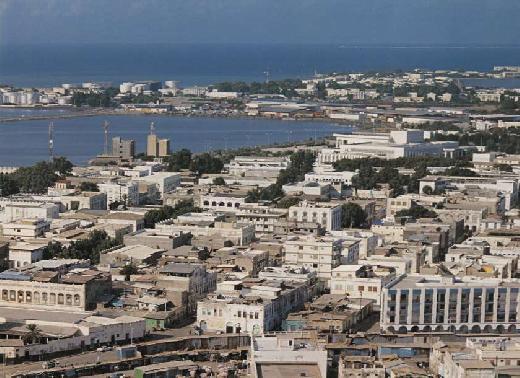
The capital city of Djibouti City has about 600,000 people – roughly the size of Portland, Oregon.  This seaport is known for its sand beaches, which are major tourist spots.  The city is also known its many markets, many of which are open-air markets selling everything from fabrics, woven goods, and jewelry to fresh meats and vegetables and grains. Much of the culture and architecture is a mix of Somali, Arab, and French styles and traditions.  Soccer is pretty popular, and they have a stadium that holds many international sporting events. Djibouti City is also a financial hub for many up-and-coming businesses in all fields.


By far, Djibouti’s largest trade partners are neighboring Ethiopia and Somalia. Djibouti also refines about four million tons of salt from the Lake Assal region annually – which also happens to be the lowest point in the entire continent of Africa.  With the help of Chinese investment, they are looking to expand the salt industry.  They do have problems with high unemployment; some estimates put it around 50%.  Because of persistent problems with drought causing an unfavorable environment for growing, most of their food is imported from other countries.  This also causes the country to have a lot of long-term debt they have to deal with.


While Arabic and French are official languages, most people also speak Somali or Afar as a first language.  Different dialects of Arabic are also found spoken in Djibouti, mostly in immigrant populations, as well as other minority languages.

The vast majority of Djiboutians practice Islam – about 94% of the population. In fact, the Constitution of Djibouti specifically lists Islam as the state religion, with Sunni Muslims making up the largest group and non-denominational Muslims being the second.  The remaining 6% of the population are Christian – there is a small Catholic population overseen by the Diocese of Djibouti.


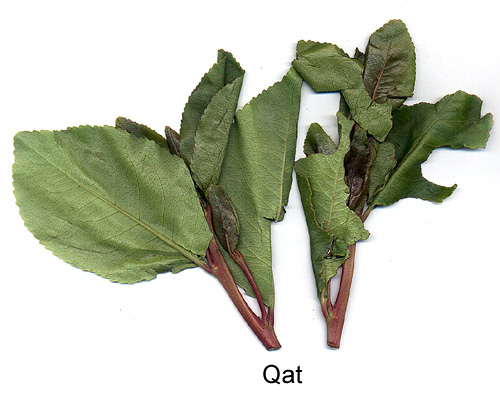
 I read that one of the common “pastimes” in Djibouti is qat chewing.  Qat (also spelled khat) is a medicinal plant, when chewed gives narcotic effects.  In fact, it’s banned in a lot of European countries (weirdly enough, not the UK).  It’s also banned in the US, but from what I could gather, it will be seized but not for the reasons you might think: it’s not seized as an illegal substance, but because “it’s labeling fails to bear adequate directions for use” according to the Federal Food, Drug, and Cosmetic Act. Sounds weird… So, while I may not be getting so local as to chew some qat, but I am looking forward to eating some Djiboutian food and learning more about a country that up until now has long just been relegated to geographical jokes.

 Up next: holidays and celebrations

Sunday, November 24, 2013

DENMARK: THE FOOD


Well, my son finally turned five years old this week, and I turned in his application for kindergarten and the magnet school program for next year.  Hopefully, he’ll be accepted to the same school that his sister goes to, a Spanish-immersion language school where their math and science classes are taught in Spanish and the rest of the classes are taught in English.  I really love it. I wish I had those opportunities when I was in school. 

And it was also a busy week, because the rugbrød bread is now at the top of my list of “bread that takes the longest to make.”  I had to start the sourdough starter last week because it was supposed to sit for seven days (ok, mine sat for six).  I’ve never made a sourdough bread before: this one called for buttermilk, water, rye flour, whole wheat flour, and some salt to be mixed together and then sprinkled with course salt before its covered and put in a cool place (but not in the refrigerator) and forgot about.  Then today, I had to get up and start this much earlier than I normally do.  I mixed a bottle of Carlsberg beer, some honey, salt, water, yeast, rye flour, and the sour dough mix together.  Then I stirred in some cracked wheat (because I didn’t have cracked rye), some water, and some crushed sunflower seeds into it.  In Denmark, they have special rugbrød molds, but I’m just using a regular loaf pan.  I didn’t take out any to preserve as a starter, but I could have if I wanted to.  Since I didn’t do that, I had to use three loaf pans.  The recipe says to let this sit for six hours, but I’m hoping science can do its thing in five hours.  After that, it calls to bake it at 350º F for two hours, spraying it with water every half hour or so (of which I had to get kind of inventive since my husband took my spray bottle to the garage where it’s lost and presumed dead.  I improvised with a Hello Kitty soy sauce dispenser.).  Technically, to do this the right way, the bread is supposed to cool on its own for a couple of hours and then wrapped in plastic wrap and put in the refrigerator for a day before slicing. Obviously, I should’ve made this yesterday, and since I didn’t, I’m going to try to accelerate all of this cooling business.  Maybe I should give it the cold shoulder? (I did manage to put it in the refrigerator for a bit, and I think it was fine to cut.)

Hearty and perfect for cold weather -- it was 25 degrees colder in Indianapolis than in Copenhagen. 
The rugbrød is the basis of an open-faced sandwich called smørrebrød.  There are probably hundreds of types of smørrebrød from pickled herring to vegetarian styles.  The one I chose was called frikadeller.  It’s basically a meatball made from pork and veal, but I couldn’t find any veal, so I went with just the ground pork.  (Of course, I am shopping in the days before Thanksgiving, so some of the shelves are a little bare.)  The pork is mixed with a little onion, egg, some soda water, salt, flour, a little allspice, and pepper.  Unlike the baked meatballs that I made from Belarus, these meatballs are pan fried in butter and flattened slightly to resemble small patties. I think there was a little too much soda water because the first batch kept falling apart.  I added a little more flour, and really, even at that, they still turned out more like patties rather than slightly flattened meatballs. But regardless, the flavor was excellent. 

Yes, I ditched the veal, but these were really good.
And now it comes time to assemble the smørrebrød.  It starts out by spreading some Dijon mustard on a slice of the freshly made rugbrød (although I think I would prefer yellow mustard), then topping it with a couple of the frikadeller meatballs and some kind of garnish on top of the meatballs. I used a recipe called syltede agurker, which is Danish Pickled Cucumbers to put on top of it.  This recipe is 98.1% like a similar recipe my mother would often make in the summer.  It’s thin-sliced cucumbers, cider vinegar, water, sugar, salt, and pepper stirred together and refrigerated for a couple of hours.  Then it’s drained and sprinkled with dill weed.  I bought fresh dill for this because it was 99¢ for a bunch, but it’s a HUGE bunch, and I’ll never use it all.  Maybe I can find someone to pawn off some dill on. And maybe a loaf of rugbrød. 

Tastes like childhood, and the fresh dill just made my childhood even better. 
The bread was extremely hearty. And even though each ingredient is delicious, yet completely different from the others, when it was assembled, it all came together.  The reason I would’ve chosen yellow mustard over Dijon is that between the Dijon mustard and the vinegar cucumbers, it was a little too much bite.  But that was my only measly complaint.  Otherwise, it was the most wonderful thing I’ve eaten today.  And it was really filling.  One sandwich was plenty enough. I think this will make the best lunch tomorrow, and probably for the next couple of the days.  Of course, I chased this all down with a Carlsberg beer (but when I was at the liquor store, I found a dark rye ale called Rugbrød – it tasted something like Guinness -- I only bought it for the name). 

I suck at pouring beer into a glass since it was all foam.  So, I drank it straight from the bottle.
And at least this is a short workweek for Thanksgiving. It’s a common time to reflect on what you’re thankful for, and I suppose I’ve been thinking about it a little myself.  I’m thankful for so many things including my family and this blog, and my ability to think and read and write – it’s more than a lot of people have.

Mmmm. There are no words but mmm mmm. (Ok, that's also the sound I make with food in my mouth.) 


Up next: Djibouti

Saturday, November 23, 2013

DENMARK: MUSIC AND DANCE


The earliest known music in Denmark has been traced to the Bronze Age with the making of lurs.  A lur is a long tube-like instrument made from bronze, shaped similar to a sousaphone but much skinnier, and played by blowing into it like a horn.  It’s actually thought to be one of the earliest forms of many of the modern-day brass instruments. Music has been a very important part of Danish society, although most of the early music was centered after the Reformation, and later, Dieterich Buxtehude was one of the prominent organists and composers during the Baroque era.  Opera was later introduced from Italy and Germany during the early 1700s.  Friedrich Kuhlau was a composer whose music was used in one of the Danish national anthems. As a pianist, Kuhlau also brought Beethoven’s music to the people of Denmark. 


Carl Nielsen is often contributed as the most famous Danish composers of all time. I actually am embarrassed to say that even as someone who holds a degree in music, I was unaware of his name. I did listen to portions of his “Symphony No. 1” and “Symphony No. 4,” both of which I enjoyed. 


In contrast to this, folk music and folk dancing was something that was more on the “people’s” level.  It was something that everyone could join in and was often the centerpiece of community events.  Many of these dances took place in a farmhouse or in some other public building perhaps, and most of these dances were styled as chain dances or rotational dance so that it could maximize the number of dancers in crowded spaces.  And actually, during the 17th and 18th centuries, only officially appointed town musicians were allowed to play the music, so it was probably best to stay away from crazy ideas of unauthorized fiddle playing.  Denmark imported a couple of dances from Poland and other countries – one was the pols (a variant of the polka, a pair dance), and another was the minuet. And of course, the Danes came up with their own versions of other country’s dances, such as the waltz and square dances. People generally dressed in their Sunday best when it came time to coming to these dances, and nowadays there are many folk dancing societies around Copenhagen and other cities in Denmark, giving performances in traditional dress. Ballet and other forms of classical dance are also quite popular in Denmark as well. 


Starting in the 1920s, jazz became quite popular – and still is.  Even during the German occupation during WWII, jazz music was generally discourage, but some musicians kept performing anyway while others escaped to nearby Sweden to continue their music.  After the war, New Orleans/Delta style jazz and bebop from the US began infiltrating Danish jazz.  Jazz venues became destinations, such as Jazzhus Montmartre in Copenhagen, and American jazz musicians began flocking to Copenhagen to perform.


Danish rock emerged in the 1960s and 1970s and drew much of its influence from the highly popular styles of American and British rock.   I have found several bands that I liked, mostly in the indie rock and folk rock genre, but also a couple hip-hop and R&B artists.  The first band that I found that I ABSOLUTELY love is The Raveonettes.  I went to the library and checked out the albums Lust Lust Lust (2008) and Observator (2012).  I actually thought Observator was a better album, but it was extremely short – only 9 songs. 


And of course, the drummer for Metallica is Lars Ulrich, born and raised in Denmark.  In fact, he was the first Dane to be inducted in the Rock and Roll Hall of Fame.  I added their Black Album to my playlist – it reminds me of my high school years. 


As a pianist myself, I really enjoyed listening to Agnes Obel’s album Philharmonics.  It’s acoustic and simplistic and at times resembles Celtic folk motifs. I may end up buying this album. It’s nice to listen to while I’m working.


One pop singer I discovered is Fallulah whose album The Black Cat Neighborhood is really catchy, and my daughter is absolutely in love with it. Probably because it has the word “cat” in it and she’s an 8-year-old girl. I tried to find this: my library doesn’t have it, and iTunes doesn’t have it, but I did find some used copies on Amazon for about $13.  I may also have to buy this.


I did find an artist who calls himself Burhan G. It’s kind of R&B, I think. More or less a mainstream American sound, the album does have a few catchy tracks. The same goes for another group call Nik & Jay. 

Up next: the food