Showing posts with label rock art. Show all posts

Thursday, June 18, 2020

TUNISIA: ART AND LITERATURE

It’s no surprise that Tunisia, a land that is surrounded by rocks and desert, should have rock art. Archaeologists found evidence of these ancient rock drawings in areas around the Saharan regions of southern Tunisia. These ancient peoples around the town of Bou Salem also left behind some dolmens, a type of large stone structure that serves as a tomb. The Romans, Greeks, and Carthagians left a lot of artistic styles and architecture throughout Tunisia.


Because of Tunisia’s location, quite a bit of the types of art and particular styles have been based on their history and influences from other areas. Spain, Persia, and even China has had their influence on Tunisian art. The country’s older art forms use these influences to create a style called Arabesque. It’s a type of surface decoration that consists of scrolling, intertwined vines, tendrils, foliage, or sometimes just lines with other elements to it. Sometimes it can be created as a tile, and the tile is replicated (I suppose somewhat like a partial tessellation, perhaps?). Because Islamic art forbids creating any likeness to people, it will often employ these arabesque-style artforms, incorporating geometric patterns with it. It creates for a very complicated, beautiful look.


Tunisia is also known for its mosaics and pottery. Mosaic art is one of my favorite styles of art: taking smaller pieces of ceramic or glass usually (or both perhaps) and creating a picture out of the pieces. They use a variety of bright colors to make these designs, mostly seen on walls or floor patterns. You can see this style of art used in a lot of buildings and in architecture, and many times, mosaics are cut to create geometric shapes and even accented in gold or other metals.

by Ammar Farhat

Early on, painting wasn’t quite something that Tunisians engaged much in since Islam forbids painting humans. By the time the French arrived and took over, painting extended itself from a European artform to one that Tunisians took up as well. Art schools popped up, especially in Tunis, and students began learning skills and techniques from all over Europe, Asia, and other places. A group of painters led by Moses Levy, Ammar Farhat, Abdelaziz Gorgi, Yahia Turki and others encouraged native themes and rejected some other foreign influences in a way to promote their country. It ended up bringing people of different backgrounds together. As Tunisia gained its independence, artists started going off on their own, incorporating their own national flair into other genres, like abstract, expressionist, fantasy, calligraphy, and other styles. And as much as Tunisians went abroad to study art, other artists trekked to Tunisia for the same thing, most notably Alexander Roubtzoff, Paul Klee, and August Macke.

Aboul-Qacem Echebbi

Tunisian literature is either published in Arabic or in French. Clearly, there’s more literature written in Arabic than French, mostly because the French influence didn’t come until 1881. Poetry has long been an artform among the Arabic-speaking countries, and Tunisian poetry is included. However, Tunisian poetry is also known for stretching the rules, doing their own thing through nonconformity, and creating their own through innovation. One poet who represents this well is Aboul-Qacem Echebbi--most famously known for writing the last two verses of the current national anthem. The sad thing is that he died at age 25 from heart problems, but his poetry has been revived to a degree in recent years.

Albert Memmi

French literature in comparison was seen as a critical approach to writing. In fact, one French-Tunisian writer, Albert Memmi, who just passed away last month, didn’t have high hopes for Tunisian literature. He essentially alluded to the idea that it just simply wouldn’t go anywhere, a fad that will fade. But that’s completely contrary to what other Tunisian authors have done by traveling abroad. Authors like Hélé Béji (author, educator), Abdelwahab Meddeb (professor, poet, novelist, translator, radio producer), and Mustapha Tlili (novelist, worked at the UN) brought themes of traveling, wandering, heartbreak, and exile to the forefront.


Radio also had a huge influence on storytelling (both fiction and nonfiction), especially during the early 20th century. Telling stories on the radio during that time was popular all over the world because it was a fairly new technology that allowed you to reach massive audiences. Douagi Ali was one of these writers, producing over 150 of these radio stories, not to mention over 500 poems and folksongs, and about 15 plays as well. Even today, radio is still being used by youth as a medium for telling journalistic stories that commercial and government stations wouldn’t begin to think of airing. These youth have even rejected the idea that there are some subjects (as directed by some older people) that should be taboo, like politics, religion, and sexuality. But they’re pushing forward and creating more of these youth-led radio stations across the country.

Up next: music and dance

Wednesday, December 5, 2018

SOUTH AFRICA: ART AND LITERATURE


As the Khoisan and San people moved into the southernmost parts of Africa where the Bantu and Nguni people came before them, they brought along their own art forms and culture. The earliest nomadic tribes left evidence of their existence through their rock paintings depicting their life and even their magical beliefs. The paints they used were created from local plants and other materials, giving them an array of reds, blacks, greys, whites, and yellows.


When the Europeans arrived in South Africa, they brought along their arts with them as well. Toward the end of the 19th century, the first South African arts society was formed. Art galleries began popping up in the cities. Of course, many paintings and other works were of European origin in the beginning. However, it didn’t take long for South African artists (in the broad sense) to showcase their truly South African art.


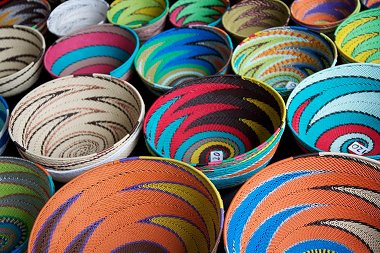
In the indigenous communities, art remained a functional part of their society. Like many similar cultures, their folk art came in the forms of small sculptures, jewelry, pottery, baskets, and other handicrafts. However, most of what is made now is only to appease the tourist markets.

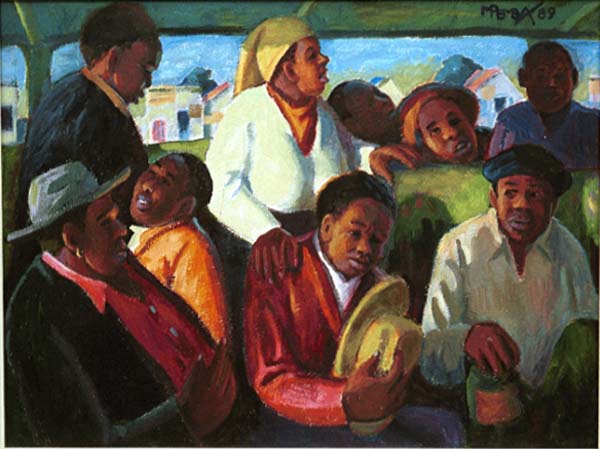
by George Pemba
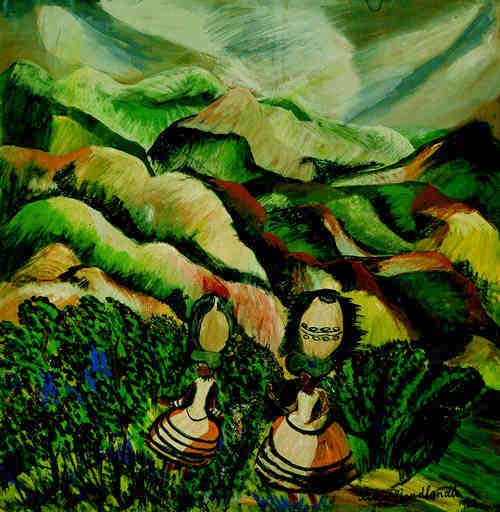
During the 20th century, South African artists began to take on subjects related to their national and ancestral identity, in contrast to the colonialism they just came out from under. Art was also used as a way of dealing with their socio-political problems, like apartheid. Some names to know are Moses Tladi (in 1938, he became the first black artist to formally exhibit his work), Qwabe brothers (known for their relief carvings), Hezekiel Ntuli (known for his sculptures, especially oxen, leopards, and portrait busts), Gerard Bengu (known for his realistic paintings of rural Bhaca life and landscapes), George Pemba (one of the pioneers of black artists, part of the “Thirties Generation,” won numerous awards for his work spanning seven decades), John Koenakeefe Mohl (painter, also started the first art school for black artists), Gladys Mgudlandlu (self-taught artist, first black woman to have her work displayed in a gallery), and Simon Lekgetho (known for his often haunting depictions of African life and cultural items).

by Gladys Mgudlandlu
It's great to live in a diverse area. It makes us all richer. However, when your country's borders were drawn by someone else, it can cause some cultural issues. South Africa has 11 official languages and a number of other locally spoken ones. Literature from this country can be found written in English, Afrikaans, Xhosa, Zulu, Pedi, Sotho, Venda, Tswana, Tsonga, Ndebele, or SiSwati. However, these languages and cultures spread across borders, so someone can write in Tswana but not necessarily live in South Africa. Sometimes, it brings up questions of nationality versus culture.

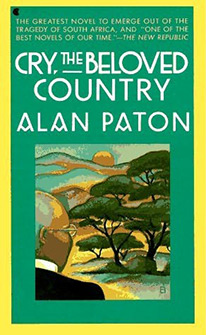
Because English is often used as the lingua franca in South Africa and holds status as an international language, there is quite a bit of South African literature written in English. One of the first major works written in English from South Africa was The Story of an African Farm by Olive Schreiner, published in 1883. However, by far the most widely read South African work (in American classrooms, at least) is Alan Paton's Cry, The Beloved Country, published in 1948. Some English-language authors of note include Nadine Gordimer (anti-apartheid political activist, winner of the Booker Prize in 1974 and the Nobel Prize in Literature in 1991), J.M. Coetzee (won the Booker Prize in both 1983 and 1999 as well as the Nobel Prize in Literature in 2003 and others), Miriam Tlali (first black woman to have a novel published, which was in 1975), and Zakes Mda (poet, playwright, novelist, won the Commonwealth Writers Prize in 2001 and is part of the school curriculum) among many others.


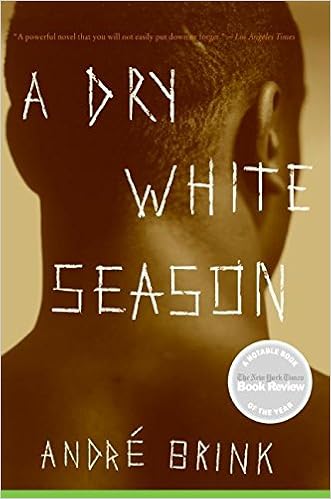
Afrikaans literature makes up another large portion of the literature from South Africa. The Afrikaans language is similar to Dutch but obviously has a lot of African and German words thrown in the mix. It's spoken throughout the land and also serves as a lingua franca among both whites and coloured South Africans. [In South Africa, coloured refers to mixed race people, not the archaic derogatory meaning it has in the US -- it still throws me off when I see it). One of the more prominent literary styles that was popular was the plaasroman, or farm novel; and likewise as urbanization became to take hold post-WWII, the dorpsroman, or town novel developed the same way. Some of the more well-known Afrikaans-language authors (and some also write in English as well) include Andre Brink, Eben Venter, Marlene van Niekerk, Lettie Viljoen, Breyten Breytenbach, and Etienne van Heerden. 


And now we come to African language literature. There is a difference in subject matter and perhaps tone between white and black South African authors. Racial differences sometimes set boundaries in literature. Many black authors write using the apartheid period as the backdrop and often write on their history, the consequences of colonialism, and other epidemics. And while the early part of the 20th century was clearly dominated by male writers, female authors began to emerge and get published during the latter half. And even at that, it was hard for female authors to gain notoriety because of the long-established patriarchy. Black South African authors are generally categorized by the language they write in: Zulu (BW Vilakazi, Mazisi Kunene, HIE Dhlomo, RRR Dhlomo), Xhosa (SEK Mqhayi, AC Jordan, Godfrey Mzamane), Sesotho (Thomas Mofolo), and Tswana (Sol Plaatje, LD Raditladi).

Up next: music and dance

Tuesday, June 5, 2018

SAUDI ARABIA: ART AND LITERATURE


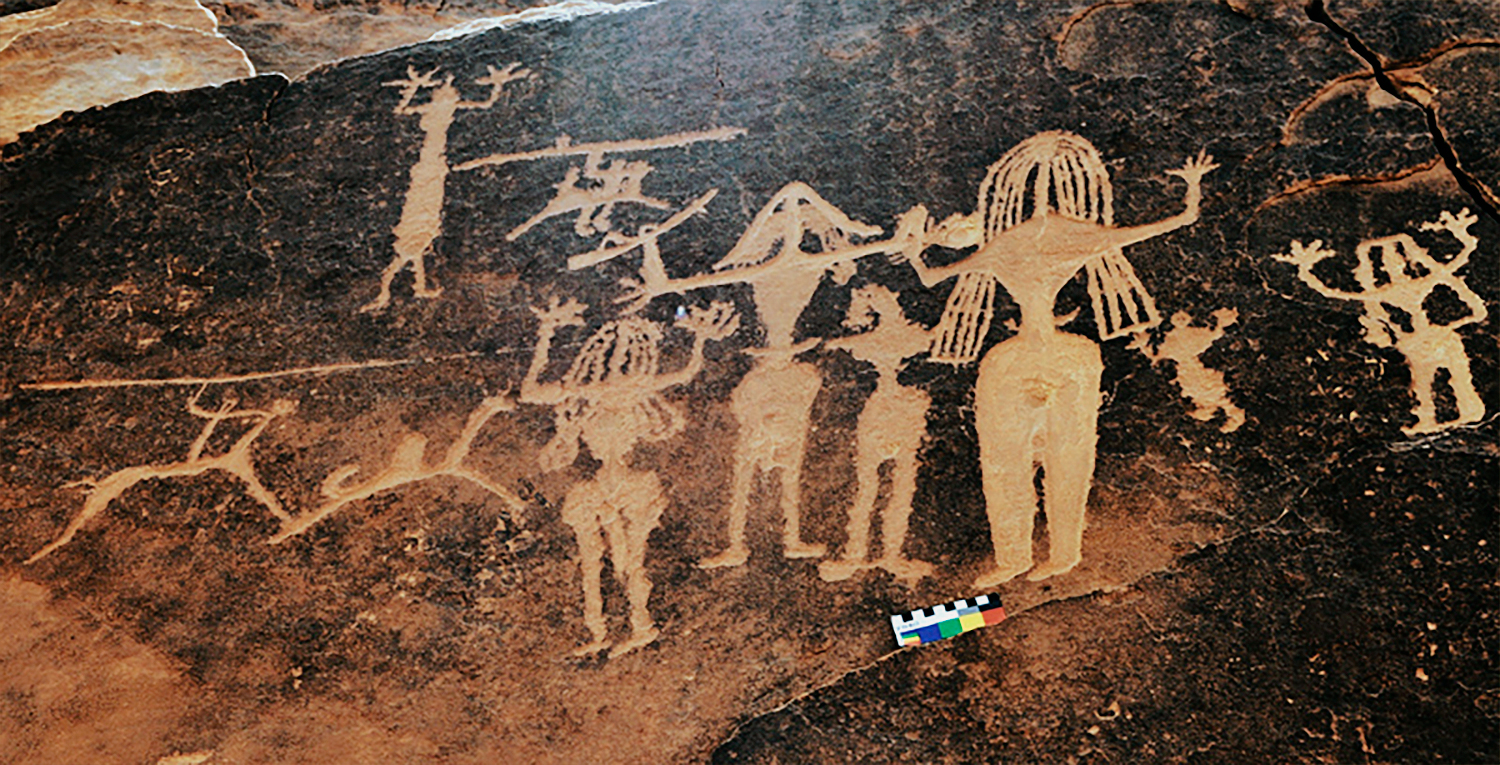
The earliest form of art is probably in the form of rock art. Most of this art depicted both humans and animals and their nomadic ways of life. Wusum, or tribal symbols, were carved by the Bedouins in many of the hills and throughout the deserts. During the latter part of the 1980s, there was a push to record where a lot of these sites are located and came up with nearly 1000 rock art sites! 

 
Many of the handicrafts in Saudi Arabia have been passed down for generation. Nomadic tribes like the Bedouin have relied on weaving for their everyday lives. Woven rugs were not only for practical use, but the brightly colored strips were also for decoration. Other crafts include metalwork, jewelry, leatherwork, and pottery.


Architecture is also a form of art. In certain regions, the buildings are made from mud bricks, while buildings in different regions can be a couple stories tall with courtyards built into the center of the property. Islamic architecture is also very common and geometric in design. Arches and interconnected designs or tessellations are often used as decoration.Mosaic are also often used.


Pretty much all literature from Saudi Arabia is written in Arabic. Modern traditions rose out of traditional Bedouin poetry. This poetry played an important part in their society and was quite integrated into it. It was often oratory and passed down from generation to generation.


Today, authors face far more scrutiny and censorship from the government. Many publish their works outside of the country. And even some authors who are published still have issues with censorship.


A few Saudi Arabian authors of note include Haifaa al-Mansour (more known as a controversial female filmmaker), Abdul Rahman Munif (he has had his books banned and his citizenship revoked), Ghazi Abdul Rahman Al Gosaibi (poet, novelist, politician), Turki al-Hamad (known for his coming-of-age trilogy; he’s had a fatwa and death threats), Raja’a Alem (award-winning novelist known for her novel The Doves’ Necklace), and Rajaa Al Sanie (known for his novel Girls of Riyadh).

Up next: music and dance
Wednesday, December 14, 2016

NAMIBIA: ART AND LITERATURE


Namibian art goes back to the earliest days of antiquity. Rock art has been found in caves and shelters that were close to where these nomadic tribes had set up temporary settlements. Evidence of early stone tools and weapons has also been found in these locations as well. Many of these rock drawings depict their everyday life, their hunting expeditions, and their spiritual beliefs. Their paints were made from materials that were readily available to them in the desert, and paintbrushes were made from animal or human hair. Sharpened stones were used for carving. 

 
However, rock art wasn’t the only art Namibians produced. They were also skilled at creating art out of everyday utensils and tools. Items such as baskets and pots were woven, molded, and painted in a variety of subtle geometric designs. Belts, bracelets, and leather pouches were decorated with beads, ivory, and stones. Even musical instruments such as drums, rattles, and thumb pianos (mbira) are also decorated with carved designs. Textile arts were also a necessity: embroidery, weaving, and appliqué were used for wall coverings, clothing, tablecloths, rugs, and a number of other items.


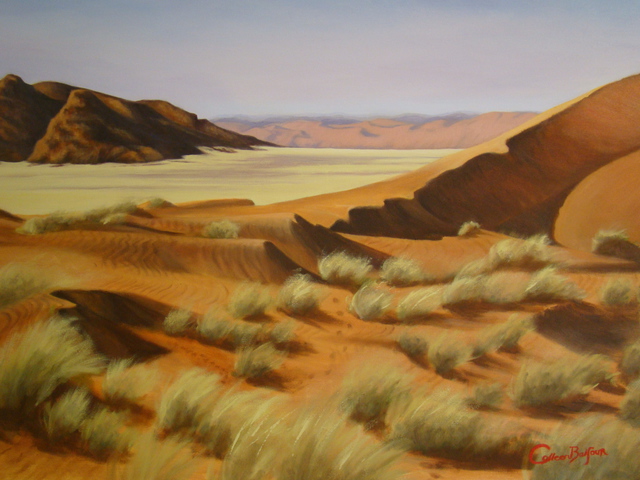
As Europeans moved into the land and took it over, they also introduced a variety of styles of European painting. Landscapes were quite a popular thing to paint as was the abundant African wildlife. Namibian artists as well as European and foreign artists flocked to the rural areas to paint the view.


Even after independence, Namibian artists continued to utilize these European artistic styles and techniques. They merged their own culture into their art, and it became an expression of their identity, a means to tell a story, and to depict their life and their struggles. It’s hard to say if there’s a unifying theme or style among artists because each is unique. Perhaps the land and the people remain the unifying element.


Technically speaking, the first pieces of literature were probably those rock drawings. But the Owambo tradition is considered one of the earliest forms of literature in Namibia. As Europeans ventured into the area as explorers and missionaries, they wrote about what they saw. However, they wrote from their point of view, not necessarily about the people or their history or way of life. For the people who lived here, oral traditions were at the heart of their storytelling for many of the early times. 


As Christianity moved through the land, it influenced their literature in many ways. For one, there were cases where they downplayed the local cultures in lieu of European ways. However, in many areas, the church was responsible for education and the teaching of written language. Much of the early literature was in the form of poetry, short stories, and traditional tales that have been passed down from generation to generation.


Literature from colonization to today is mainly written in English, Afrikaans, or German. Many Namibian writers have had their works published and have made significant contributions to modern African literature. Common themes include women’s rights, the rise to independence and the shedding away of colonialism, the struggles of oppression, and cultural identity. One writer, Neshani Andreas, writes about women’s issues in her novel The Purple Violet of Oshaantu. Giselher W. Hoffman is an example of a Namibian writer who has produced several novels written in German.

Up next: music and dance

Thursday, January 14, 2016

LIBYA: ART AND LITERATURE


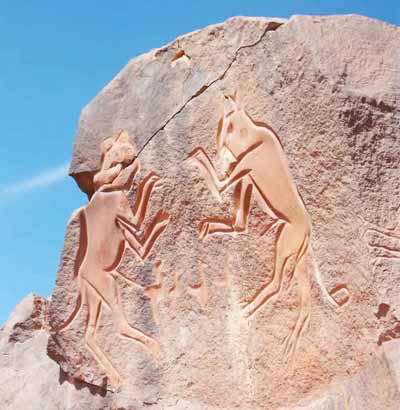
Libyan art shares influences with several cultures that have historically been in the area: Romans, Ottomans, Arabs, Tuaregs, Berbers, Italians, and others. The earliest forms of art are in the form of cave drawings found at a site near Awiss. These drawings mostly show the hunt of animals and desert life. Really, what else is there? (I’m joking.) Wadi Tidwa is known for its more bizarre rock carvings, and archaeologists have thought that perhaps it’s related to some ancient religion because, you know, religion can be bizarre sometimes. Other areas where rock carvings have been found include Messak Settafet, Mellet, and Wadi Matkhandoush. According to the Greek historian Herodotus, the Libyans invented the wheel, and subsequently, there are about 500 examples of cave drawings of chariots. (Yes, but are they on fire?) 

It's supposed to be two cats fighting. They must've been able to see into the future and paint what I deal with every single day..
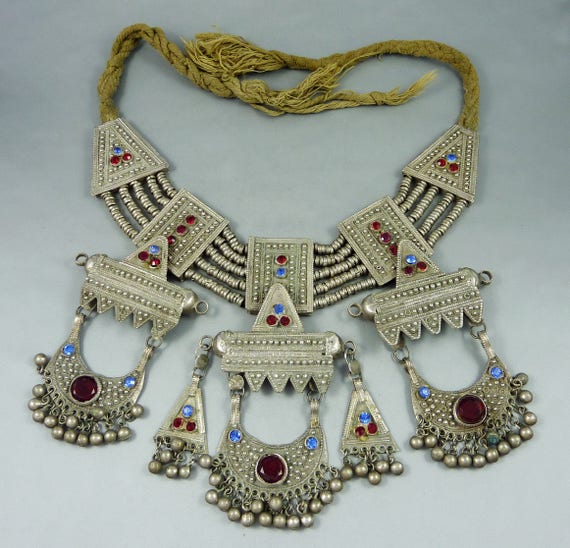
Many of their folk art traditions are tied in with Islamic traditions. And per the Islamic guideline that no figures or animals are to be depicted, Libyan crafts and folk art do not have this either. Instead, geometric patters are used. Other crafts and folk arts include embroidery and weaving, metal engraving, instrument making, jewelry making (mostly out of leather, silver, and beads), and leatherwork. 

Libyan Berber jewelry
Art has long been used as a means of expression and as a means of addressing issues that need to be dealt with. Unfortunately, many of Libya’s artists left the country due to the high level of censorship under the Gaddafi government. One artist is Aimen Ajhani (aka El Bohly). He was instrumental as a graffiti artist, and often created art with a political message. In Libya, he often faced arrest for his craft, many times reported by people who didn’t understand what he was doing — even after the war. I think that although most art was repressed for almost two generations, now that we’re on the other side of the Civil War, artists are finally starting to come out and be more open about it. The political situation is still somewhat shaky, but I think it’s heading in the direction of getting better. (Maybe? I hope?)

by El Bohly
Libyan literature stretches back thousands of years. Early Libyan literature was stemmed from its oral poetry traditions. It didn’t have as much impact on early literature coming out of the Arab Renaissance. However, its oral poetry strived, and it was this medium that was used to express their unsavory sentiments during the Italian occupation. 

by Sadeq al-Neihum

Modern Libyan literature didn’t really get its momentum until after they gained their independence. Many of the writers who rose to prominence during the 1960s wrote on progressive and socialist views. Writers like Ali al-Regeie, Khamel al-Maghur, Sadeq al-Neihum, Khalifa al-Fakhri, and Muhammad al-Shaltami followed these themes and were widely read during this time. 

 
Ghassan Fergiani owns a bookshop in London promoting Arabic and Libyan literature.
These writers hit a wall after Muammar Gaddafi took over. He set up one single state-owned publishing house that everyone had to go through whether you liked it or not. The state got to decide who and what got published. The ones who didn’t like it were either imprisoned or just simply left the country. It was a rough time for anyone in the arts, especially if your views were contrary to Gaddafi’s. After the Civil War, however, this uber-conservative censorship was lifted, and writers could freely write again. (More or less, I suppose.) Their constitution made sure they wrote in freedom of the press. It’ll be interesting to see how free their freedom of the press is as we continue to watch the changes in their political situation.

Up next: music and dance
Thursday, December 5, 2013

DJIBOUTI: ART AND LITERATURE


A lot of the art in Djibouti has been influenced by Somali, Afar, French, Arab, and Ottoman arts and cultures.  Some of the oldest pieces of art are in the form of rock drawings, especially near the town of Balho.  Speaking of rocks, this is a good time to bring in Lake Abhe (sometimes spelled Lake Abbe).  It’s one of the lowest places in Africa and is most famous for its limestone “chimneys” protruding from the ground.  This area is also a hotbed for geothermal energy.  I’ve also read in two places that this is where they filmed Planet of the Apes, but I also read that it was filmed in deserts of Arizona and California. But I'm not sure which one they were talking about. So, who knows?


Some of the largest pieces of art can be found in their architecture.  Most of the buildings are Arab-influenced styles and motifs.  Plasterwork seems to be a common medium as well, usually found on ceilings, walls, and moldings. What I find interesting when taking a close look at it, it's highly mathematical. Some of these designs almost seem to be based on tessellations, although many seem to be variations on a theme. It tends to be highly decorated with reoccurring patterns, often filled with Islamic symbology. 


Like other North African countries, the art from Djibouti often utilizes geometrical shapes in its designs and motifs and bright colors. They also are skilled at woven arts such as baskets and mats as well as other types of textile arts.


Much of Djibouti’s literary history has been passed on generation to generation by word of mouth.  Djiboutians are great poets, and there are several styles of poetry that they utilize.  The gabay is a Somali epic poem that is over 100 lines long.  In a young poet’s studies, they’ve finally reached a respectable level of being a poet once they can compose and recite one of these poems. In the Afar culture, a ginnili was a kind of warrior-poet and often thought of as a diviner as well.  Poets evidently held a high status in their society.  They were also great storytellers, mostly in folk stories that are passed on orally, as well as being composers of the great battle songs. 


Many Djiboutian writers have also contributed to the world of Islamic literature.  One of the most prime historical works is Futuh Al-Habash, written by Shihab al-Din during the Middle Ages.  This important work is a leading account of the Army of the Adal Sultanate’s occupation of Abyssinia. 

Abdourahman Waberi
In modern times, there are several politicians and intellectuals who have written memoirs and works about their vision for country as well.  One of the most prominent writers today is Abdourahman Waberi.  Born and raised in Djibouti City, he later went to France to study English literature.  He did work as an English teacher while in France as well as a consultant and critic for various groups.  As the recipient of numerous awards, his latest novel Transit was also finalist for the Best Translated Book Award this year. 

Up next: music and dance

Thursday, May 9, 2013

CENTRAL AFRICAN REPUBLIC: ART AND LITERATURE


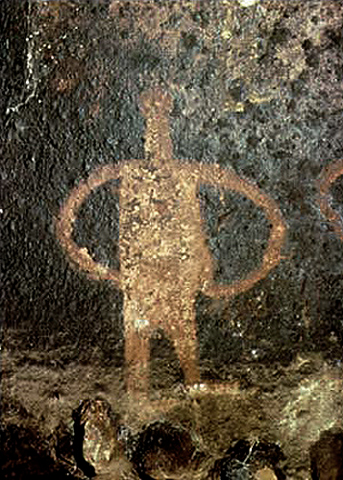
One of the most prolific styles of folk art from the Central African Republic is that of rock art.  Most of the rocks used for these drawings are in sandstone, a generally soft stone.  It’s spread throughout the country, but there are large finds in the northern, western, and southern regions.  And the style varies by region as well.

In the north, the figures are anthropomorphic (a fancy word meaning having human characteristics) representations and are generally white, black, and red in color.  One characteristic of these drawings is the “pot handle arms,” where the arm is drawn like a giant curve from the shoulder to the waist, mimicking the handle on a pot.


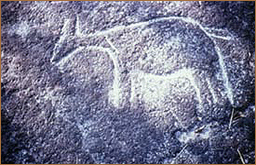
In the south, the animals most used in their drawings are the antelope, birds, and felines.  A lot of the figures are shown throwing spears and knifes and tend to be more geometrically and angularly drawn.


I read that there is a unique site near Bwale where the anthropomorphic figures are drawn with guns.  Umm, really? So, unless these particular drawings are the missing links of various alien conspiracy stories, or these drawings are a whole lot newer than the others.

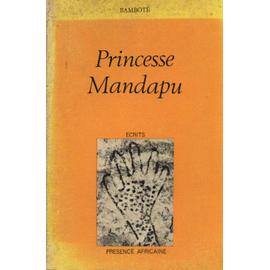
Only a few writers have emerged to the notoriety.  Pierre Makombo Bamboté was the first writer from the CAR to be published in 1962. He is an accomplished poet and novelist, and short story writer, most known for his work Princesse Mandapu. 


Étienne Goyémidé is another poet who also wrote a number of plays and novels. He wrote his first novel (Le Silence de la Forêt) about the way of life of the pygmies.  A year later, his second novel debuted, called Le Dernier Survivant de la Carivane, was written about the external and inner battles between the people and the slave traders. 


Blaise N’Djehoya is a writer, journalist, and a filmmaker who makes documentaries. He was born in Bangui to Cameroonian parents but currently resides in Paris.


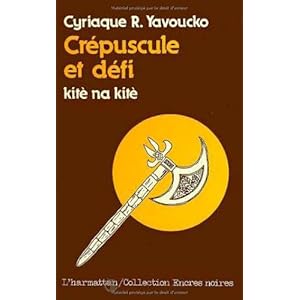
Cyriaque Robert Yavoucko is most known for his novel Crépuscule et Défi: Kité na Kité (1979). There’s not a lot of biographical information out there. He either had worked or currently works at the University of Bangui.  I tried to find him on the university’s website, but the site is under construction. It’s the only university in the CAR as of 2006.

Up next:  music and dance