Showing posts with label Dead Sea. Show all posts

Sunday, August 2, 2015

JORDAN: THE LAND AND THE PEOPLE

As another country that doubles as a first name, you’d be hard pressed if you haven’t heard of Jordan, especially if you pay any attention to the news. I suppose there are more than a few who only watch the dumbest of TV shows, and well… I promised I would stop going off on tangents, even though that is certainly tangent worthy. But it’s a topic for another time. There’s a lot going on in this area of the world. And I’m hoping to shed some light into the culture where this is taking place. 


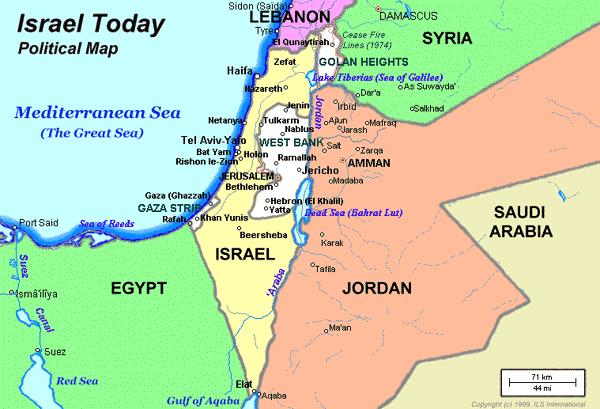
This country is named after the Jordan River, a major river in this area. It essentially runs from the Sea of Galilee to the Dead Sea and partly serves as the border between Israel and Jordan. 


Jordan lies in the Middle East in an area sometimes called the Levant. This is the area that is closest to the Mediterranean Sea. It is surrounded by Israel (along with the West Bank and the Golan Heights) to the west, Syria to the north, Iraq to the northeast, and Saudi Arabia to the south and east. Jordan also shares a border with the Gulf of Aqaba and the Dead Sea, which are really the most significant bodies of water in the entire country. The Dead Sea is actually the lowest place on earth at 408 m (1338.58 ft) below sea level. The country varies between arid desert plateaus and arable mountain regions and generally has a Mediterranean climate. 


This area is steeping in Biblical history, and several of the kingdoms mentioned in the Bible originated here, like the Kingdom of Moab, the Kingdom of Ammon, the Kingdom of Edom, and others. It was also included as part of other kingdoms that extended its way into this region: the Akkadians, the ancient Egyptians, the Hittites, the Persians, the Greeks, the Nabateans, a number of other empires including at times, the Israelites. The Nabateans were the ones who developed the Nabatean alphabet, originally based on Aramaic, and eventually became the basis of the Arabic script. The Nabateans also left us the city of Petra, known for its rock-cut structures and is now a UNESCO World Heritage Site. This country began to be known as Transjordan, and this name will stick around until they declare their independence. There were many Jewish settlements in this area, but Christianity quickly spread across the region because of the Roman Empire. But like most places in this region, the Ottomans eventually took over (and stayed for the next 400 years), bringing with them Islam. While the fighting of WWI was happening in Europe, there was another fight happening: the Transjordan troops were fighting against the Ottoman Empire and were generally supported by the Allies. (This revolt was highlighted by T.E. Lawrence and served as the basis of the movie Lawrence of Arabia.) Afterwards, Transjordan was placed under the British Mandate for Palestine. In 1946, Transjordan gained its independence, officially becoming the Hashemite Kingdom of Transjordan. A few years later, the “trans” was dropped, becoming the Hashemite Kingdom of Jordan. They went through Palestine to attack Jerusalem. Throughout the latter part of the 20th century, Jordan and Israel would fight several wars over the Palestinian states and land occupation, and several peace treaties have been signed.


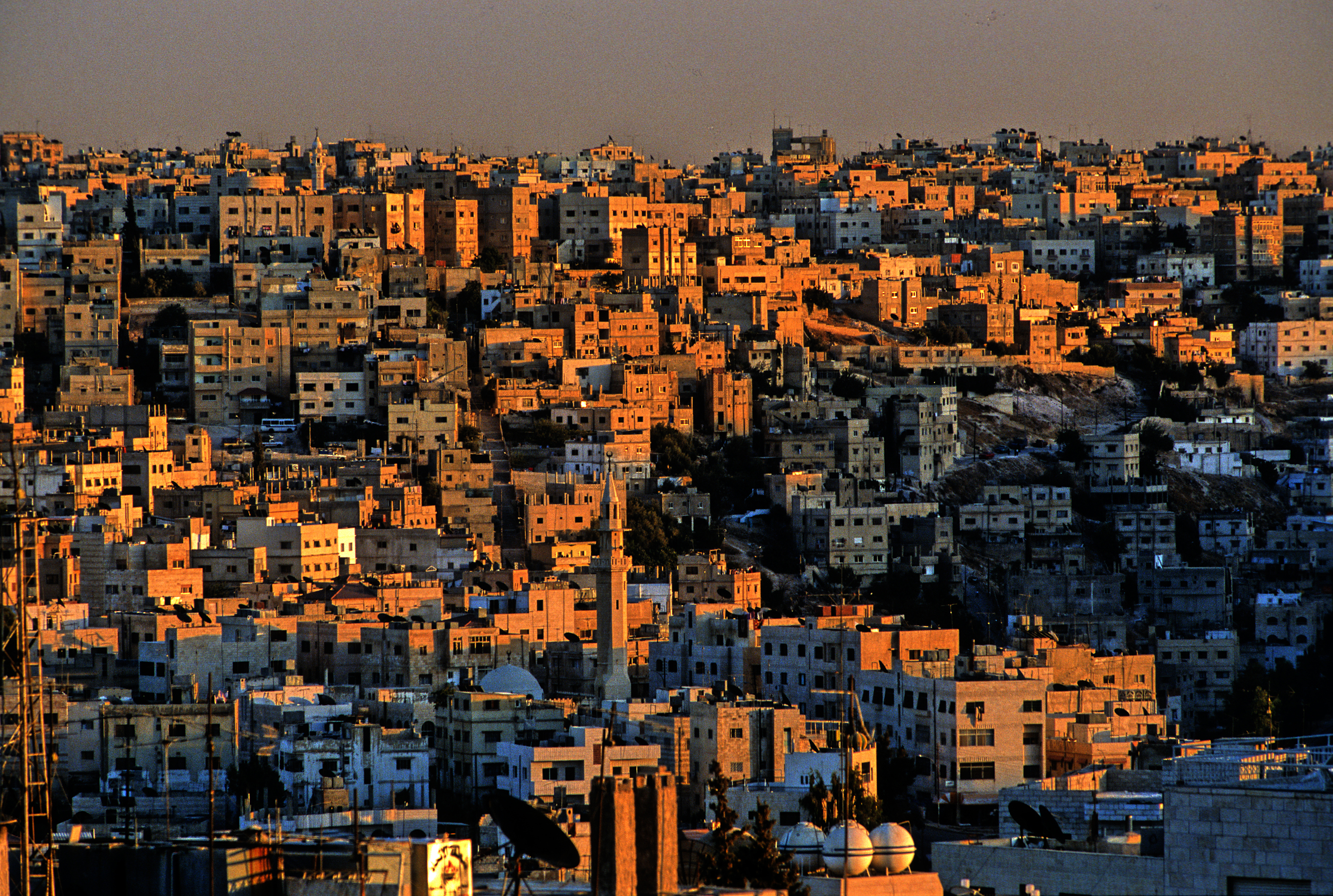
The capital and largest city, Amman, has about 4 million people, making it about the size of Los Angeles. Because it’s one of the largest cities in this area, it’s also a center for government, media, arts, education, and business. Amman is also one of the oldest, continuously inhabited cities in the world. At one time, the city was renamed Philadelphia by the Macedonian Greek ruler of Egypt at that time. The Ottomans moved the capital to the city of Salt, but when the British took control, it was moved back to Amman. The city itself now spreads across 19 hills, and it can actually get cold enough to snow (which seems weird to me because I always think of it as a warm country). Although the city has very ancient roots, it is very much of a modern city today. Complete with several universities, mass transit, growing financial and commercial sectors, sports, and a thriving culinary scene, Amman enjoys a large tourist season throughout much of the year. 


Jordan enjoys a moderately high economy and benefits from trade agreements with Turkey and the European Union. Larger portions of their economy are based on the production of various fertilizers, medicaments, and textiles. The country suffers from low natural resources, which forces them to become reliant on foreign aid and trade for food and energy resources. It’s the only country in this region to not have its own oil reserves. Battling high unemployment and poverty, they also suffer from having the top students choosing to work abroad and send their remittances home. However, their growing financial, commercial, and tourism industries are helping the country regain some of its footing. 


The official language is Standard Arabic, which is the language of education and government business. English is so widely spoken that many college courses are taught in English, and it’s become the de facto language of commerce and banking as well.  You’ll also find French and German taught, but mostly in the private and elite sections. Along with those languages, there are several other languages that have pockets of speakers throughout the country: Chechen, Circassian, Armenian, Tagalog, and Russian. 


The vast majority (about 92%) practice Sunni Islam, and there is a smaller percentage of other Islamic denominations. There is also a small Christian population in Jordan. Christian lawmakers actually have a certain number of seats reserved, and many business owners traditionally have been Christian. Smaller pockets of other religions like Druze and Bahá’í are spread throughout the country. Although religious freedom is technically on the books, there is some controversy as to how protected the minority religions are. 


Jordan is an ancient land, and there are many places mentioned in the Bible that are widely believed to be in present-day Jordan. Moses’ burial place is thought to be near Mount Nebo. The ancient city of Petra that was carved into rock is thought to be nearly 2000 years old, but it wasn’t known to the western world until the 19th century. John the Baptist was imprisoned in a Jordanian palace near the city of Madaba. The culture here is different from other areas, especially in comparison to European-based cultures. Jordanians are a very welcoming people and often offer coffee or tea to friends and visitors. They are especially cautious about admiration and praise and often warn against it. Admiring something in someone’s home will often prompt the owner to give it to their guest, and praising children excessively is often viewed as bad luck. There are a lot of customs concerning eating and being in the home and in public. But I will throw caution to the wind, however, and say that I have picked out some really good recipes and cannot wait to make them.

Up next: art and literature

Sunday, June 7, 2015

ISRAEL: THE LAND AND THE PEOPLE


When I was a kid growing up in the 1980s, I always imagined Israel looked exactly like the pictures in the children’s Bibles. I thought that it probably still looked like that even in 1986. I figured there were still low-lying trees and a lot of rocks and the people wandered around in sandals and their mother’s sheets. (Well, that’s how we dressed for the Christmas plays, and I figured it was probably like that there, too. I was six years old growing up in rural Indiana.) But as I got older, and I saw images of modern Israelis running through streets trying to hide from gunfire, grenades, and bombs; I realized they wore jeans and regular clothes just like most other people did. But it took a long time to figure out why almost every time Israel was in the news here, it was for something bad. (One time, I turned on Anthony Bourdain’s new show Parts Unknown to see him talking about food in Israel, the West Bank, and Gaza. It was a nice change.) 

 
The land where the country of Israel is has been known by many names in its long history. Officially, it’s known as the State of Israel, but in the past it has also been known as Judea, Eretz Israel (“Land of Israel”), Zion, Samaria, Southern Syria, Canaan, Syria-Palaestina, among others. The name “Israel,” meaning “struggles with God,” is attributed to its patriarch Jacob. It was his sons who were named the “Twelve Tribes of Israel” or sometimes the “Children of Israel.”

  
Israel lies on the eastern side of the Mediterranean Sea, bordered by Lebanon and Syria to the north, Jordan to the east, and the Egyptian Sinai Peninsula to the southwest. It also has a very short coast along the Gulf of Aqaba, which empties into the Red Sea. This area is sometimes referred to as the Levant. There are also three disputed areas within Israel (I’m sure you’ve heard these mentioned before): the Gaza Strip (a small section along the Mediterranean coast bordering Egypt), the Golan Heights (a small area in the north bordering Syria and Lebanon), and the West Bank (a large area east of Jerusalem and extending to the Syrian border). Israel’s landscape varies between mountainous to some forest areas to desert to coastal areas. The Sea of Galilee, the lowest freshwater lake in the world, is a large lake often mentioned in the Bible as well as the Dead Sea. The Dead Sea is a popular tourist destination because of the “healing powers” of its salinity, and it’s also the lowest point on earth. The Negev Desert in the southern region actually takes up nearly 60% of the country, but only 8% of the population lives there. 

Sea of Galilee

Israel is the setting for many Biblical stories, so people have been there for thousands of years. There were many villages around the land, mostly supporting themselves by farming and herding animals. It seems to me that the country of Israel is one of those countries where everyone was trying to grab a piece of this area. It has been part of many other empires, including the Persians, the Greeks, the Hasmoneans, the Roman Empire, the Byzantines, the Arabs, Crusaders, Seljuks, and the Ottoman Empire. After the British defeated the Ottoman Empire, they divided up much of their territory between themselves and France; the British placed the Judean area (now Israel) under a mandate called Mandatory Palestine (Geez, could they find a less flattering name? Why didn’t they follow suit as their other territories, colonies, and mandates? I mean, British Judea would’ve sounded better.). During this time, many of the Jewish people here left the country for Europe, the United States, Canada, and other areas in the Middle East. When WWII was finally over, British then found itself at violent odds against the Jewish people here, and to an extent, the Arab community as well. However, at the same time, there were thousands of Holocaust survivors trying to come back to Israel amid the tensions. In 1948, David Ben-Gurion declared Israel’s independence as a Jewish state. Israel’s independence was not an easy thing to establish. Pretty much from the get-go, they were almost immediately thrown into more conflict with several Arab countries over the establishment of a Jewish state. Afterwards, Gaza was annexed to Egypt, and the West Bank was annexed to Jordan. During the 1950s, Egypt banned Israel shipping lines from using the Suez Canal, a major waterway allowing ships to travel from the Mediterranean Sea to the Dead Sea, which leads to the Arabian Sea. The Six Days War of 1967 led to the taking of the Golan Heights. There were many Israeli athletes killed during an attack at the 1972 Summer Olympics in Munich.  Since then, there have been more conflicts between the same combatants as well as many attempts at peaceful interventions. 

Famous Western Wall in Jerusalem

The de facto capital is Jerusalem, one of the oldest cities in the world—and one of the holiest. It’s an important city in three major religions in this area: Judaism, Islam, and Christianity. It’s a resilient city, surviving over 121 incidents of sieges, attacks, complete devastation, and capture/recaptures. While it is often listed as the capital of Israel, this is disputed between Israel and Palestine (which operates parts of the West Bank and Gaza Strip). The city lays on a plateau that is part of the Judean Mountains. It’s not far from the Mount of Olives and Mount Scopus. Jerusalem is known for being divided into quarters based on demographics: the Muslim Quarter, the Armenian Quarter, the Jewish Quarter, and the Christian Quarter. Despite uprisings and conflicts, many people still flock to Jerusalem as a cultural and religious center. It’s host to first-rate museums, theatres, universities, stadiums, business centers and markets, parks, and other attractions. American actress Natalie Portman was born in Jerusalem. 


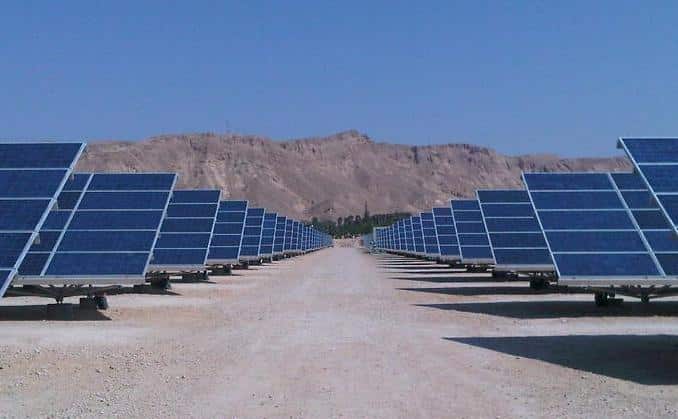
Israel is one of the most economically advanced countries in its region. It has the second-largest number of start-ups (the United States is the largest), and outside of the US, Israel has the largest number of companies listed on the NASDAQ. Much of this is due to the types of commerce it specializes in: pharmaceuticals, medical equipment, software and electronics technology, rough and cut diamonds, fuels, and military technology/equipment. Israel also has a highly developed agricultural sector as well, exporting products such as grains, beef, fruits, and nuts. Israel is a huge center for science- and technology-based industries, and the country has wrapped its arms around solar energy (must be nice). They are also one of the world’s leading countries in terms of water conservation (California, you might want to talk to Israel about this). 


Israel is the only country in the world that has a Jewish majority. And while that is true, as I mentioned earlier, this country is also a center for many other religions. Judaism itself has different denominations (or maybe more like levels of how “Jewish” you are, perhaps?) like Haredi Jews, Religious Zionists, secular Jews, or traditional Jews. There is also a large Muslim population in Israel as well along with smaller populations of Christians, Bahá’ís, Buddhists, and Hindus. 

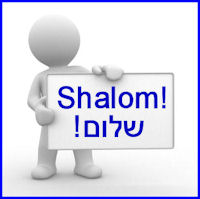
Shalom = Hello

Officially, there are two main languages spoken and used in Israel: Hebrew and Arabic (Hebrew being the majority language). Many Israelis speak and understand English because of its international role; school children study English from an early age. Because Israel is a haven for many immigrants from Russia, Ethiopia, and Northern Africa, you’ll also find pockets of Russian, Amharic, and French speakers throughout Israel (mostly in the urban areas). 

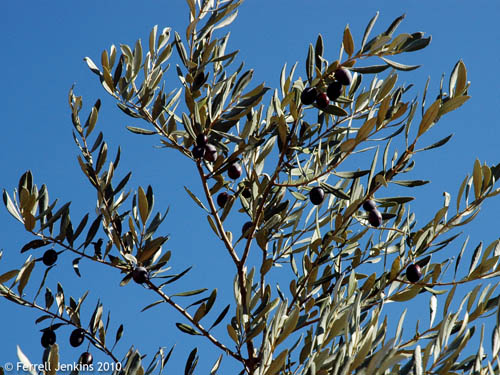
Olive tree, an important part of their cuisine
The thing about Israel is that they are at the top or nearly at the top of things I think would surprise a lot of people. Israel is home to many technology companies’ research and development centers, such as Motorola and Cisco. There has been many program developments and inventions produced in Israel: cell phones, voice mail (actually, I think this is the worst invention ever, next to speaker phone), anti-virus software, and computer processors. Israeli paper money has Braille on it so that blind people can identify which bills they have. They were also the first country to adopt the Kimberly Process, which is a process of determining that diamonds came from conflict-free zones. Israel also publishes more books (per capita) than any other country, but that’s not all: they also have more home computers, museums, orchestras, media coverage, cancer survivors, in-vitro fertilization (and it’s free!), immigrants, ratio of university degrees, engineers, scientists, PhD degree holders, physicians, the largest consumers of fruits and veggies, and producers of milk per capital in the world.  It certainly has a lot to be proud of. So, let’s delve into Israeli culture while we wait to eat!

Up next: art and literature