Showing posts with label planned cities. Show all posts

Wednesday, August 19, 2015

KAZAKHSTAN: ART AND LITERATURE


Because of the Kazakh’s tradition of primarily being a nomadic, horseback riding people, traditional arts were mainly relegated to having a practical use. Not that it didn’t look artistic at the same time, it just had to be useful. Textiles such as clothing, hats, and carpets/rugs were designed using a variety of embroidery and beading techniques to decorate it.  Felt, wool, and leather were often used in making these items. Wealthier people were able to afford clothing with gold and silver threads in it. Silver jewelry items were also commonly made. 


The traditional Kazakh home is called a yurt. These rudimentary homes are basically like a round tent with walls made of latticed wood or bamboo and a pitched cone-like roof. Many of these homes are designed to be packed up and carried with them to another location, much like how the teepees of the North American Indians were designed. A few designs, however, are built on wooden platforms for a more permanent design. 


During the Russian occupation, every building that was built was done purely out of functionality. There was no life in these lackluster buildings. When the country gained its independence and the Russians left, mosques and other buildings began popping up across the country again. Some of these mosques are built rather elaborately with much skill and care. The city of Astana hired Japanese architecture firms to create the city as well as some of its most iconic buildings. This modernity adds to its futuristic skyline. Today, there is a national push toward preserving their traditional arts after decades of arts suppression. Arts festivals and galleries showcasing the best of Kazakh artists dot the major cities and an appreciation toward the traditional arts is felt across the nation. 


The earliest form of literature was in the form of oral poetry; however, there have been mentions of these poetic traditions found inscribed on rocks. Typically during this time, the vast majority of the languages spoken were various Turkic languages and dialects. Like other cultures during these days, a major portion of these poems was about kings, warriors, and heroic legends. Book of the Dede Korkut and Oguz Name are two of the most well-known examples of literature from this period. 


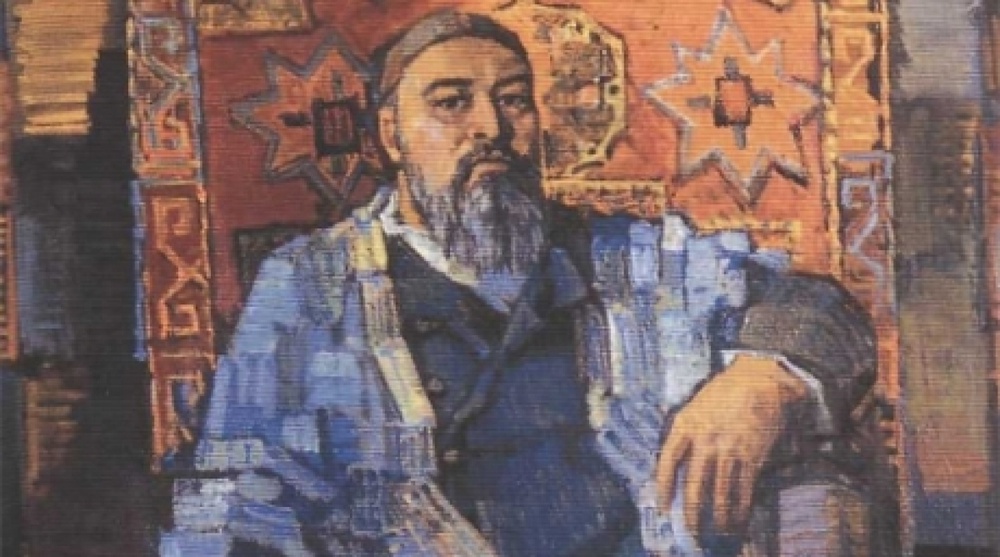
During the period of Russian occupancy, Russian language literature was produced in Kazakhstan. One of the most prolific authors of this period was Abay Qunanbayuli. He’s often thought of as the father of modern Kazakh literature. He spent much of his time promoting Kazakh culture and Kazakh folk stories. Not only did he spend his time trying to preserve his own culture, but he also wrote about his feelings and views on Russian colonialism, especially noted in his book The Book of Words

Abay Qunanbayuli

Today, the country has a strong feeling toward its own literature, and the government actively promotes and awards up-and-coming authors with a variety of awards and prizes. Pretty much every genre of literature is covered by Kazakh writers, from women’s equality issues to science fiction to poetry. They are also pushing to have many of their works translated into other languages as well. Although some writers write in Kazakh, many writers publish their works in Russian in order to have a better chance on the international market. And certainly, many Kazakh writers have been the recipients of several Russian literary awards.

Up next: music and dance

Sunday, December 30, 2012

BRAZIL: THE LAND AND THE PEOPLE

During the summer of 2003, I was working at a total immersion Japanese camp (part of the Concordia Language Villages spread throughout northern Minnesota), and I had chosen to work both the first and second sessions. I was trying to figure out what I was going to do with all of the money I was making while doing both sessions (I say that as if I had stacks of cash. Anyone who knows CLV, knows we’re paid in experience rather than monetarily). I saw two options: use it as a down payment for a new(er) car or travel. I was confident that my 1987 Chevrolet Celebrity Caprice would make it many more years (it lasted five more months). The next big question was where… I chose Brazil, mostly since I had many English-teacher friends down there, and I thought if I went somewhere where I knew people, I could stay with people rather than in hotels or hostels. So, Brazil it was.


In the mountains of Parana.  Wow, what changes 10 years makes; this is before 8 years of marriage and two babies. That's not even my hair color anymore.  
Brazil is the largest country in South America, and not only the only Portuguese-speaking country on the continent, but the largest Portuguese-speaking country in the world. For most people, Brazil conjures up images of the Amazon, gauchos, coffee, pristine beaches full of bikini-clad women, the wild throws of Carnival and samba, racing, and soccer (or fútbol as the rest of the world calls it). And while those things are popular, there is more to Brazil than that.


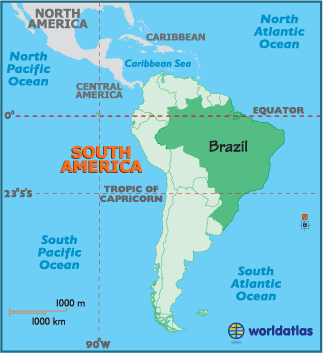
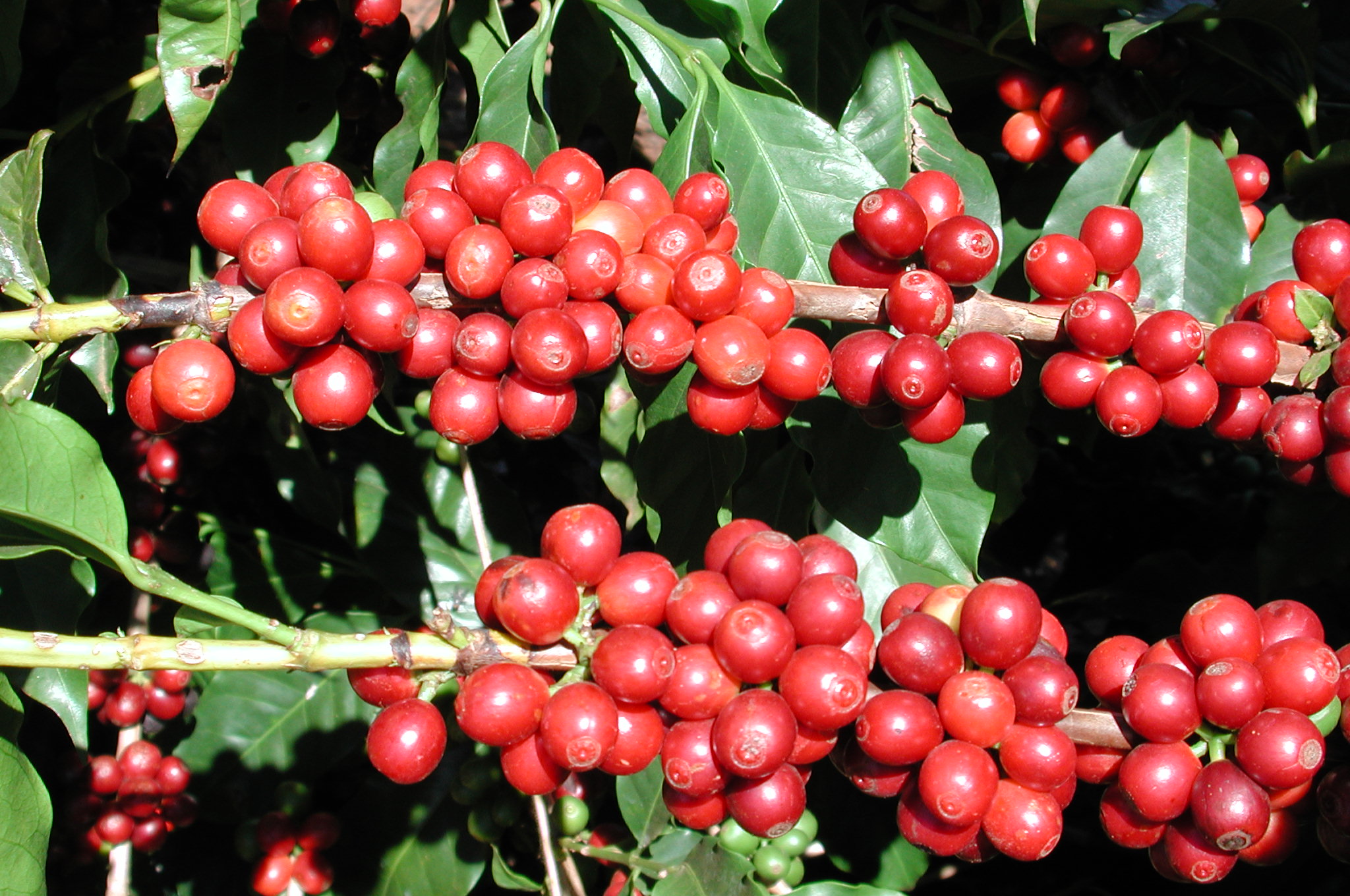
Brazil borders every country in South America, except two: Chile and Ecuador. And because Brazil is such a large country, not much smaller than the United States, the land is diverse as well. The Amazon rainforest spans across the northwest regions of the country, and its famous coffee grows in the coastal states in the mid- to southern regions. Brazilian coffee is among the best in the world, and prior to the Great Depression on the 1930s, Brazil provided 80% of the world’s coffee.  The southern part is an important agricultural region – famous for their gaucho culture. Part mountainous and part plains, this region is famous for its beef as well as its wine production, both of which are superb.


The country of Brazil is named after brazilwood, a type of tree that has a dark red wood found mostly in the northwest of Brazil, mostly from the state of Pernambuco. During the 15th and 16th century, the wood was coveted by Europeans for its ability to create dyes and for other uses, such as musical instruments (like violin bows). Ships carrying brazilwood were often pirated and had its cargo stolen. However, the tree is listed as endangered because of all of this.

An example of brazilwood. This is a viola bow. 
Brazil is just about as diverse as the United States. Because it was also a stop on the slave trade, much of the northern areas have many people of African descent or mixed African descent. Of course, you’ll find many people of Portuguese, Spanish and other European descent, and after WWII, there was a large emigration of Italians and Germans who fled to the southern parts of Brazil. Brazil also is the host of the largest Japanese population outside of Japan, one of the largest communities being that of Liberdade in São Paulo, Brazil's (and South America's) largest city. I was only in São Paulo for a day and didn’t get the chance to go to Liberdade, so it’s definitely a MUST-SEE the next time I go.


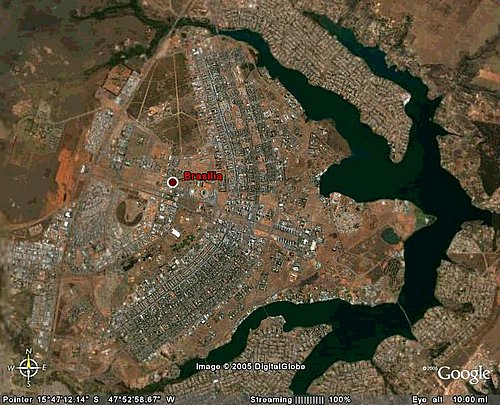
While most people know of São Paulo and Rio de Janeiro, neither of those cities are the capital. The capital is Brasilia, which lies farther inland and has the distinction of being one of the world's few "planned cities." (We talked about the capital city of Canberra, Australia also being a planned city.) And actually, it's the largest city in the world that didn't exist at the beginning of the 20th century.  The principle architect was Oscar Niemeyer (I went to one of his museums in Curitiba where the building looked like a big eye.), and if viewed from above, the city looks like an airplane or butterfly. 


The vast majority of the country claims Roman Catholic as their religion, although Protestantism has been gaining followers in the past decade. There is also a large population who do not claim any particular religion at all. Brazil actually has the world’s largest Catholic population.

In the past decade, Brazil has made strides in coming up as an economic power. It has a strong manufacturing, agricultural, mining, and service jobs sector that helps to drive its economy to make it one of the fastest emerging economies in the world.

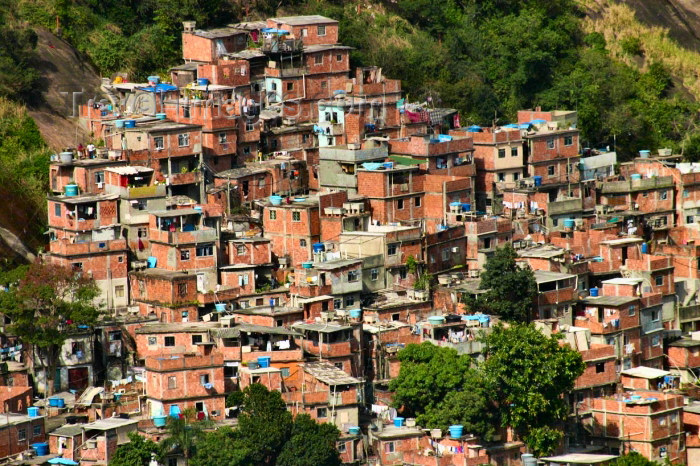
Brazil still struggles with literacy rates among the poor areas and violent crimes in the larger cities; some areas still don't have adequate access to clean water and sanitation. The country is still trying to come up with solutions relating to its infamous favelas, the most famous ones in Rio de Janeiro.  These slum areas are occupied by the poorest peoples in the city, disproportionately minority neighborhoods. The literacy rates are lower than the rest of the population and certain diseases tend to be higher since access to health care is limited. These areas are often one of the central points for drug trafficking; Brazil is the second-largest consumer of cocaine and an illicit producer of cannabis as well. I imagine this will be an issue we’ll see more of in the news in the next few years since Brazil will be the host of the 2014 FIFA World Cup as well as the 2016 Summer Olympics.


I’m really excited for the opportunity to delve into Brazil’s cultural history to showcase a country that has been close to my heart for almost a decade now. (I was made an honorary Brazilian by my friends.) They take a lot of pride in their arts and history, from their literature to their music to their cuisine. Even though I have a lot of pre-knowledge about Brazil, I’m sure there are things that will still be new to me.

Up next: Holidays and Celebrations