I had to carefully
word my search criteria this time because I kept getting recipes for Georgia
Pecan Pie and Georgia Peach Pie. While those sound absolutely divine, it’s the
wrong Georgia. The Georgia I’m talking about used to be part of Russia when I
was in elementary school. And since I loved the food from neighboring Armenia
and Azerbaijan, I’m presuming I’m going to love the food from here too.

While native Georgians
call their country Sakartvelo, the name Georgia is named after St. George, a
revered saint from the 12th century. (In contrast, the US state of
Georgia was named after King George II of Great Britain.) Unlike many
countries, Georgia doesn’t have an official long form name: it’s simply
Georgia. Simple like that. No need for unnecessary words and complications. The
world is complicated as it is.
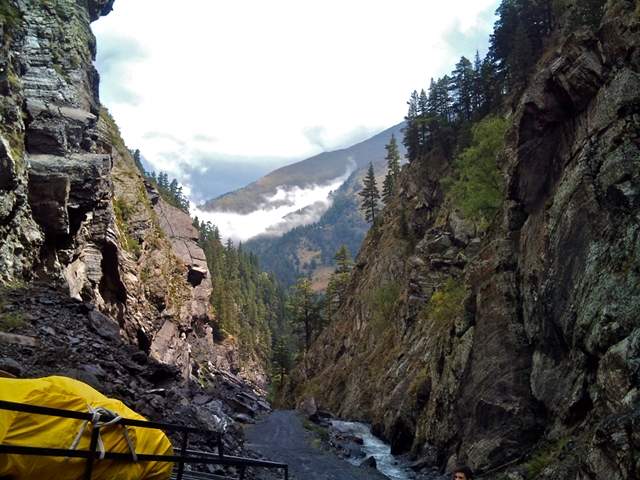
Georgia lies in the
South Caucasus Mountains, surrounded by Russia, Azerbaijan, Armenia, Turkey,
and the Black Sea. The northern border doesn’t lie far from the Russian city of
Sochi, where the 2014 Winter Olympics were held. Offshoots of the Caucasus Mountains
stretch their way through much of the northern regions of the country, giving
some of the most spectacular views ever. These mountains also allow for the
perfect breeding ground for volcanic plateaus, earthquakes, hot springs, and
cave systems. In fact, Krudera Cave, located in the region of Abkhazia, is the
world’s deepest known cave. Even though the country isn’t that large, has an
incredible range of climates. The northern and western regions generally have
cooler climes, having snowy winters, while the southern and eastern regions are
more or less warmer in nature, categorized as humid subtropical. It also allows
for a wide variety of flora and fauna. They are particularly known for the
Caucasian Shepherd Dog, the Caucasian Leopard, brown bears, lynxes, many
varieties of mushrooms, and the common pheasant.
The first time people
wrote about Georgians was in the 12th Century BC. Several empires
and kingdoms switched hands at ruling these lands. In Greek and Roman history,
this area was called Colchis, which is also the area attributed to where the
Golden Fleece was located that was sought by Jason and the Argonauts. Georgians
spent much of the first century trying to figure out who was actually ruling
the country as well as turning it into a cultural center at the same time. East
of Colchis was Iberia, different from the Iberia most people think of as being
where Spain and Portugal are (I just read about this last week in James
Michener’s book about Spain called Iberia.)
During the Middle Ages, this area was divided between the Persians and the
Ottomans at the same time. During the late 1700s, Russia began to move into the
region and defeated the Persians, opening the way to take the country for
themselves. Georgia declared independence in 1918, but soon after, they entered
the Georgian-Armenian War and this time, found themselves as a British
protectorate for the next two years. Once again, Georgia was invaded by the
Russian Red Army, only to be later lumped in with Armenia and Azerbaijan to
form the Transcontinental SFSR and then later renamed Georgian SSR. Joseph Stalin came to power in 1917 and
was also an ethnic Georgian. It’s still not uncommon to see statues of Joseph
Stalin around the country. A 1989 peaceful demonstration ended in bloodshed,
and that pushed the people to fight for independence once again and winning it
in 1991. Their independence has been dotted with a civil war in 1995 and a
conflict with Russia in 2008 in the South Ossetia area.
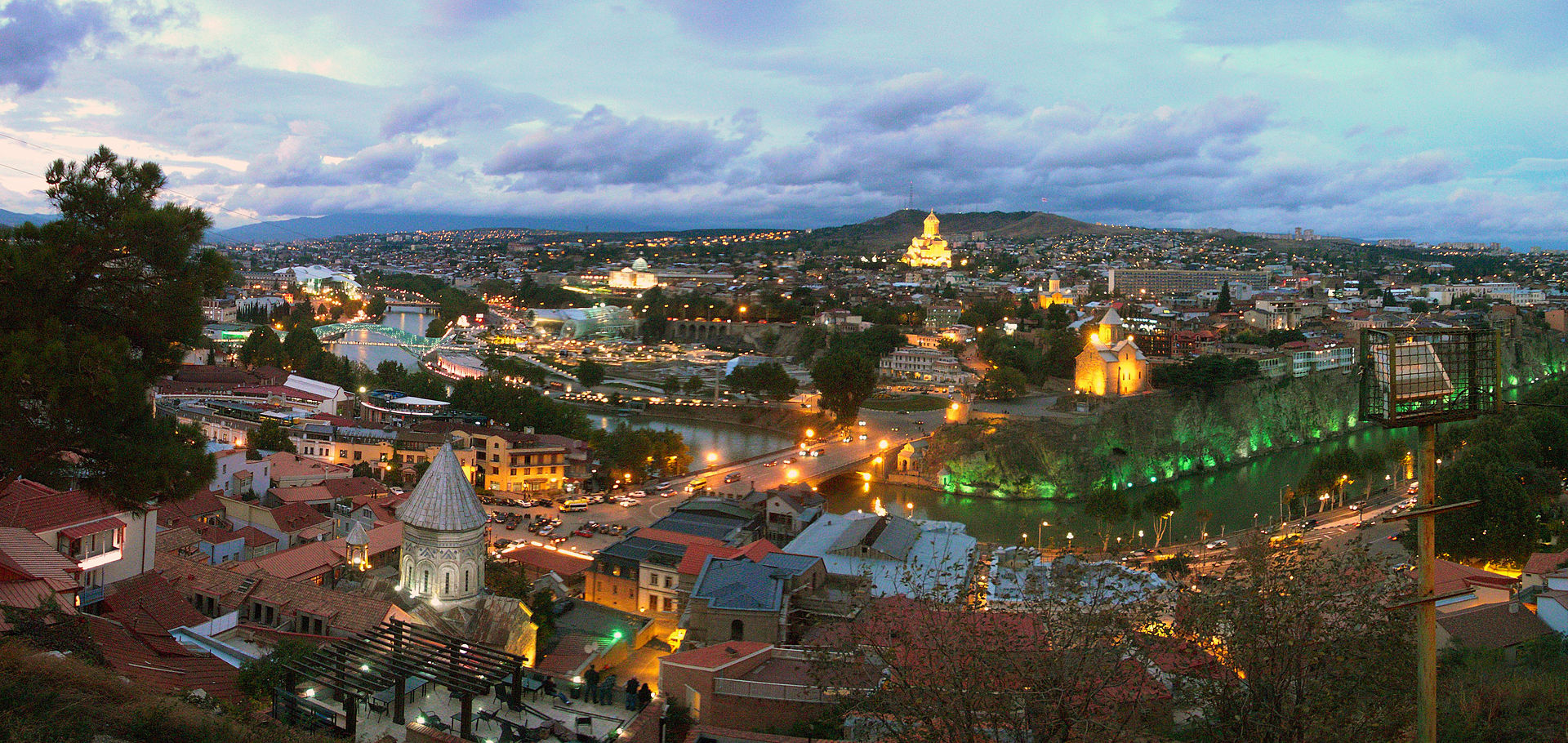
Located on the banks
of the Mtkvari River, the capital city of Tbilisi is also the largest city in
Georgia. With a population of about 1.5 million people, Tbilisi has taken
advantage of the east-west trade routes since ancient times, making this a
prime city for both business and cultural arts. Because of Georgia’s and
Tbilisi’s long history of being a part of various empires and kingdoms, the
city is multi-ethnic while Medieval, Classical, and typical Soviet architecture
can be seen throughout the cityscape.

Georgia has
historically relied on the land and trade for the brunt of its economic
stability. Gold, silver, copper, and iron mining camps were established in the
Caucasus Mountains, and wine making has been an old tradition Georgians take
pride in. After the break-up of Russia, war and conflict has taken its toll on
their economy. Trade with Russia also became icy: Russia raised the price of
oil being sold to Georgia and also banned the import of Georgian wine, a trade
relationship Georgia depended on. However, the country is grateful for a rise
in tourism, especially to World Heritage sites such as monasteries and their
numerous mineral springs resorts.
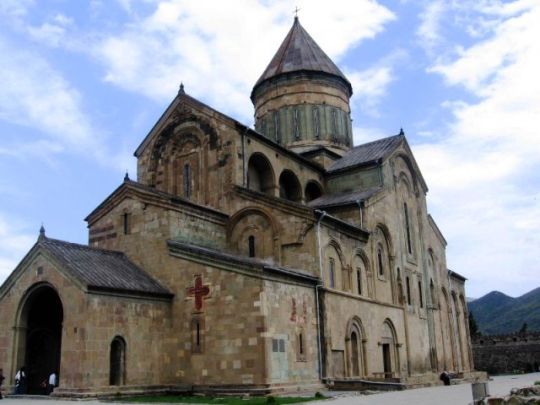
The vast majority of
the people practice Georgian Orthodox Christianity, one of the most ancient of
Christian churches. There are also a sizable number of Armenian Christians,
Muslims, and Roman Catholics. Strangely enough, there are also a small number
of Jehovah’s Witnesses in Georgia as well; however, they are also the target of
some religious discrimination.

The Georgian language
is really unique. They use three alphabets whose invention has widely been
attributed to King Pharnavaz I of Iberia. It’s the official language of Georgia
and belongs to the Kartvelian language family. The really weird part of the
Georgian language, is that there are actually words where there are eight
consonants in a row: gvbrdgvni,
"you tear us"; or, gvprtskvni,
"you peel us."

If you’re into winter
sports like skiing or snowboarding, then Georgia is your place. The
second-highest peak in Europe is Mount Shkara, beating the famous Mount Blanc
by over 1300 ft. These soaring peaks even found their way into ancient Greek
mythology. It was considered the place where Zeus tied up Prometheus so that
eagles could eat his liver. That’s pleasant. The Greeks also considered Mount
Shkara as one of the peaks holding up the world. But that part may be true.
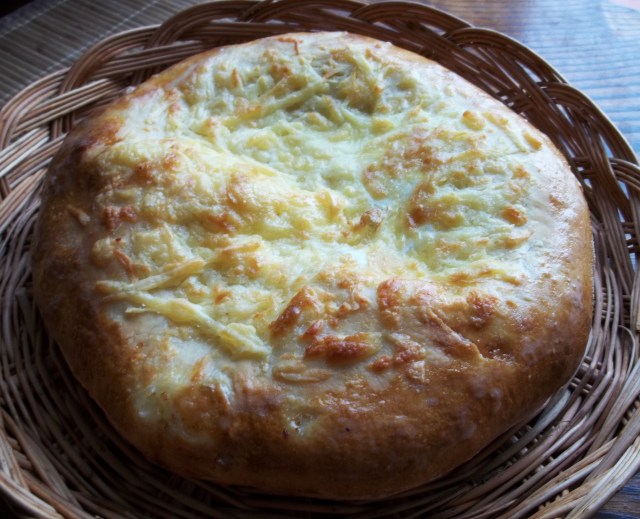
Family is huge in
Georgia. While the people are generally friendly, conservative religious values
are closely held, especially against homosexuality. In a country with unreliable social services, people rely on
family members to help them out. The food seems spectacular; I had a hard time
narrowing it down. But I did manage to eventually get that accomplished.
Up next: art and
literature


