Showing posts with label Ashik. Show all posts

Friday, July 6, 2012

AZERBAIJAN: MUSIC AND DANCE


One of the most important musical styles of Azerbaijan is that of the mugham. It’s basically a long segment of sung poetry with musical interludes between the segments.  They will also utilize a form of yodeling as well. The poems these are based off of are most about a divine love that is often sourced from Sufism and originated in Iran.

Some of the common instruments you’ll find in Azerbaijani music are the tar (a type of lute with a double bowl), kamancha (a bowed string instrument similar to the rebab), the oud (a short-necked lute), and the saz (a long-necked lute). There are also a number of drums that are used: naghara (cylindrical double-faced drum), goshe nagara (pair of small kettle drums), ghaval (frame drum), daf (another type of frame drum), and the nagara (a barrel drum).

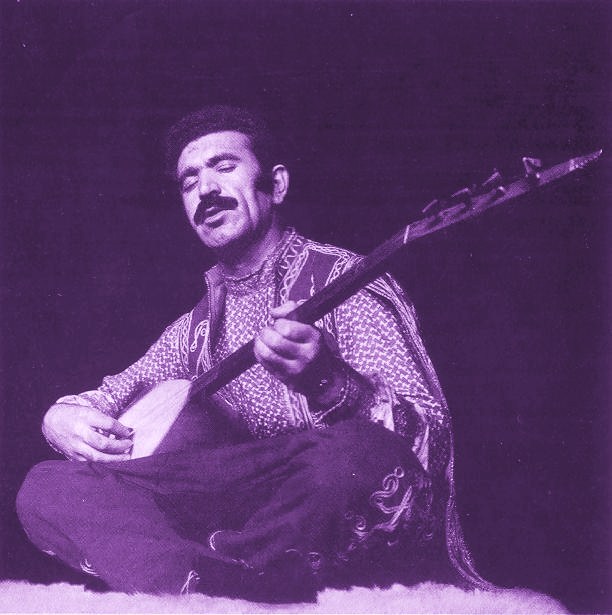
I found this video of the ashik style music. I believe what the performer is using is a saz (please correct me if I’m wrong here). You can definitely hear the “yodeling” style when he sings, although there are times when it's almost sung-spoke. Although I have no idea what he’s singing about, at times I get the feeling he’s the Bob Dylan of Azerbaijan.


It was somewhat harder to find current popular musicians. This year the Eurovision Song Contest was held in Baku, and I did find a singer named Emin Agalarov. (Spotify, I'm wagging my finger at you for not having any of his stuff.) This video is of the finals from the 2012 Eurovision and showcases some of the mugham concepts mentioned above as well as showcasing current pop music. You’ll be able to pick out some of the instruments mentioned as well as the drums.


Azerbaijan has a number of folk dances that have developed over the past centuries as part of its national culture. Asma Kasma is one of the oldest dances, one that’s used when the people escort a bride to the groom’s home. It’s generally somewhat slow and includes a lot of exaggerated jumps.

The Halay (also called Yalli in Azerbaijan) is a dance that’s centered around fire. Fire is and has been an important symbol in Azerbaijani history. It starts out slow, but speeds up to where the steps are almost running.


The Uzundara is a slow, attractive dance danced solely by women. It’s origins lie in the Karabakh region and traditionally is danced and sung while the bride and groom are away. It reminds me a little of ballet at times. 


The Zorkhana is a men-only dance that is used to signify courage and valor. However, this video made me smile. Perhaps the courage and valor comes in the form of actually getting the guts to go out there and dance. To all the nerdy guys at frat parties in college we laughed at because we thought they couldn't dance, well, apparently they one-upped us: they were beyond us all the whole time dancing the zorkhana. 


Up next: the food!

Resources:
Wikipedia: “Music of Azerbaijan” “Dances of Azerbaijan” “Mugham” 

Wednesday, July 4, 2012

AZERBAIJAN: ART AND LITERATURE


One of the most important art forms in Azerbaijan, and in that entire region, is in carpet weaving. I had mentioned carpet weaving when I wrote on neighboring Armenia. Azerbaijani carpets do have certain style changes that are indicative of the different eras and different regions. Different ornamentations have different meanings in them as well. Some of the wealthier people have had pearls and gems sewn into the carpet. Many of these carpets were woven with silk. These carpets were not only used for practical purposes, such as coverings for furniture or the floor, but there were also used to decorate the walls on the home as well.


In Azerbaijan, there are different schools of carpet weaving. There are seven, actually, that are spread throughout the country. Each location has a slightly different style of weaving and the designs and ornamentations used for it.


Architecture in Azerbaijan is a mixture of East and West, of modern and ancient. There are several buildings that have been maintained since antiquity, such as the Maiden Towers (which reminds me of Rapunzel's tower with an offshoot) and Palace of the Shirvanshahs, and many of these are of Persian origin.  When the Russians took control of the area, you will start to see many buildings and homes, as well as city planning, with Russian architectural style.


Azerbaijanis also have a lot of jewelry art and handicrafts, metal work, wood work, and stone cutting work.

Some of the oldest art is found at the Gobustan Rock Art Cultural Landscape, a collection of more than 6000 rock art drawings and cave art found.  This area has been counted as a UNESCO World Heritage Site. 

The earliest forms of Azerbaijani literature are in the form of poetry, more specifically a ghazal (a type of poetry consisting of rhyming couplets and refrains). The early forms are closer in style to Persian and Turkish styles.  One of the most notable lyrical poets is a woman by the name of Khurshidbanu Natavan.  She was from the city of Shusha in the Karabakh region where her father was the last ruler of that area. Not only was she popular in literary circles, her family also had a big name in raising Karabakh horses.


Another early find is the book of Dede Qorqud is a collection of twelve stories that were copied by Oghuz nomads. It’s a set of two manuscripts that were copied during the 16th century, but scholars have reason to believe it may have been a little earlier.

During the 16th century, the art form called Ashik became popular. Ashik is like a traveling, singing bard, not terribly different from the troubadours in France and other areas of Europe around this time. One of the popular stories that are told/sang in the Ashik style is that of the Epic of Köroğlu, a Robin Hood-like character.


Under Soviet rule, writers (as well as other artists) who didn’t adhere to their standards of what is acceptable often found missing, persecuted, or even killed. However, there were some writers who did keep writing: Mahammid Hadi, Abbas Sahhat, Huseyn Javid, Adbullah Shaig, Jafar Jabbarly, Mikayil Mushfig. After Stalin’s death, this strictness over censorship was slowly lifted, and writers could write freely again.

Up next: Music and Dance

Resources:
Wikipedia: “Architecture of Azerbaijan” “Folk Art of Azerbaijan” “Khurshidbanu Natavan” “Literature of Azerbaijan”