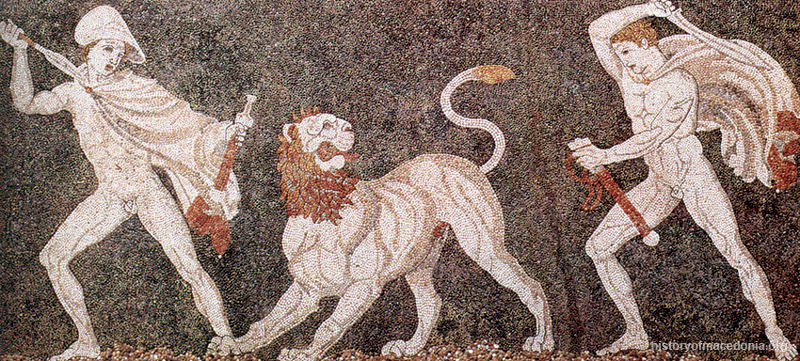
Showing posts with label mosaic art. Show all posts

Thursday, June 18, 2020

TUNISIA: ART AND LITERATURE

It’s no surprise that Tunisia, a land that is surrounded by rocks and desert, should have rock art. Archaeologists found evidence of these ancient rock drawings in areas around the Saharan regions of southern Tunisia. These ancient peoples around the town of Bou Salem also left behind some dolmens, a type of large stone structure that serves as a tomb. The Romans, Greeks, and Carthagians left a lot of artistic styles and architecture throughout Tunisia.


Because of Tunisia’s location, quite a bit of the types of art and particular styles have been based on their history and influences from other areas. Spain, Persia, and even China has had their influence on Tunisian art. The country’s older art forms use these influences to create a style called Arabesque. It’s a type of surface decoration that consists of scrolling, intertwined vines, tendrils, foliage, or sometimes just lines with other elements to it. Sometimes it can be created as a tile, and the tile is replicated (I suppose somewhat like a partial tessellation, perhaps?). Because Islamic art forbids creating any likeness to people, it will often employ these arabesque-style artforms, incorporating geometric patterns with it. It creates for a very complicated, beautiful look.


Tunisia is also known for its mosaics and pottery. Mosaic art is one of my favorite styles of art: taking smaller pieces of ceramic or glass usually (or both perhaps) and creating a picture out of the pieces. They use a variety of bright colors to make these designs, mostly seen on walls or floor patterns. You can see this style of art used in a lot of buildings and in architecture, and many times, mosaics are cut to create geometric shapes and even accented in gold or other metals.

by Ammar Farhat

Early on, painting wasn’t quite something that Tunisians engaged much in since Islam forbids painting humans. By the time the French arrived and took over, painting extended itself from a European artform to one that Tunisians took up as well. Art schools popped up, especially in Tunis, and students began learning skills and techniques from all over Europe, Asia, and other places. A group of painters led by Moses Levy, Ammar Farhat, Abdelaziz Gorgi, Yahia Turki and others encouraged native themes and rejected some other foreign influences in a way to promote their country. It ended up bringing people of different backgrounds together. As Tunisia gained its independence, artists started going off on their own, incorporating their own national flair into other genres, like abstract, expressionist, fantasy, calligraphy, and other styles. And as much as Tunisians went abroad to study art, other artists trekked to Tunisia for the same thing, most notably Alexander Roubtzoff, Paul Klee, and August Macke.

Aboul-Qacem Echebbi

Tunisian literature is either published in Arabic or in French. Clearly, there’s more literature written in Arabic than French, mostly because the French influence didn’t come until 1881. Poetry has long been an artform among the Arabic-speaking countries, and Tunisian poetry is included. However, Tunisian poetry is also known for stretching the rules, doing their own thing through nonconformity, and creating their own through innovation. One poet who represents this well is Aboul-Qacem Echebbi--most famously known for writing the last two verses of the current national anthem. The sad thing is that he died at age 25 from heart problems, but his poetry has been revived to a degree in recent years.

Albert Memmi

French literature in comparison was seen as a critical approach to writing. In fact, one French-Tunisian writer, Albert Memmi, who just passed away last month, didn’t have high hopes for Tunisian literature. He essentially alluded to the idea that it just simply wouldn’t go anywhere, a fad that will fade. But that’s completely contrary to what other Tunisian authors have done by traveling abroad. Authors like Hélé Béji (author, educator), Abdelwahab Meddeb (professor, poet, novelist, translator, radio producer), and Mustapha Tlili (novelist, worked at the UN) brought themes of traveling, wandering, heartbreak, and exile to the forefront.


Radio also had a huge influence on storytelling (both fiction and nonfiction), especially during the early 20th century. Telling stories on the radio during that time was popular all over the world because it was a fairly new technology that allowed you to reach massive audiences. Douagi Ali was one of these writers, producing over 150 of these radio stories, not to mention over 500 poems and folksongs, and about 15 plays as well. Even today, radio is still being used by youth as a medium for telling journalistic stories that commercial and government stations wouldn’t begin to think of airing. These youth have even rejected the idea that there are some subjects (as directed by some older people) that should be taboo, like politics, religion, and sexuality. But they’re pushing forward and creating more of these youth-led radio stations across the country.

Up next: music and dance

Wednesday, March 9, 2016

MACEDONIA: ART AND LITERATURE


Early art in Macedonia was highly influenced by the styles of the Greeks and later the Ottomans, but it was also influenced by the Romans as well. Many examples of religious iconography have been found, and many of these are portrayed on the walls of cathedrals across the country. Mosaics of the Christian icons on walls and floors were also created during this time. Fresco painting was also a popular art form during the pre-Medieval period. Some of the best-known examples of Byzantine frescos are found in Macedonia. 

From about the 13th century, portrait painting started to become a popular style of painting, especially among royalty and the leaders of the church. Intricate and highly decorated woodcarving is one art that has its roots in this early period. Many designs were either Biblical scenes, folklore stories, or historical events. While many examples were used in the church, the artistic styles and functions varied. And the influence from the Middle East certainly left its mark in both its art, sculpture, and architecture.  

I'm fairly certain this is a scene of someone finally telling their jerk boss what they really think.

Macedonia has a strong painting scene thanks to four painters who acted as the founders of modern painting in this country: Dimitar Avramovski-Pandilov, Vangel Kodzoman, Lazar Licenoski, and Nikola Martinoski. These painters emerged during the early part of the 20th century, embracing movements that were popular in other areas of Europe like expressionism and impressionism. They paved the way for other painters to step up to the plate after they passed on.

 
Sculpture at Mechkin Kamen

Sculpture is also an art form that Macedonians embraced. Several years ago, many terracotta icon statues were discovered (or rather, rediscovered) near the city of Vinica. The father of modern sculpture is often attributed to Dimo Todorovski. He was also a painter, but it was his memorial at Mechkin Kamen in commemoration of the battle of the same name (located in Krushevo) that put him on the map. That monument alone became a national symbol. His work led the way for other sculptors such as Tome Serafimovski and Petar Hadzi Boskov. 


Much of the early architecture of Macedonia came from the Bulgarians. Several of its early churches have been included on the UNESCO World Heritage list. Most of them are located in and around the city of Ohrid. In fact, there were so many in that city that UNESCO just declared the entire city and the nearby lake to be on the list due to its historical significance. (“You know what? I’m not writing reports for all these buildings. Seriously, it’s 4:30pm on a Friday. Just put the entire city down and be done with it. Now, let’s go get a beer.”) There are also several architectural styles that can be contributed to the Ottoman Empire. Mosques, baths, and other buildings that were built during this time have been found in many of the old sections of towns and cities. 


Literature in Macedonia is primarily written in the Macedonian language, which wasn’t even officially acknowledged as a language until 1946 when Yugoslavia was formed. (Maybe it was viewed more along the lines of a dialect, perhaps?) There are generally three large literary periods: Old Macedonian Literature (which ran from the 9th—18th century and included the introduction of Christianity and the Ottoman invasion), New Macedonian Literature (from 1802—1944 and included a period of national awakening, a revolutionary period, and an inter-war period between the world wars), and a Modern Literature period (from 1944—present). 

Blaze Koneski. I think he looks a little like a cross between Philip Seymour Hoffman and Harry Caray.

Although the earlier literary eras laid the groundwork for the modern movements, Macedonian literature really didn’t gain momentum until after WWII. A group of scholars led by Blaze Koneski were given the task of standardizing the Macedonian language for usage in the government, in education, and as a language for literature. During the time after the war, authors starting using it as a means to write and publish freely. Several poets emerged on the scene like Gane Todorovski, Blaze Koneski, Aco Shopov, and Slavko Janevski. Many poets also ventured into short story and novel writing as well. Theatre and cinema is also highly popular in Macedonia. Dramatists such as Tome Arsovski, Goran Stefanovski, and Kole Cashule have been entertaining people for decades on the stage. Of course, they also wrote works in prose as well. 


One well-known author is Zivgo Cingo. A few of his stories have been translated into other languages including English. His most famous work is his novel Golemata Voda (The Great Water), which was also made into a movie. (Unfortunately, it's not available on Netflix, at least not in the US. However, it looks like you can buy a used copy on Amazon for $3.84, and it's a Region 1 DVD too!)


Up next: music and dance

Wednesday, August 5, 2015

JORDAN: ART AND LITERATURE


Jordan’s traditional arts are highly influenced by Islamic art and other traditions from the region. Two of the most significant arts found in Jordan are ceramic arts and mosaic arts. Many of these pieces include Islamic motifs and themes as well as Islamic calligraphy. If you’ve ever seen Islamic calligraphy, it’s an art in and of itself. Some can be quite elaborate. Mosaic art has been discovered in many of the archaeological sites throughout the country and is a skill that is still being encouraged today. In fact the government started a mosaic school in order to preserve the mosaics that are found in these various historical sites. It’s set up in the city of Madaba, which is known for its large mosaic map of the Holy Land. 


Another craft known in Jordan is embroidery, especially that from the Palestinian women. They are known for their textile needlework and typically use a variety of colors to create patterns based on geometric shapes. It doesn’t stop there: Jordanians are also known for their rug and carpet making as well as basket weaving. Most of these items are designed for use in the home. Other small handicrafts such as decorative bottles and jewelry are also commonly practiced. 


Today, Jordanians also study painting and sculpture and other contemporary arts. Amman is the artistic center of the country, although other larger cities also have their own arts support organizations. Amman has many art museums and smaller art galleries spread throughout the city. These galleries not only showcase many of Jordan’s finest artists but also the works of artists from the entire region. Many Iraqi artists have fled to Jordan to escape the terrible conditions in their country, and there are some galleries designed just for Iraqi art. 

by Fadi Daoud

Prior to the 20th century, there really aren’t too many works of literature to note. Most of the early literature was in the form of religious texts, and today the vast majority of literature produced is written in Arabic. One of the first Jordanian poets to really become popular was Mustafa Wahbi al-Tal. Many of his poems used humor to discuss life in Jordan as well serious subjects like anti-colonialism and nationalism. 


Only in the latter part of the 20th century did Jordanian writers really take the stage. Many of the most popular authors often tout Mounis al-Razzaz as one of the instrumental figures in bringing contemporary Jordanian literature to the limelight. One of the main themes that run through his works includes the transition between small, traditional towns and the larger, more modern cities. 


Rifka Doudeen is a female author who has risen to popularity with her collection of short stories and a novel. Other writers such as Ramadan al-Rawashdeh, Mefleh al-Adwan, Basma Nsour, Abdullah Mansour, Abdel Raouf Shamoun, Hashim Ghareybeh, Jamal Naji, and Raga Abu Gazaleh have won many awards and prizes for their works, which are enjoyed throughout much of the Arab world.


There are a few Palestinian authors who have risen to fame as well. There are several authors, like Taher al-Edwan as well as many Palestinian/Jordanian authors who are living abroad, who have written first hand on the Israeli-Palestinian conflict and books that take place during events in this history. Many of these books have also won national and international awards. 

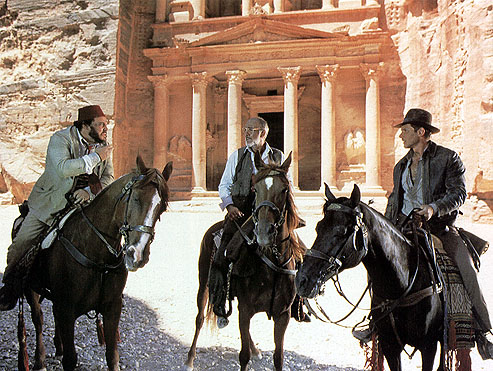
from Indiana Jones and the Last Crusade

During the past decade, Jordan has made significant pushes toward encouraging the film industry. Several big-name films have been filmed in Jordan (Indiana Jones and the Last Crusade, Lawrence of Arabia, The Hurt Locker, Transformers: Revenge of the Fallen, and others), and many more are on the schedule. They do make their own films, and many filmmaking companies across the region choose to film here for many reasons. The popularity of writing films taking place in Iraq has risen, but due to the instability of the security in that country, it’s not always safe to actually film there. Thankfully, the terrain in Jordan is very similar to Iraq, and there are many Iraqi refugees already in Jordan.

Up next: music and dance

Wednesday, February 29, 2012

ALBANIA: MUSIC, ARTS, AND LITERATURE


I am really fascinated with Albania’s music.  And I didn’t realize I was. Among some of the instruments, one of the early ones was the lahuta, a one-stringed lute-like instrument. But as they say, one is the loneliest number, and it soon gave way to a more popular two-stringed version called çiftelia.  Probably introduced during the 500 years of Ottoman rule, the medium sized frame drum with jingles called the dajreja is used for keeping rhythm. It seems similar to the tambourine, which is also used.

But one style that struck me is the vocal iso polyphony heard in the southern regions.  If you listen, it gives the same effect as a bagpipe (which is also used in Albanian music): you have a drone note and the melody on top.  There is a leader, who’ll sing the introductory phrase and the others will follow.  There are several groups who have formed in recent years in an effort to preserve Albania’s traditional folk music.


Classical music is also on the rise with several prominent music conservatories focusing on creating Albanian composers and classical musicians. Opera seems to be one of the fortes (no pun intended), especially given it’s proximity to Italy. Probably one of the most famous opera singers in Albania is Inva Mula. She was the voice of the Diva Plavalaguna in the movie The Fifth Element. You know the song -- it's the best part of the movie. 


As far as modern music goes, I came across two that impressed me: Genta Ismajli and Bertan Asllani. I found Genta’s 2011 album Guximi available on iTunes for $9.99. I’m definitely planning on buying it (although it’s also available to listen to on Spotify).  


I’m not able to find very many songs for Bertan, except a few individual songs on iTunes and a few more on Spotify. But unfortunately I can't find this song and I really like it. I do believe he has a Facebook page and I could probably find info there. 


Because of the influence from the Ottomans, mosaic art is very popular. Mural paintings are also quite popular. Probably one of the most widely known mosaic artists is Saimir Strati, who have won numerous Guinness World Records for his work. His work is pretty cool. I’d love to see it up close. Of course mosaic art is one of my favorite mediums, so I’m a little partial. This particular mosaic is make of cork. 

Early Albanian texts were strictly religious works and historical documents. Pjetër Budi was one of the first to write poetry in Albanian. Of course Albanian literature went through its eras, just like English literature does. Ismail Kadare is thought of as one of the best-known contemporary authors. Fifteen of his novels have been translated into 40 languages, bringing Albanian literature to accessibility in Europe and throughout the world.  There are many of his books available through Amazon and many of those are also available for the Kindle – some as low as $3.19! You can’t beat inexpensive literature. Definitely thinking of making a Kindle purchase in the near future…

Next up: Food!