Showing posts with label rock carving. Show all posts

Wednesday, October 18, 2017

QATAR: ART AND LITERATURE


Prehistoric rock carvings and rock art have been found in several places around Qatar. Some of these drawing depict humans, animals (like turtles, ostriches, and fish), and boats while others were merely geometric and tribal designs. 

 
There are a ton of other folk art styles. Weaving and dying fabric is common, especially in a Bedouin fashion. Typically sheep or camel wool is used while the dyes were made from herbs and other natural resources. Embroidery was also a common ornamental feature in clothing. Gold threads imported from India were frequently used. There were several different kinds of stitches used as well as designs like flowers and birds.

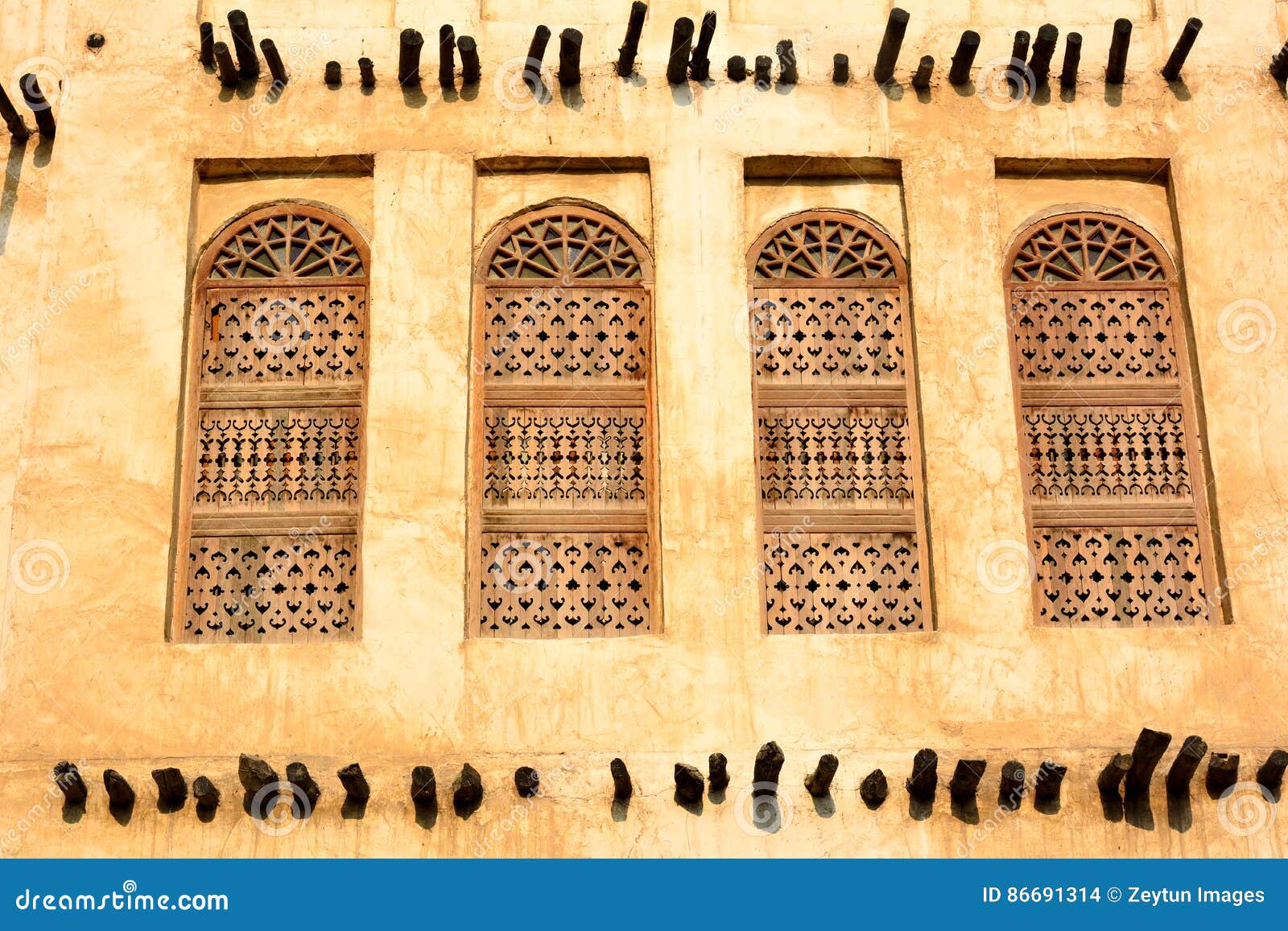
A certain amount of art and aesthetics went into their historical architecture as well. Although simply made, geometric shapes and symmetry were important decorative features in homes. Elaborately designed doors are frequently created from wood or metal. Much of their architectural design was created with the heat in mind, and windows were seldom used. Instead, they used other ways of ventilation. However, there were vertical windows that were designed to pull in wind and naturally cool the inside of the building. Colored glass is sometimes used as a decorative feature.

Although calligraphy has long been an art form, painting didn’t really gain popularity until after the oil boom struck. Common themes include Arabic and Islamic culture. In order to cultivate more artists, the government offered scholarships to young artists to study abroad, bringing back what they learned to share through exhibitions. Art museums and galleries were then built to preserve and promote Qatari art. Jassim Zaini is often considered the founder of the modern art movement; other artists of note include Faraj Daham, Wafika Sultan Al-Essa, Yousef Ahmad, Salman Al-Malik, and Hassan Al Mulla.


Historically, poetry has been an important part of literature and has been practiced for many centuries. During the 7th century, Qatari ibn al-Fuja’a was well known for his poetry and often considered a folk hero of sorts. Most poetry during was oral and performed during social events. The most common type of poem is the Nabati poem and passed down from generation to generation. Today, they’re still being read on radio and television. Women were also poets as well, but they mostly wrote laments called ritha, which served as elegies. 
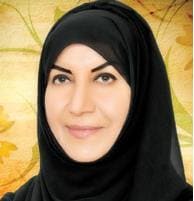
Kaltham Jaber
Modern literature, written in Arabic, didn’t really begin until the 1970s when they gained their independence from Britain. And this is one art form where females have been included pretty much equal to men from the beginning. What is amazing is that the first person to publish a book was a woman: Kaltham Jaber first published her anthology of short stories in 1978.

Up next: music and dance

Thursday, January 14, 2016

LIBYA: ART AND LITERATURE


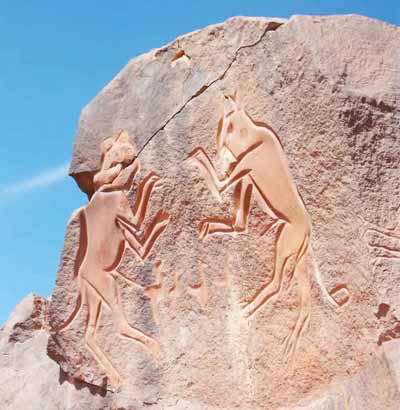
Libyan art shares influences with several cultures that have historically been in the area: Romans, Ottomans, Arabs, Tuaregs, Berbers, Italians, and others. The earliest forms of art are in the form of cave drawings found at a site near Awiss. These drawings mostly show the hunt of animals and desert life. Really, what else is there? (I’m joking.) Wadi Tidwa is known for its more bizarre rock carvings, and archaeologists have thought that perhaps it’s related to some ancient religion because, you know, religion can be bizarre sometimes. Other areas where rock carvings have been found include Messak Settafet, Mellet, and Wadi Matkhandoush. According to the Greek historian Herodotus, the Libyans invented the wheel, and subsequently, there are about 500 examples of cave drawings of chariots. (Yes, but are they on fire?) 

It's supposed to be two cats fighting. They must've been able to see into the future and paint what I deal with every single day..
Many of their folk art traditions are tied in with Islamic traditions. And per the Islamic guideline that no figures or animals are to be depicted, Libyan crafts and folk art do not have this either. Instead, geometric patters are used. Other crafts and folk arts include embroidery and weaving, metal engraving, instrument making, jewelry making (mostly out of leather, silver, and beads), and leatherwork. 

Libyan Berber jewelry
Art has long been used as a means of expression and as a means of addressing issues that need to be dealt with. Unfortunately, many of Libya’s artists left the country due to the high level of censorship under the Gaddafi government. One artist is Aimen Ajhani (aka El Bohly). He was instrumental as a graffiti artist, and often created art with a political message. In Libya, he often faced arrest for his craft, many times reported by people who didn’t understand what he was doing — even after the war. I think that although most art was repressed for almost two generations, now that we’re on the other side of the Civil War, artists are finally starting to come out and be more open about it. The political situation is still somewhat shaky, but I think it’s heading in the direction of getting better. (Maybe? I hope?)

by El Bohly
Libyan literature stretches back thousands of years. Early Libyan literature was stemmed from its oral poetry traditions. It didn’t have as much impact on early literature coming out of the Arab Renaissance. However, its oral poetry strived, and it was this medium that was used to express their unsavory sentiments during the Italian occupation. 

by Sadeq al-Neihum

Modern Libyan literature didn’t really get its momentum until after they gained their independence. Many of the writers who rose to prominence during the 1960s wrote on progressive and socialist views. Writers like Ali al-Regeie, Khamel al-Maghur, Sadeq al-Neihum, Khalifa al-Fakhri, and Muhammad al-Shaltami followed these themes and were widely read during this time. 

 
Ghassan Fergiani owns a bookshop in London promoting Arabic and Libyan literature.
These writers hit a wall after Muammar Gaddafi took over. He set up one single state-owned publishing house that everyone had to go through whether you liked it or not. The state got to decide who and what got published. The ones who didn’t like it were either imprisoned or just simply left the country. It was a rough time for anyone in the arts, especially if your views were contrary to Gaddafi’s. After the Civil War, however, this uber-conservative censorship was lifted, and writers could freely write again. (More or less, I suppose.) Their constitution made sure they wrote in freedom of the press. It’ll be interesting to see how free their freedom of the press is as we continue to watch the changes in their political situation.

Up next: music and dance

Thursday, November 22, 2012

BOLIVIA: ART AND LITERATURE

Bolivia, like most other countries colonized by the Europeans, had a great cultural fusion between the two peoples. Many genres of art, such as painting and sculpture may be European in style and technique, but native in style and substance. Materials and mediums have been modified and adapted to be able to utilize what is available. Traditional arts are still ever popular and are continued in order to preserve the ancient cultures they were created from.

Jewelry making is really popular in Bolivia. Most jewelry uses silver or gold, and many use ancient and traditional symbols and styles. Wood and other gem stones are also found in pieces of Bolivian jewelry.


Wood carving is also a popular traditional art in Bolivia. Many of these carvings are made with different kinds of wood to add variations of color. Bolivia had a problem with deforestation and the effects of it, but it was one of the first countries to enact forest conservation efforts.


Archaeologists have discovered ancient rock carvings in several areas in Bolivia. These intricate ancient rock carvings are found alongside rivers, in mountains, and in the caves in the Andes and eastern lowlands regions.


Almost half of the indigenous peoples of Bolivia speak either Aymara, Guarani, or Quechua. Similar to many other cultures, there is a strong tradition of storytelling, including myths and legends. These stories have been passed down from generation to generation by mouth, and unfortunately many of these stories have not been written down. 

Because of Bolivia’s political upheaval through the years, many writers found it difficult to publish their works, and it was especially true if the work was anything contrary to the ruling government at that time. Newer writers have emerged on the scene, but the older writers still dominate Bolivia literature.

Adela Zamudio has long been considered one of Bolivia’s most famous poets. Her other claim to fame is helping to found the country’s feminist movement. Born in Cochabamba, she started out as a teacher and then moved up to being the director of an all-girls high school. Her work was often highly intellectual and non-religious, often writing under the pseudonym Soledad. Towards the end, she even stopped teaching religion at the school where she was director, receiving criticism from the League of Catholic Women. Her birthday, October 11, is celebrated as the Day of Bolivian Women.


Franz Tamayo is a renowned writer and politician, as well as poet, philosopher and intellectual, being the namesake of Franz Tamayo Province. Tamayo had both Aymara and Spanish ancestry, and his ideologies and concepts on race were quite influential to the new Bolivian identity after the 1952 Revolution. His basic idea was that those who were of mixed race were actually superior in comparison to those who were primarily of one race because mixed-race people took what was good in each race and made them stronger (more or less).  He was originally part of the Liberal Party but later switched to the Republican Party. President Salamanca had appointed him the Minister of Foreign Relations and had actually won presidential elections in 1934. However, a military coup right afterward nulled the win.


Oscar Alfaro is another Bolivian writer who is famous for writing children’s literature. He had studied law, but he had never finished his degree. He did go on to teach Castilian language and literature at a school in his hometown of San Lorenzo. Alfaro also produced a radio program called “The Republic of Children” and had wrote several columns in different newspapers published in the area. Several of his poems were put to music by various composers, and many others had been translated into several different languages.


Up next: music and dance